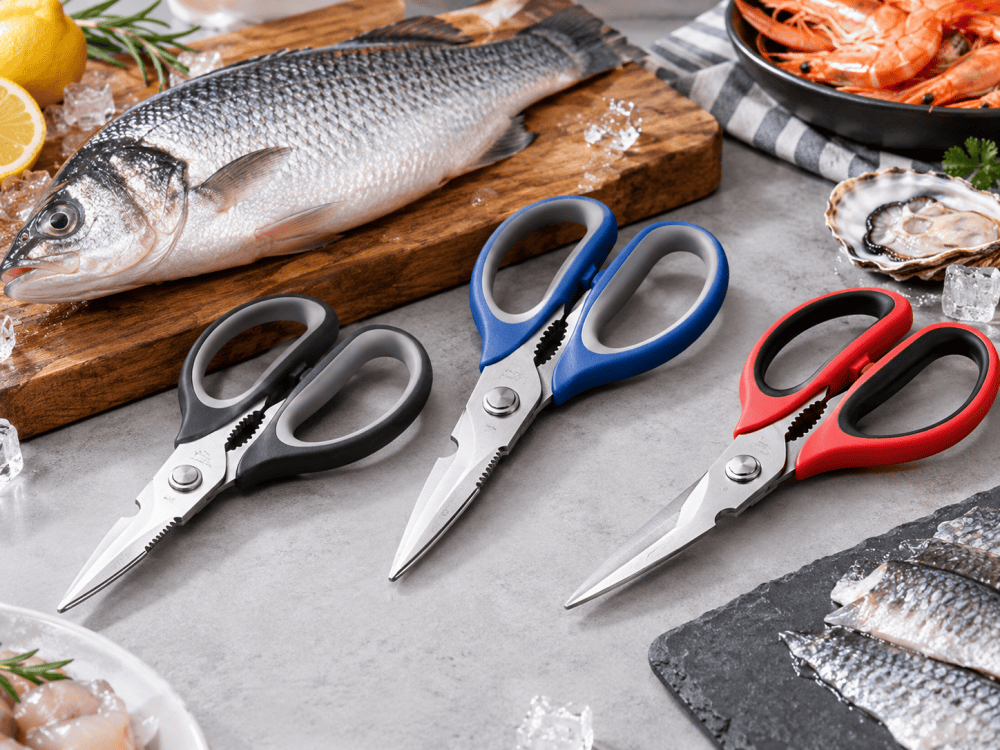



Kitchen Scissors Guide: Uses, Sharpening, Features & Common Questions (2026)
Kitchen Scissors Guide: Uses, Sharpening, Features & Common Questions (2026)
Kitchen scissors are one of the most underrated tools in the kitchen.
While most home cooks rely heavily on chef's knives and cutting boards, many everyday kitchen tasks can actually be completed faster, safer, and more conveniently with a good pair of kitchen scissors.
From trimming poultry and cutting herbs to opening food packaging and preparing seafood, kitchen scissors have evolved into multifunctional tools found in both household and professional kitchens.
However, many people still have questions:
- What are kitchen scissors used for?
- How do you sharpen kitchen scissors?
- Can you cut hair with kitchen scissors?
- What are the metal teeth on kitchen scissors for?
- What's the difference between kitchen scissors and kitchen shears?
In this complete guide, we'll answer all of these questions while helping you choose, maintain, and get the most value from your kitchen scissors.

What Are Kitchen Scissors Used For?
Kitchen scissors are versatile cutting tools designed specifically for food preparation tasks.
Unlike ordinary household scissors, kitchen scissors typically feature stronger stainless steel blades, ergonomic handles, and multifunctional components that allow them to tackle a wide variety of kitchen jobs.
Professional chefs often consider kitchen scissors one of the most practical tools in their kitchens because they increase efficiency and reduce unnecessary knife use.
1. Cutting Poultry
One of the most common uses for kitchen scissors is trimming and portioning poultry.
Kitchen scissors make it easy to:
- Trim excess chicken skin.
- Remove fat.
- Spatchcock whole chickens.
- Cut through smaller poultry bones.
- Separate wings and joints.
Compared with knives, scissors often provide better control and improve safety when working with slippery raw poultry.

2. Snipping Fresh Herbs
Kitchen scissors are ideal for preparing fresh herbs quickly.
Instead of using a cutting board and knife, many cooks simply snip herbs directly into mixing bowls or cooking pots.
Common herbs include:
- Parsley.
- Cilantro.
- Basil.
- Chives.
- Dill.
- Mint.
This method saves time while minimizing cleanup.
3. Opening Food Packaging
Modern food packaging can be surprisingly difficult to open.
Kitchen scissors simplify everyday tasks such as:
- Opening frozen food bags.
- Cutting seasoning packets.
- Trimming vacuum-sealed packaging.
- Opening snack bags.
- Cutting parchment paper and foil.
Many households use kitchen scissors multiple times a day for packaging alone.
4. Preparing Seafood
Seafood preparation is another area where kitchen scissors excel.
They can be used to:
- Trim shrimp antennae.
- Cut shrimp shells.
- Prepare lobster tails.
- Open crab sections.
- Remove fish fins.
Using scissors often reduces waste and provides more precision than larger kitchen knives.

5. Cutting Pizza and Flatbreads
In many households, kitchen scissors are used to cut pizzas, quesadillas, naan, and other flatbreads.
Scissors provide excellent control and can often produce cleaner cuts without dragging toppings across the surface.
6. Food Garnishing and Presentation
Kitchen scissors are useful for decorative finishing touches.
Professional chefs frequently use them to:
- Trim edible flowers.
- Cut seaweed strips.
- Create garnish shapes.
- Snip microgreens.
- Finish plated dishes.
Their precision makes them particularly valuable in presentation-focused cooking.
7. Baking Applications
Bakers also benefit from keeping kitchen scissors nearby.
Common baking uses include:
- Cutting parchment paper.
- Trimming dough.
- Scoring pastry decorations.
- Opening ingredient packets.
- Portioning dried fruits.
Why Every Kitchen Needs a Pair of Kitchen Scissors
Many people purchase kitchen scissors expecting to use them occasionally.
In reality, they quickly become one of the most frequently used tools in the kitchen.
Compared with knives, kitchen scissors offer several advantages:
- Faster food preparation.
- Greater cutting control.
- Improved safety for specific tasks.
- Less reliance on cutting boards.
- Convenient one-handed operation.
- Multifunctional capabilities.
Whether you're a home cook, culinary student, restaurant operator, or kitchenware buyer, investing in high-quality kitchen scissors can significantly improve efficiency in daily food preparation.
Explore professional kitchen scissors designed for global markets here:
What Are the Metal Teeth on Kitchen Scissors For?
One of the most misunderstood features on kitchen scissors is the set of metal teeth located between the handles.
Many people assume these teeth are decorative or part of the hinge mechanism, but they actually serve several practical purposes.
On high-quality kitchen scissors, the metal teeth transform the tool from a simple cutting device into a multifunctional kitchen accessory.
1. Nut Cracker Function
The most common use of the metal teeth is cracking nuts.
When the scissors are opened, the serrated teeth create a gripping area capable of holding hard shells securely.
This design works well for:
- Walnuts.
- Hazelnuts.
- Pecans.
- Macadamia nuts.
- Almond shells.
Instead of purchasing a separate nutcracker, users can simply utilize the built-in gripping section.
2. Bottle Cap Assistance
Many kitchen scissors use the metal teeth as a gripping mechanism for stubborn bottle caps.
The serrated surface improves friction and helps users gain leverage when opening tightly sealed containers.
3. Gripping Slippery Foods
Seafood preparation often involves handling slippery ingredients.
The metal teeth can help grip:
- Crab legs.
- Lobster shells.
- Fish tails.
- Shrimp shells.
This feature increases control and reduces the chance of accidental slips.
4. Breaking Small Bones
Heavy-duty kitchen shears sometimes use the serrated gripping section to help stabilize poultry bones before cutting.
Combined with strong stainless steel blades, this improves cutting efficiency when processing chicken wings or smaller joints.
5. Multifunction Kitchen Tool Design
Modern kitchen scissors increasingly incorporate multiple functions into a single product.
Depending on the design, the metal teeth may also assist with:
- Jar opening.
- Shellfish preparation.
- Bottle opening.
- Food gripping.
- Packaging removal.
For many users, these built-in functions make kitchen scissors one of the most versatile tools in the kitchen.
How to Sharpen Kitchen Scissors
Even premium stainless steel kitchen scissors eventually become dull after repeated use.
Regular sharpening helps maintain cutting performance, extends tool lifespan, and improves safety.
Dull scissors often require excessive force, increasing the risk of slipping during food preparation.
Step 1: Clean the Scissors Thoroughly
Before sharpening, wash the scissors using warm water and mild detergent.
Remove:
- Food residue.
- Oil buildup.
- Rust spots.
- Debris around the pivot screw.
Dry completely before proceeding.
Step 2: Disassemble the Scissors If Possible
Many modern kitchen scissors feature detachable blades.
Separating the blades provides easier access and allows for more accurate sharpening.
Detachable kitchen scissors are also easier to clean and sanitize.
Step 3: Use a Sharpening Stone
A whetstone remains one of the most effective sharpening tools.
Maintain the original factory sharpening angle and make smooth strokes along the cutting edge.
Repeat the process evenly on both blades.
Step 4: Remove Burrs
After sharpening, inspect the blade edges carefully.
Fine burrs can form during the sharpening process.
Use a finishing stone or honing tool to remove any remaining burrs.
Step 5: Test Cutting Performance
After reassembling the scissors, test them on:
- Paper.
- Fresh herbs.
- Food packaging.
- Thin cardboard.
A properly sharpened pair of kitchen scissors should cut cleanly without tearing.
How Often Should Kitchen Scissors Be Sharpened?
The answer depends on usage frequency.
| Usage Level | Recommended Sharpening |
|---|---|
| Occasional Home Use | Every 12 Months |
| Frequent Home Cooking | Every 6 Months |
| Professional Kitchen | Every 1-3 Months |
For a dedicated sharpening tutorial, see:
👉 How to Sharpen Kitchen Shears
Can I Cut My Hair With Kitchen Scissors?
Technically, yes.
However, professional hairstylists strongly advise against it.
Kitchen scissors and hair-cutting scissors are engineered for completely different purposes.
Although kitchen scissors may appear sharp, their blade geometry is optimized for food preparation rather than precision hair cutting.
| Feature | Kitchen Scissors | Hair Scissors |
|---|---|---|
| Primary Use | Food Preparation | Hair Cutting |
| Blade Thickness | Thicker | Very Thin |
| Edge Geometry | Durability Focused | Precision Focused |
| Hygiene Purpose | Food Contact | Personal Grooming |
Using kitchen scissors on hair can result in:
- Uneven cuts.
- Hair pulling.
- Split ends.
- Poor styling results.
- Hygiene concerns.
While an emergency trim may be possible, dedicated hair-cutting scissors remain the better choice.
How to Choose the Best Kitchen Scissors
Not all kitchen scissors are created equal.
Whether you're a home cook, restaurant operator, distributor, or kitchenware buyer, understanding the key factors that determine quality can help you select scissors that deliver long-lasting performance.
1. Choose the Right Blade Material
Blade material has the greatest impact on cutting performance, durability, and corrosion resistance.
| Steel Type | Advantages | Best For |
|---|---|---|
| 3Cr13 Stainless Steel | Affordable, corrosion resistant | Entry-level household use |
| 5Cr15MoV Stainless Steel | Excellent balance of sharpness and toughness | Premium kitchen scissors |
| 420J2 Stainless Steel | Outstanding rust resistance | Frequent washing environments |
2. Look for Detachable Designs
Detachable kitchen scissors can separate into two pieces, making cleaning significantly easier.
Benefits include:
- Improved hygiene.
- Easier sharpening.
- Thorough cleaning around the pivot area.
- Reduced bacterial buildup.
3. Consider Handle Comfort
Ergonomic handles reduce hand fatigue during extended use.
Features to consider include:
- Soft-touch TPR grips.
- Non-slip textures.
- Large finger loops.
- Balanced weight distribution.
4. Evaluate Multifunction Features
Premium kitchen scissors often integrate additional functions such as:
- Nut crackers.
- Bottle openers.
- Jar grippers.
- Fish scale removers.
- Bone-cutting notches.
These features maximize utility while minimizing the need for separate kitchen tools.
Kitchen Scissors vs Kitchen Shears
Although the terms are often used interchangeably, some manufacturers distinguish between kitchen scissors and kitchen shears.
| Feature | Kitchen Scissors | Kitchen Shears |
|---|---|---|
| Construction | Light to Medium Duty | Heavy Duty |
| Bone Cutting | Limited | Yes |
| Multifunction Features | Basic | Extensive |
| Target Users | Home Cooks | Chefs & Professionals |
Learn more here:
👉 Kitchen Shears vs Kitchen Scissors
OEM Kitchen Scissors Manufacturing Solutions
As consumer demand grows for multifunctional kitchen tools, brands and retailers are increasingly looking for reliable manufacturing partners.
FASAKA provides OEM and ODM kitchen scissors manufacturing solutions for customers worldwide.
Our capabilities include:
- Private label production.
- Custom logo engraving.
- Packaging customization.
- Blade material selection.
- Handle color customization.
- Retail and e-commerce solutions.
- Global export support.
Whether you're building a kitchenware brand or expanding your product line, our team can help transform your ideas into market-ready products.
👉 OEM & ODM Kitchenware Services
👉 Explore Our Kitchen Scissors Collection
Frequently Asked Questions
Are kitchen scissors dishwasher safe?
Many stainless steel kitchen scissors are dishwasher safe, but hand washing is recommended to preserve sharpness and extend service life.
Can kitchen scissors cut bones?
Heavy-duty kitchen shears can cut small poultry bones, while standard kitchen scissors are better suited to softer ingredients.
How often should kitchen scissors be sharpened?
Home users typically sharpen every 6–12 months, while professional kitchens may sharpen every 1–3 months depending on usage.
Can kitchen scissors be taken apart?
Many modern designs feature detachable blades for easier cleaning and maintenance.
Why do kitchen scissors rust?
Improper drying, prolonged exposure to moisture, and poor-quality steel can contribute to corrosion.
What are kitchen scissors used for?
Kitchen scissors are commonly used for cutting poultry, herbs, seafood, food packaging, pizza, and many other kitchen tasks.
What are the metal teeth on kitchen scissors for?
They can function as nut crackers, bottle openers, shellfish grippers, and multipurpose gripping tools.
Can I cut my hair with kitchen scissors?
Technically yes, but dedicated hair scissors are recommended for better precision and hygiene.
What's the difference between kitchen shears and kitchen scissors?
Kitchen shears are generally more robust and suitable for heavier tasks, while kitchen scissors focus on lighter everyday food preparation.
What steel is best for kitchen scissors?
5Cr15MoV stainless steel is widely regarded as an excellent balance of sharpness, toughness, and corrosion resistance for premium kitchen scissors.
Final Thoughts
Kitchen scissors may not receive as much attention as chef's knives, but they are among the most practical tools found in modern kitchens.
From trimming poultry and snipping herbs to opening packages and preparing seafood, a high-quality pair of kitchen scissors can improve efficiency, convenience, and safety in everyday cooking.
By understanding how to choose, sharpen, maintain, and properly use kitchen scissors, you'll get more value from one of the kitchen's most versatile tools.
Partner with FASAKA
FASAKA specializes in manufacturing premium kitchen scissors and kitchen shears for brands, wholesalers, distributors, and retailers worldwide.
✔ OEM & ODM Manufacturing
✔ Custom Branding & Packaging
✔ Premium Stainless Steel Materials
✔ Global Export Experience
✔ Flexible Production Solutions