



Can Fishing Scissors Cut Braided Fishing Line?
Can Fishing Scissors Cut Braided Fishing Line?
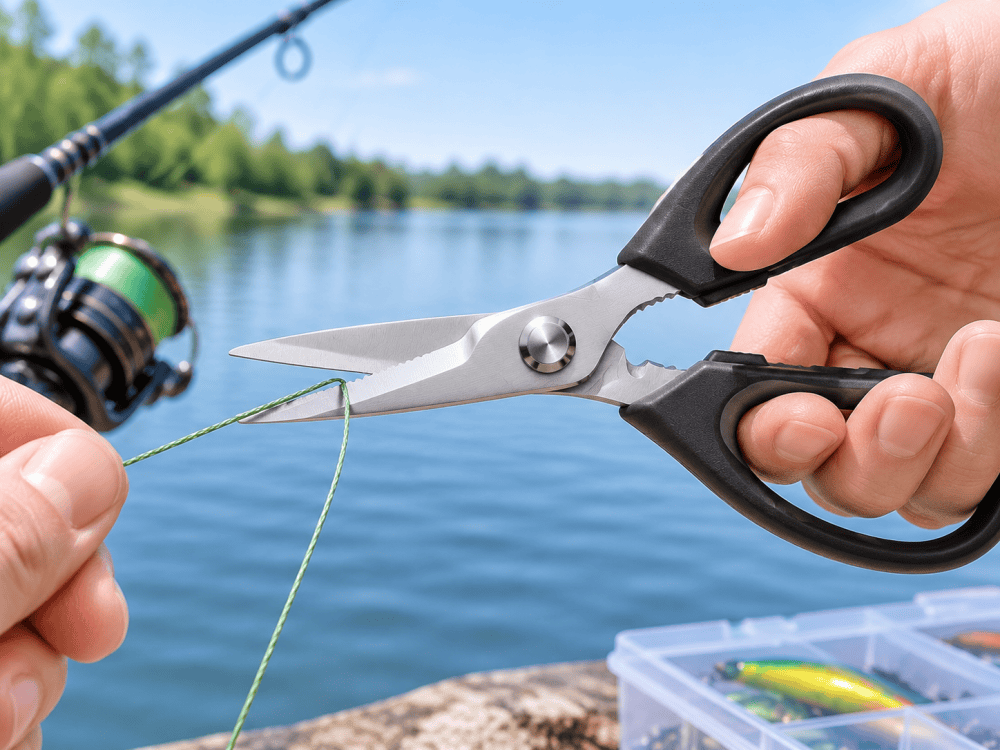
Braided fishing line is popular among anglers because of its high strength, low stretch, and relatively small diameter. However, cutting braided line cleanly can be challenging. Unlike some monofilament lines, braided fishing line consists of multiple tightly woven fibers that can flatten, fray, or slip between ordinary scissor blades.
So, can fishing scissors cut braided fishing line?
Quick Answer: Yes. Fishing scissors can cut braided fishing line, but the results depend on blade sharpness, edge design, blade alignment, and the construction of the scissors. Sharp blades with suitable geometry are generally more effective than ordinary household scissors. Some designs also use micro-serrated edges to help grip slippery braided fibers during cutting.
In this guide, we explain why braided fishing line is difficult to cut, which fishing scissor features matter, and how to choose scissors for different fishing applications.
Why Is Braided Fishing Line Difficult to Cut?
Braided fishing line is made by weaving multiple synthetic fibers together. Common materials include PE-based fibers and other high-strength synthetic fibers, depending on the product.
This construction provides useful fishing performance, but it also creates challenges when cutting.
1. Multiple Woven Fibers
Unlike a single-strand fishing line, braided line contains several fibers woven together. When ordinary scissors close around the line, the fibers may spread or flatten instead of being cut cleanly at once. This can result in an uneven cut or loose fibers at the end.
2. Slippery Surface
Many braided lines have smooth surfaces that can slide along a straight blade edge. If the blades cannot grip the line effectively, the scissors may push the line forward instead of cutting through it.
3. Small Diameter and Flexible Structure
Braided fishing line is often relatively thin and flexible. When the blades do not meet closely enough, small fibers may escape between them. This is why blade alignment and cutting-edge condition matter, especially when working with thin fishing lines.
What Type of Fishing Scissors Work Best for Braided Fishing Line?
The right design depends on the fishing line, cutting frequency, and intended application. Two common blade designs are straight edges and serrated edges.
Straight Edge Fishing Scissors
Straight-edge scissors use smooth cutting edges. When properly sharpened and manufactured with accurate blade alignment, they can provide clean cuts on suitable fishing lines.
Potential advantages:
- Smooth cutting action
- Simple blade structure
- Suitable for general cutting tasks
- Easy-to-understand design for everyday use
However, smooth blades may have difficulty gripping some slippery braided lines, particularly when the line is very thin or the blade edge is worn.
Serrated or Micro-Serrated Fishing Scissors
Serrated scissors feature small teeth along the cutting edge. These teeth can help hold certain materials in place during cutting.
Micro-serrated designs may be useful for braided fishing line because they can reduce slipping between the blades.
Potential advantages:
- Improved grip on some slippery materials
- Better control when cutting certain braided lines
- Useful for fishing-line preparation and rigging tasks
However, serrated edges are not automatically better for every type of braided line. Actual performance depends on tooth design, blade sharpness, blade alignment, and the construction of the scissors.
Straight Edge vs. Serrated Fishing Scissors
| Feature | Straight Edge | Serrated Edge |
|---|---|---|
| Blade design | Smooth cutting edge | Small teeth along the edge |
| Line grip | Depends on blade geometry and sharpness | Teeth may help grip slippery fibers |
| Cutting action | Smooth when properly aligned | May provide additional holding action |
| Maintenance | Requires a properly maintained sharp edge | Tooth design may require more specialized maintenance |
| Suitable applications | General fishing and cutting tasks | Certain slippery or braided materials |
Which should you choose? If braided fishing line is your primary concern, consider fishing scissors with a suitable serrated or micro-serrated edge. However, do not choose based on the blade description alone. Test the scissors with the actual fishing line types and diameters you intend to use.
How to Cut Braided Fishing Line Cleanly
Even suitable fishing scissors may perform poorly if they are used incorrectly. Follow these practical steps to improve cutting results.
Step 1: Keep the Line Properly Positioned
Hold the fishing line firmly and position it between the blades near the intended cutting point. Avoid letting the line slide toward the blade tips if that area does not provide sufficient cutting contact.
Step 2: Use the Correct Part of the Blade
Place the line in the section of the blade that provides effective contact and cutting pressure. The best position depends on the scissors' design.
Step 3: Close the Blades Firmly and Smoothly
Apply controlled pressure through the handles. Avoid repeatedly squeezing or pulling the line if it does not cut immediately, as this may cause fraying.
Step 4: Check the Cut End
After cutting, inspect the line end. A clean cut should have minimal loose fibers. If the line is flattened, frayed, or partially cut, check the blade sharpness, alignment, and suitability for that line.
Step 5: Clean and Dry the Scissors
After fishing, remove moisture, dirt, and line residue. Dry the scissors before storage, especially after use in saltwater environments.
Fishing Scissors vs. Ordinary Household Scissors
Can ordinary scissors cut braided fishing line? Sometimes, but they may not provide consistent results.
Household scissors are generally designed for everyday materials such as paper, fabric, or packaging. Their blade geometry may not be optimized for thin, slippery fishing lines.
Fishing scissors are designed for fishing-related tasks, although their actual cutting capabilities vary by model.
| Comparison | Fishing Scissors | Ordinary Household Scissors |
|---|---|---|
| Intended use | Fishing-related cutting tasks | General household cutting |
| Blade design | May include straight or serrated edges | Usually smooth edges |
| Braided line performance | Depends on product design and testing | May struggle with slippery fibers |
| Portability | Often designed for tackle storage | Depends on size and style |
| Handle design | May include compact or fishing-oriented grips | Designed for general use |
For occasional fishing, ordinary scissors may be sufficient for some lines. For frequent rigging and braided-line cutting, purpose-designed fishing scissors are generally worth considering.
What Should Buyers Look for in Wholesale Fishing Scissors?
For fishing tackle brands, distributors, and importers, selecting fishing scissors involves more than choosing a blade style. Product construction, usability, consistency, and packaging all affect the suitability of a product for the target market.
1. Blade Material and Construction
Check the blade material, thickness, edge finish, and overall construction. Stainless steel is commonly used in fishing scissors, but material selection alone does not determine cutting performance or corrosion resistance. Blade geometry, manufacturing quality, and maintenance requirements should also be considered.
2. Cutting Performance
Ask for samples and test them with different braided fishing lines.
- Cutting performance on different line diameters
- Cutting consistency across repeated uses
- Fiber fraying after cutting
- Blade alignment and closing action
- Performance after repeated cutting cycles
Do not assume that a product can cut every braided line simply because it is marketed as fishing scissors.
3. Handle Material and Ergonomics
The handle should provide a comfortable and secure grip. Common considerations include handle shape, surface texture, weight, and ease of operation. For compact fishing scissors, lightweight construction can also be useful for tackle storage and portability.
4. Product Size and Portability
Different fishing applications may require different product sizes. Compact scissors can be convenient for tackle boxes and portable fishing kits, while larger designs may provide a different grip and handling experience.
5. Customization and Packaging
For private-label and wholesale projects, buyers may also evaluate:
- Handle colors and appearance
- Logo printing or branding options
- Retail packaging
- Product dimensions and specifications
- MOQ and production lead time
The available customization options should be confirmed with the manufacturer based on the specific product design.
Frequently Asked Questions
Can regular scissors cut braided fishing line?
Some regular scissors can cut braided fishing line, but results vary. Thin, slippery fibers may slide between the blades, especially when the scissors are dull or poorly aligned. Fishing scissors designed and tested for line cutting are generally a more suitable choice.
Are serrated fishing scissors better for braided line?
Serrated or micro-serrated edges can help grip certain braided fibers and reduce slipping. However, performance depends on the tooth design, blade sharpness, and blade alignment. A serrated edge does not guarantee that scissors will cut every braided line cleanly.
Why do my fishing scissors fray braided line?
Common reasons include dull blades, poor blade alignment, unsuitable blade geometry, or a fishing line that is too thick for the scissors. Check the blade condition and test the scissors with the specific line you use.
Can stainless steel fishing scissors cut braided line?
Yes, stainless steel fishing scissors can cut braided fishing line if their blade design, sharpness, and alignment are suitable. Stainless steel describes the blade material, not its cutting performance by itself.
How do I keep fishing scissors sharp?
Clean and dry the scissors after use, remove residue, and store them properly. If the blades become dull, use a sharpening method suitable for the specific blade design. Serrated edges may require specialized sharpening, so follow the manufacturer's maintenance instructions.
What should I test before buying fishing scissors in bulk?
Buyers should evaluate blade material, cutting performance on representative fishing lines, blade alignment, handle comfort, product consistency, packaging, and customization options. Sample testing is recommended before confirming a large order.
Source Fishing Scissors for Your Business
Looking for fishing scissors for your retail, wholesale, or private-label product range? Contact FASAKA to discuss product specifications, customization requirements, and wholesale inquiries.
Get a Free Quote