




What Types of Scissors Sell Best in the USA? A B2B Market Guide
What Types of Scissors Sell Best in the USA? A B2B Market Guide
The United States is an important market for scissors used in homes, kitchens, offices, schools, sewing rooms, workshops, and gardens. However, there is no single type of scissors that is best for every buyer. Product demand depends on the intended application, retail channel, price point, and customer expectations.
For importers, wholesalers, distributors, and private-label brands, understanding the main scissors categories can help build a more competitive product range. Everyday household scissors may suit mass-market retail, while kitchen scissors, sewing scissors, and garden pruning shears serve more specific needs.
This guide explores popular scissors types in the US market, explains their typical applications, and outlines what B2B buyers should evaluate before placing a wholesale or OEM order.
Major categories worth evaluating include:
- All-purpose and household scissors: everyday cutting at home, school, and work.
- Kitchen scissors and kitchen shears: food preparation and kitchen tasks.
- Sewing and tailor scissors: fabric cutting, garment making, and crafts.
- Office and school scissors: paper, stationery, classroom, and desk use.
- Craft scissors: DIY, scrapbooking, and creative projects.
- Garden pruning shears: trimming stems, flowers, and small branches.
These categories represent practical market segments to investigate, not a definitive nationwide sales ranking.
1. All-Purpose and Household Scissors
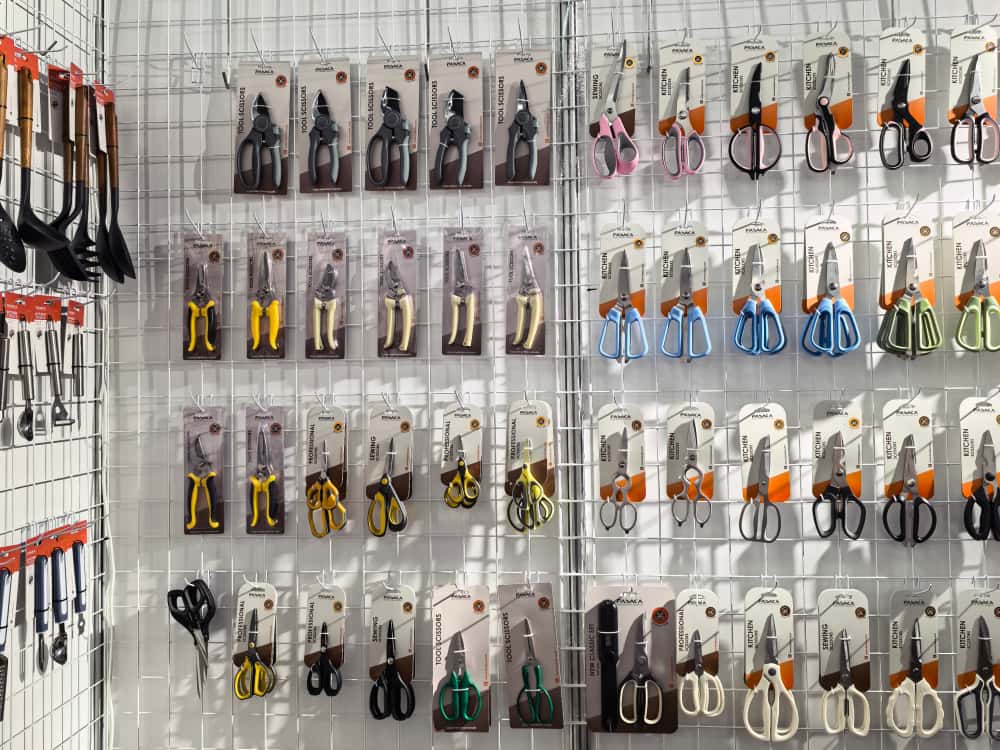
All-purpose scissors are designed for routine cutting tasks and are widely suited to general retail, supermarkets, department stores, office supply stores, and online marketplaces. Their broad functionality makes them a useful category for buyers who want a product with a wide potential customer base.
Common applications
- Cutting paper, cardboard, and packaging.
- Opening parcels and household products.
- Basic DIY and craft projects.
- Everyday tasks at home, school, and work.
Features buyers should evaluate
- Stainless steel blades or other suitable blade materials.
- Comfortable handles and a secure grip.
- Smooth blade movement and consistent cutting performance.
- Suitable sizes for adult or family use.
- Single units, multipacks, or coordinated household sets.
For a mass-market product line, simple and dependable designs may be more suitable than unnecessary functions. Multipacks can also help retailers serve shoppers looking for scissors for different rooms or users.
2. Kitchen Scissors and Kitchen Shears
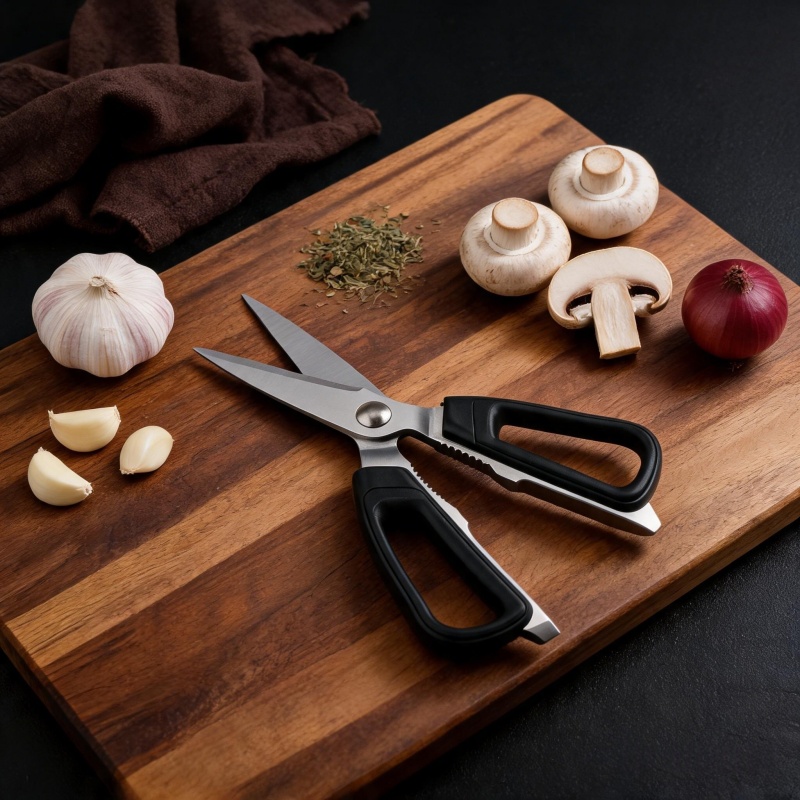
Kitchen scissors and kitchen shears are important categories for kitchenware retailers, cookware brands, supermarkets, and online sellers. They are used for food preparation and other kitchen tasks, with heavier-duty models designed for more demanding cutting applications.
Third-party Amazon US product-tracking reports published in 2026 show strong estimated sales for certain all-purpose kitchen shears and multipacks. These reports provide useful retail signals, although their estimates cover tracked listings and search terms rather than the entire US market.
Common applications
- Cutting herbs and vegetables.
- Opening food packaging.
- Preparing poultry, meat, and seafood with an appropriate model.
- Handling routine food-preparation tasks.
- Supporting outdoor cooking and barbecue preparation.
Product features worth considering
- Corrosion-resistant stainless steel blades.
- Ergonomic handles for comfortable use.
- A strong pivot and reliable blade alignment.
- Detachable blades when easier cleaning is an important selling point.
- Protective covers or sheaths for selected retail products.
- Additional functions only when they serve a clear customer need.
Kitchen scissors are a natural category to evaluate alongside other kitchen cutting tools. For a more detailed product comparison, read Kitchen Shears vs Kitchen Scissors.
3. Sewing Scissors and Tailor Scissors
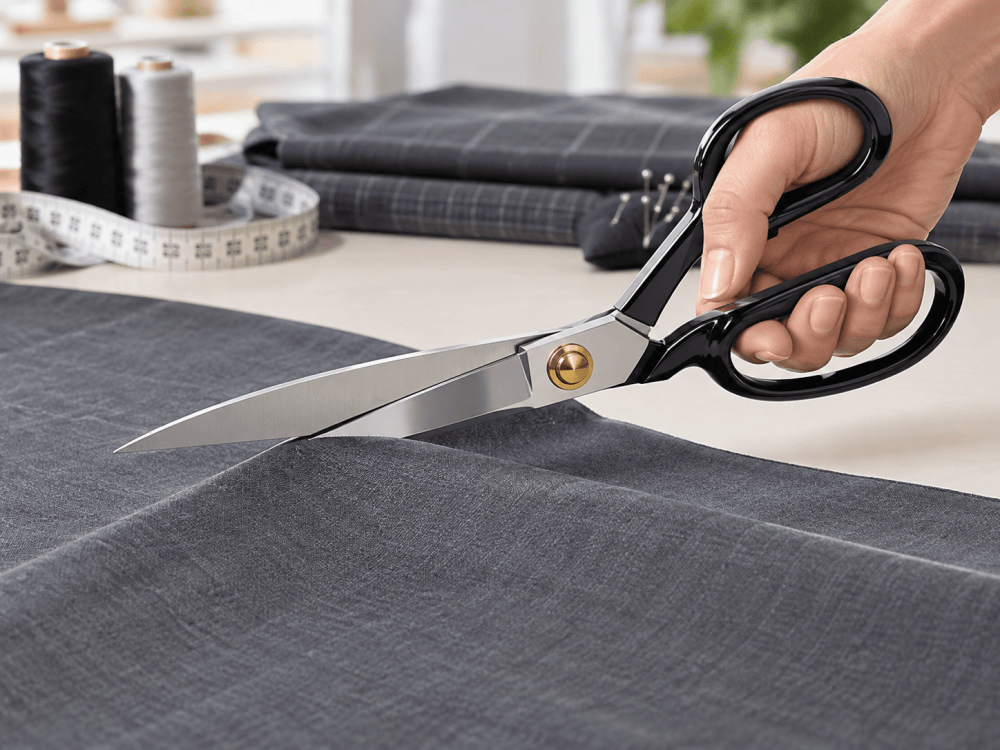
Sewing and tailor scissors serve home sewists, craft enthusiasts, textile businesses, garment workshops, and professional tailors. Unlike general-purpose scissors, these products are selected primarily for their ability to cut fabric cleanly and accurately.
Common applications
- Cutting fabric and garment patterns.
- Dressmaking and tailoring.
- Quilting and textile crafts.
- Cutting suitable denim, canvas, and other heavier fabrics with an appropriate model.
- Textile production and sewing-room tasks.
What makes a competitive product?
- Sharp blades with consistent cutting performance.
- Appropriate blade length for the intended fabric work.
- Comfortable handles and stable blade alignment.
- Suitable construction for the target fabric thickness.
- Size options, handle colors, and packaging choices for retail.
For this category, the product name alone does not guarantee a specific design. Buyers should confirm blade length, overall size, handle shape, intended materials, and cutting performance.
Explore the FASAKA tailor scissors guide for more information about product types, sizes, and applications.
4. Office and School Scissors
Office and school scissors are used for paper, stationery, classroom activities, and light craft projects. This category can serve office supply retailers, educational suppliers, stationery brands, and general merchandise distributors.
Common applications
- Cutting paper and documents.
- Classroom projects and school assignments.
- Light craft and stationery tasks.
- Everyday desk use.
Product features to evaluate
- Different sizes for children and adults.
- Comfortable handles for repeated use.
- Rounded tips for products intended for younger users, where appropriate.
- Multipacks and color assortments.
- Packaging that clearly identifies intended users and applications.
For school products, buyers should consider applicable age grading, product safety requirements, and destination-market regulations. These requirements should be confirmed for the specific product and sales channel rather than assumed from appearance alone.
5. Craft and DIY Scissors
Craft scissors support creative work, including scrapbooking, paper crafts, fabric crafts, and hobby projects. Some are designed for general cutting, while others use specialized edges or blade shapes to create particular effects.
Potential product opportunities
- General craft scissors for home and hobby use.
- Precision scissors for detailed cutting.
- Decorative-edge scissors for paper crafts.
- Small scissors included in craft kits.
- Assorted sets for hobby retailers and online stores.
For this category, differentiation may come from blade design, product appearance, set composition, and packaging. Buyers should ensure that the product's actual cutting function matches the claims made on the package.
6. Garden Pruning Shears
Garden pruning shears are designed for trimming plants and cutting stems or small branches within the tool's rated capacity. They are relevant to gardening retailers, home improvement stores, nurseries, and outdoor product distributors.
Common applications
- Trimming flowers and plant stems.
- Pruning small branches within the product's stated capacity.
- Maintaining home gardens and potted plants.
- Routine gardening and landscaping tasks.
Key product considerations
- Blade design and cutting capacity.
- Handle comfort and grip.
- Locking mechanism and safe storage.
- Blade material, maintenance, and corrosion resistance.
- Product testing and clearly stated use limitations.
Garden pruning shears are structurally different from ordinary household scissors. They should be evaluated as a dedicated garden-tool category, not simply as another variation of paper scissors.
Which Scissors Categories Should US Importers Prioritize?
The best product mix depends on the buyer's sales channel, target customer, price positioning, and sourcing capabilities. The following table is a practical planning framework, not a measured ranking of total US sales.
| Scissors category | Potential buyer channels | Product strategy to consider | Key buying factor |
|---|---|---|---|
| All-purpose scissors | General retail, online marketplaces, supermarkets | Everyday designs, multipacks, different sizes | Price, comfort, consistent cutting |
| Kitchen scissors | Kitchenware retailers, cookware brands, online sellers | Stainless steel models, selected multifunctional designs | Blade performance, cleaning, corrosion resistance |
| Sewing and tailor scissors | Sewing stores, textile suppliers, craft retailers | Fabric-specific sizes and professional models | Cutting precision, blade length, comfort |
| Office and school scissors | Stationery retailers, educational suppliers | Multipacks, color options, age-appropriate designs | Usability, packaging, applicable safety requirements |
| Craft scissors | Hobby shops, craft brands, online retailers | Precision tools, specialty edges, coordinated sets | Function, design, target hobby |
| Garden pruning shears | Garden centers, home improvement stores | Different cutting capacities and handle designs | Cutting capacity, durability, safe operation |
What Factors Influence Scissors Sales in the US Market?
1. The intended use
Customers usually choose scissors to solve a particular cutting problem. A product designed for food preparation should communicate its kitchen application clearly, while fabric scissors should emphasize textile cutting performance. Clear positioning helps buyers avoid products that look similar but perform differently.
2. Price and perceived value
Price matters, but the lowest-cost product is not always the strongest choice. Buyers should evaluate blade quality, assembly, handle comfort, packaging, and expected product life together with the purchase price.
3. Product design and comfort
Handle shape, weight, blade length, and pivot performance can influence the user experience. For products used repeatedly, comfort and reliable cutting performance can be important differentiators.
4. Multipacks and product sets
Multipacks may suit office, school, household, and online retail channels. A set can offer convenience, but the number of pieces and size assortment should match the needs of the intended customer.
5. Retail packaging and product presentation
Packaging should communicate the product type, intended application, size, materials, and key features accurately. For private-label products, buyers may also need custom colors, logos, barcodes, instructions, and retail-ready packaging.
6. Quality consistency and compliance
Importers should verify product specifications, sample performance, packaging information, and any applicable US requirements before placing a large order. Requirements vary by product type and intended user, so compliance should be checked for each product rather than generalized across all scissors.
How Can B2B Buyers Choose the Right Scissors Supplier?
Choosing a supplier is not just about finding a product that resembles a best seller. Buyers need to determine whether the manufacturer can consistently deliver the required specifications, quality level, order quantity, and packaging.
- Does the supplier manufacture the scissors category you need?
- Can it provide clear blade, handle, size, and construction specifications?
- Are samples available for cutting-performance evaluation?
- Can the supplier support logo, color, and packaging customization?
- Are MOQ, sample lead time, production lead time, and payment terms clear?
- Can the supplier explain its quality-control process?
- Can it provide documentation relevant to the destination market and product?
- Are packaging details and shipping arrangements confirmed before production?
OEM and Private Label Scissors: What Can Buyers Customize?
OEM and private-label projects allow importers, wholesalers, and brands to develop scissors for a defined market position instead of relying only on standard catalog products. The available options depend on the product design and manufacturer's capabilities.
- Product type: kitchen, household, office, sewing, or garden scissors.
- Size and design: blade length, handle shape, and product configuration.
- Materials: suitable blade and handle materials for the intended application.
- Appearance: handle colors, finishes, and selected visual details.
- Branding: logo application and private-label presentation.
- Packaging: retail cards, boxes, protective covers, multipacks, and sets where available.
Before requesting a quotation, prepare the target product type, intended application, preferred specifications, estimated order quantity, target price, packaging requirements, and destination market. Providing these details makes supplier evaluation and quotation comparison more practical.
Why Consider FASAKA for Scissors Sourcing?
FASAKA is a brand under DKS Enterprises Co., Ltd., a manufacturer and supplier based in Yangjiang, Guangdong, China, specializing in hardware knives and scissors, BBQ tools, and kitchenware. FASAKA provides a range of scissors for different applications, including kitchen scissors, household scissors, sewing scissors, stationery scissors, garden shears, and scissors sets.
For US importers, distributors, wholesalers, and private-label brands, the next step is to match the intended sales channel with the right product specifications, order requirements, and packaging options.
Learn more about the complete guide to scissors or visit the FASAKA website to explore the product range.
Frequently Asked Questions
What types of scissors are popular in the USA?
Major categories to investigate include all-purpose scissors, kitchen scissors, sewing and tailor scissors, office and school scissors, craft scissors, and garden pruning shears. Demand differs by retail channel and customer application.
What type of scissors should a US wholesaler sell?
It depends on the target channel. General retailers may evaluate all-purpose scissors and multipacks, kitchenware brands may focus on kitchen scissors, and sewing or textile retailers may need fabric-cutting scissors. Product selection should be based on customer demand and supplier capability.
Are kitchen scissors a good product category for US retailers?
Kitchen scissors are a category worth evaluating because they serve routine food-preparation tasks and are sold through kitchenware and general retail channels. Buyers should compare current listings, prices, reviews, product features, and their own sales-channel data before making inventory decisions.
What is the difference between household scissors and tailor scissors?
Household scissors are intended for general cutting tasks, while tailor scissors are designed primarily for fabric and textile cutting. Blade geometry, length, handle design, and cutting performance should match the intended use.
Can scissors be customized for a private-label brand?
Many scissors products can be developed with selected options such as logo application, handle colors, product configurations, and retail packaging. Buyers should confirm the available customization options, MOQ, and production lead time with the supplier.
What should buyers ask a scissors manufacturer before ordering?
Ask about product specifications, materials, sample availability, quality control, MOQ, production lead time, packaging, customization, and documentation relevant to the target market.
Conclusion: Choose Scissors by Market Segment, Not by Guesswork
All-purpose scissors, kitchen scissors, sewing scissors, office scissors, craft scissors, and garden pruning shears each serve different customer needs in the US market. Instead of assuming that one category is universally the best seller, B2B buyers should compare sales-channel data, competitor products, customer expectations, and supplier capabilities.
A well-planned product range starts with a clear target customer, accurate product specifications, consistent quality, and packaging suited to the retail channel. These factors provide a stronger foundation for wholesale and private-label sourcing than a broad sales claim alone.
Looking for a Scissors Manufacturing Partner?
Contact FASAKA to discuss scissors product options, wholesale requirements, and potential OEM/ODM customization for your target market.
Explore FASAKA Request a Quote

