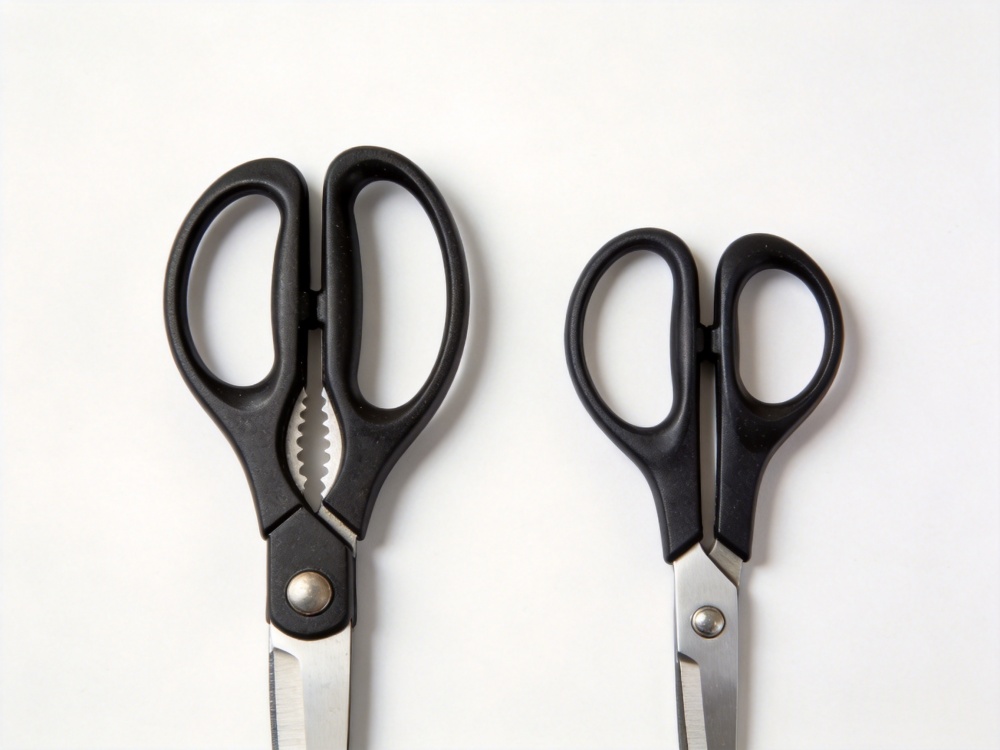



How to Sharpen Kitchen Shears: Step-by-Step Guide
How to Sharpen Kitchen Shears: Step-by-Step Guide
Kitchen shears are useful for cutting herbs, poultry, packaging, vegetables, meat, twine, and other kitchen materials. Like other cutting tools, kitchen shears can become dull with repeated use.
If your kitchen shears no longer cut cleanly, learning how to sharpen kitchen shears can help restore their cutting performance. However, the correct method depends on the construction of the shears, blade design, and whether the blades can be separated.

Can Kitchen Shears Be Sharpened?
Yes. Many kitchen shears can be sharpened when their blades become dull.
However, not every pair should be sharpened in exactly the same way. Kitchen shears may have straight, serrated, micro-serrated, coated, or specialized blades. Some models can also be separated for easier cleaning and maintenance, while others are designed as a permanently assembled unit.
Before sharpening, identify the blade design and check whether the manufacturer provides specific maintenance instructions.
When Should You Sharpen Kitchen Shears?
You do not need to sharpen kitchen shears simply because they have been used for a certain amount of time. The better indicator is a noticeable change in cutting performance.
Consider sharpening when:
- The shears struggle to cut materials they previously handled easily.
- The blades start to pull or crush rather than cut cleanly.
- You need noticeably more hand pressure to make a cut.
- The shears cut well near the pivot but poorly toward the tip.
- The blades slide over the material instead of engaging it.
- Regular cleaning and pivot maintenance no longer restore the cutting performance.
What Tools Can You Use to Sharpen Kitchen Shears?
Several sharpening methods exist, but they are not equally suitable for every pair of kitchen shears.
| Sharpening Method | Best For | Important Consideration |
|---|---|---|
| Scissor sharpener | Many standard kitchen shears | Use a sharpener designed for scissors and follow its instructions |
| Sharpening stone | Suitable separable or accessible blades | Requires good control of the blade position and edge |
| Professional sharpening | High-quality or specialized shears | Useful when blade geometry or construction is difficult to reproduce at home |
| Built-in sharpening feature | Compatible models | Follow the manufacturer's specific instructions |
A dedicated scissor sharpener is often the simplest option for users who want to maintain compatible kitchen shears at home. Some manufacturers specifically provide sharpeners designed for their scissors. :chatgpt-content-reference{index="1"}
How to Sharpen Kitchen Shears Step by Step
The following process is intended as a general guide. If your kitchen shears have specialized blade geometry or manufacturer-specific sharpening instructions, those instructions should take priority.
Step 1: Clean the Kitchen Shears
Before sharpening, remove food residue, grease, fibers, or other material from the blades and pivot area.
Cleaning is important because contamination can interfere with blade movement and make it harder to evaluate the actual condition of the cutting edge.
Dry the blades thoroughly before sharpening.
Step 2: Inspect the Blades
Open the shears and inspect both blades carefully.
Look for:
- Visible nicks
- Uneven edges
- Rust or corrosion
- Food residue
- Damage to the blade tip
- Loose pivot hardware
- Blade misalignment
If the blades are visibly damaged rather than simply dull, sharpening may not be enough to restore proper performance.
Step 3: Check Whether the Shears Can Be Separated
Some kitchen shears are designed to separate at the pivot, while others are permanently assembled.
If your model is designed to separate, separating the blades can make cleaning and sharpening easier. Do not force the pivot apart if the product is not designed for disassembly.
Step 4: Choose the Correct Sharpening Tool
For many standard kitchen shears, a dedicated scissor sharpener is a practical choice.
If using a sharpener, confirm that it is designed for scissors and compatible with the type of blade you are sharpening.
Do not automatically use a pull-through knife sharpener simply because it works for kitchen knives. Knife and scissor blades have different geometries and sharpening requirements.
Some scissor sharpeners use a ceramic sharpening element. For example, Fiskars provides a scissor sharpener designed for compatible right-handed scissors and describes a controlled sharpening motion through the sharpening element. :chatgpt-content-reference{index="2"}
Step 5: Position the Scissors Correctly
Follow the instructions for your specific sharpener.
For a dedicated scissor sharpener, the blades are generally positioned so the sharpening element contacts the appropriate cutting edge. Maintain stable control and avoid forcing the blades against the abrasive surface.
The correct position matters because removing material from the wrong surface can change the blade geometry and reduce cutting performance.
Step 6: Make Controlled Sharpening Passes
Use slow, controlled movements rather than applying excessive force.
For a sharpener designed for scissors, follow the recommended number of passes. Some dedicated scissor sharpeners specify only a small number of sharpening passes rather than repeated aggressive grinding. Fiskars, for example, specifies three to five passes for one of its compatible scissor sharpeners. :chatgpt-content-reference{index="3"}
Avoid excessive sharpening. Every sharpening process removes or reshapes some material from the cutting edge, so unnecessary grinding can shorten the useful life of the blades.
Step 7: Test the Cutting Performance
After sharpening, test the shears on a suitable material.
Do not test them by cutting your fingers or using an unsafe material. Instead, choose a representative kitchen material that the shears are designed to cut.
Check whether the blades:
- Engage the material cleanly
- Cut with less resistance
- Maintain contact through the cutting motion
- Perform consistently along the blade
Step 8: Clean and Maintain the Pivot
After sharpening, clean away any remaining particles from the blades and pivot.
If the manufacturer's maintenance instructions allow lubrication, a small amount of appropriate oil at the pivot can help maintain smooth opening and closing. Fiskars recommends occasional oiling of the pivot to keep the cutting motion smooth. :chatgpt-content-reference{index="4"}
Can You Sharpen Kitchen Shears With a Knife Sharpener?
Usually, you should not assume that a knife sharpener is suitable for kitchen shears.
Kitchen knives and scissors have different blade configurations. A pull-through knife sharpener is designed around the geometry of knife blades, while scissors require the sharpening element to interact with a specific cutting edge and blade relationship.
If a sharpener is specifically designed for both knives and scissors, follow the manufacturer's instructions for the scissor setting. Otherwise, use a dedicated scissor sharpener or a professional sharpening service.
Can You Sharpen Kitchen Shears With a Whetstone?
It is possible to sharpen some scissors with a sharpening stone, particularly when the blade can be separated and the cutting edge is accessible.
However, using a whetstone requires more control than a dedicated scissor sharpener. The user needs to maintain the correct contact between the abrasive surface and the cutting edge without changing the original blade geometry.
This is different from sharpening a conventional kitchen knife. Knife sharpening guides often specify a particular angle for the knife edge, but that angle should not simply be transferred to kitchen shears. WÜSTHOF, for example, provides specific sharpening procedures and angles for its knives, demonstrating why sharpening specifications should be matched to the tool being sharpened. :chatgpt-content-reference{index="5"}
How Do You Sharpen Serrated Kitchen Shears?
Serrated kitchen shears require additional care because the cutting edge contains teeth rather than a single continuous straight edge.
A standard flat sharpener may not properly reach the individual serrations.
If the shears have a serrated blade, check the manufacturer's sharpening instructions before attempting to sharpen them.
For expensive, specialized, or heavily serrated kitchen shears, professional sharpening may be preferable to trying to recreate the original tooth geometry at home.
Should You Sharpen Both Blades of Kitchen Shears?
Not necessarily.
Scissor blades work together as a pair, and the cutting edge geometry is part of the overall design. You should not automatically sharpen every surface of both blades in the same way.
The correct maintenance procedure depends on the specific shear construction. Follow the manufacturer's instructions and only sharpen the surfaces intended to be sharpened.
How Do You Know if Kitchen Shears Need Sharpening?
A simple performance check can help determine whether sharpening is actually necessary.
| Problem | Possible Cause | What to Check First |
|---|---|---|
| Shears do not cut cleanly | Dull edge or blade alignment issue | Inspect the cutting edges and pivot |
| Blades slip over material | Dullness or unsuitable blade geometry | Check the edge and intended application |
| Shears feel loose | Pivot tension problem | Inspect the pivot before sharpening |
| Blades stick during cutting | Residue, friction, or pivot issue | Clean and inspect the pivot |
| One area cuts better than another | Blade alignment or edge problem | Test the blade from heel to tip |
| Visible nicks | Damaged cutting edge | Consider professional sharpening or repair |
How Often Should You Sharpen Kitchen Shears?
There is no universal sharpening schedule for kitchen shears.
How often they need sharpening depends on:
- How frequently they are used
- What materials they cut
- Blade material and hardness
- Blade geometry
- Whether the shears are used on food or packaging
- How well the blades are cleaned and maintained
- How the shears are stored
High-use kitchen shears may require more frequent maintenance than a pair used occasionally at home.
Instead of sharpening on a fixed calendar, monitor cutting performance and maintain the pivot and blades regularly.
How to Keep Kitchen Shears Sharp for Longer
Sharpening is only one part of scissor maintenance. Proper use and storage can reduce unnecessary wear.
- Clean food residue from the blades after use.
- Dry the blades thoroughly to reduce corrosion risk.
- Keep the pivot clean.
- Lubricate the pivot when recommended by the manufacturer.
- Store the shears safely to protect the cutting edges.
- Do not use kitchen shears on materials they are not designed to cut.
- Avoid unnecessary contact with hard surfaces.
- Sharpen only when the cutting edge actually needs attention.
- Follow the manufacturer's sharpening instructions.
Fiskars similarly recommends cleaning kitchen scissors after use and occasionally oiling the pivot to maintain smooth operation. :chatgpt-content-reference{index="6"}
What Should You Avoid When Sharpening Kitchen Shears?
Improper sharpening can damage a pair of scissors more quickly than normal use.
Do Not Remove Excessive Material
Repeated aggressive sharpening can shorten blade life and change the original edge geometry.
Do Not Sharpen the Wrong Surface
Scissor blades are designed to work together. Sharpening a surface that is not intended to be sharpened can affect how the blades meet.
Do Not Force a Fixed Pivot Apart
If the shears are not designed to separate, forcing the pivot can damage the assembly and affect blade alignment.
Do Not Ignore Serrated Blades
Serrated blades require a different approach from straight blades. If you are unsure how the teeth should be maintained, use the manufacturer's instructions or a professional sharpening service.
Do Not Assume Sharpening Will Fix Every Problem
A dull edge is only one possible cause of poor cutting. Loose pivots, damaged blades, corrosion, contamination, or misalignment may require a different solution.
Kitchen Shears Maintenance vs Kitchen Knife Maintenance
Kitchen shears and kitchen knives are both cutting tools, but their maintenance procedures should not be treated as identical.
| Maintenance Point | Kitchen Shears | Kitchen Knives |
|---|---|---|
| Blade configuration | Two blades working together | Usually one primary cutting edge |
| Sharpening method | Should match scissor construction | Common methods include stones, steels, and dedicated sharpeners |
| Pivot | Important moving component | Usually not applicable |
| Blade alignment | Critical to cutting action | Different geometry considerations |
| Serrated options | Common in some kitchen shears | Also available on some knives |
The key point is simple: do not automatically apply a knife-sharpening technique to kitchen shears.
When Should You Replace Kitchen Shears Instead of Sharpening Them?
Sharpening can restore a worn cutting edge, but it cannot always repair structural damage.
Replacement may be more appropriate when:
- The blades are severely damaged.
- The pivot is permanently loose or damaged.
- The blades are significantly bent.
- Corrosion has seriously affected the cutting edges.
- The blades no longer align correctly after adjustment.
- The cost of professional repair is higher than replacement.
For high-quality professional shears, professional assessment may be worthwhile before replacement.
What Should B2B Buyers Look for in Sharpenable Kitchen Shears?
For wholesalers, retailers, importers, and private-label brands, sharpening capability can be an important part of product usability and lifecycle value.
When sourcing kitchen shears, buyers should consider not only initial sharpness but also how the product can be maintained after repeated use.
- Can the kitchen shears be sharpened?
- Is the blade straight or serrated?
- Can the blades be separated?
- What steel is used?
- What is the blade hardness?
- Is a compatible sharpener available?
- Are sharpening instructions included?
- Can the pivot be adjusted?
- Can the pivot be lubricated?
- What maintenance is recommended?
- What is the expected service life under normal use?
- Can the product be customized for private label?
Why Kitchen Shear Design Matters for Long-Term Sharpness
How well kitchen shears retain their cutting performance depends on more than the initial sharpening.
Blade steel, heat treatment, edge geometry, blade thickness, pivot construction, and the materials being cut all influence long-term performance.
A well-designed pair of kitchen shears should also make routine maintenance practical. If the blades can be cleaned properly, the pivot can be maintained, and the sharpening method is clearly defined, users can more easily preserve the original cutting performance.
Frequently Asked Questions About Sharpening Kitchen Shears
How do you sharpen kitchen shears?
Clean and inspect the shears first, then use a sharpening method specifically compatible with the scissor design. For many standard kitchen shears, a dedicated scissor sharpener is a practical option. Follow the sharpener manufacturer's instructions and test the cutting performance afterward.
Can kitchen shears be sharpened?
Yes. Many kitchen shears can be sharpened when they become dull. The appropriate method depends on the blade design, construction, and manufacturer instructions.
Can I sharpen kitchen shears with a knife sharpener?
Do not assume that a knife sharpener is suitable for kitchen shears. Scissors have different blade geometry. Use a sharpener specifically designed for scissors or confirm that the sharpening device has a compatible scissor function.
Can you sharpen kitchen shears with a whetstone?
Some kitchen shears can be sharpened with a whetstone, especially when the blades can be separated and the cutting edge is accessible. However, the technique requires careful control and should follow the blade manufacturer's geometry and maintenance instructions.
How often should kitchen shears be sharpened?
There is no universal schedule. Sharpen kitchen shears when cutting performance noticeably declines, taking into account usage frequency, materials cut, blade construction, and maintenance.
How do I know if my kitchen shears are dull?
Signs include increased cutting resistance, slipping over materials, pulling or crushing instead of cutting cleanly, and inconsistent cutting performance along the blade.
Can serrated kitchen shears be sharpened?
Yes, but serrated blades require a method that matches the tooth geometry. A standard flat sharpener may not be appropriate. Check the manufacturer's instructions or use a professional sharpening service.
Should I sharpen both blades of kitchen shears?
Not automatically. The blades work together and their surfaces have specific roles in the cutting action. Follow the manufacturer's instructions and sharpen only the surfaces intended for sharpening.
How can I keep kitchen shears sharp longer?
Clean and dry the blades after use, keep the pivot clean, lubricate it when recommended, store the shears safely, avoid cutting unsuitable materials, and sharpen only when necessary.
When should I replace kitchen shears instead of sharpening them?
Replacement may be appropriate when the blades are severely damaged, bent, heavily corroded, or permanently misaligned, or when the pivot is damaged and cannot be repaired effectively.
Final Takeaway: Sharpen Kitchen Shears According to Their Design
Learning how to sharpen kitchen shears is useful, but the most important principle is to match the sharpening method to the actual scissor design.
For many standard kitchen shears, a dedicated scissor sharpener can be a practical maintenance solution. More specialized or serrated shears may require a different approach or professional sharpening.
Before sharpening, always check the blades, pivot, alignment, and overall condition. After sharpening, test the shears on a suitable material and maintain the blades and pivot regularly.
- Clean the blades first.
- Inspect for damage and misalignment.
- Identify whether the blades are straight or serrated.
- Check whether the shears can be separated.
- Use a compatible sharpening tool.
- Follow the manufacturer's instructions.
- Avoid excessive material removal.
- Test the cutting performance afterward.
- Maintain the pivot and blades regularly.
Looking for Kitchen Shears for OEM & Private Label?
FASAKA is a brand under DKS Enterprises Co., Ltd., a manufacturer and supplier based in Yangjiang, Guangdong, China, specializing in hardware knives and scissors, BBQ tools, and kitchenware.
For B2B buyers, kitchen shears can be developed around requirements such as blade material, blade edge, size, handle material, pivot design, finishing, logo, packaging, and target application.
If you are developing kitchen shears for retail, wholesale, or private label, see FASAKA OEM/ODM Services or contact FASAKA with your product requirements.
Looking for Custom Kitchen Shears?
FASAKA supports B2B buyers with kitchen scissors, professional cutting tools, OEM/ODM development, and private-label customization.
Contact FASAKA