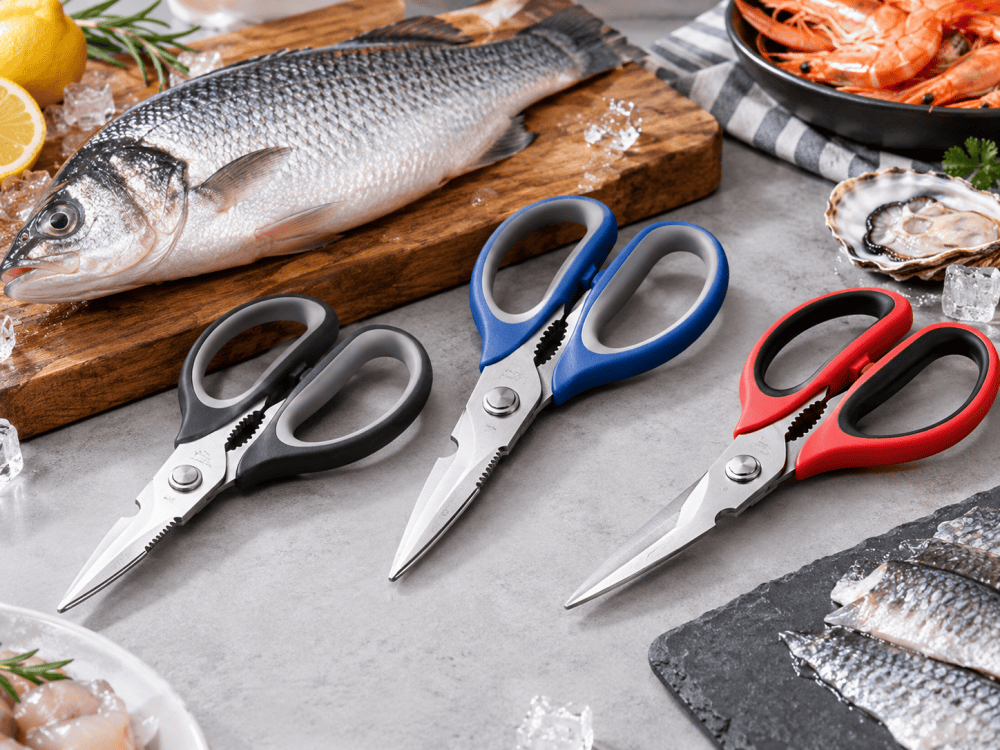



Kitchen Shears vs Kitchen Scissors: What's the Difference and Which Is Better?
Kitchen Shears vs Kitchen Scissors: What's the Difference and Which Is Better?
Published by FASAKA | Kitchen Cutting Tools Guide
Many people use the terms kitchen shears and kitchen scissors interchangeably. At first glance, they appear nearly identical. Both feature two blades connected by a pivot and are designed for cutting tasks in the kitchen.
However, while the two tools share similarities, there are important differences in blade construction, cutting strength, durability, functionality, and intended applications.
Understanding these differences can help home cooks, professional chefs, retailers, and kitchenware buyers choose the right tool for their needs.
In this comprehensive guide, we'll compare kitchen shears and kitchen scissors in detail, explain when each tool performs best, and help you determine which option deserves a place in your kitchen.

Why the Confusion Exists
The confusion largely comes from marketing terminology.
Some manufacturers label their products as "kitchen scissors," while others use "kitchen shears" for nearly identical tools. In many regions, both names are accepted by consumers.
However, within the kitchenware industry, the term kitchen shears usually refers to a heavier-duty cutting tool designed specifically for food preparation, while kitchen scissors often describes lighter general-purpose kitchen cutting tools.
Although the distinction isn't always absolute, understanding the typical characteristics of each category is useful when evaluating product quality and intended use.
What Are Kitchen Shears?
Kitchen shears are heavy-duty cutting tools designed specifically for demanding food preparation tasks.
Unlike ordinary household scissors, kitchen shears feature stronger blades, reinforced pivot joints, thicker steel construction, and ergonomic handles capable of generating greater cutting force.
They are commonly used for:
- Cutting poultry.
- Trimming chicken skin.
- Spatchcocking chicken.
- Preparing seafood.
- Cutting herbs.
- Opening food packaging.
- Portioning ingredients.
- Breaking down small bones and joints.
Many premium kitchen shears also include additional functions such as:
- Bottle openers.
- Nut crackers.
- Fish scale removers.
- Jar lid grippers.
- Screw-cap openers.
- Detachable blades for cleaning.
Because of their versatility and durability, kitchen shears are considered an essential tool in both home and commercial kitchens.
Explore FASAKA's professional kitchen shears collection:
👉 Kitchen Scissors & Kitchen Shears Collection

What Are Kitchen Scissors?
Kitchen scissors are generally lighter cutting tools designed for routine kitchen tasks.
While they are still intended for food-related applications, they typically have thinner blades and are optimized for lighter cutting work rather than heavy-duty food processing.
Common uses include:
- Opening food packages.
- Cutting herbs.
- Trimming vegetables.
- Snipping green onions.
- Cutting baking parchment.
- Opening seasoning packets.
Compared to kitchen shears, kitchen scissors usually offer:
- Lighter weight.
- Smaller blade thickness.
- Lower cutting force.
- Simpler construction.
- Lower manufacturing cost.
For basic food preparation tasks, kitchen scissors can be perfectly adequate. However, they may struggle with tougher ingredients such as poultry joints, seafood shells, or thick meat cuts.
Kitchen Shears vs Kitchen Scissors: Quick Comparison Table
| Feature | Kitchen Shears | Kitchen Scissors |
|---|---|---|
| Primary Purpose | Heavy-duty food preparation | Light kitchen tasks |
| Blade Thickness | Thicker | Thinner |
| Cutting Power | High | Moderate |
| Poultry Processing | Excellent | Limited |
| Seafood Preparation | Excellent | Moderate |
| Multi-Function Features | Common | Rare |
| Durability | Higher | Moderate |
| Professional Kitchen Use | Very Common | Less Common |
| Price Range | Higher | Lower |
The Most Important Difference: Cutting Power
If there is one factor that truly separates kitchen shears from kitchen scissors, it is cutting power.
Kitchen shears are engineered to generate significantly more leverage through thicker blades, stronger pivots, and more robust handle designs.
This additional strength allows kitchen shears to cut through:
- Chicken joints.
- Poultry skin.
- Fish fins.
- Lobster shells.
- Crab shells.
- Dense herbs.
- Thick food packaging.
Kitchen scissors, while useful for lighter tasks, are generally not intended for these demanding applications.
As a result, professional chefs and commercial kitchens overwhelmingly prefer kitchen shears when performance and durability are priorities
Blade Design Differences
Although kitchen shears and kitchen scissors may appear similar at first glance, their blade designs are often significantly different.
Blade geometry directly affects cutting performance, durability, comfort, and the range of kitchen tasks each tool can handle.
Kitchen Shears Blade Design
Kitchen shears are engineered for heavy-duty food preparation.
Typical design features include:
- Thicker blade stock.
- Stronger cutting edges.
- Reinforced pivot construction.
- Wider blade profile.
- Higher cutting leverage.
- Micro-serrated options for grip.
These design characteristics help kitchen shears cut through difficult materials such as poultry skin, chicken joints, seafood shells, and dense herbs.
Kitchen Scissors Blade Design
Kitchen scissors generally prioritize lightweight handling and convenience.
Common characteristics include:
- Thinner blades.
- Lighter construction.
- Lower cutting force.
- Simpler blade profiles.
- Reduced manufacturing cost.
These features make kitchen scissors suitable for everyday household cutting tasks but less effective for demanding food preparation jobs.

Steel Materials Comparison
The blade material also plays a major role in determining performance.
High-quality kitchen shears often use stronger stainless steel grades that provide better durability, corrosion resistance, and edge retention.
| Steel Type | Typical Application |
|---|---|
| 420J2 | Kitchen scissors and entry-level shears |
| 3Cr13 | General-purpose kitchen shears |
| 5Cr15MoV | Premium kitchen shears |
| 7Cr17MoV | Professional cutting tools |
If you're interested in understanding knife and cutting-tool steels in more detail, read:
👉 High Carbon vs Stainless Steel Knives
Durability Comparison
Durability is one area where kitchen shears generally outperform kitchen scissors.
Because kitchen shears are designed for more demanding applications, manufacturers typically reinforce key stress points including:
- Pivot joints.
- Blade spines.
- Handle structures.
- Cutting edges.
As a result, kitchen shears tend to withstand years of heavy use with less risk of blade deformation or joint failure.
Kitchen scissors, while durable enough for lighter tasks, often wear more quickly when repeatedly exposed to high-force cutting applications.
Commercial Kitchen Perspective
In restaurants, butcher shops, seafood processing facilities, and catering operations, kitchen shears are overwhelmingly preferred because they provide:
- Longer service life.
- Higher cutting efficiency.
- Reduced maintenance frequency.
- Better safety during heavy-duty cutting.
Food Preparation Applications
The best way to understand the difference between kitchen shears and kitchen scissors is to compare their real-world kitchen applications.
| Task | Kitchen Shears | Kitchen Scissors |
|---|---|---|
| Cutting Herbs | Excellent | Excellent |
| Opening Packages | Excellent | Excellent |
| Cutting Poultry | Excellent | Limited |
| Seafood Preparation | Excellent | Moderate |
| Cutting Small Bones | Good | Not Recommended |
| Heavy Packaging | Excellent | Moderate |
For casual cooking, kitchen scissors may be sufficient.
For serious food preparation, kitchen shears provide noticeably better performance.
Can Kitchen Scissors Replace Kitchen Shears?
This is one of the most frequently searched questions online.
The answer depends entirely on your cooking habits.
If your primary needs involve:
- Opening packages.
- Cutting herbs.
- Snipping vegetables.
- Light kitchen work.
Then quality kitchen scissors may be sufficient.
However, if you regularly prepare:
- Whole chickens.
- Seafood.
- Large cuts of meat.
- Commercial food volumes.
Kitchen shears are the superior choice.
Most professional kitchens choose kitchen shears because they can perform nearly all tasks that kitchen scissors can handle while offering much greater strength and versatility.
Which Tool Do Professional Chefs Prefer?
Professional chefs overwhelmingly prefer kitchen shears.
The reasons are straightforward:
- Greater durability.
- Higher cutting force.
- Improved versatility.
- Easier poultry preparation.
- Better seafood processing.
- Multi-function capabilities.
In many commercial kitchens, kitchen shears are used daily for tasks that would be difficult or inefficient with standard kitchen scissors.
Kitchen Shears vs Poultry Shears
Another common source of confusion is the difference between kitchen shears and poultry shears.
Poultry shears are actually a specialized type of kitchen shears.
They are specifically designed for breaking down poultry and feature:
- Extra-thick blades.
- Spring-loaded mechanisms.
- Bone-cutting capability.
- Safety locking systems.
All poultry shears are kitchen shears, but not all kitchen shears are poultry shears.
To learn more, read:
How to Choose the Right Kitchen Cutting Tool
Choosing between kitchen shears and kitchen scissors depends on how you cook, how frequently you prepare ingredients, and the types of food you handle most often.
Choose Kitchen Scissors If You Mainly:
- Open food packaging.
- Cut baking paper.
- Trim herbs occasionally.
- Need a lightweight tool.
- Cook simple meals.
Choose Kitchen Shears If You Regularly:
- Prepare poultry.
- Process seafood.
- Cut meat.
- Handle large ingredient volumes.
- Need a multi-function kitchen tool.
- Want professional-grade durability.
For most serious home cooks and professional kitchens, kitchen shears offer significantly greater versatility and long-term value.
Maintenance and Sharpening
Whether you choose kitchen shears or kitchen scissors, proper maintenance is essential for preserving performance and food safety.
Cleaning
Wash the blades after every use, especially after cutting poultry, seafood, or raw meat.
Food residue left on the blades can contribute to bacterial growth and corrosion.
Drying
Always dry the blades thoroughly before storage.
Even stainless steel products can develop staining if exposed to moisture for extended periods.
Sharpening
Regular sharpening helps maintain cutting efficiency and reduces user fatigue.
For a complete guide, read:
👉 How to Sharpen Kitchen Shears
Storage
Store kitchen shears and scissors in a dry location away from loose utensils that may damage the cutting edges.
Frequently Asked Questions
Are kitchen shears and kitchen scissors the same thing?
Not exactly. The terms are often used interchangeably, but kitchen shears typically refer to heavier-duty cutting tools designed for demanding food preparation tasks.
Which is better: kitchen shears or kitchen scissors?
For versatility, durability, and heavy-duty cutting performance, kitchen shears are generally considered the better option.
Can kitchen scissors cut chicken bones?
Most kitchen scissors are not designed for cutting bones. Heavy-duty kitchen shears or poultry shears are better suited for this task.
Why do chefs prefer kitchen shears?
Professional chefs appreciate kitchen shears because they can handle poultry, seafood, herbs, packaging, and many other food preparation tasks efficiently.
What are poultry shears?
Poultry shears are a specialized type of kitchen shears designed specifically for cutting poultry joints and small bones.
Not completely. Kitchen shears complement knives but cannot fully replace them for slicing, chopping, or precision cutting.
Are detachable kitchen shears better?
Detachable kitchen shears are often easier to clean and sharpen, making them popular in professional kitchens.
How long do kitchen shears last?
A quality pair of stainless steel kitchen shears can last many years with proper care and maintenance.
Can kitchen shears be sharpened?
Yes. Most kitchen shears can be sharpened multiple times during their lifespan.
What material is best for kitchen shears?
High-quality stainless steel such as 3Cr13, 5Cr15MoV, and 7Cr17MoV are commonly used because they offer a good balance of corrosion resistance, durability, and edge retention.
Related Resources
- What Are Kitchen Shears Used For?
- How to Sharpen Kitchen Shears
- Poultry Shears Definition
- Kitchen Scissors Collection
OEM Kitchen Shears & Kitchen Scissors Manufacturing
FASAKA specializes in the development and manufacturing of premium kitchen shears, poultry shears, kitchen scissors, and professional kitchen cutting tools for brands, wholesalers, distributors, and retailers worldwide.
Our OEM and ODM services include:
- Custom product design.
- Private label manufacturing.
- Logo customization.
- Custom packaging solutions.
- Retail-ready products.
- Wholesale production support.
Whether you're launching a new kitchenware brand or expanding an existing product line, our manufacturing team can help deliver reliable, market-ready products.
👉 OEM & ODM Kitchenware Manufacturing
👉 Browse Kitchen Shears & Kitchen Scissors
Final Thoughts
Although the terms "kitchen shears" and "kitchen scissors" are often used interchangeably, there are meaningful differences between the two tools.
Kitchen scissors are ideal for light-duty food preparation and general household tasks, while kitchen shears provide superior cutting power, durability, versatility, and professional-level performance.
For cooks who frequently prepare poultry, seafood, meat, and large quantities of ingredients, investing in a quality pair of kitchen shears is usually the best choice.
With proper maintenance and sharpening, premium kitchen shears can remain one of the most valuable and versatile tools in any kitchen for many years.
Looking for a Professional Kitchen Shears Manufacturer?
FASAKA provides OEM and ODM manufacturing services for kitchen shears, kitchen scissors, poultry shears, and customized kitchen cutting tools for global brands and distributors.