




What Is a Gyuto Knife Used For? A Complete Guide
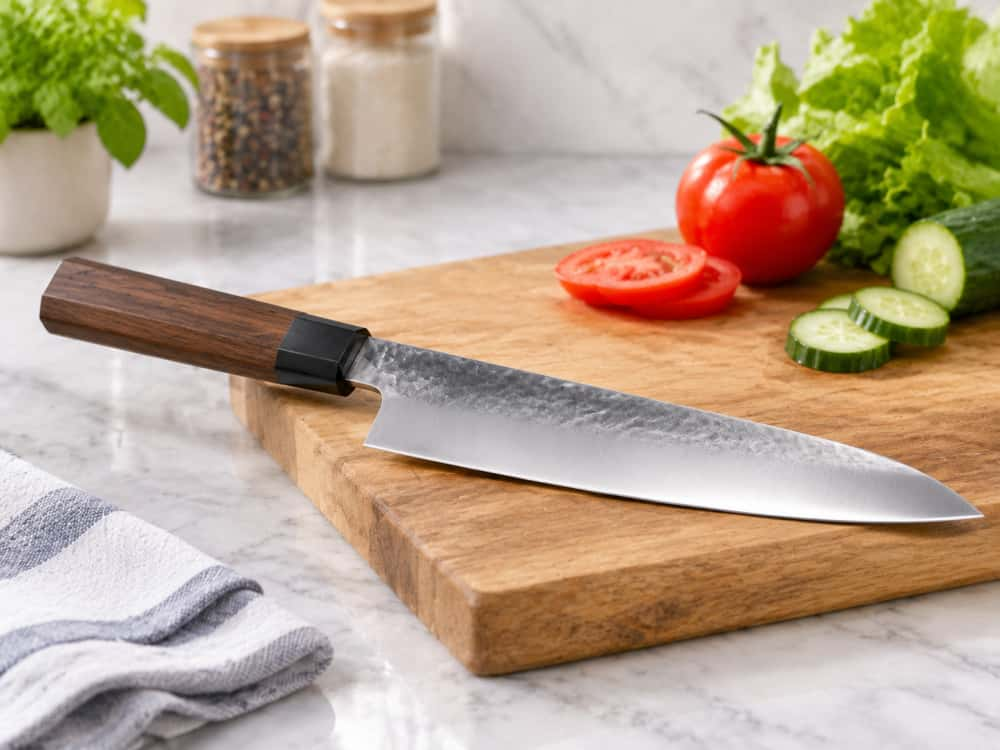
A Gyuto knife is a Japanese-style chef's knife designed for versatile food preparation. It is commonly used for slicing meat, cutting fish, chopping vegetables, mincing herbs, and performing everyday kitchen tasks. With its pointed tip, relatively thin blade, and versatile cutting profile, a Gyuto knife is a popular choice for both home cooks and professional chefs.
Quick Answer: What Is a Gyuto Knife Used For?
A Gyuto knife is primarily used for slicing, dicing, chopping, and mincing a wide variety of ingredients. It works well with meat, boneless fish, vegetables, fruits, and herbs. Its pointed tip is useful for detailed cutting, while its curved cutting edge supports rocking and push-cutting techniques.
In Japanese, "Gyuto" is commonly translated as "beef sword." Although its name is associated with cutting beef, this knife is not limited to meat preparation. It has developed into an all-purpose kitchen knife that can handle many of the same daily tasks as a Western chef's knife.
In this guide, we will explain what a Japanese Gyuto knife is used for, its main features, the foods it can cut, and the situations where another knife may be a better choice.
1. What Is a Gyuto Knife?
A Gyuto is a Japanese chef's knife with a long, relatively narrow blade, a pointed tip, and a cutting edge that usually has a gentle curve. It was developed as a versatile kitchen knife and is now widely used in both professional and home kitchens.
Compared with many traditional Western chef's knives, Gyuto knives often have a thinner blade profile and a lighter feel. However, the exact weight, blade thickness, edge geometry, and handle design vary depending on the manufacturer and model.
Common characteristics of a Gyuto knife include:
- Pointed blade tip: Useful for precise cuts, trimming, and detailed preparation.
- Long cutting edge: Provides enough blade length for slicing larger ingredients.
- Gentle blade curve: Supports rocking motions as well as push-cutting techniques.
- Relatively thin blade: Many Gyuto knives are designed for controlled, precise cutting.
- Versatile design: Suitable for preparing meat, fish, vegetables, fruits, and herbs.
2. What Is a Gyuto Knife Used For?
The main advantage of a Gyuto knife is its versatility. Instead of using a separate knife for every ingredient, cooks can use one Gyuto for many everyday preparation tasks.
2.1 Slicing Meat
A Gyuto knife is well suited for slicing boneless meat, including beef, pork, chicken, and lamb. Its long cutting edge allows cooks to make smooth, controlled cuts through larger pieces of meat.
It can be used for:
- Slicing boneless beef into thin strips.
- Cutting pork into portions or smaller pieces.
- Preparing boneless chicken for stir-fries and other dishes.
- Trimming meat and removing small unwanted sections.
The pointed tip also helps with detailed work around connective tissue and smaller areas. However, a Gyuto is not designed for cutting through bones or frozen meat. A cleaver or suitable butcher knife is a better choice for those jobs.
2.2 Cutting Fish
A Gyuto can be used for general fish preparation, especially when cutting boneless fillets. Its sharp edge and pointed tip help make clean cuts through fish flesh.
Typical tasks include:
- Slicing boneless fish fillets into portions.
- Cutting fish into cubes for cooked dishes.
- Trimming fish fillets before cooking.
- Preparing fish for everyday kitchen recipes.
For specialized sashimi preparation, a traditional Japanese slicing knife such as a Yanagiba may be more suitable. Its long, narrow blade is specifically designed for making long, clean slices of boneless fish.
2.3 Chopping and Slicing Vegetables
Vegetable preparation is another major use of the Gyuto knife. Its long edge and versatile blade profile make it suitable for many vegetables, from soft tomatoes to firm carrots and potatoes.
A Gyuto can help with:
- Chopping onions, cabbage, and leafy vegetables.
- Slicing carrots, cucumbers, and zucchini.
- Dicing potatoes, peppers, and tomatoes.
- Cutting larger vegetables into manageable portions.
Its pointed tip is useful when making smaller cuts, while the curved edge can support a rocking motion for repetitive chopping. For very large quantities of vegetables or tasks that require a tall, flat blade, a Nakiri knife may offer better control and efficiency.
2.4 Mincing Garlic, Ginger, and Herbs
The Gyuto knife can also be used for mincing smaller ingredients. Its sharp edge allows cooks to finely chop garlic, ginger, parsley, cilantro, and other herbs.
Depending on the blade profile and cutting technique, cooks can use a controlled rocking motion or a series of short downward cuts. The pointed tip is also helpful when making precise cuts around smaller ingredients.
2.5 Slicing Fruits
A Gyuto knife is useful for preparing many types of fruit. It can slice apples, pears, melons, and other fruits into pieces for snacks, salads, and cooking.
For larger fruits such as melons, the longer blade can help make longer cutting strokes. For small decorative cuts or peeling, a paring knife may be easier to control.
3. Gyuto Knife Uses at a Glance
The following table summarizes common Gyuto knife applications and when another knife may be more appropriate.
| Food or Ingredient | Common Cutting Tasks | Suitability |
|---|---|---|
| Beef and pork | Slicing, trimming, portioning boneless meat | Excellent |
| Chicken | Slicing and cutting boneless meat | Excellent |
| Fish fillets | Portioning and slicing boneless fillets | Very good |
| Vegetables | Chopping, dicing, and slicing | Excellent |
| Garlic and herbs | Mincing and fine chopping | Very good |
| Fruits | Slicing and portioning | Very good |
| Bones and frozen food | Heavy chopping and breaking | Not recommended |
4. What Makes a Gyuto Knife Different from Other Chef's Knives?
Gyuto knives share many functions with Western chef's knives, but their blade profiles and handling characteristics can differ. Understanding these differences can help buyers and cooks choose the right knife for their needs.
Gyuto vs. Western Chef's Knife
A Western chef's knife often has a thicker blade and a more pronounced curve, making it suitable for rocking cuts and general-purpose kitchen work. Many Gyuto knives feature a thinner blade and a more pointed tip, offering a different balance of precision and cutting feel.
| Feature | Gyuto Knife | Western Chef's Knife |
|---|---|---|
| Blade profile | Often thinner with a pointed tip | Often thicker with a more pronounced curve |
| Cutting style | Push-cutting, slicing, and rocking | Rocking, chopping, and slicing |
| Typical feel | Often lighter and more precise | Often heavier and more robust |
| Common uses | Meat, fish, vegetables, and detailed cutting | General food preparation |
These are general design tendencies rather than fixed rules. Actual performance depends on blade geometry, steel, thickness, handle construction, and the individual knife design.
For a more detailed comparison, read our guide: Western Chef Knife vs Japanese Gyuto: Key Differences.
Gyuto vs. Santoku
Both Gyuto and Santoku knives are versatile Japanese kitchen knives, but they have different blade profiles.
A Gyuto usually has a longer blade and a more pointed tip. A Santoku generally has a shorter blade with a flatter cutting edge and a rounded or sheep's-foot-style tip. Gyuto knives are often preferred for longer slicing strokes, while Santoku knives are popular for everyday slicing, dicing, and chopping.
Neither knife is automatically better. The right choice depends on the user's preferred cutting style, hand comfort, and the ingredients being prepared.
5. How to Use a Gyuto Knife Effectively
Using the correct cutting technique helps improve control, consistency, and blade life. Here are several practical tips for using a Gyuto knife.
Choose the Right Cutting Motion
A Gyuto's blade profile supports several cutting techniques:
- Push cutting: Move the blade forward and down through the ingredient. This technique is useful for controlled, precise cuts.
- Rocking motion: Keep the blade tip closer to the cutting board while moving the handle in a rocking motion. This works well for mincing herbs and chopping smaller ingredients.
- Slicing motion: Use a smooth forward or backward stroke to cut through boneless meat, fish, and vegetables.
Use a Suitable Cutting Board
Choose a stable cutting board made from wood or a suitable food-grade plastic material. Very hard surfaces such as glass, stone, ceramic, and metal can damage or dull the knife edge more quickly.
Keep the Blade Properly Maintained
Clean and dry the knife after use, and store it in a knife block, blade guard, or another protective storage solution. Avoid leaving the blade loose in a drawer where it may hit other utensils.
For more knife-care advice, see our related guide on kitchen knives and knife care.
6. How to Choose the Right Gyuto Knife Size
Gyuto knives are available in different blade lengths. The right size depends on the user's hand size, cutting habits, kitchen space, and the ingredients being prepared.
| Blade Length | Typical Use | Who May Prefer It? |
|---|---|---|
| 180 mm | Everyday food preparation and smaller ingredients | Home cooks who prefer a more compact knife |
| 210 mm | Versatile daily slicing, chopping, and portioning | Many home cooks and general kitchen users |
| 240 mm | Longer slicing strokes and larger ingredients | Experienced users and cooks who prefer a longer blade |
These lengths are common options, not strict standards. A shorter Gyuto may be easier to handle in a compact kitchen, while a longer blade can be useful for larger ingredients and longer slicing strokes.
7. What Should You Avoid Cutting with a Gyuto Knife?
Although a Gyuto is designed for versatile kitchen use, it is not suitable for every cutting task. Using it incorrectly can damage the edge or reduce its performance.
- Bones: Do not use a standard Gyuto to chop through beef, pork, poultry, or fish bones. Choose an appropriate cleaver or butcher knife.
- Frozen foods: Avoid cutting frozen meat or other frozen ingredients, which can put excessive stress on the blade.
- Hard materials: Do not use the knife to cut hard shells, hard pits, or other materials beyond its intended use.
- Twisting and prying: Avoid twisting the blade inside food or using it as a lever.
- Very hard cutting surfaces: Avoid glass, stone, and metal boards.
For heavy-duty cutting tasks, use a knife specifically designed for that purpose rather than applying excessive force to a Gyuto.
8. Is a Gyuto Knife Good for Home Cooks and Professional Chefs?
Yes. A Gyuto knife can be a practical choice for both home cooks and professional chefs because it handles a wide range of everyday food preparation tasks.
For Home Cooks
A Gyuto can serve as a primary kitchen knife for preparing vegetables, meat, fish, and fruit. Users who want one versatile knife for many daily tasks may find it a convenient option.
For Professional Chefs
Professional kitchens often require knives that support repeated slicing, chopping, and detailed preparation. A Gyuto can fit these needs, although the ideal blade length, steel, weight, and handle design depend on the chef's workflow and preferences.
For Kitchenware Brands and Wholesale Buyers
Gyuto-style knives can also be considered when developing a kitchen knife product range. Buyers should evaluate blade material, edge geometry, handle construction, size options, finishing quality, packaging, and target-market preferences.
For distributors, retailers, and private-label brands, these product specifications are important when selecting knives for different consumer segments.
9. Frequently Asked Questions About Gyuto Knives
1. What is a Gyuto knife mainly used for?
A Gyuto knife is mainly used for general food preparation, including slicing boneless meat and fish, chopping vegetables, dicing fruits, and mincing herbs. It is designed as a versatile Japanese chef's knife.
2. Can a Gyuto knife cut meat?
Yes. A Gyuto knife is suitable for slicing and portioning boneless beef, pork, chicken, and other meats. It should not be used to chop through bones or frozen meat.
3. Can you use a Gyuto knife for vegetables?
Yes. A Gyuto is suitable for chopping, slicing, dicing, and mincing many vegetables, including onions, carrots, cabbage, cucumbers, and peppers.
4. Is a Gyuto knife good for beginners?
Yes. A Gyuto can be a good all-purpose knife for beginners who want to learn basic slicing, chopping, and dicing techniques. Choosing a comfortable blade length and handle is important.
5. What is the difference between a Gyuto and a Santoku?
A Gyuto typically has a longer blade and a more pointed tip, while a Santoku usually has a shorter blade with a flatter edge profile. Both are versatile kitchen knives, but they offer different cutting experiences.
6. What size Gyuto knife is best for everyday use?
A 210 mm Gyuto is a common all-purpose option for everyday kitchen work. However, a 180 mm blade may feel easier to control for users who prefer a smaller knife, while a 240 mm blade offers more length for larger ingredients and longer slicing strokes.
7. Can a Gyuto knife replace a Western chef's knife?
For many everyday kitchen tasks, yes. Both knives can handle slicing, chopping, and dicing. However, their blade profiles, weight, and handling characteristics can differ, so the best choice depends on personal preference and cutting style.
Conclusion: Is a Gyuto Knife Worth Having?
A Gyuto knife is a versatile Japanese chef's knife that can handle many everyday kitchen tasks. From slicing boneless meat and fish to chopping vegetables and mincing herbs, it offers a practical combination of precision and versatility.
Its pointed tip, long cutting edge, and adaptable blade profile make it a useful option for both home cooks and professional kitchens. However, it is important to choose the right size, use suitable cutting techniques, and avoid heavy-duty tasks such as chopping bones or frozen foods.
Whether you are selecting a knife for your own kitchen or developing a kitchen knife range for your business, understanding the design and applications of a Gyuto knife can help you make a more informed decision.
Looking for Kitchen Knives for Your Product Range?
FASAKA, under DKS Enterprises Co., Ltd., supports global buyers with kitchen knife and kitchenware sourcing. If you are a distributor, wholesaler, importer, or private-label brand, explore our kitchen knife range or contact our team to discuss your product requirements.
Explore Kitchen Knives OEM & ODM Services Get a Free Quote