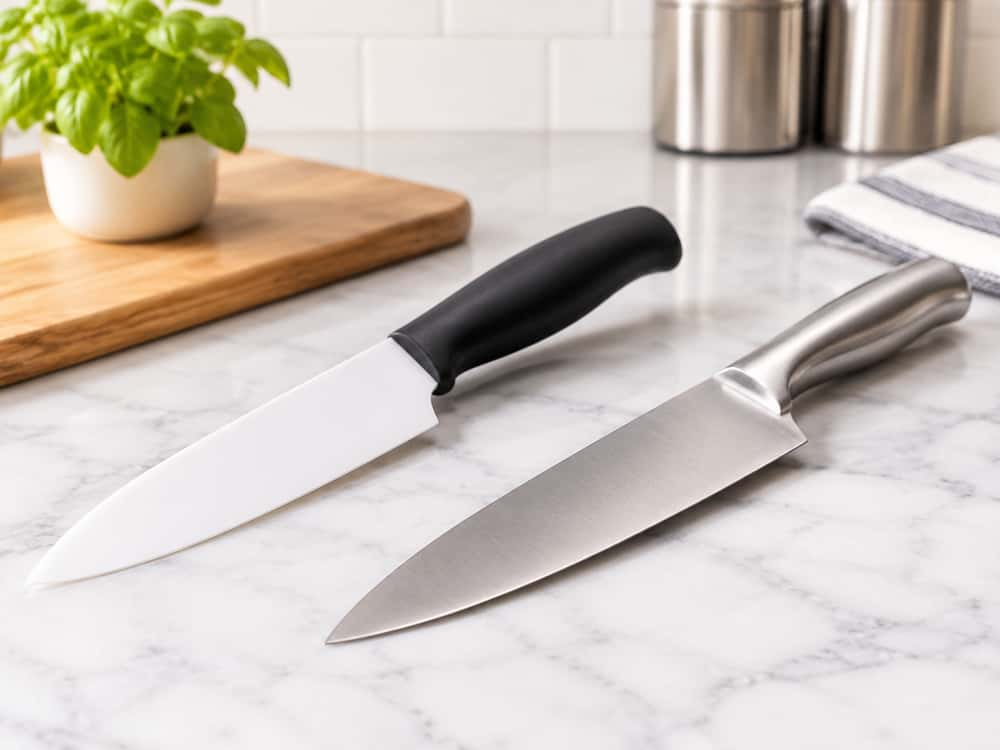




Do Ceramic Knives Rust or Stain? A Complete Cleaning and Maintenance Guide
Do Ceramic Knives Rust or Stain? A Complete Cleaning and Maintenance Guide
Do ceramic knives rust or stain after regular kitchen use? One of the main advantages of ceramic kitchen knives is that their blades do not rust like conventional steel knives. Most ceramic knife blades are made from zirconia, a non-metallic material with excellent chemical stability and resistance to corrosion.
However, ceramic knives are not completely immune to discoloration, food residue, or surface marks. White ceramic blades may occasionally develop stains from certain foods, while handles and other components can require different cleaning methods depending on their materials.
In this guide, we explain whether ceramic knives rust, what can cause staining or discoloration, how to clean ceramic knife blades, and how to maintain them for everyday kitchen use.
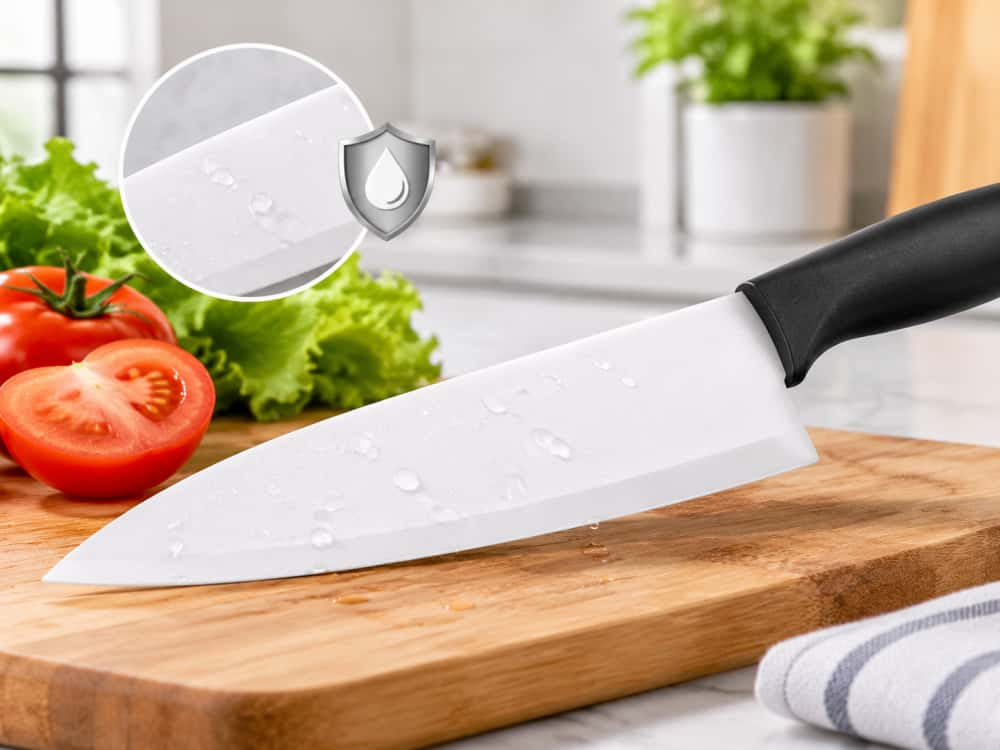
Quick Answer: Do Ceramic Knives Rust?
No, ceramic knife blades do not rust like steel blades. Most ceramic knives are made from zirconium dioxide, which is not an iron-based metal and does not develop iron oxide rust during normal kitchen use.
Ceramic blades can still develop surface stains or discoloration from food residue. Proper cleaning and careful handling help keep the blade looking clean and maintain the knife's condition.
1. Do Ceramic Knives Rust?
Ceramic knife blades do not rust in the same way stainless steel or carbon steel blades can. Most modern ceramic knives use zirconia ceramic, also known as zirconium dioxide (ZrO₂).
Unlike steel, zirconia is not an iron-based material. Since conventional rust forms through the corrosion of iron, a zirconia ceramic blade does not develop iron oxide rust under ordinary kitchen conditions.
This makes ceramic knives attractive to users who want a cutting tool with minimal blade-corrosion concerns.
Why Are Ceramic Blades Resistant to Rust?
Zirconia is a chemically stable ceramic material. It does not react with moisture in the same way iron-containing metals do, and it has excellent resistance to many common food-related conditions.
For example, cutting fruits, vegetables, and other everyday ingredients does not normally cause a zirconia ceramic blade to rust.
However, a complete ceramic knife may contain other components, such as metal fittings or decorative parts. These components may have different corrosion characteristics from the ceramic blade itself.
Therefore, when discussing rust resistance, it is important to distinguish between the ceramic blade and the knife's other components.
2. Can Ceramic Knives Stain or Discolor?
Although ceramic blades are resistant to rust and corrosion, they can sometimes develop surface discoloration. This is more noticeable on white ceramic knives because stains and residue are easier to see against a light-colored surface.
Most discoloration is related to food residue, surface contamination, or improper cleaning rather than rust.
Food Pigments and Residue
Some foods contain natural pigments, oils, or compounds that can leave marks on knife surfaces if they are not cleaned promptly.
Ingredients such as tomatoes, carrots, beets, berries, turmeric, and certain strongly colored sauces may leave visible residue on kitchen tools. Although zirconia ceramic is resistant to many stains, residue can still accumulate on the blade surface or around the handle connection.
Rinsing the knife after cutting these ingredients helps prevent residue from drying and becoming more difficult to remove.
Mineral Deposits from Water
In areas with hard water, mineral deposits may remain on kitchen tools after washing and air drying. These deposits can appear as white spots, cloudy marks, or a dull surface film.
Such marks are not necessarily damage to the ceramic blade. They may simply be mineral residue left behind by water.
Residue from Improper Cleaning
Oil, detergent residue, food particles, or buildup around the blade and handle can affect the appearance of a ceramic knife.
Regular cleaning with mild dish soap and a soft sponge is usually sufficient for routine maintenance.
3. Why Does a White Ceramic Knife Turn Yellow or Look Dirty?
White ceramic knives are popular because of their clean appearance and modern design. However, their light-colored blades can make certain stains more visible than those on darker kitchen tools.
If a white ceramic knife develops a yellowish or brownish appearance, several factors may be responsible.
- Food stains: Pigments from vegetables, spices, sauces, and other ingredients may leave colored residue.
- Oil buildup: A thin layer of cooking oil or food residue can make the blade appear yellow or dull.
- Mineral deposits: Water residue may create cloudy or uneven surface marks.
- Cleaning residue: Detergent or other cleaning products may leave a film if the blade is not rinsed thoroughly.
- Surface contamination: Contact with other materials or dirty storage conditions may affect the blade's appearance.
A yellow or brown mark on a ceramic blade does not automatically mean the knife is rusting. Since zirconia ceramic does not rust like iron-based steel, the cause is more likely to be surface residue or staining.
If the discoloration does not disappear with gentle cleaning, avoid using aggressive chemicals or abrasive tools. Check the manufacturer's cleaning instructions before attempting further treatment.
4. How to Clean a Ceramic Knife Properly
Cleaning a ceramic knife is generally straightforward. For most everyday food preparation, a few simple steps are enough to remove food residue and keep the blade clean.
Step 1: Rinse the Blade After Use
After cutting fruits, vegetables, or other ingredients, rinse the blade with clean water to remove food particles and surface residue.
Cleaning the knife promptly is especially helpful after cutting foods with strong pigments or sticky substances.
Step 2: Use Mild Dish Soap
Apply a small amount of mild dishwashing liquid to a soft sponge or cloth. Gently clean the blade surface without applying unnecessary pressure.
Avoid using rough scouring pads, steel wool, or abrasive cleaning tools that may scratch other knife components or damage the handle finish.
Step 3: Rinse Thoroughly
Rinse the blade and handle to remove any remaining soap or food residue. Detergent buildup may leave a dull or cloudy appearance if the knife is not rinsed properly.
Step 4: Dry the Knife
Dry the knife with a clean soft towel before storing it. Although the ceramic blade does not rust, drying helps prevent water spots and keeps the handle and other components in good condition.
Step 5: Store It Safely
Store the ceramic knife in a protective sheath, knife block, or suitable storage holder. Avoid placing it loosely in a drawer where it may collide with other utensils.