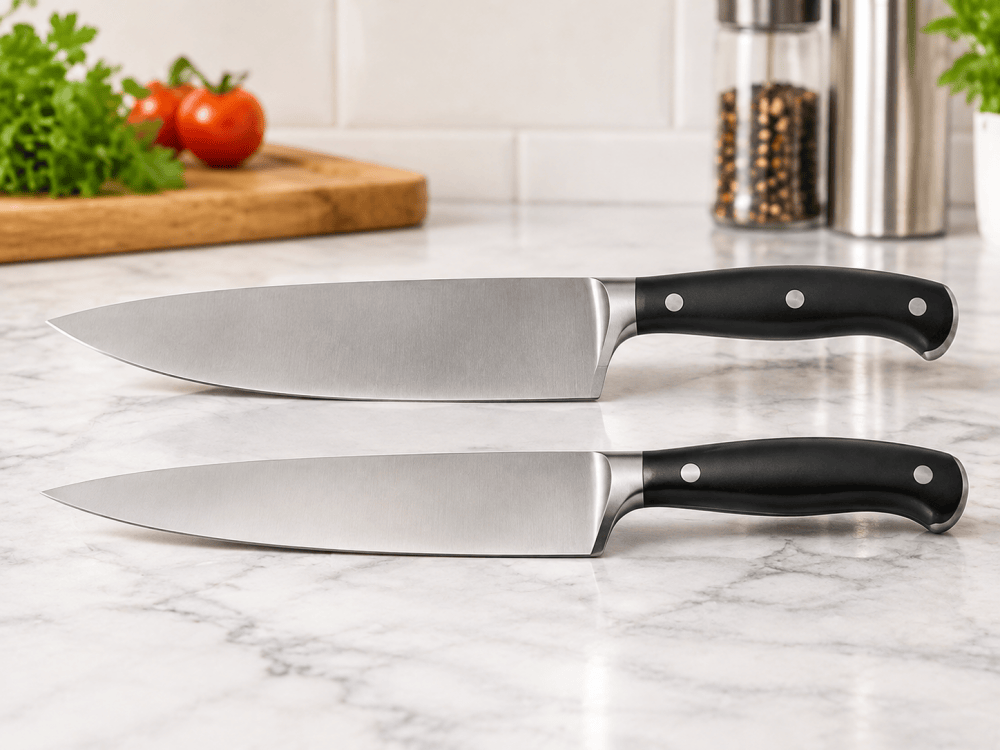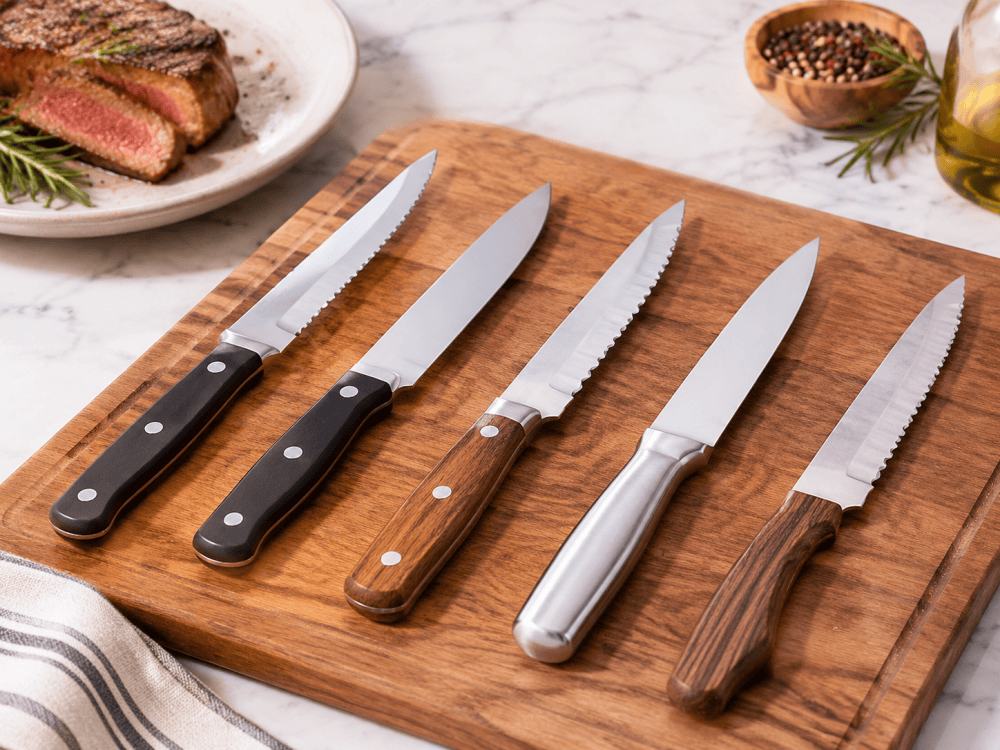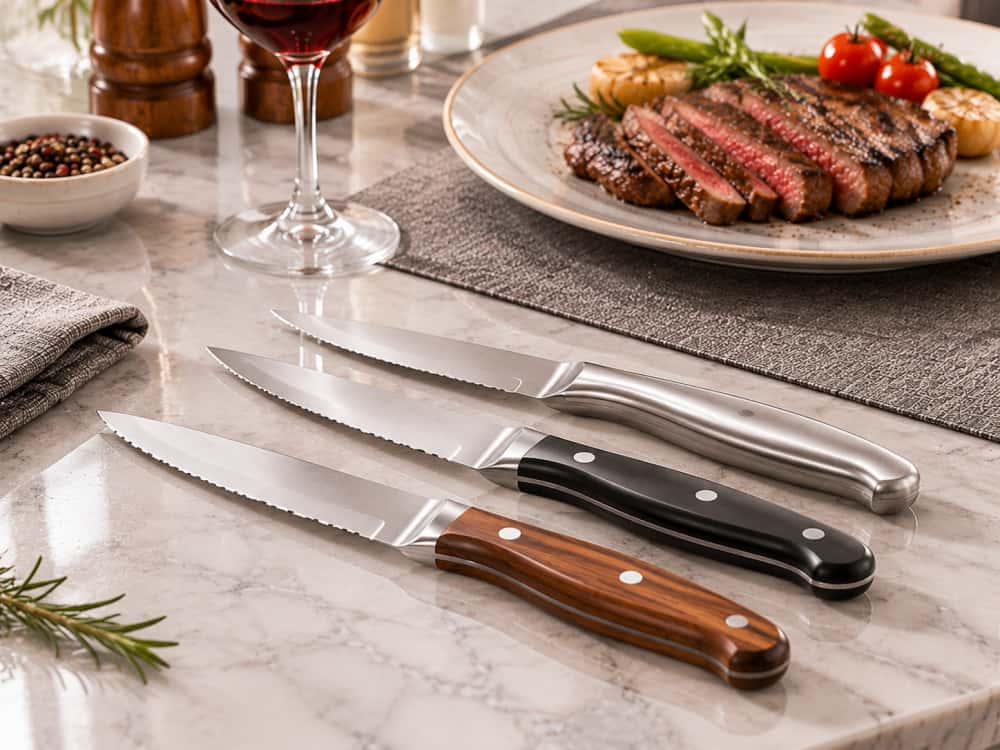




Western Chef Knife vs Japanese Gyuto: Key Differences
When choosing a professional kitchen knife, two popular options are the Western chef knife and the Japanese Gyuto. Both are versatile, all-purpose knives designed for slicing, dicing, chopping, and preparing a wide range of ingredients. However, they can differ in blade geometry, steel hardness, weight, edge design, and cutting feel.
The main difference is that traditional Western chef knives, particularly German-style models, often have a thicker and more robust blade with a relatively softer edge. Japanese Gyuto knives are commonly designed with a thinner blade and harder steel for precise cutting. However, these are general tendencies rather than fixed rules. Modern knife designs often combine features from both traditions.
This guide compares Western chef knives and Japanese Gyuto knives to help home cooks, professional chefs, kitchenware buyers, and distributors understand their differences and choose the right knife for their needs.
Quick Answer: Western Chef Knife vs Japanese Gyuto
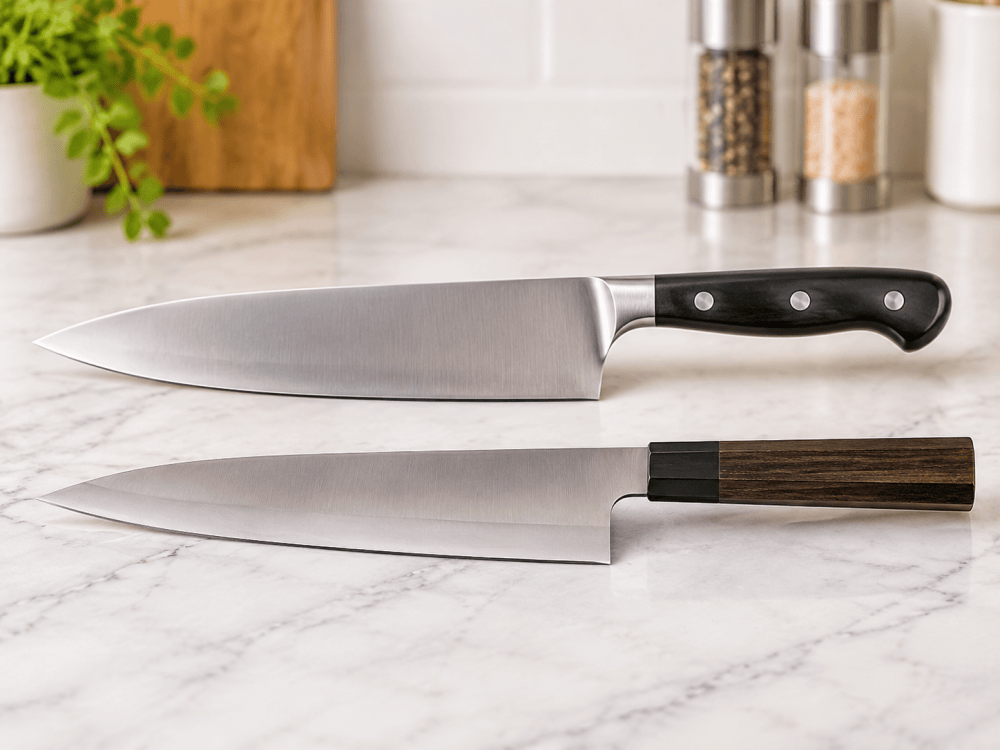
A traditional Western chef knife is often heavier, more robust, and designed to handle a broad range of everyday kitchen tasks. A Japanese Gyuto is generally thinner and lighter, with a harder cutting edge that supports precise slicing and fine ingredient preparation.
Choose a Western chef knife if you prefer a sturdy, versatile knife with straightforward maintenance. Choose a Gyuto if you prioritize a thinner cutting profile, precision, and a refined slicing experience.
1. What Is a Western Chef Knife?
A Western chef knife is a general-purpose kitchen knife commonly used in European and Western-style cooking. German and French chef knives are two well-known design traditions.
German-style chef knives are often associated with a relatively sturdy blade, a curved cutting edge, and a comfortable handle designed for different cutting techniques. French-style chef knives may have a more pronounced tip and a different blade profile, depending on the design.
Western chef knives are commonly used for:
- Chopping vegetables and herbs
- Slicing meat and poultry
- Preparing fish and other ingredients
- Dicing onions, carrots, and other vegetables
- General food preparation in home and professional kitchens
Many Western chef knives use stainless steel and have a double-bevel edge, meaning both sides of the blade are sharpened. Their construction often emphasizes durability and ease of everyday use.
2. What Is a Japanese Gyuto Knife?
A Gyuto is a Japanese all-purpose kitchen knife. The name is commonly translated as "beef knife," reflecting its historical association with cutting meat. Today, Gyuto knives are used for a much wider range of kitchen tasks.
A Gyuto has a blade profile similar to a Western chef knife, with a pointed tip and a relatively long cutting edge. It is designed for slicing, chopping, dicing, and preparing meat, fish, vegetables, and other ingredients.
Many Japanese Gyuto knives feature:
- A relatively thin blade for efficient cutting
- Harder steel designed to support a fine cutting edge
- A lighter overall feel in many designs
- A double-bevel edge, although single-bevel and asymmetrical designs also exist
- Different handle styles, including Japanese wa handles and Western-style handles
Not every Gyuto is extremely thin or lightweight. Blade thickness, steel, handle construction, and balance vary between manufacturers and product lines.
3. Western Chef Knife vs Japanese Gyuto: Key Differences
Although both knives serve similar purposes, their design priorities can be different. The following table summarizes common characteristics. Actual specifications depend on the individual knife model.
| Feature | Traditional Western Chef Knife | Japanese Gyuto |
|---|---|---|
| Blade profile | Often has a pronounced curve for rocking cuts | Often has a flatter profile toward the heel, depending on the model |
| Blade thickness | Often thicker and more robust | Often thinner for precise cutting |
| Steel hardness | Commonly uses moderate hardness for durability and easier maintenance | Often uses harder steel to support edge retention and a fine edge |
| Weight | Frequently heavier, although lightweight models exist | Frequently lighter, depending on blade and handle construction |
| Edge design | Usually double-bevel | Often double-bevel; some models use asymmetrical or single-bevel designs |
| Cutting feel | Often feels sturdy and substantial | Often feels precise and responsive |
| Maintenance | Generally straightforward to maintain | May require more careful sharpening and handling, depending on steel and geometry |
| Common use | General-purpose preparation and everyday kitchen work | Precise slicing, vegetable preparation, and versatile kitchen tasks |
3.1 Blade Shape and Cutting Technique
One noticeable difference is the shape of the cutting edge. Many traditional Western chef knives have a more curved belly, making them suitable for rocking cuts. This technique involves keeping the knife tip close to the cutting board while moving the blade in a rocking motion.
Many Gyuto knives have a flatter cutting profile, particularly toward the heel. This can make push cutting and pull slicing feel natural. However, Gyuto profiles vary, and some models have a more pronounced curve.
The best blade profile depends on your preferred cutting technique, the ingredients you prepare, and the way you work in the kitchen.