


What Are Tailor Scissors? Types, Uses & Buying Guide
What Are Tailor Scissors? Types, Uses & Buying Guide
Tailor scissors are specialized fabric-cutting scissors designed for sewing, tailoring, garment making, dressmaking, and other textile applications. Compared with general-purpose scissors, tailor scissors are designed around controlled fabric cutting, with features such as longer blades, sharp cutting edges, stable construction, and handles suited to repeated use.
The right pair of tailor scissors can make a noticeable difference when cutting fabric. Blade length, handle design, weight, construction, and cutting performance all affect how easily the scissors move through fabric and how precisely a pattern can be followed.
What Are Tailor Scissors?
Tailor scissors are fabric-cutting scissors developed for sewing and tailoring work. They are also commonly referred to as tailoring scissors or tailor shears. In some markets, the terms may overlap with dressmaker shears or fabric shears, although product specifications can vary between manufacturers and regions.
The main purpose of tailor scissors is to produce controlled, clean cuts through fabric. They are particularly useful when a user needs to cut pattern pieces, garment panels, hems, seams, or multiple layers of textile material.
Unlike general household scissors, tailor scissors are usually designed with the cutting characteristics of fabric in mind. Depending on the model, they may feature longer blades, a heavier construction, a bent or offset handle, or a reinforced pivot to provide stability during repeated cutting.
Fabric-Focused
Designed primarily for cutting textiles rather than general household materials.
Controlled Cutting
Blade geometry and handle design are intended to support smooth and accurate fabric cutting.
Different Sizes
Tailor scissors are available in different lengths for different cutting tasks and user preferences.
What Are Tailor Scissors Used For?
Tailor scissors are mainly used for cutting fabric, but their applications extend across professional tailoring, garment manufacturing, sewing, crafts, and other textile-related work.
| Application | Typical Use |
|---|---|
| Tailoring | Cutting garment fabric and pattern pieces |
| Dressmaking | Cutting fabric for dresses, shirts, trousers, and other garments |
| Sewing | General fabric cutting and preparation |
| Garment Manufacturing | Cutting textile components during production |
| Quilting | Cutting fabric pieces and layers |
| Upholstery | Cutting suitable upholstery fabrics and heavier textiles |
| Crafts | Cutting fabric for DIY and textile projects |
| Curtain Making | Cutting long lengths of curtain and drapery fabric |
For heavier materials such as denim, canvas, upholstery fabric, or multiple textile layers, the appropriate scissors should be selected according to the material thickness and the manufacturer's intended application. A larger or heavier pair is not automatically better for every fabric or user.
What Are the Different Types of Tailor Scissors?
There is no single design that fits every tailoring application. Tailor scissors can differ in blade length, construction, handle design, material, finish, and intended use.
1. Straight-Blade Tailor Scissors
Straight-blade tailor scissors are designed with conventional straight cutting edges and are commonly used for general fabric cutting. They are suitable for many sewing and tailoring tasks where a clean, controlled straight cut is required.
They are often available in several sizes, allowing users to select a pair according to the length of the cutting path and the amount of control required.
2. Heavy-Duty Tailor Scissors
Heavy-duty tailor scissors are designed for demanding fabric-cutting applications. They may use stronger construction, thicker blades, forged handles, or reinforced pivot components.
These scissors can be suitable for materials such as denim, canvas, upholstery fabrics, curtains, and multiple layers of suitable textiles, provided the specific model is designed for those applications.
3. Stainless Steel Tailor Scissors
Stainless steel tailor scissors are commonly selected when corrosion resistance, durability, and a clean surface finish are important considerations.
The exact performance depends on the stainless steel grade, heat treatment, blade geometry, grinding, and overall construction. Therefore, buyers should evaluate the complete specification rather than selecting scissors based only on the words "stainless steel."
4. Forged Tailor Scissors
Forged tailor scissors use a forged metal construction for components such as the handle or body. Forging can provide a strong and rigid structure suitable for scissors designed for repeated or heavy-duty cutting.
For professional or industrial applications, construction quality is particularly important because the scissors may be opened and closed repeatedly during long cutting sessions.
5. Professional Dressmaker or Tailor Shears
Professional dressmaker and tailor shears are generally designed around frequent fabric cutting. They may combine longer blades, ergonomic handles, balanced weight, and durable blade construction.
The exact design varies by manufacturer and intended market, so buyers should compare actual specifications and sample performance rather than relying only on product names.
Tailor Scissors vs Regular Scissors: What Is the Difference?
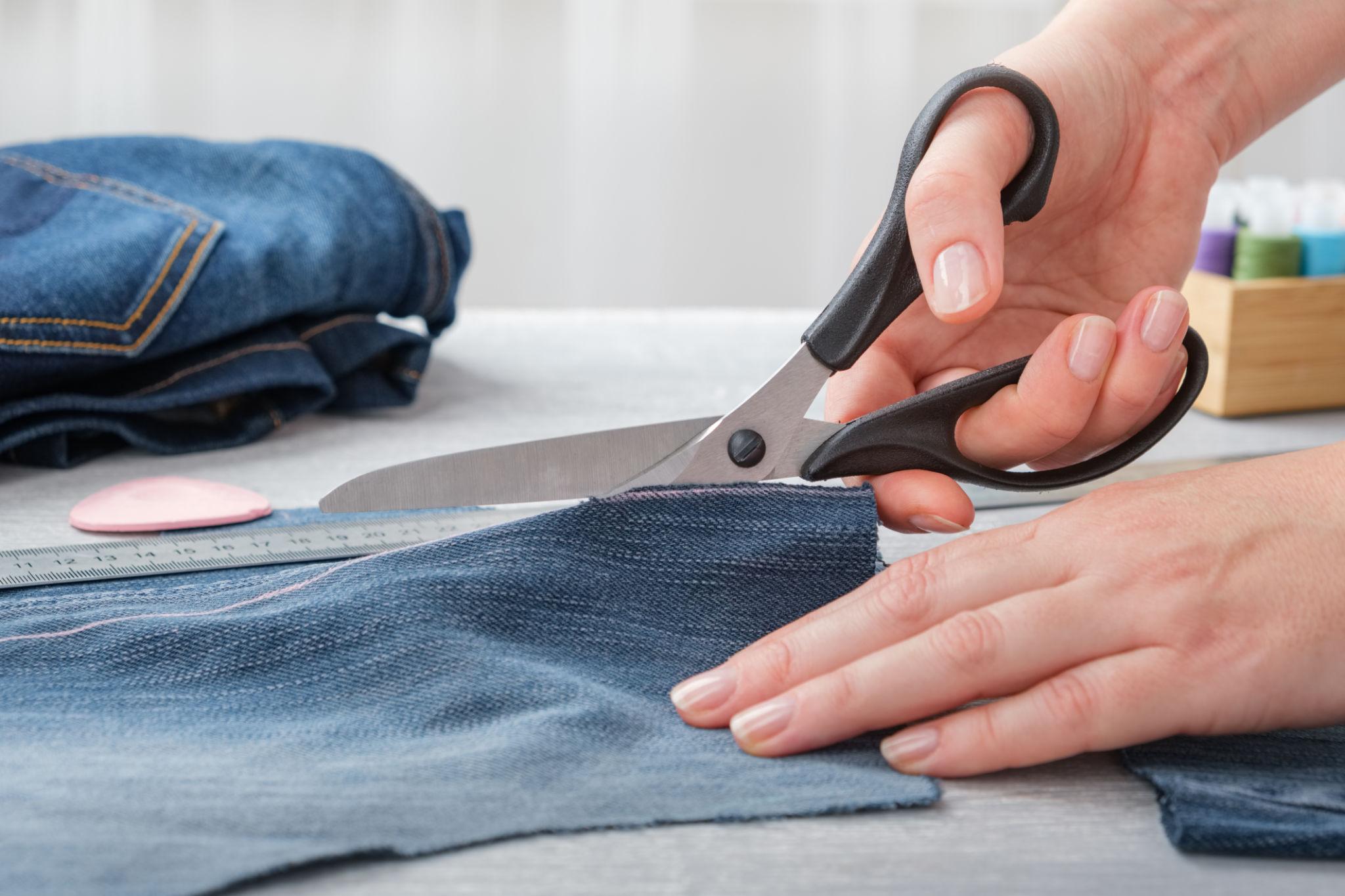
Tailor scissors and regular household scissors may look similar, but they are designed for different cutting requirements.
| Feature | Tailor Scissors | Regular Household Scissors |
|---|---|---|
| Main application | Fabric, sewing, tailoring and textiles | General household cutting |
| Blade design | Designed around fabric cutting | General-purpose cutting |
| Typical construction | May be heavier or more specialized | Usually designed for everyday versatility |
| Cutting control | Prioritizes controlled fabric cutting | Prioritizes general-purpose use |
| Long fabric cuts | Suitable for many fabric-cutting applications | Model-dependent |
| Professional tailoring | Designed for this application | Usually not the primary purpose |
A general-purpose pair may cut fabric, but that does not automatically make it a tailor shear. Fabric-cutting scissors are designed around the interaction between the blade and textile material, and cutting performance should be evaluated on the intended fabric.
Tailor Scissors vs Sewing Scissors vs Dressmaker Shears
These terms are often used interchangeably in the market, but they do not always describe exactly the same product. The terminology can vary by country, manufacturer, retailer, and product category.
| Term | Common Meaning | Typical Application |
|---|---|---|
| Tailor Scissors | Fabric scissors intended for tailoring and garment work | Tailoring, garment making, heavy or general fabric cutting |
| Tailor Shears | Often used as an alternative term for tailor scissors | Professional fabric cutting |
| Sewing Scissors | Broad category covering scissors used in sewing | Fabric, thread, pattern and sewing tasks |
| Dressmaker Shears | Fabric shears commonly associated with garment construction | Dressmaking and long fabric cuts |
| Fabric Scissors | General term for scissors designed for fabric | Home sewing, quilting, tailoring and crafts |
For buyers, the product specification matters more than the name. When sourcing tailor scissors, check blade length, material, construction, handle design, cutting performance, and intended application.
What Size Tailor Scissors Should You Choose?
Tailor scissors are available in different sizes, and the appropriate size depends on the cutting task, fabric, user's hand, and working style.
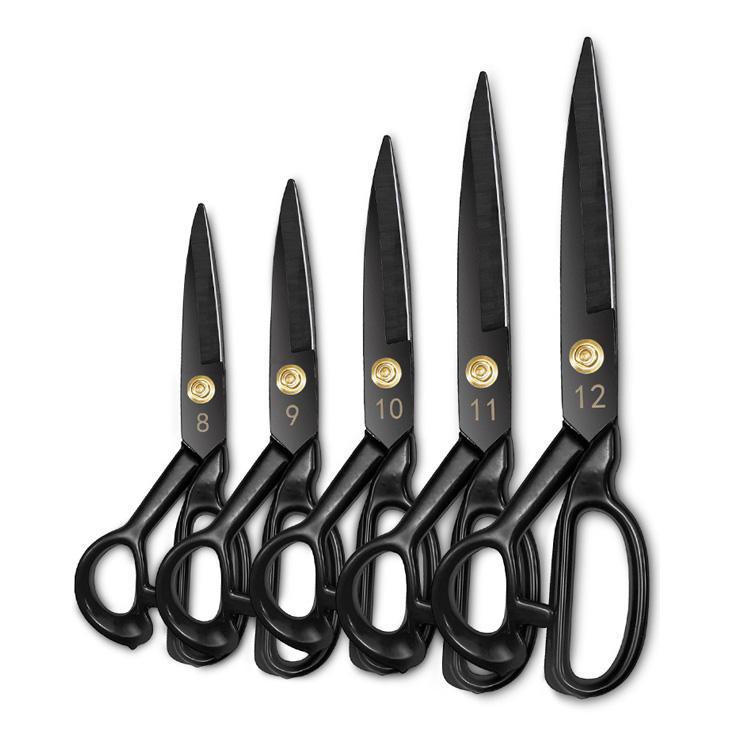
Common commercial sizes include approximately 8, 9, 10, 11, and 12 inches, although the available range varies by manufacturer.
| Size | Typical Characteristics | Potential Applications |
|---|---|---|
| 8 inch | More compact and easier to maneuver | Home sewing, DIY, general fabric cutting |
| 9 inch | Balance between control and cutting reach | General tailoring and sewing |
| 10 inch | Longer cutting movement with good versatility | Professional tailoring and heavier fabric work |
| 11 inch | Longer blades and increased cutting reach | Large fabric pieces and professional applications |
| 12 inch | Long cutting stroke and heavy-duty positioning | Large-scale fabric and industrial cutting applications |
Which Tailor Scissors Are Suitable for Different Fabrics?
Different fabrics create different cutting demands. Thickness, density, flexibility, surface texture, and the number of layers can all affect the choice of scissors.
| Fabric or Material | What to Look For | Suitable Scissor Direction |
|---|---|---|
| Cotton | Sharp edge and smooth cutting action | General fabric or tailor scissors |
| Linen | Precise cutting and stable blades | Fabric or dressmaker shears |
| Denim | Rigid construction and strong cutting performance | Heavy-duty tailor scissors |
| Canvas | Strong blades and stable construction | Heavy-duty fabric scissors |
| Wool | Controlled cutting and suitable blade length | Professional fabric shears |
| Upholstery Fabric | Durable construction for thicker materials | Heavy-duty tailor shears |
| Multiple Fabric Layers | Blade rigidity, sharpness and appropriate length | Heavy-duty professional scissors |
For demanding materials, buyers should test the actual scissors with representative fabric samples. The same nominal scissor size can perform differently depending on blade geometry, material, hardness, grinding quality, pivot construction, and overall balance.
What Makes a Good Pair of Tailor Scissors?
A good pair of tailor scissors is not defined by one specification alone. Cutting performance comes from the interaction of the blade, handle, pivot, materials, manufacturing process, and ergonomics.
- Sharp and properly ground blades. The cutting edges should provide clean and consistent fabric cutting without excessive dragging or crushing.
- Stable blade alignment. The blades should meet consistently throughout the cutting stroke. Poor alignment can affect cutting quality and user comfort.
- Suitable blade length. Longer blades can be useful for long straight cuts, while shorter scissors may offer better maneuverability for shaped pieces.
- Comfortable handle design. Tailoring can involve repetitive cutting, so handle geometry and grip comfort matter, particularly for professional users.
- Appropriate weight and balance. A heavier construction may provide stability for some heavy-duty applications, but excessive weight may be tiring during extended use.
- Reliable pivot construction. The pivot should allow smooth opening and closing while maintaining appropriate blade tension and alignment.
- Consistent manufacturing quality. For professional and B2B applications, consistency between different pairs is as important as the performance of an individual sample.
What Materials Are Used for Tailor Scissors?
Tailor scissors can be manufactured using different steels and construction methods. Common considerations include stainless steel, carbon steel, forged steel construction, and surface treatments.
Stainless Steel
Stainless steel can provide useful corrosion resistance and a clean appearance. It is widely used in scissors and other cutting tools, but the exact performance depends on the steel grade and manufacturing process.
Carbon Steel
Carbon steel can provide useful hardness and cutting performance when properly processed and maintained. Buyers should also consider corrosion protection and the intended working environment.
Forged Construction
Forged construction can increase structural strength and rigidity. This can be valuable for tailor scissors intended for repeated or heavy-duty cutting.
Surface Coatings
Some tailor scissors use surface treatments or coatings for appearance, corrosion resistance, friction characteristics, or product positioning. The coating should be evaluated together with the underlying blade material and manufacturing process.
How to Choose Tailor Scissors: A Practical Buying Guide
Whether you are a home sewer, professional tailor, garment manufacturer, retailer, or sewing-tool buyer, the selection process can be simplified by starting with the actual application.
- Define the fabric. Identify whether the scissors will mainly cut cotton, linen, denim, canvas, wool, upholstery fabric, or multiple layers.
- Define the cutting task. Decide whether you need long straight cuts, detailed pattern cutting, general tailoring, or heavy-duty fabric cutting.
- Select the appropriate size. Compare 8, 9, 10, 11, or 12-inch options based on the cutting distance and desired maneuverability.
- Check the blade construction. Ask about the blade material, thickness, grinding, hardness, and edge treatment where these specifications are relevant.
- Evaluate the handle. Check the handle shape, grip, material, balance, and whether the design is suitable for repeated use.
- Check pivot performance. Open and close the scissors repeatedly. The movement should be smooth and controlled without excessive looseness or resistance.
- Test the actual fabric. A product description cannot replace a practical cutting test. Use fabric representative of the intended application.
- For bulk purchasing, test multiple samples. One successful sample does not necessarily demonstrate production consistency. Compare several pieces whenever possible.
What Should B2B Buyers Check When Sourcing Tailor Scissors?
For wholesalers, retailers, sewing-tool brands, garment suppliers, and private-label buyers, product selection is only one part of the sourcing process. The manufacturer should also be able to provide consistent specifications and support the commercial requirements of the project.
| Area | Questions to Ask the Manufacturer |
|---|---|
| Product size | Which blade lengths and overall sizes are available? |
| Material | What exact steel or material specification is used? |
| Blade | What are the blade thickness, grinding process, hardness and edge requirements? |
| Handle | Can the handle material, shape, color or finish be customized? |
| Logo | Can the brand logo be engraved, printed or otherwise applied? |
| Packaging | Can retail boxes, cards, sleeves or other packaging be customized? |
| Sample | Can samples be provided before bulk production? |
| MOQ | What is the minimum order quantity for each specification? |
| Lead time | What is the expected production lead time after specification approval? |
| Quality control | What cutting, appearance, assembly and consistency checks are performed? |
Can Tailor Scissors Be Customized for OEM and Private Label?
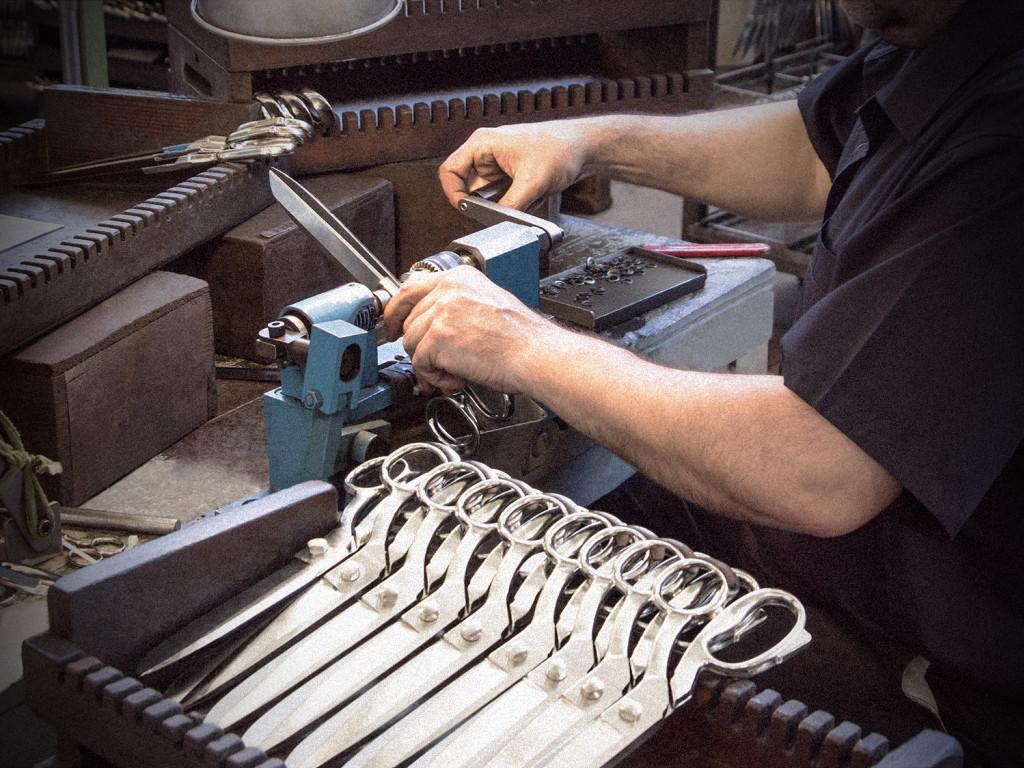
Yes. Tailor scissors can be developed or customized for different B2B markets depending on the manufacturer's capabilities.
Customization may include product size, handle design, surface finish, logo application, packaging, assortment, and other specifications. However, not every manufacturer can provide every option, so buyers should confirm the available customization range before requesting a quotation.
Common OEM Customization Options
- 8, 9, 10, 11 or 12-inch size options
- Handle color and design
- Blade finish or surface treatment
- Brand logo engraving or printing
- Retail box or custom packaging
- Individual packaging or bulk packaging
- Multi-size product assortments
- Private-label product development
For an OEM project, it is better to provide the manufacturer with a clear specification rather than simply asking for "tailor scissors." A detailed requirement makes it easier to compare quotations and reduce misunderstandings during sampling and production.
- Product: Professional tailor scissors
- Application: Garment and fabric cutting
- Size: 8 / 9 / 10 / 11 / 12 inch
- Blade: Stainless steel
- Handle: Forged metal construction
- Finish: Black or polished
- Logo: Custom brand logo
- Packaging: Custom retail box
- Target market: Professional sewing and tailoring users
- Quantity: To be confirmed by SKU
- Sample: Required before bulk production
FASAKA Tailor Scissors for Professional and B2B Applications
FASAKA offers professional tailor scissors designed for fabric cutting, tailoring, sewing, upholstery, and other textile applications. Its current tailor scissors range includes different sizes and constructions for different cutting requirements.
For example, the FASAKA SS23008 Black Titanium Forged Handle Professional Tailor Scissors is available in 8, 9, 10, 11, and 12-inch sizes. The product uses black titanium-coated stainless steel blades, a forged steel handle, and reinforced brass rivets, with applications including denim, leather, canvas, upholstery and curtain fabrics.
FASAKA also offers a full stainless steel professional tailor scissors series in 8.5, 9, and 10-inch sizes, designed for fabric, denim, leather, canvas, upholstery and multi-layer textile applications.
For B2B customers, FASAKA supports OEM/ODM customization, including options such as logo engraving, packaging customization and private-label tailor scissors projects. Buyers can discuss product specifications, target applications and packaging requirements before requesting a quotation.
FASAKA is a brand under DKS Enterprises Co., Ltd., a manufacturer and supplier based in Yangjiang, Guangdong, China, with product expertise covering hardware knives and scissors, BBQ tools, and kitchenware.
For broader product development and private-label requirements, see the FASAKA OEM/ODM service.
How Should You Maintain Tailor Scissors?
Proper maintenance can help maintain cutting performance and extend the working life of tailor scissors.
- Use fabric scissors primarily for their intended cutting application.
- Avoid using professional tailor scissors to cut paper, cardboard or other unsuitable materials unless the manufacturer specifically allows it.
- Keep the blades clean and dry after use.
- Check the pivot and blade alignment periodically.
- Store the scissors in a dry location.
- Use professional sharpening or servicing when the cutting edge becomes dull.
- Do not force the scissors through material that exceeds their intended application.
Frequently Asked Questions About Tailor Scissors
Tailor scissors are primarily used for cutting fabric and textiles in tailoring, dressmaking, sewing, garment production, quilting, upholstery and related applications.
The terms are often used similarly, but product definitions vary between manufacturers and markets. Tailor scissors are generally a specialized type of fabric-cutting scissors intended for tailoring and garment work.
Tailor scissors are designed specifically for fabric cutting, while regular household scissors are intended for general-purpose cutting. Tailor scissors may use longer blades, specialized blade geometry, stronger construction, and handles designed for repeated fabric cutting.
The appropriate size depends on the cutting task and user. Smaller sizes such as 8 or 9 inches can offer easier maneuverability, while 10, 11 or 12-inch scissors can provide greater cutting reach for long fabric cuts and certain heavy-duty applications.
A 10-inch pair can be suitable for professional tailoring, but suitability depends on the blade construction, handle design, fabric, cutting task and user preference. Size alone does not determine cutting performance.
Some heavy-duty tailor scissors are designed for denim, canvas, upholstery and multiple layers of fabric. Buyers should check the manufacturer's intended application and test the scissors on representative material before bulk purchasing.
Stainless steel can provide useful corrosion resistance and durability, but "stainless steel" alone does not determine overall scissor performance. Blade geometry, hardness, grinding, construction, pivot quality and intended application also matter.
Yes, depending on the manufacturer. Common customization options can include size, handle design, surface finish, logo application and retail packaging. Buyers should confirm the available options, MOQ, tooling requirements and lead time with the supplier.
Ask about blade material, blade length, construction, hardness, grinding, handle design, cutting applications, sample availability, MOQ, customization, packaging, quality control and production lead time.
Tailor Scissors Buying Checklist
- Define the main fabric and application.
- Choose the appropriate blade length.
- Check blade material and construction.
- Evaluate blade sharpness and alignment.
- Check handle comfort and balance.
- Inspect pivot movement and tension.
- Test the scissors on representative fabric.
- For bulk orders, evaluate multiple samples.
- Confirm OEM customization requirements in writing.
- Confirm packaging, MOQ and production lead time.
Conclusion: How Do You Choose the Right Tailor Scissors?
The right tailor scissors should match the fabric, cutting task, user and expected frequency of use. For general sewing, a manageable size and comfortable handle may be more important. For professional tailoring and heavy fabric cutting, blade stability, construction, cutting performance and durability become increasingly important.
For B2B buyers, the selection process should go one step further. Instead of comparing products only by price or size, evaluate the complete specification, sample performance, manufacturing consistency, customization capability and packaging requirements.
Whether you are sourcing tailor scissors for a sewing brand, garment supplier, retailer, distributor or private-label product line, a clear product specification can make the quotation, sampling and production process much more efficient.
Looking for Custom Tailor Scissors?
FASAKA provides professional scissors and OEM/ODM solutions for global B2B customers. Tell us your required size, material, handle design, logo, packaging and target application, and our team can help develop a suitable tailor scissors solution.
Request a Tailor Scissors Quote