
2026-07-24

The Complete Guide to Scissors: Types, Uses, Materials and Buying Tips (2026)

The Complete Guide to Scissors: Types, Uses, Materials and Buying Tips (2026)

Scissors are one of the most widely used cutting tools in everyday life, professional industries, and commercial applications. From preparing food in the kitchen to cutting fabrics, trimming plants, and handling office tasks, different scissors are designed for different purposes.

Although many scissors look similar, their blade design, material, handle structure, and manufacturing process can significantly affect cutting performance and durability.

Choosing the right scissors requires understanding the differences between various types, including kitchen scissors, sewing scissors, household scissors, office scissors, garden shears, and professional scissors.

This complete scissors guide explains the major types of scissors, their applications, common materials, key features, and how to choose the right scissors for different needs.
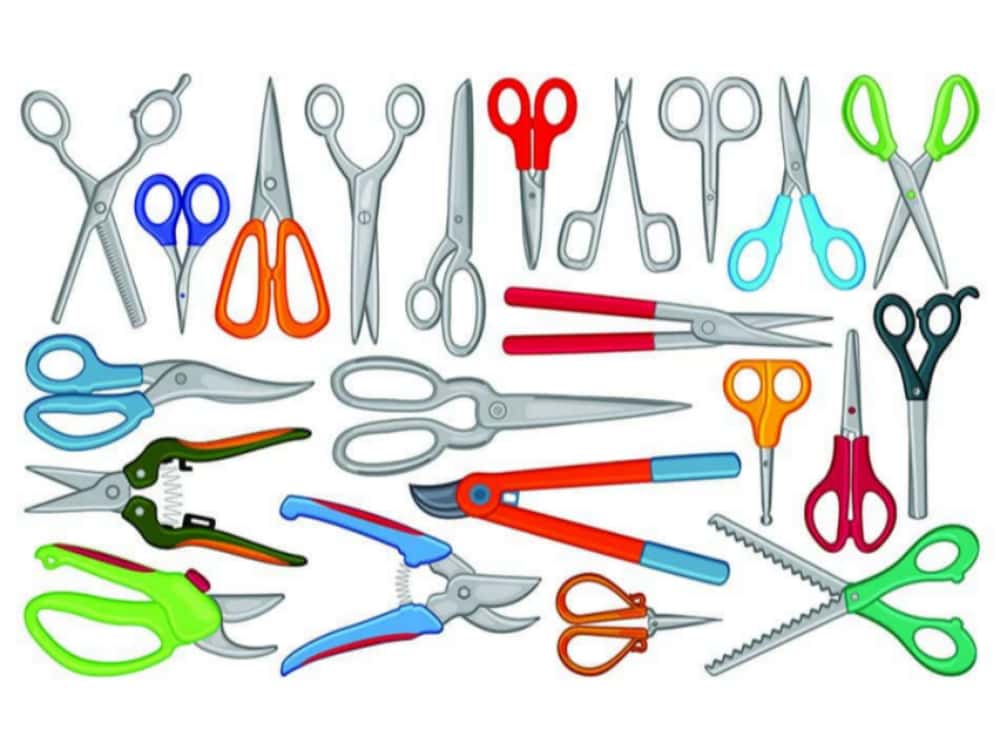
Different types of scissors including kitchen scissors sewing scissors garden shears and office scissors

Quick Overview: Different Types of Scissors

Type Main Uses
Kitchen Scissors Food preparation, herbs, meat, packaging
Sewing Scissors Fabric cutting and textile work
Household Scissors General daily cutting tasks
Office Scissors Paper, documents, crafts
Garden Shears Plants, branches, gardening
Professional Shears Industrial and specialized applications
Comparison of different types of scissors for different applications

What Are Scissors?

Scissors are hand-operated cutting tools consisting of two blades connected by a pivot point. When the handles are squeezed, the blades move against each other to create a cutting action.

The basic structure of scissors includes:

  • Blades: Cutting components that determine sharpness and performance.
  • Pivot screw: Connects two blades and controls movement.
  • Handles: Provide grip and cutting force.
  • Edge design: Determines cutting ability for different materials.

While the basic structure remains similar, scissors are highly customized depending on their intended application.


1. Kitchen Scissors

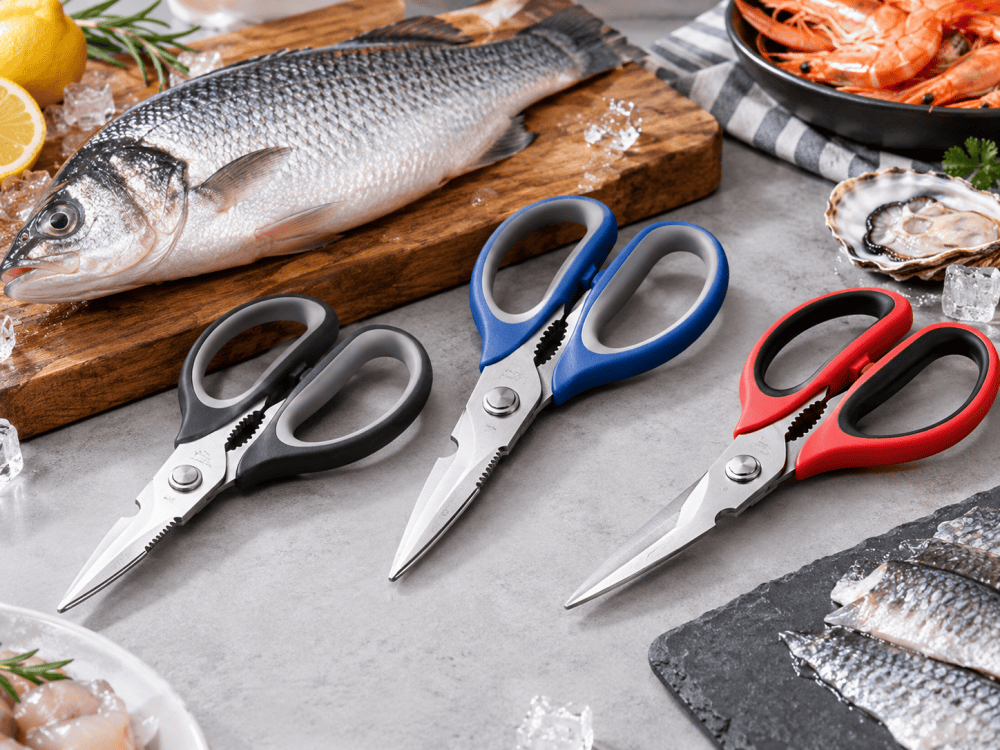
Kitchen scissors are specially designed for food preparation and kitchen tasks. Compared with regular household scissors, kitchen scissors usually feature stronger blades, ergonomic handles, and food-safe materials.

Many professional kitchen scissors are made from stainless steel because stainless steel provides corrosion resistance and easy cleaning.

FASAKA provides various kitchen scissors designed for household users, retailers, and professional kitchen applications.

Common Uses of Kitchen Scissors

  • Cutting herbs and vegetables
  • Opening food packaging
  • Cutting poultry and meat
  • Preparing seafood
  • Cutting pizza and dough
  • General kitchen preparation

Key Features of Quality Kitchen Scissors

  • Stainless steel blades
  • Sharp cutting edges
  • Comfortable ergonomic handles
  • Strong blade connection
  • Easy cleaning design
Stainless steel kitchen scissors used for food preparation

2. Sewing Scissors

Sewing scissors are designed specifically for cutting fabrics, textiles, and sewing materials. They require precise blades and smooth cutting performance to prevent fabric damage.

Professional tailors and textile workers usually choose sewing scissors with sharp edges, comfortable handles, and excellent blade alignment.

Explore FASAKA sewing scissors for textile and fabric cutting applications.

Common Uses of Sewing Scissors

  • Fabric cutting
  • Clothing production
  • Tailoring
  • Craft projects
  • Textile manufacturing
Professional sewing scissors for fabric cutting and textile work

3. Household Scissors

Household scissors are general-purpose cutting tools designed for everyday tasks at home, schools, workshops, and various indoor applications. They are usually designed with a balance between sharpness, comfort, durability, and affordability.

Unlike specialized scissors such as kitchen or sewing scissors, household scissors are versatile tools that can handle a wide range of lightweight cutting jobs.

FASAKA supplies durable household scissors suitable for retailers, distributors, and daily consumer applications.

Common Uses of Household Scissors

  • Cutting paper and cardboard
  • Opening packages and plastic bags
  • DIY crafts and home projects
  • Cutting strings and tapes
  • General household maintenance

Features of Good Household Scissors

  • Comfortable ergonomic handles
  • Sharp and durable blades
  • Smooth opening and closing action
  • Suitable weight balance
  • Long service life

For household scissors, user comfort is especially important because these tools are often used for multiple tasks rather than a single professional purpose.


4. Office Scissors

Office scissors are designed for workplace, school, and administrative environments. They are mainly used for cutting paper, documents, packaging materials, and office supplies.

Compared with heavy-duty scissors, office scissors focus more on lightweight handling, comfort, and everyday convenience.

FASAKA offers reliable office scissors designed for stationery markets, wholesalers, and office supply retailers.

Common Uses of Office Scissors

  • Cutting paper
  • Opening envelopes
  • Craft and school projects
  • Cutting labels and stickers
  • Handling packaging materials

Office Scissors Buying Considerations

When selecting office scissors, buyers should consider:

  • Blade sharpness
  • Handle comfort
  • Product weight
  • Safety design
  • Packaging presentation

For retailers and distributors, attractive packaging and consistent quality are important factors when selecting office scissors suppliers.


5. Garden Shears and Garden Scissors

Garden shears are outdoor cutting tools designed for gardening, landscaping, and plant maintenance. They are built with stronger blades and structures to cut branches, stems, and plants.

Compared with regular scissors, garden shears require higher strength, better durability, and stronger cutting power.

FASAKA provides professional garden scissors for gardening markets and outdoor tool applications.

Common Uses of Garden Scissors

  • Trimming flowers
  • Cutting branches
  • Maintaining plants
  • Harvesting vegetables and herbs
  • Garden landscaping

Important Features of Garden Shears

  • Strong cutting blades
  • High-strength steel construction
  • Comfortable non-slip handles
  • Rust resistance
  • Long-lasting performance

Professional garden scissors often require stronger materials and more precise manufacturing compared with ordinary household scissors.

Garden scissors and pruning shears used for plant trimming


6. Professional Shears

Professional shears are high-performance scissors designed for specialized industries where precision, durability, and cutting efficiency are critical.

They are commonly used in:

  • Textile manufacturing
  • Hairdressing
  • Industrial production
  • Professional kitchens
  • Gardening and agriculture

Characteristics of Professional Shears

  • High-quality steel materials
  • Precision blade grinding
  • Excellent cutting accuracy
  • Ergonomic professional handles
  • Designed for frequent use

Professional users often require scissors that maintain sharpness after thousands of cutting operations, making manufacturing quality a key factor.


Different Scissors Materials Explained

The material of scissors blades directly affects sharpness, durability, corrosion resistance, and overall performance.

Different applications require different materials. For example, kitchen scissors need corrosion resistance, while industrial scissors require maximum strength.

1. Stainless Steel Scissors

Stainless steel is the most commonly used material for modern scissors because it offers a good balance of strength, corrosion resistance, and cost efficiency.

Advantages:

  • Rust resistant
  • Easy maintenance
  • Suitable for kitchen and household use
  • Good durability

2. Carbon Steel Scissors

Carbon steel provides excellent hardness and sharpness retention, making it suitable for professional cutting applications.

Advantages:

  • Extremely sharp cutting edge
  • High strength
  • Excellent cutting performance

However, carbon steel requires more maintenance because it has lower corrosion resistance compared with stainless steel.


3. Titanium Coated Scissors

Titanium coated scissors are scissors with a titanium coating applied to the blade surface. The coating improves blade hardness, wear resistance, and overall cutting performance.

Compared with traditional stainless steel scissors, titanium coated scissors usually provide longer-lasting sharpness and smoother cutting performance, making them popular for household, office, craft, and professional applications.

Advantages of Titanium Coated Scissors

  • Higher blade hardness
  • Better wear resistance
  • Longer edge retention
  • Smooth cutting performance
  • Attractive premium appearance

Titanium coated scissors are often selected by brands looking for upgraded product lines with better durability and premium market positioning.


4. High Carbon Steel Scissors

High carbon steel scissors are manufactured using steel with higher carbon content, providing excellent hardness and cutting strength.

They are commonly used in professional applications where sharpness and cutting precision are critical.

Advantages of High Carbon Steel Scissors

  • Excellent sharpness
  • Strong cutting ability
  • Good edge retention
  • Suitable for professional use

However, high carbon steel requires proper maintenance because it is more sensitive to moisture and corrosion compared with stainless steel.


Scissors Blade Types Explained

Besides materials, blade design is another important factor affecting scissors performance. Different blade structures are developed for different cutting applications.

1. Straight Blade Scissors

Straight blade scissors feature smooth cutting edges that create clean and precise cuts.

They are commonly used for:

  • Fabric cutting
  • Paper cutting
  • Kitchen preparation
  • General household tasks

Straight blades provide excellent accuracy and are preferred when a clean cutting surface is required.

2. Serrated Blade Scissors

Serrated blade scissors feature small teeth along the blade edge. These teeth help grip materials and prevent slipping during cutting.

They are suitable for:

  • Thick materials
  • Food preparation
  • Heavy-duty cutting
  • Materials that move easily

3. Micro Serrated Blade Scissors

Micro serrated blades combine the advantages of straight and serrated edges. The fine teeth provide stronger grip while maintaining cutting precision.

They are commonly used in professional kitchen scissors and multipurpose scissors.


How to Choose the Right Scissors?

Selecting the right scissors depends on the intended application, cutting materials, frequency of use, and required durability.

1. Identify the Main Application

Application Recommended Scissors
Food preparation Kitchen scissors
Fabric cutting Sewing scissors
Daily home use Household scissors
Office work Office scissors
Gardening Garden scissors

2. Choose the Right Blade Material

For most consumer scissors, stainless steel provides the best balance between performance, durability, and price.

For professional applications requiring maximum sharpness, high carbon steel or titanium coated blades may be more suitable.

3. Consider Handle Design

Ergonomic handles improve comfort and reduce hand fatigue, especially when scissors are used frequently.

For professional and commercial markets, handle design can significantly influence product competitiveness.


Scissors Manufacturing Process

Professional scissors manufacturing involves multiple production steps to ensure cutting performance, durability, and consistency.

1. Material Selection

Manufacturers select suitable steel materials based on product requirements, such as stainless steel, carbon steel, or coated steel.

2. Blade Forming

Steel materials are processed into blade shapes through stamping, forging, or precision forming methods.

3. Grinding and Sharpening

Blade edges are carefully ground and sharpened to achieve the required cutting performance.

4. Assembly and Quality Inspection

Blades, screws, and handles are assembled before final inspection, including sharpness testing, opening resistance testing, and appearance checks.


FASAKA: Professional Scissors Manufacturer

As an experienced scissors manufacturer, FASAKA provides customized scissors solutions for global wholesalers, retailers, and brands.

With professional manufacturing capabilities, strict quality control, and flexible customization options, FASAKA supports customers from product development to mass production.

Explore our complete scissors categories:

Learn more about our manufacturing capabilities:

FASAKA Scissors Manufacturer

Looking for a Reliable Scissors Supplier?

FASAKA provides OEM and ODM scissors solutions for global customers.

Contact FASAKA


Frequently Asked Questions About Scissors

What are the main types of scissors?

The main types include kitchen scissors, sewing scissors, household scissors, office scissors, garden scissors, and professional shears.

What material is best for scissors?

Stainless steel is the most popular choice because it offers good sharpness, durability, and corrosion resistance.

Are kitchen scissors different from regular scissors?

Yes. Kitchen scissors are designed for food preparation and usually feature stronger blades and food-safe materials.

What scissors are best for fabric?

Sewing scissors with sharp straight blades are recommended because they provide clean and accurate fabric cuts.

Can scissors be customized for brands?

Yes. Professional scissors manufacturers can customize blade design, handles, packaging, logos, and product specifications.


Final Thoughts

Scissors are essential cutting tools used across kitchens, homes, offices, gardens, and professional industries.

Choosing the right scissors requires understanding the differences in application, material, blade design, and manufacturing quality.

For businesses looking for reliable scissors supply, working with an experienced scissors manufacturer ensures consistent quality, customization options, and long-term cooperation.

Build Your Scissors Product Line with FASAKA

Professional scissors manufacturing solutions for wholesalers, retailers, and global brands.

Request OEM Solution