





What Size Paring Knife Should You Choose?
A paring knife is one of the most useful small knives in a kitchen. It is designed for detailed tasks such as peeling fruit, trimming vegetables, removing seeds, and making precise cuts that are difficult to handle with a larger chef's knife.
But what size paring knife should you choose? Common blade lengths range from approximately 2.5 to 4 inches, with 3-inch and 3.5-inch models being popular options. The right size depends on the ingredients you prepare, the level of cutting control you need, and how you prefer to handle the knife.
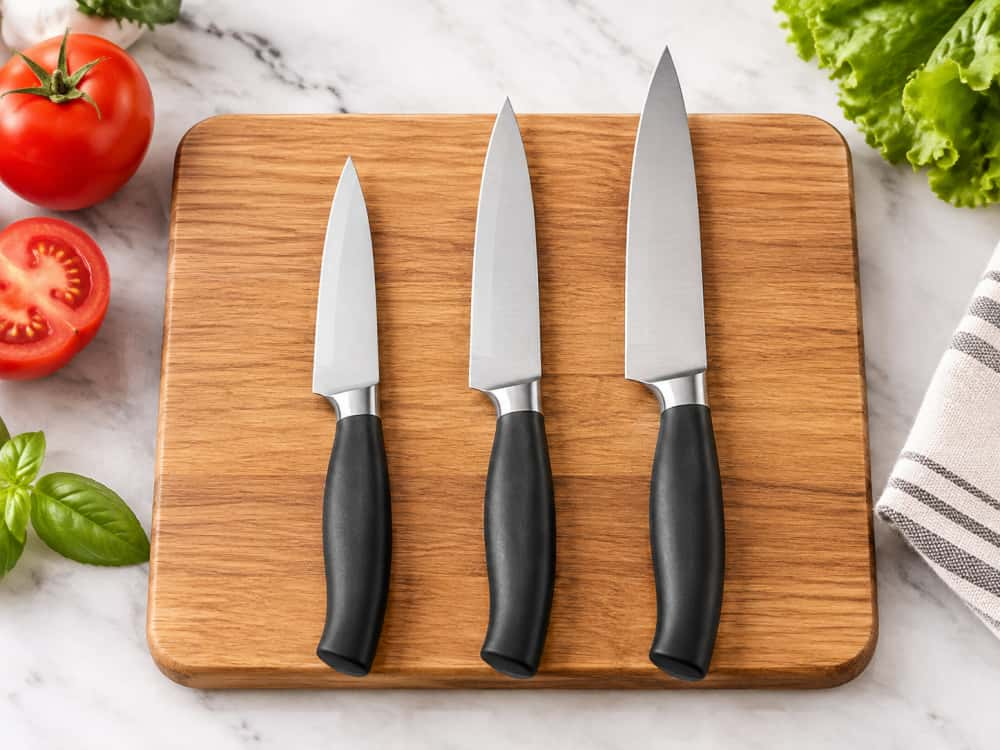
For general kitchen use, a paring knife with a blade around 3 to 3.5 inches (7.6 to 8.9 cm) is a practical starting point. A 3-inch blade offers precise control for small ingredients and detailed work, while a 3.5-inch blade provides a little more cutting length for everyday preparation. Choose a 4-inch model when you regularly work with larger fruits or vegetables and prefer a longer cutting edge.
1. What Is the Standard Size of a Paring Knife?
Most paring knives have blade lengths of approximately 2.5 to 4 inches (6.4 to 10.2 cm). Some designs may fall outside this range, but these sizes cover many common kitchen applications.
When comparing paring knives, pay attention to blade length rather than the overall knife length. Overall length includes both the blade and handle, so two knives with similar total lengths may have different cutting areas.
| Blade Length | Metric Length | Typical Applications | Handling Characteristics |
|---|---|---|---|
| 2.5 inches | 6.4 cm | Small fruit, trimming, detailed peeling | Compact and precise |
| 3 inches | 7.6 cm | Peeling apples, removing seeds, small vegetables | Easy to control for detailed tasks |
| 3.5 inches | 8.9 cm | Everyday peeling, trimming, slicing small ingredients | A balanced option for general use |
| 4 inches | 10.2 cm | Larger fruit, small produce, more extended cutting tasks | Offers additional cutting length |
These are common size categories rather than strict industry standards. The actual suitability of a knife also depends on blade shape, handle design, blade height, and overall balance.
2. 3-Inch vs. 3.5-Inch vs. 4-Inch Paring Knives
The difference between these sizes may look small, but even half an inch can affect how a knife feels during detailed preparation. Here is how the three common options compare.
3-Inch Paring Knife: Best for Precision and Small Ingredients
A 3-inch paring knife is a good choice for users who prioritize control and precision. Its compact blade is suitable for small ingredients and tasks that require careful handling.
Common uses include:
- Peeling small fruits such as kiwis and strawberries.
- Removing seeds and cores from small produce.
- Trimming vegetables and removing blemishes.
- Making small decorative cuts and garnishes.
Because the blade is relatively short, it can feel manageable during detailed work. However, it may require more cutting strokes when working with larger ingredients.
3.5-Inch Paring Knife: A Versatile Everyday Option
A 3.5-inch paring knife offers a balance between compact handling and usable cutting length. It is suitable for many everyday preparation tasks without feeling as small as a 3-inch model.
Common uses include:
- Peeling apples, pears, and other medium-sized fruit.
- Trimming vegetables and removing unwanted sections.
- Slicing smaller ingredients.
- Preparing fruit and vegetables for salads or cooking.
For buyers who want one general-purpose paring knife size for a household kitchen or a basic kitchen knife set, 3.5 inches is a practical option to consider.
4-Inch Paring Knife: More Cutting Length for Larger Ingredients
A 4-inch paring knife provides a longer cutting edge while retaining the compact design of a small kitchen knife. It can be useful when preparing larger fruit and vegetables or when a little more blade length is preferred.
Common uses include:
- Peeling and trimming larger fruit.
- Cutting small vegetables into portions.
- Preparing ingredients that need a longer cutting stroke.
- General kitchen preparation when a larger paring knife feels more comfortable.
However, a longer blade is not automatically better. For very small ingredients or intricate cutting, some users may find a shorter blade easier to control.
3. Which Paring Knife Size Is Best for Different Kitchen Tasks?
The best paring knife size depends on what you prepare most often. Rather than choosing a blade based only on its length, consider the size of your ingredients and the type of cutting movement involved.
| Kitchen Task | Suggested Blade Length | Why It Works |
|---|---|---|
| Peeling small fruit | 2.5–3 inches | A compact blade is convenient for detailed work. |
| Peeling apples and pears | 3–3.5 inches | Provides a useful balance of control and cutting length. |
| Removing seeds and blemishes | 2.5–3 inches | Shorter blades can be easier to maneuver around small areas. |
| Trimming vegetables | 3–3.5 inches | Suitable for many everyday trimming tasks. |
| Preparing larger fruit | 3.5–4 inches | Offers more cutting length for larger ingredients. |
| Decorative cutting and garnishing | 2.5–3 inches | Supports short, controlled cutting movements. |
These recommendations are general guidelines. Blade shape and handle ergonomics can influence performance just as much as blade length.
4. How to Choose the Right Paring Knife Size
If you are unsure which paring knife size to buy, consider the following factors before making a decision.
Consider the Ingredients You Prepare Most Often
If your daily preparation involves small fruits, berries, and detailed trimming, a 3-inch blade may be sufficient. If you frequently peel apples, pears, or prepare a wider variety of produce, a 3.5-inch or 4-inch blade may offer more flexibility.
Think About Cutting Control
A shorter blade can be easier to maneuver for certain detailed tasks, while a longer blade provides more cutting edge. The best choice is the one that allows you to make controlled cuts without unnecessary hand movement.
Check the Handle Design
Blade length is only one part of knife comfort. Handle thickness, shape, material, and grip texture all affect how a paring knife feels in the hand.
A well-designed handle should provide a secure grip and comfortable control during repeated preparation tasks. Buyers should evaluate the complete knife rather than choosing by blade length alone.
Consider the Knife's Overall Balance
The relationship between blade weight and handle weight affects how a knife feels during use. A knife that feels too heavy at the blade or uncomfortable in the handle may be less suitable for detailed work, even if its blade length is appropriate.
5. Is a 3-Inch or 4-Inch Paring Knife Better?
Neither size is universally better. A 3-inch paring knife is generally more suitable for compact, detailed tasks, while a 4-inch paring knife offers additional cutting length for larger ingredients and broader preparation work.
Choose a 3-inch model if:
- You frequently peel small fruit and vegetables.
- You prioritize detailed cutting and maneuverability.
- You prefer a compact knife for close-up preparation.
Choose a 4-inch model if:
- You often prepare medium-sized or larger produce.
- You prefer a longer cutting edge.
- You want a small knife that can handle a wider range of preparation tasks.
If you are buying your first paring knife and want a versatile option, a blade around 3.5 inches is a sensible starting point.
6. Paring Knife Size for Kitchen Knife Sets and Wholesale Buyers
For kitchenware brands, importers, wholesalers, and retailers, selecting the right paring knife size is also a product assortment decision. Different markets and customer groups may prefer different blade lengths, so offering more than one size can help cover a wider range of applications.
When sourcing paring knives for a kitchen knife set or private-label product line, consider the following factors:
- Target market: Understand the preferences of your intended customers and the typical kitchen tasks they perform.
- Product assortment: Consider whether a 3-inch, 3.5-inch, or 4-inch model best complements the other knives in your collection.
- Blade material: Evaluate the selected steel, corrosion resistance, edge retention, and maintenance requirements based on the intended product positioning.
- Handle material: Compare available handle materials, shapes, and finishes for comfort, appearance, and target price positioning.
- Product consistency: Confirm blade dimensions, overall length, weight, and other specifications before production.
- Packaging: Consider whether the paring knife will be sold individually or included in a kitchen knife set.
For wholesale projects, it is useful to evaluate the paring knife as part of the complete product range rather than treating blade length as an isolated specification.
Explore FASAKA kitchen knives to learn more about available kitchen knife product categories.
7. Frequently Asked Questions About Paring Knife Sizes
What is the most common size for a paring knife?
Paring knives commonly have blade lengths of approximately 3 to 3.5 inches (7.6 to 8.9 cm). These sizes provide a practical balance between precision and everyday usability.
Is a 3-inch paring knife too small?
No. A 3-inch paring knife is suitable for peeling small fruit, trimming vegetables, removing seeds, and other detailed preparation tasks. It may simply require more cutting strokes for larger ingredients.
Is a 4-inch paring knife too big?
Not necessarily. A 4-inch paring knife is still a compact kitchen knife and can be useful for larger fruit and vegetables. However, users who prioritize very detailed work may prefer a shorter blade.
What size paring knife is best for peeling apples?
A 3-inch or 3.5-inch paring knife is a practical choice for peeling apples. A 3-inch blade offers compact handling, while a 3.5-inch blade provides additional cutting length.
What is the difference between blade length and overall knife length?
Blade length measures only the cutting blade, from the blade tip to the point where the blade meets the handle. Overall length measures the entire knife, including both blade and handle. Always check which measurement a product specification refers to.
Should I buy a paring knife separately or as part of a knife set?
If you need a specific blade length or handle design, buying individually may offer more flexibility. A kitchen knife set can be a practical option when you want several knife types with a consistent design and matching appearance.
Can a paring knife replace a utility knife?
Not completely. A paring knife is designed for small, precise tasks, while a utility knife generally has a longer blade for cutting and slicing a wider range of medium-sized ingredients. They serve different roles in the kitchen.
8. Choose the Right Paring Knife for Your Product Range
Choosing the right paring knife size involves more than selecting a number. Blade length, blade shape, handle design, material, and product positioning all influence the final product.
For kitchenware brands and wholesale buyers, a well-planned paring knife assortment can help address different customer preferences and complement a broader kitchen knife collection.
Looking for a Kitchen Knife Manufacturing Partner?
FASAKA, a brand under DKS Enterprises Co., Ltd., supports B2B customers exploring kitchen knives and related product sourcing projects. Contact our team to discuss product specifications, OEM/ODM requirements, and your target market.
Get a Free Quote

