



What Is the Best Steel for a Paring Knife?
What Is the Best Steel for a Paring Knife?
A paring knife may be small, but its blade steel has a major impact on cutting performance, edge retention, corrosion resistance, and maintenance. Whether you use it for peeling fruit, trimming vegetables, or making precise cuts, choosing the right steel can make a noticeable difference.
Why Does Steel Matter for a Paring Knife?
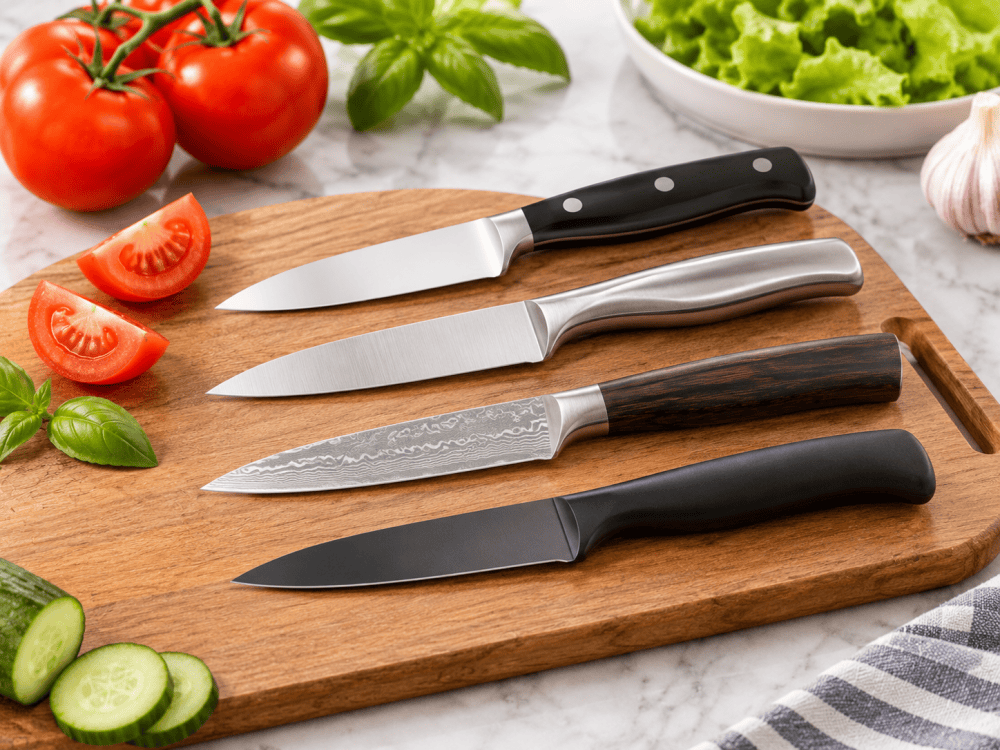
A paring knife is designed for detailed cutting tasks that require control and precision. Its short blade is commonly used for peeling apples, removing blemishes, trimming vegetables, deveining shrimp, and making small decorative cuts.
Because these tasks often involve direct contact with fruits and vegetables, the blade needs to maintain a useful cutting edge while resisting moisture, food acids, and regular washing.
Blade steel affects several important aspects of performance:
- Edge retention: How long the blade stays sharp during use.
- Corrosion resistance: How well the steel resists rust and staining.
- Sharpenability: How easily the blade can be restored when dull.
- Toughness: How well the blade resists chipping or cracking.
- Hardness: How resistant the steel is to deformation and wear.
No single steel excels in every category. A steel with excellent edge retention may be more difficult to sharpen, while a highly corrosion-resistant steel may require a different balance of hardness and toughness.
Key Properties to Look for in Paring Knife Steel
1. Hardness
Hardness is commonly measured using the Rockwell C scale, written as HRC. It indicates how resistant a material is to indentation. In knife blades, hardness influences edge stability and wear resistance, but it does not tell the whole story.
A harder blade may hold its edge well, but if the steel and heat treatment are not properly balanced, it may become more prone to chipping. A softer blade may be less likely to chip under certain conditions but can lose its sharp edge more quickly.
2. Edge Retention
Edge retention describes how well a blade maintains its cutting ability over time. It is influenced by steel composition, hardness, carbide structure, heat treatment, and edge geometry.
For a paring knife used frequently throughout the day, good edge retention can reduce how often the blade needs sharpening.
3. Corrosion Resistance
Paring knives regularly come into contact with water, fruit juices, vegetables, and acidic ingredients. Stainless steel generally offers better resistance to rust and staining than ordinary carbon steel.
However, stainless steel is not completely rust-proof. Prolonged exposure to moisture, salt, or acidic food can still cause staining or corrosion if the blade is not cleaned and dried properly.
4. Toughness
Toughness is the ability of steel to resist cracking and chipping under impact or stress. A paring knife is intended for small, controlled cutting tasks rather than heavy chopping, but toughness remains important for everyday durability.
5. Ease of Sharpening
Every knife eventually needs maintenance. Some steels are easier to sharpen with common sharpening stones, while highly wear-resistant steels may take more time and suitable abrasives.
For home users and commercial kitchens, a steel that can be sharpened without specialized equipment may be more convenient.
Is Stainless Steel Good for a Paring Knife?
Yes. Stainless steel is one of the most practical choices for everyday paring knives. It contains chromium, which helps form a protective surface layer that improves resistance to rust and corrosion.
This makes stainless steel suitable for kitchens where knives are frequently exposed to water, fruit juices, and other ingredients.
Advantages of Stainless Steel
- Good resistance to rust and staining.
- Suitable for frequent kitchen use.
- Generally easier to maintain than ordinary carbon steel.
- Available in a wide range of grades and price points.
- A practical option for household and commercial kitchen knives.
Potential Limitations
- Not all stainless steels offer the same edge retention.
- Some highly wear-resistant grades can take longer to sharpen.
- Corrosion resistance does not eliminate the need for proper cleaning and drying.
For most consumers looking for a low-maintenance paring knife, a properly heat-treated stainless steel blade offers a useful balance of performance, durability, and convenience.
Is Carbon Steel a Good Choice for a Paring Knife?
Carbon steel is valued by many knife enthusiasts for its sharpening characteristics and potential to achieve a very keen edge. Depending on the grade and heat treatment, it can deliver excellent cutting performance.
However, ordinary carbon steel generally contains less chromium than stainless steel and is more vulnerable to rust and discoloration.
Advantages of Carbon Steel
- Can take a very sharp edge.
- Many common carbon steel grades are straightforward to sharpen.
- Can provide strong cutting performance when properly heat-treated.
- Offers an option for users who are comfortable with regular blade maintenance.
Potential Limitations
- More prone to rust if left wet.
- May discolor when exposed to acidic foods.
- Requires prompt cleaning and drying.
- May not be ideal for users who prefer minimal maintenance.
Carbon steel can be a good choice for experienced users who value sharpening performance and are willing to care for the blade. For busy kitchens and general household use, stainless steel is often more convenient.
Stainless Steel vs Carbon Steel: Which Is Better?
The main difference is the balance between corrosion resistance and maintenance. Stainless steel is generally more forgiving in everyday kitchen environments, while carbon steel appeals to users who prioritize sharpening characteristics and are comfortable with additional care.
| Feature | Stainless Steel | Carbon Steel |
|---|---|---|
| Rust resistance | Generally high | Generally low |
| Edge retention | Depends on the grade and heat treatment | Depends on the grade and heat treatment |
| Sharpness potential | Can achieve a very sharp edge | Can achieve a very sharp edge |
| Sharpening | Varies by steel grade | Many common grades are relatively easy to sharpen |
| Maintenance | Relatively low | Requires more frequent care |
| Best suited for | Everyday kitchens and users seeking convenience | Users comfortable with regular maintenance |
Common Steel Types Used in Kitchen Knives
Different stainless and carbon steel grades are used in kitchen knives. Their properties vary according to chemical composition, heat treatment, and manufacturing quality. The following examples are useful starting points when comparing knife materials.
1. 3Cr13 Stainless Steel
3Cr13 is a commonly used martensitic stainless steel in value-oriented cutting tools and kitchen knives. It offers corrosion resistance and can be processed into practical everyday blades.
Its performance depends on heat treatment and blade design. It is often considered for entry-level and cost-conscious kitchen knife ranges.
2. 5Cr15MoV Stainless Steel
5Cr15MoV is a stainless steel grade used in some kitchen and outdoor knives. Its composition includes chromium and other alloying elements intended to balance corrosion resistance, hardness, and wear performance.
It can be a practical option for mid-range kitchen knives, although actual performance varies with the manufacturer's heat treatment and finishing process.
3. 7Cr17MoV Stainless Steel
7Cr17MoV is another stainless steel used in some consumer knife products. It is designed to provide a combination of corrosion resistance, hardness, and wear performance.
Buyers should compare the actual blade performance and manufacturing consistency rather than choosing a knife based only on its steel name.
4. VG-10 Stainless Steel
VG-10 is a higher-performance stainless steel commonly associated with premium kitchen knives. It is valued for its ability to combine corrosion resistance with good edge performance when properly heat-treated.
It is often considered by buyers seeking a premium knife specification, but the finished knife's performance still depends on blade geometry and production quality.
5. 1095 Carbon Steel
1095 is a high-carbon steel used in various cutting tools and knives. It can be sharpened to a keen edge and is appreciated by users who prefer traditional carbon steel.
Its lower corrosion resistance means that it needs careful cleaning and drying, especially after contact with acidic ingredients.
| Steel Grade | Steel Category | General Characteristics | Potential Positioning |
|---|---|---|---|
| 3Cr13 | Stainless steel | Practical corrosion resistance and cost-conscious production | Entry-level kitchen knives |
| 5Cr15MoV | Stainless steel | Balanced properties depending on heat treatment | Everyday and mid-range knives |
| 7Cr17MoV | Stainless steel | Corrosion resistance with potential for good wear performance | Consumer kitchen knives |
| VG-10 | Stainless steel | Higher-performance stainless knife steel | Premium kitchen knives |
| 1095 | Carbon steel | Good sharpening response; requires corrosion care | Traditional carbon steel knives |
This table is a general overview, not a fixed ranking. Steel grades should be evaluated using verified material specifications, hardness testing, heat-treatment consistency, and finished-blade performance.
How to Choose the Best Steel for Your Paring Knife
Before choosing a paring knife, consider how it will be used and how much maintenance the user is willing to perform.
1. Consider Your Daily Kitchen Tasks
For peeling fruit, trimming vegetables, and general food preparation, a stainless steel paring knife is usually a convenient option. If the user enjoys sharpening knives and prefers carbon steel, a carbon steel blade may also be suitable.
2. Think About Maintenance
A knife used in a busy kitchen may be washed frequently and handled by different people. Stainless steel is generally better suited to users who want easier day-to-day care. Carbon steel requires more attention to cleaning and drying.
3. Check the Heat Treatment
A well-selected steel grade can still perform poorly if it is not heat-treated correctly. Consistent heat treatment helps the blade achieve its intended hardness and balance of toughness and wear resistance.
4. Evaluate Blade Design
Steel is only one part of cutting performance. Blade thickness, edge angle, grind, and overall geometry also influence how easily a paring knife moves through food.
5. Match Quality with Budget
A premium steel grade is not automatically the best choice for every buyer. For household and wholesale ranges, the right balance of material cost, durability, maintenance, and target-market expectations is often more important than choosing the most expensive steel.
What Should Wholesale Buyers Consider When Sourcing Paring Knives?
For importers, distributors, retailers, and private-label brands, selecting paring knife steel is also a product-positioning decision. The material should match the target market, retail price, expected usage, and maintenance preferences.
Material Consistency
Ask the manufacturer to confirm the specified steel grade and provide relevant material or quality documentation where applicable. Consistency between production batches is important for maintaining product quality.
Hardness and Heat Treatment
Discuss the target hardness range and how it is controlled during production. Buyers should evaluate finished samples and request appropriate test information rather than relying only on a steel grade printed in a product specification.
Blade Finish and Cutting Performance
Check blade thickness, edge finishing, sharpness, and overall workmanship. These factors influence the user's experience and should be assessed alongside the steel specification.
Target Market and Price Positioning
A value-oriented retail range may prioritize practical stainless steel and easy maintenance. A premium range may call for a higher-performance steel specification, refined finishing, and more detailed product documentation.
OEM and Private Label Requirements
For private-label projects, buyers may also need to discuss blade design, handle materials, logo placement, packaging, and product specifications. A clear specification helps align the finished product with the brand's quality and market requirements.
FASAKA, a brand under DKS Enterprises Co., Ltd., supplies kitchen knives and other cutting tools for global B2B customers. Explore our kitchen knife range or learn more about our OEM and ODM services.
Frequently Asked Questions
1. What is the best steel for a paring knife?
For most everyday users, stainless steel is a practical choice because it offers good corrosion resistance and relatively easy maintenance. The ideal grade depends on the desired balance of sharpness, edge retention, toughness, and price.
2. Is stainless steel better than carbon steel for paring knives?
Stainless steel is generally more convenient for everyday kitchen use because it resists rust better. Carbon steel can be sharpened to a keen edge and is suitable for users who are comfortable with more frequent maintenance.
3. Is 3Cr13 stainless steel good for a paring knife?
3Cr13 can be a practical material for cost-conscious kitchen knives. Its actual performance depends on heat treatment, blade geometry, and manufacturing quality.
4. Does harder steel always make a better paring knife?
No. Hardness is only one performance factor. A good paring knife needs a suitable balance of hardness, toughness, edge retention, corrosion resistance, and sharpening convenience.
5. What HRC is suitable for a paring knife?
There is no single ideal HRC value for every paring knife. The appropriate hardness depends on the steel grade, heat treatment, blade geometry, and intended use. Buyers should evaluate the complete specification rather than relying on hardness alone.
6. Does stainless steel paring knife steel rust?
Stainless steel is corrosion-resistant, not completely rust-proof. Clean and dry the blade after use, and avoid leaving it in water or exposing it to corrosive substances for extended periods.
7. Is VG-10 a good steel for a paring knife?
VG-10 can be a good option for a premium paring knife because it offers a combination of corrosion resistance and edge performance. The finished knife's quality still depends on heat treatment, blade design, and manufacturing.
8. How often should a paring knife be sharpened?
Sharpening frequency depends on how often the knife is used, the cutting surface, steel type, and edge geometry. Instead of following a fixed schedule, sharpen the knife when it no longer cuts efficiently.
Looking for a Reliable Kitchen Knife Supplier?
FASAKA supports global B2B buyers with kitchen knife products and OEM/ODM customization solutions. Contact our team to discuss your product requirements and sourcing plans.
Get a Free Quote