



Types of Paring Knives: A Complete Guide to Blade Shapes
Types of Paring Knives: A Complete Guide to Blade Shapes
Not all paring knives are designed the same way. From traditional spear point blades to curved bird's beak designs, different blade shapes offer different advantages for peeling, trimming, and detailed food preparation. Learn how to identify the main types of paring knives and choose the right design for your kitchen or product range.
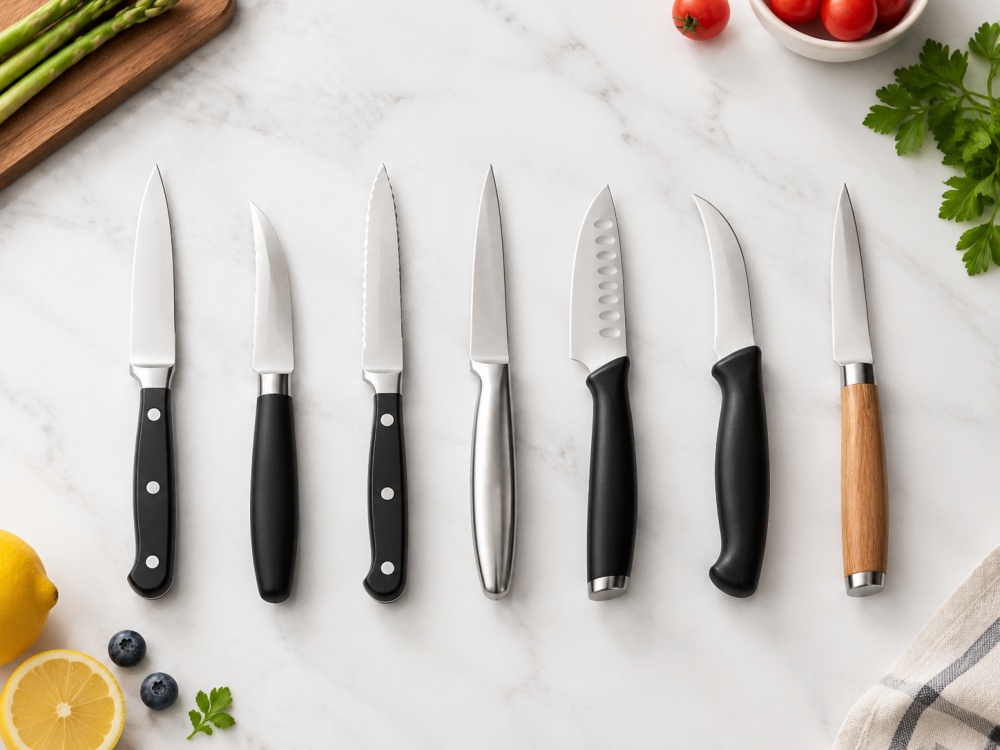
The main paring knife designs include spear point, bird's beak, and sheep's foot styles. Serrated paring knives are another useful option, distinguished by their toothed cutting edge. Each design is suited to different food preparation tasks.
What Are the Main Types of Paring Knives?
A paring knife is a small kitchen knife designed for detailed cutting and food preparation. Its compact blade offers control when working with fruits, vegetables, and other small ingredients.
Paring knives are commonly distinguished by their blade profiles and edge designs. The main styles include:
- Spear Point Paring Knife: A traditional design with a pointed tip and a relatively straight cutting edge.
- Bird's Beak Paring Knife: An inward-curved blade designed to follow rounded food surfaces.
- Sheep's Foot Paring Knife: A blade with a rounded or blunt tip and a relatively straight cutting edge.
- Serrated Paring Knife: A compact knife with a toothed cutting edge for certain delicate foods.
These designs serve different purposes. The right option depends on the ingredients being prepared, the cutting technique, and the user's preferences.
1. Spear Point Paring Knife
The spear point paring knife is one of the most common and recognizable paring knife designs. It features a pointed tip, a narrow blade, and a cutting edge that is generally straight or slightly curved.
Its balanced shape makes it suitable for a wide range of small kitchen tasks.
Key Features
- A pointed tip for precise cutting and trimming.
- A narrow blade for controlled handling.
- A relatively straight cutting edge for versatile food preparation.
- A compact design suitable for detailed work.
Common Uses
- Peeling apples, potatoes, and other small fruits or vegetables.
- Removing blemishes and unwanted spots.
- Trimming vegetables and fruits.
- Cutting small ingredients into pieces.
- Making decorative cuts and garnishes.
2. Bird's Beak Paring Knife
A bird's beak paring knife, also known as a curved paring knife or tourné knife, has a distinctive inward-curved blade. Its shape resembles the beak of a bird, which explains its name.
Unlike a traditional spear point knife, the curved blade is designed to follow the contours of rounded ingredients.
Key Features
- A noticeably curved cutting edge.
- An inward-facing blade profile.
- A compact design for controlled peeling.
- A shape suited to following curved food surfaces.
Common Uses
- Peeling round fruits and vegetables.
- Removing skins from apples and potatoes.
- Shaping vegetables into decorative forms.
- Creating tourné cuts in professional kitchens.
- Trimming curved surfaces with greater control.
3. Sheep's Foot Paring Knife
A sheep's foot paring knife has a distinctive blade profile with a relatively straight cutting edge and a rounded or blunt tip. Unlike a traditional spear point knife, it does not have a prominent sharp pointed tip.
This shape creates a different cutting experience and is often associated with controlled slicing and trimming movements.
Key Features
- A relatively straight cutting edge.
- A rounded or blunt blade tip.
- A blade profile without a prominent pointed tip.
- A shape suited to controlled slicing and trimming.
Common Uses
- Slicing small ingredients.
- Trimming vegetables.
- Making controlled cuts on a cutting board.
- Cutting foods where a pointed tip is not necessary.
Sheep's foot designs are less common in traditional paring knife collections than spear point and bird's beak styles.
4. Serrated Paring Knife
A serrated paring knife is distinguished by its toothed cutting edge rather than a completely smooth blade edge. It usually has a compact blade similar in size to other paring knives.
The serrations help the knife grip certain food surfaces during cutting.
Key Features
- A serrated or toothed cutting edge.
- A compact blade for small ingredients.
- Better engagement with some tough or slippery food surfaces.
- A design suited to foods that may be compressed by a smooth blade.
Common Uses
- Cutting small tomatoes.
- Slicing grapes and other small soft-skinned fruits.
- Cutting small citrus fruits.
- Working with foods that have a relatively firm outer skin and soft interior.
Comparing Different Types of Paring Knives
Choosing between different paring knife designs becomes easier when their main characteristics are compared side by side.
| Type | Blade Shape or Edge | Main Advantage | Typical Applications |
|---|---|---|---|
| Spear Point | Pointed tip, straight or slightly curved edge | Versatile and precise | Peeling, trimming, general preparation |
| Bird's Beak | Inward-curved blade | Follows curved surfaces | Peeling round produce, decorative cuts |
| Sheep's Foot | Rounded tip, relatively straight edge | Controlled straight cutting | Slicing and trimming |
| Serrated Paring Knife | Toothed cutting edge | Grips certain food surfaces | Small tomatoes, soft fruits, delicate skins |
Which Type of Paring Knife Is Best?
- For everyday kitchen preparation, a spear point paring knife is a versatile choice.
- For peeling rounded fruits and vegetables, a bird's beak paring knife is worth considering.
- For controlled cutting without a prominent pointed tip, consider a sheep's foot-style blade.
- For cutting small foods with delicate interiors and tougher skins, a serrated paring knife may be more suitable.
There is no single blade shape that is best for every kitchen. The right choice depends on the user's preparation habits and intended application.
Blade Shape vs. Blade Edge: What's the Difference?
When comparing paring knives, it is important to distinguish between blade shape and blade edge.
Blade shape refers to the overall profile of the blade, including its tip, spine, and cutting-edge curve. Spear point, bird's beak, and sheep's foot are examples of blade shapes.
Blade edge refers to the cutting surface itself. Common options include:
- Straight Edge: A smooth, continuous cutting edge suitable for peeling, trimming, and precise cuts.
- Serrated Edge: A toothed cutting edge that can grip certain food surfaces and cut through delicate skins.
A knife's blade shape and edge style are separate design characteristics. For example, a paring knife may have a spear point blade with a straight edge or a compact blade with a serrated edge.
How to Choose the Right Paring Knife
When selecting a paring knife, consider more than just its blade shape. Blade length, material, handle design, and intended application all affect the knife's performance and user experience.
1. Consider the Intended Application
Start by identifying the main tasks the knife will handle.
- For general food preparation, consider a spear point design.
- For peeling rounded produce, consider a bird's beak design.
- For controlled straight cuts, consider a sheep's foot-style profile.
- For small soft fruits with tougher skins, consider a serrated edge.
2. Check the Blade Material
Blade material affects corrosion resistance, edge retention, sharpening requirements, and maintenance.
Stainless steel is a common choice for kitchen knives because it offers good corrosion resistance and is practical for everyday kitchen environments.
When comparing stainless steel knives, buyers should also consider the specific steel grade, heat treatment, blade thickness, and overall manufacturing quality. The steel name alone does not determine the knife's complete performance.
3. Choose a Suitable Blade Length
Paring knives generally have short blades, but available lengths vary by design and manufacturer. A shorter blade may offer more control for detailed work, while a slightly longer blade can provide additional cutting length for general preparation.
The most suitable length depends on the user's hand size, cutting technique, and intended application.
4. Evaluate the Handle Design
A comfortable handle is essential for precise cutting and repeated kitchen use. Consider the following factors:
- Grip comfort and ergonomic shape.
- Handle material and surface finish.
- Balance between the blade and handle.
- Durability and ease of cleaning.
- Overall construction and assembly quality.
For B2B buyers, handle color, material, shape, and logo placement may also be important customization options.
5. Consider Maintenance Requirements
Different blade designs may require different care practices. Straight-edge knives are generally straightforward to sharpen with suitable sharpening tools. Serrated knives require more specialized sharpening methods because of their toothed edges.
Regardless of blade shape, proper cleaning, drying, and storage help maintain the knife's condition over time. Always follow the manufacturer's care instructions.
Paring Knife Selection for Kitchenware Brands and Wholesale Buyers
For kitchenware distributors, importers, retailers, and private-label brands, selecting paring knives is not only about choosing a blade shape. It is also about developing a product range that meets the needs of different customers.
A practical paring knife collection may include:
- Spear Point Paring KnivesA versatile option for everyday kitchen use.
- Bird's Beak Paring KnivesA specialized option for peeling and decorative preparation.
- Serrated Paring KnivesAn alternative for cutting small fruits and foods with delicate interiors.
- Different Handle DesignsOptions to match different product styles, price ranges, and target markets.
When sourcing paring knives, B2B buyers should evaluate:
- Blade material and specifications.
- Blade shape, length, and thickness.
- Handle material, design, and assembly.
- Product consistency and quality control.
- Packaging and private-label requirements.
- Minimum order quantity and production lead time.
Working with an experienced kitchen knife manufacturer can help buyers develop products that fit their market positioning and product assortment.
FASAKA, a brand under DKS Enterprises Co., Ltd., offers kitchen knives and kitchenware solutions for global B2B customers. With OEM and ODM support, buyers can discuss product specifications, handle designs, branding, and packaging requirements for their projects.
Learn more about our OEM & ODM Kitchenware Services or contact FASAKA to discuss your sourcing requirements.
Frequently Asked Questions
1. What are the most common types of paring knives?
The most common paring knife designs include spear point and bird's beak styles. Serrated paring knives are also available for specific cutting applications. Other blade profiles, such as sheep's foot, are less common in traditional paring knife collections.
2. What is the difference between a spear point and a bird's beak paring knife?
A spear point paring knife has a pointed tip and a relatively straight cutting edge, making it suitable for general-purpose preparation. A bird's beak paring knife has an inward-curved blade that follows rounded surfaces more easily, making it useful for peeling and decorative cutting.
3. What is a bird's beak paring knife used for?
A bird's beak paring knife is mainly used for peeling round fruits and vegetables, trimming curved surfaces, and creating decorative cuts. Its curved blade helps follow the contours of ingredients such as apples and potatoes.
4. Is a serrated paring knife better than a straight-edge paring knife?
Neither is universally better. A serrated paring knife can be useful for cutting small foods with delicate interiors and tougher skins. A straight-edge paring knife is generally more versatile for peeling, trimming, and precise cutting.
5. Which paring knife is best for everyday kitchen use?
A spear point paring knife is a practical everyday option because its pointed tip and relatively straight cutting edge support a wide range of preparation tasks.
6. What should wholesale buyers consider when sourcing paring knives?
Wholesale buyers should evaluate blade shape, steel material, blade length, handle design, product quality, packaging, MOQ, and production lead time. OEM and ODM capabilities are also important for brands developing customized kitchen knife collections.
Looking for a Kitchen Knife Manufacturing Partner?
Different markets require different kitchen knife designs. FASAKA supports global B2B customers with kitchen knife and kitchenware solutions, including OEM and ODM customization discussions for product specifications, handle designs, branding, and packaging.
Contact our team to discuss your product requirements and sourcing plans.
Get a Free Quote