



Straight Edge vs Serrated Paring Knife: Which One Is Better?
When choosing a paring knife, one important decision is whether to choose a straight edge or a serrated blade. Both designs are useful for small kitchen tasks, but they work differently when cutting fruits, vegetables, and other ingredients. Understanding their differences can help you select the right knife for everyday food preparation or build a more practical kitchen knife collection.
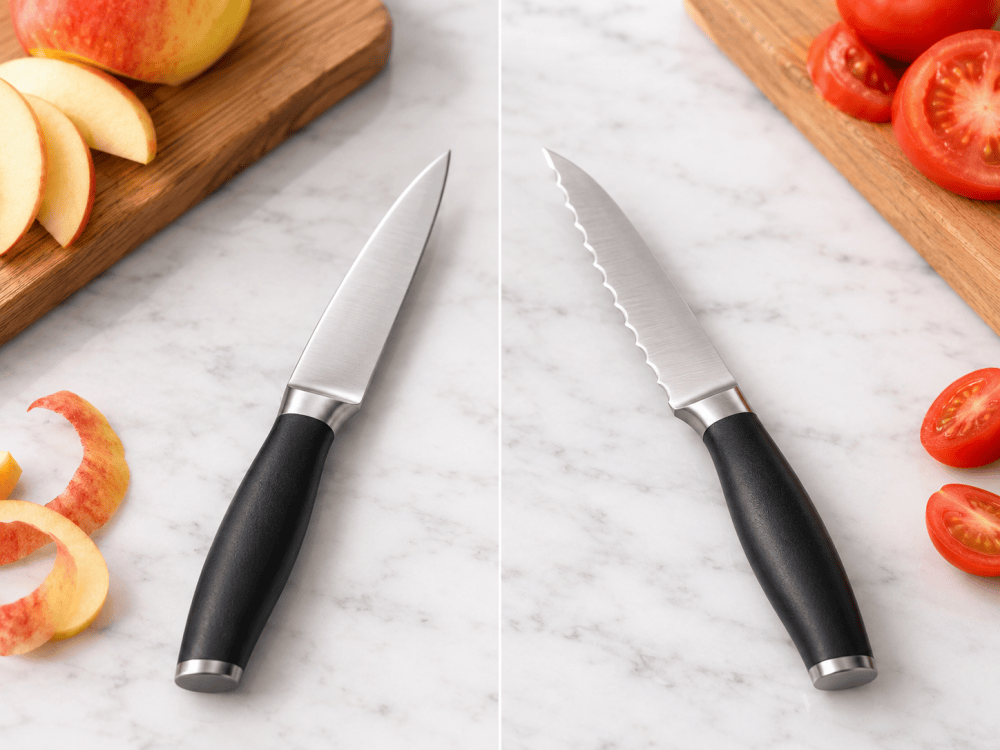
A straight edge paring knife is generally more versatile for peeling, trimming, and precise cutting. A serrated paring knife is often better for cutting small foods with delicate interiors and tougher skins, such as tomatoes. The better choice depends on the ingredients and cutting tasks.
What Is a Straight Edge Paring Knife?
A straight edge paring knife has a smooth, continuous cutting edge without teeth or serrations. It is one of the most common designs for everyday kitchen preparation.
Its compact blade and smooth cutting surface allow users to make controlled cuts when peeling, trimming, slicing, and preparing small ingredients. Depending on the model, the blade may have a pointed tip and a straight or slightly curved cutting profile.
Key Features
- A smooth, continuous cutting edge.
- A compact blade designed for detailed food preparation.
- A clean cutting action when the blade is properly sharpened.
- Suitable for a broad range of peeling, trimming, and slicing tasks.
Common Uses
- Peeling apples, potatoes, and other fruits and vegetables.
- Removing blemishes and trimming unwanted parts.
- Cutting small fruits and vegetables into pieces.
- Making precise cuts and decorative garnishes.
- Preparing ingredients that require controlled blade movement.
What Is a Serrated Paring Knife?
A serrated paring knife has a toothed cutting edge with a series of small points and curved sections along the blade.
Unlike a smooth blade that relies mainly on a continuous sharp edge, a serrated blade uses its teeth to grip and begin cutting into food surfaces. This design can be particularly useful when the outer skin is relatively firm but the inside is soft or delicate.
Key Features
- A toothed or scalloped cutting edge.
- A compact blade for small food preparation tasks.
- Teeth that help engage with certain food surfaces.
- A cutting action that can reduce the need for heavy downward pressure on some ingredients.
Common Uses
- Cutting small tomatoes with firm skins and soft interiors.
- Slicing certain soft fruits.
- Cutting small citrus fruits.
- Preparing ingredients that may be compressed by a smooth blade.
Straight Edge vs Serrated Paring Knife: Key Differences
Although both knives are designed for small kitchen tasks, their cutting edges create different results. The following comparison highlights the main differences.
| Comparison | Straight Edge Paring Knife | Serrated Paring Knife |
|---|---|---|
| Blade Edge | Smooth and continuous | Toothed or scalloped |
| Cutting Action | Uses a smooth slicing or cutting motion | Teeth help engage with the food surface |
| Peeling | Generally well suited | Less suitable for most detailed peeling tasks |
| Precise Trimming | Generally better suited | Less suitable for fine, controlled trimming |
| Soft Foods with Firm Skins | May require a very sharp blade and careful pressure | Often useful for cutting without excessive compression |
| Sharpening | Can be sharpened with common sharpening tools | Usually requires specialized sharpening methods |
| Versatility | Suitable for a wider range of everyday tasks | More specialized for certain cutting applications |
Actual cutting performance also depends on blade sharpness, steel, edge geometry, blade thickness, and manufacturing quality. The edge type alone does not determine the complete performance of a knife.
Which Paring Knife Is Better for Different Foods?
The best paring knife often depends on what you are preparing. A straight edge is useful for general food preparation, while a serrated edge can offer advantages with specific ingredients.
1. Peeling Apples and Potatoes
Better choice: Straight edge paring knife.
A smooth blade is generally easier to control when removing thin layers of skin. It allows the user to follow the shape of the ingredient and make controlled peeling movements.
2. Cutting Small Tomatoes
Better choice: Serrated paring knife.
Tomatoes often have relatively firm skins and soft interiors. The teeth of a serrated blade can help start the cut without requiring as much downward pressure, reducing the chance of crushing the fruit.
3. Trimming Fruits and Vegetables
Better choice: Straight edge paring knife.
For removing blemishes, trimming edges, and making detailed cuts, a smooth blade generally provides better control and a cleaner cutting path.
4. Slicing Small Soft Fruits
Better choice: Depends on the fruit.
A serrated edge may work well on fruits with delicate interiors and firmer skins. For fruits that require smooth, precise cuts, a sharp straight edge may be preferable.
5. Making Decorative Cuts
Better choice: Straight edge paring knife.
Decorative cutting requires controlled blade movement and precise shaping. A smooth edge is generally more suitable for this type of work.
Advantages and Disadvantages of Each Blade Type
Straight Edge Paring Knife
Advantages
- Versatile for everyday kitchen preparation.
- Suitable for peeling, trimming, and precise cutting.
- Generally easy to sharpen with standard sharpening tools.
- Provides a smooth cutting path for detailed work.
Disadvantages
- May require more downward pressure when cutting certain firm-skinned, soft foods.
- Cutting performance depends heavily on maintaining a sharp edge.
- Can compress delicate ingredients if the blade is dull or the cutting technique is unsuitable.
Serrated Paring Knife
Advantages
- Useful for foods with firm skins and soft interiors.
- Teeth can help grip certain slippery food surfaces.
- Can make cutting small tomatoes and similar ingredients easier.
- Offers a specialized alternative to a smooth-edge knife.
Disadvantages
- Less suitable for detailed peeling and fine trimming.
- May not produce the preferred smooth cutting finish for every ingredient.
- Sharpening is more complicated and often requires specialized tools.
- Its specialized edge makes it less versatile for some general kitchen tasks.
How to Choose the Right Paring Knife
Before buying a paring knife, consider your preparation habits, preferred cutting style, and maintenance expectations. The following factors can help narrow down your choice.
1. Think About Your Main Kitchen Tasks
Choose a straight edge knife if you mainly peel, trim, shape, and prepare small ingredients. Consider a serrated knife if you frequently cut foods with firm skins and soft interiors.
2. Check Blade Material and Quality
Blade material influences corrosion resistance, edge retention, sharpening requirements, and maintenance. Stainless steel is a common choice for kitchen knives because it offers good corrosion resistance in everyday kitchen environments.
When comparing products, consider the steel grade, heat treatment, blade thickness, edge geometry, and manufacturing quality rather than relying on the material name alone.
3. Consider Blade Length and Shape
A compact blade is useful for detailed preparation, but the ideal length depends on the user's hand size and intended tasks. Also consider whether the knife has a pointed tip, a curved profile, or another blade shape suited to your preferred cutting technique.
4. Evaluate Handle Comfort
A comfortable handle helps provide control during repeated kitchen use. Consider handle material, shape, grip, balance, and overall construction.
5. Understand Maintenance Requirements
Straight edge knives are generally easier to sharpen with common tools. Serrated knives may require a specialized sharpener or professional sharpening service. Consider how much maintenance you are willing to perform before choosing.
How to Clean and Maintain Straight Edge and Serrated Paring Knives
Both types of paring knives need proper care to maintain their cutting performance and condition. However, their different edge structures mean that sharpening methods may vary.
Cleaning
- Clean the blade after use to remove food residue.
- Use a suitable cleaning method recommended by the manufacturer.
- Dry the blade thoroughly before storage.
- Avoid leaving knives soaking in water or in contact with corrosive food residues for extended periods.
Sharpening a Straight Edge Knife
A straight edge paring knife can generally be maintained with a suitable whetstone, sharpening system, or other compatible sharpening tool. Follow the manufacturer's recommended sharpening method and angle.
Sharpening a Serrated Knife
Serrated knives have individual teeth and curved sections along the cutting edge. A standard flat sharpening stone may not reach every part of the edge effectively. A suitable tapered sharpening rod or professional sharpening service may be needed.
Straight Edge vs Serrated Paring Knives for Wholesale Buyers
For kitchenware importers, distributors, retailers, and private-label brands, choosing between straight edge and serrated paring knives is also a product assortment decision.
Both designs can serve different customer needs, so offering a suitable combination may help create a more complete kitchen knife collection.
What Should Buyers Consider?
- Target MarketUnderstand whether customers mainly need general-purpose preparation knives or specialized knives for particular foods.
- Blade SpecificationsCompare blade material, length, thickness, edge type, and overall construction.
- Handle DesignEvaluate handle materials, shape, color options, comfort, and assembly quality.
- Product PositioningChoose specifications and designs that fit the intended retail price range and customer expectations.
- Packaging and BrandingConsider private-label logos, retail packaging, product sets, and other customization requirements.
- Supply CapabilityConfirm MOQ, production lead time, quality control procedures, and communication requirements with the manufacturer.
FASAKA, a brand under DKS Enterprises Co., Ltd., offers kitchen knives and kitchenware solutions for global B2B customers. With OEM and ODM support, buyers can discuss product specifications, handle designs, branding, and packaging requirements for their projects.
Explore our Kitchen Knives range or learn more about our OEM & ODM Kitchenware Services.
Frequently Asked Questions
1. Is a straight edge or serrated paring knife better?
A straight edge paring knife is generally more versatile for peeling, trimming, and precise cutting. A serrated paring knife is often more suitable for foods with firm skins and soft interiors, such as tomatoes. The better choice depends on the intended application.
2. Can you peel vegetables with a serrated paring knife?
It is possible, but a serrated edge is generally less suitable for detailed peeling than a smooth blade. A straight edge paring knife usually offers better control when removing thin layers of skin.
3. Is a serrated paring knife good for tomatoes?
Yes. A serrated paring knife can be useful for small tomatoes because its teeth help engage with the skin while reducing the need for excessive downward pressure on the soft interior.
4. Which paring knife is easier to sharpen?
A straight edge paring knife is generally easier to sharpen using common sharpening tools. Serrated knives require more specialized methods because of their toothed cutting edges.
5. Should I own both straight edge and serrated paring knives?
If you regularly prepare a variety of fruits and vegetables, owning both can be useful. A straight edge knife can handle general preparation tasks, while a serrated model can complement it when cutting certain soft foods with firmer skins.
6. What should wholesale buyers consider when sourcing paring knives?
Wholesale buyers should compare blade material, edge type, blade length, handle design, product quality, packaging, MOQ, and production lead time. OEM and ODM options may also be important for brands developing customized knife collections.
Looking for a Kitchen Knife Manufacturing Partner?
Whether you are sourcing straight edge paring knives, serrated paring knives, or a customized kitchen knife collection, FASAKA supports global B2B customers with kitchen knife and kitchenware solutions.
Contact our team to discuss your product specifications, OEM/ODM requirements, and private-label projects.
Get a Free Quote