



What Is a Utility Knife? Common Uses of Kitchen Utility Knives
The term utility knife can refer to different types of cutting tools. In general use, it often describes a retractable or fixed-blade knife for cutting cardboard, packaging, and other materials. In the kitchen, a kitchen utility knife is a versatile food-preparation knife designed for tasks that may be too delicate for a chef's knife but too demanding for a small paring knife.
Kitchen utility knives are valued for their versatility, manageable size, and everyday practicality. This guide explains what a kitchen utility knife is, how it differs from other knives, its common uses, and what buyers should consider when selecting one.
Quick Answer: What Is a Kitchen Utility Knife?
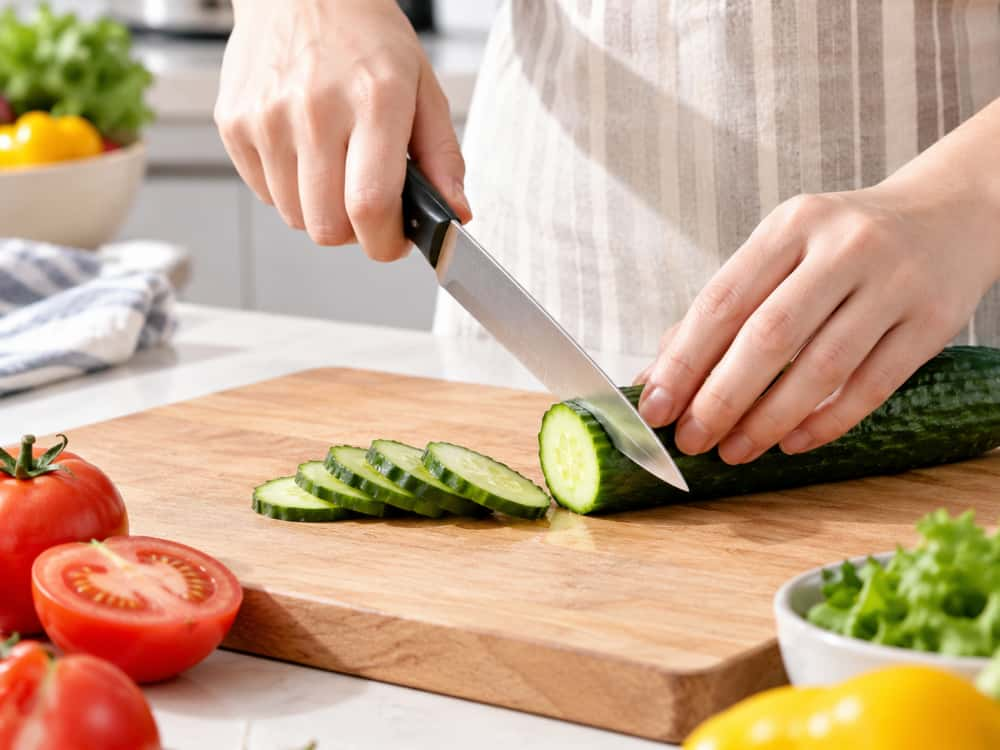
A kitchen utility knife is a medium-sized food-preparation knife used for slicing, trimming, and cutting a wide range of everyday ingredients. It offers more blade length than a paring knife while remaining smaller and easier to maneuver than many chef's knives.
1. What Does "Utility Knife" Mean?
The meaning of utility knife depends on the context. Understanding the distinction helps consumers choose the right tool for their needs.
| Knife Type | Main Purpose | Typical Applications |
|---|---|---|
| General-purpose utility knife | Cutting non-food materials | Opening cartons, cutting cardboard, packaging, and craft materials |
| Kitchen utility knife | Everyday food preparation | Slicing fruit, vegetables, cheese, sandwiches, and smaller portions of meat |
Although both tools are called utility knives, they are designed for different tasks. A kitchen utility knife is intended for preparing food and should be made from materials suitable for food contact and routine kitchen cleaning. A packaging cutter should not be used to prepare food unless it is specifically designed and approved for that purpose.
2. What Is a Kitchen Utility Knife?
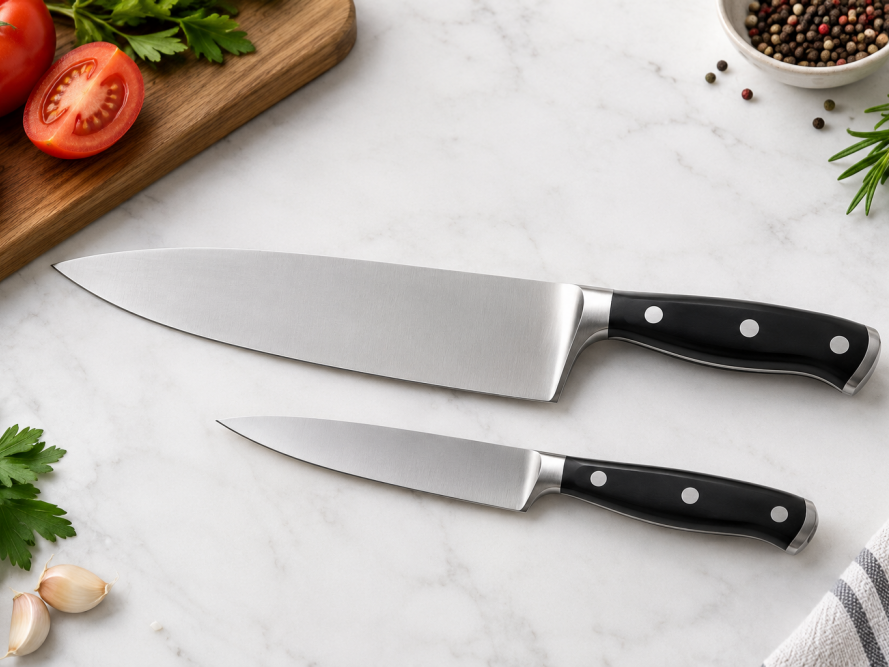
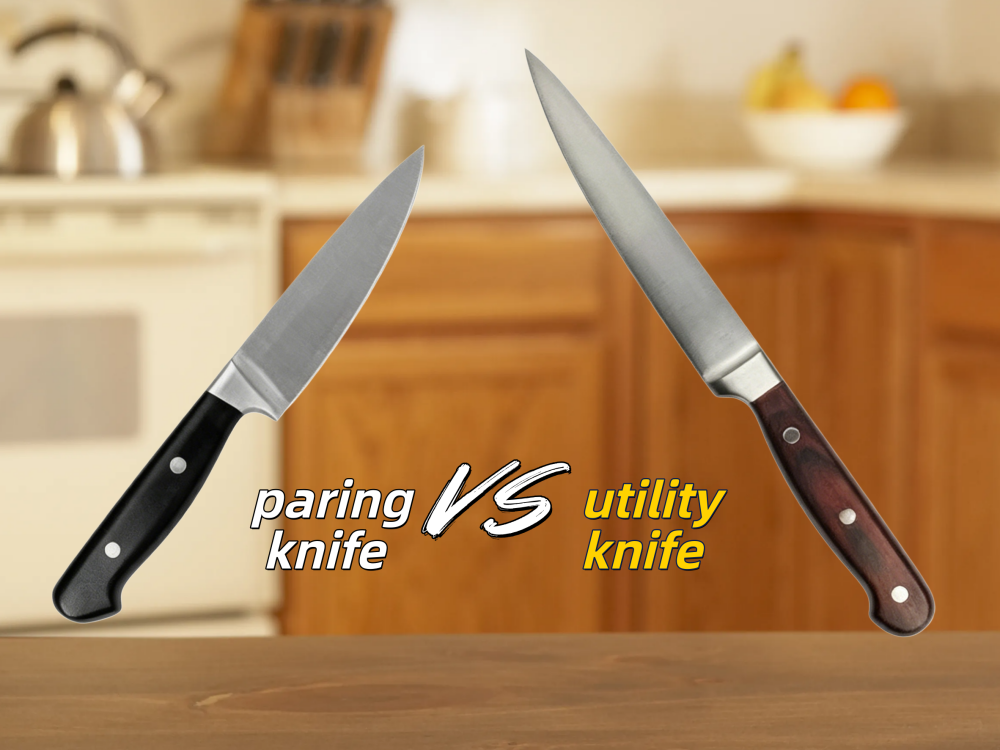
A kitchen utility knife is an all-purpose kitchen knife that fills the gap between a small paring knife and a larger chef's knife. Many models have a blade approximately 4 to 7 inches long, although the exact size varies by design and manufacturer.
Its blade may be straight-edged or serrated. Straight-edged models are useful for controlled slicing and trimming, while serrated versions can help cut through foods with delicate interiors and firmer skins.
Common Features of a Kitchen Utility Knife
- Medium-length blade: Provides a balance between cutting reach and control.
- Versatile cutting edge: Supports slicing, trimming, and portioning a variety of ingredients.
- Manageable size: Works well for tasks that do not require a large chef's knife.
- Different blade styles: Available with straight or serrated edges for different food textures.
- Various handle designs: Handle materials and shapes influence grip, comfort, maintenance, and overall product positioning.
3. What Are Kitchen Utility Knives Used For?
Kitchen utility knives are useful for many everyday food-preparation tasks. Their main advantage is flexibility: they can handle a variety of ingredients without requiring a different knife for every job.
3.1 Slicing Fruits
A kitchen utility knife can slice apples, pears, citrus fruits, strawberries, and other medium-sized fruits. Its manageable blade makes it convenient for preparing fruit plates, snacks, and ingredients for salads.
3.2 Cutting and Trimming Vegetables
From cucumbers and zucchini to peppers and tomatoes, a utility knife can handle many routine vegetable-preparation tasks. It is particularly useful when a chef's knife feels unnecessarily large for the amount of food being prepared.
3.3 Slicing Cheese
A straight-edged utility knife can slice many firm and semi-firm cheeses into portions for sandwiches, snacks, or cheese boards. The best blade style depends on the cheese's texture and how cleanly it needs to be sliced.
3.4 Preparing Sandwiches and Wraps
Kitchen utility knives can cut sandwiches, wraps, and similar foods into halves or smaller portions. Serrated models can be particularly helpful when the outer bread is crusty and the filling is soft.
3.5 Trimming Meat and Cutting Smaller Portions
A utility knife can trim small amounts of fat, remove unwanted edges, and cut boneless meat into smaller pieces. For larger cuts of meat or heavy-duty butchery, a dedicated meat knife or chef's knife may be more suitable.
3.6 Everyday Meal Preparation
A kitchen utility knife is a practical option for quick, small-scale food preparation, such as cutting ingredients for a single meal, preparing garnishes, or portioning small quantities of food.
4. Kitchen Utility Knife vs. Other Kitchen Knives
A utility knife is not a replacement for every knife in the kitchen. Each type has strengths that make it suitable for particular cutting tasks.