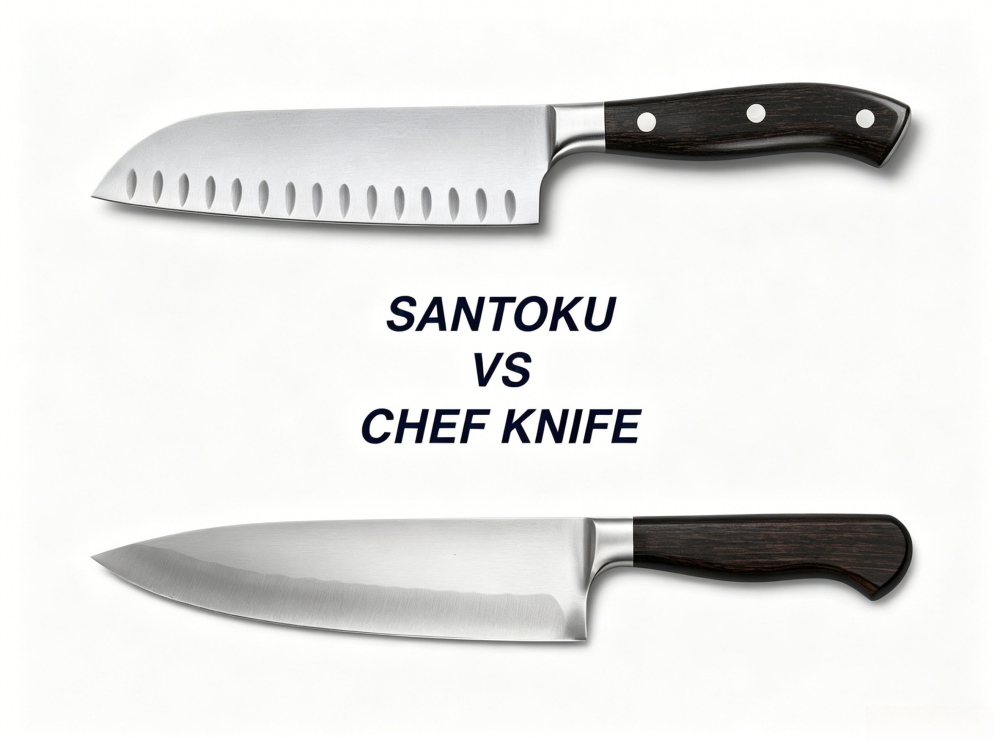



Chef Knife vs Utility Knife: Key Differences, Uses, and How to Choose
Chef Knife vs Utility Knife: Key Differences, Uses, and How to Choose
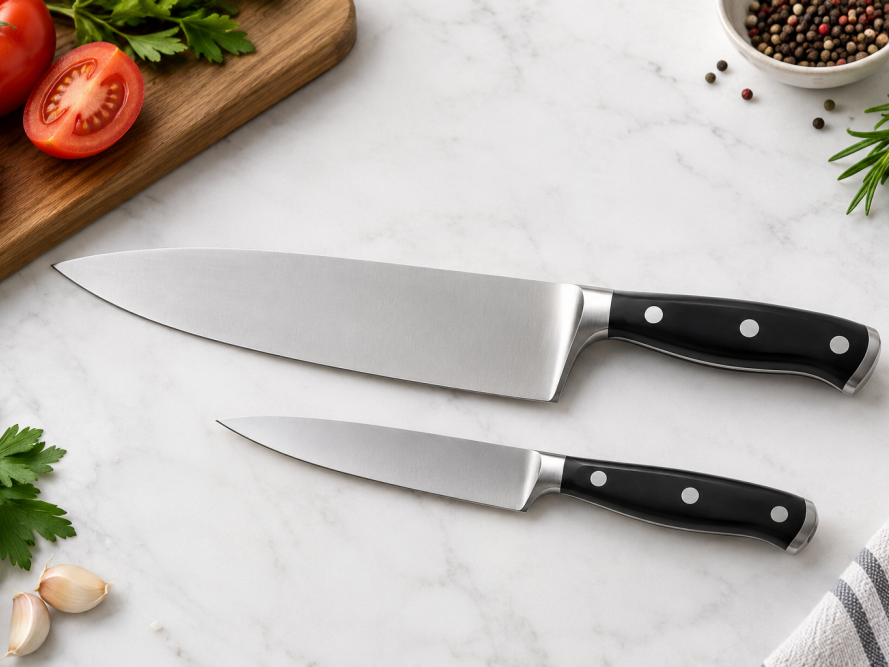
When comparing a chef knife vs utility knife, the main differences are blade size, shape, and intended use. A chef knife is a versatile, full-size kitchen knife designed for chopping, slicing, dicing, and mincing a wide range of ingredients. A utility knife is smaller and narrower, making it useful for cutting smaller foods and handling tasks that require more control.
Both knives have a place in a kitchen, but they are not equally suited to every cutting task. Understanding their differences can help home cooks, professional kitchens, retailers, and kitchenware buyers choose the right knife for their needs.
- Choose a chef knife for everyday meal preparation, chopping vegetables, dicing onions, mincing herbs, and slicing larger ingredients.
- Choose a utility knife for smaller fruits and vegetables, trimming ingredients, slicing cheese, and preparing sandwiches.
- Choose both if you want a versatile primary knife and a smaller blade for detailed, controlled cutting tasks.
1. Chef Knife vs Utility Knife: Main Differences
The most noticeable difference between a chef knife and a utility knife is the blade's overall proportions. A chef knife typically has a wider, longer blade with more height near the handle. A utility knife generally has a shorter, narrower profile that is easier to maneuver around smaller ingredients.
| Feature | Chef Knife | Utility Knife |
|---|---|---|
| Typical blade length | About 6–12 inches; 8 inches is a common choice. | About 4–7 inches, depending on the design. |
| Blade shape | Generally wider, with a curved cutting edge on many Western-style models. | Usually narrower and more compact, with a straight or gently curved edge. |
| Main purpose | General food preparation and repetitive cutting tasks. | Smaller cutting jobs that benefit from maneuverability and control. |
| Common uses | Chopping vegetables, dicing, mincing herbs, and slicing meat. | Slicing small produce, trimming ingredients, cutting cheese, and preparing sandwiches. |
| Cutting style | Often suitable for rocking, push-cutting, or straight chopping, depending on blade geometry. | Often convenient for short, controlled cuts and precise slicing. |
| Best role in a knife set | The main all-purpose kitchen knife. | A complementary knife for smaller tasks. |
These dimensions are general guidelines rather than universal standards. Blade lengths, profiles, weights, and edge designs vary by manufacturer and product series. Some utility knives are serrated, while others have a plain edge.
2. What Is a Chef Knife Used For?
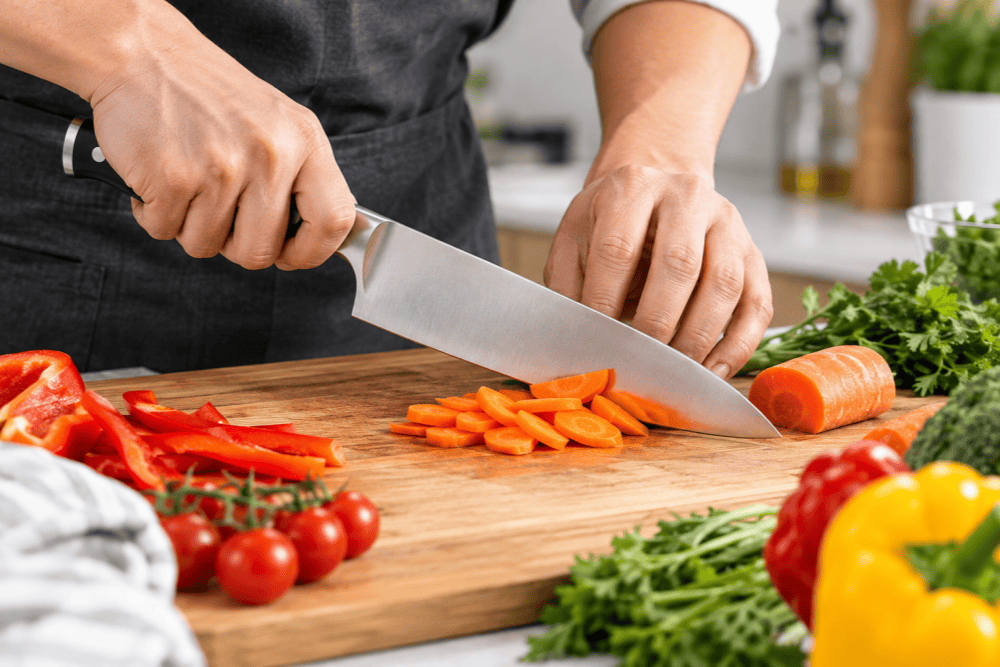
A chef knife is designed to handle a broad range of everyday food preparation tasks. Its longer blade provides cutting reach, while its wider profile offers clearance for the fingers when the knife is used correctly on a cutting board.
Chopping and dicing vegetables
A chef knife is suitable for chopping onions, dicing carrots, slicing cabbage, and preparing many other vegetables. Its blade length can make repetitive cutting more efficient, especially when preparing several portions at once.
Mincing herbs and garlic
Many Western-style chef knives have a curved cutting edge that supports a rocking motion. This can be useful when mincing parsley, garlic, and other aromatics. The best cutting motion depends on the knife's profile and the user's technique.
Slicing meat and larger ingredients
A chef knife can slice boneless meat, portion larger vegetables, and cut many everyday ingredients into consistent pieces. Its longer edge can reduce the need for repeated short cuts.
However, a standard chef knife is not intended for every type of food. Cutting through bones or other very hard materials can damage the edge. Use a suitable cleaver or specialized tool when the task requires it.
Who should choose a chef knife?
- Home cooks who want one versatile knife for everyday meal preparation.
- Professional kitchens that prepare large quantities of ingredients.
- Cooking enthusiasts who regularly chop, slice, dice, and mince.
- Retailers and kitchenware brands building a core kitchen knife range.
3. What Is a Utility Knife Used For?
A kitchen utility knife sits between a full-size chef knife and a small paring knife in many knife collections. It offers more blade length than a typical paring knife while remaining compact enough for smaller food preparation tasks.
Slicing small fruits and vegetables
A utility knife is useful for cutting apples, cucumbers, small tomatoes, lemons, and other produce. Its narrower blade can feel easier to control when a large chef knife would be unnecessarily bulky.
Preparing sandwiches and snacks
A utility knife can help slice sandwich ingredients, cut cheese, trim vegetables, and prepare smaller portions. A serrated utility knife may be particularly helpful for certain foods with a delicate interior or a firmer exterior, depending on the blade design.
Trimming and detail work
The compact profile of a utility knife makes it useful for trimming small pieces of meat, removing unwanted parts of produce, and making controlled cuts around smaller ingredients. For very detailed peeling or intricate work, however, a paring knife may offer even better control.
Who should choose a utility knife?
- Home cooks who frequently prepare small portions or snacks.
- Users who find a full-size chef knife cumbersome for smaller tasks.
- People who want a versatile secondary knife in their kitchen.
- Retailers and brands looking to offer practical knife sets with complementary blade sizes.
4. Chef Knife vs Utility Knife: Which Is Better for Different Foods?
Neither knife is universally better. The right choice depends on the ingredient's size, the type of cut, the amount of food being prepared, and the blade design.
| Food or task | Recommended knife | Reason |
|---|---|---|
| Chopping several onions | Chef knife | The longer blade is efficient for repetitive cutting. |
| Mincing a large bunch of herbs | Chef knife | The blade profile on many models supports efficient mincing. |
| Slicing a cucumber | Either knife | Choose based on the cucumber's size and your preferred level of control. |
| Cutting a small apple | Utility knife | The compact blade can feel easier to maneuver. |
| Slicing cheese for sandwiches | Utility knife | A smaller blade is convenient for individual portions. |
| Preparing a large quantity of vegetables | Chef knife | The blade's reach can make repetitive preparation more efficient. |
| Trimming small ingredients | Utility knife | The narrower profile can provide better maneuverability. |
| Peeling a small fruit by hand | Paring knife | A smaller blade is often better suited to detailed peeling. |
These are practical starting points, not strict rules. A skilled cook may use either knife for many overlapping tasks. Select the blade that provides appropriate control and clearance for the food being cut.
5. Can a Utility Knife Replace a Chef Knife?
A utility knife can handle many small, everyday cutting tasks, but it usually cannot replace a chef knife completely for general food preparation.
The shorter blade of a utility knife may require more strokes when cutting larger ingredients or preparing food in volume. Its narrower profile also provides less blade height for certain chopping techniques.
A chef knife, on the other hand, can perform many tasks normally handled by a utility knife. However, its larger size may feel awkward when trimming small ingredients or working with limited space.
If you can buy only one kitchen knife, a chef knife is usually the more versatile starting point. If you already own a chef knife, a utility knife can be a useful addition when you regularly prepare small foods or want a more compact blade for particular tasks.
6. How to Choose Between a Chef Knife and a Utility Knife
Before choosing a knife, consider your cooking habits rather than focusing on blade length alone.
Consider the food you prepare most often
If your daily routine involves chopping vegetables, mincing herbs, preparing meat, and cooking family meals, a chef knife is a sensible first choice. If you more often slice fruit, prepare sandwiches, or trim smaller ingredients, a utility knife may see frequent use.
Check blade length and profile
Blade length affects reach, while blade height and curvature influence clearance and cutting technique. An 8-inch chef knife is a common all-purpose option, but a shorter chef knife may be more comfortable for users with smaller hands or limited cutting-board space.
Utility knives vary in length and may have plain or serrated edges. Choose the configuration according to the foods and cutting methods for which the knife is intended.
Evaluate the handle and balance
A comfortable handle, secure grip, and suitable balance can make a meaningful difference during repeated food preparation. If possible, hold the knife before buying it. For online purchases, review the product dimensions, handle material, weight, and care instructions.
Compare steel, construction, and maintenance
Blade steel affects properties such as corrosion resistance, edge retention, and ease of sharpening. Construction, heat treatment, blade geometry, and intended use also matter. Stainless steel knives may be easier to maintain in humid kitchen environments, but they still require proper cleaning and drying.
Neither a chef knife nor a utility knife is automatically better because it uses a particular steel category. Evaluate the complete product specification rather than relying on a material name alone.
7. Chef Knife vs Utility Knife for Retailers and Wholesale Buyers
For kitchenware distributors, importers, retailers, and private-label brands, the chef knife vs utility knife comparison is also a product-range decision. Each category serves a different role, and offering both can help create a more complete kitchen knife assortment.
Build a product range around customer needs
A chef knife can serve as a core product for everyday food preparation, while a utility knife provides a smaller option for detailed and medium-sized cutting tasks. Depending on the target market, a range may include several blade lengths, handle styles, finishes, and packaging formats.
Define specifications before requesting a quotation
When sourcing chef knives or utility knives, buyers should confirm the details that affect product performance, cost, and consistency.
- Blade specifications: blade length, blade height, thickness, edge type, and profile.
- Material: steel grade, handle material, and any specified surface finish.
- Construction: tang design, handle attachment, and manufacturing method where relevant.
- Performance requirements: cutting performance, edge retention expectations, corrosion resistance, and sharpening requirements.
- Branding: logo application, handle design, and other customization requirements.
- Packaging: individual boxes, retail packaging, knife sets, and shipping protection.
- Quality control: agreed inspection criteria, sample approval, and consistency between samples and mass production.
Ask about MOQ, samples, and lead time
Minimum order quantity, sample availability, production lead time, and packaging options depend on the product design and supplier's capabilities. Buyers should confirm these details directly rather than assume that every knife model follows the same terms.
For brands developing a new knife range, it is useful to compare samples of the intended chef knife and utility knife side by side. This helps verify whether the two products offer meaningfully different functions and whether their specifications match the intended customer group.
FASAKA is a brand under DKS Enterprises Co., Ltd., a manufacturer and supplier based in Yangjiang, Guangdong, China, specializing in hardware knives and scissors, BBQ tools, and kitchenware. Businesses exploring customized kitchenware products can learn more about FASAKA OEM/ODM services.
8. Frequently Asked Questions
Is a chef knife the same as a utility knife?
No. A chef knife is generally larger and designed for broad food preparation tasks, including chopping, dicing, slicing, and mincing. A utility knife is usually smaller and narrower, making it convenient for smaller ingredients and more controlled cutting tasks.
Which is better, a chef knife or a utility knife?
A chef knife is usually the better first choice if you need one versatile knife for everyday cooking. A utility knife is useful as a complementary blade for smaller ingredients, trimming, and tasks where a full-size chef knife feels cumbersome.
What is the difference between a chef knife and a utility knife in size?
Chef knives commonly range from about 6 to 12 inches in blade length, with 8 inches being a popular size. Utility knives commonly range from about 4 to 7 inches. Actual dimensions vary by manufacturer and design.
Can I use a utility knife to cut meat?
Yes. A suitable kitchen utility knife can slice boneless meat or trim smaller cuts. For large quantities, larger cuts, or tasks requiring a specialized blade, a chef knife or another purpose-designed knife may be more efficient.
Is a utility knife the same as a paring knife?
No. A utility knife is generally longer than a paring knife and is useful for small-to-medium cutting tasks. A paring knife is smaller and is often better for peeling, coring, and detailed work. Their uses can overlap depending on the blade design.
Should a kitchen knife set include both a chef knife and a utility knife?
Including both can give users more flexibility. The chef knife covers many general preparation tasks, while the utility knife provides a compact option for smaller ingredients. The best set composition depends on the target customers, price point, and intended use.
What should wholesale buyers compare when sourcing chef knives and utility knives?
Buyers should compare blade dimensions, steel grade, handle construction, cutting performance, maintenance requirements, packaging, quality-control criteria, MOQ, sample availability, and lead time. Final specifications should be confirmed with the manufacturer before bulk production.
Conclusion: Chef Knife or Utility Knife?
The main difference between a chef knife and a utility knife is the balance between versatility and maneuverability. A chef knife is generally the better primary knife for everyday food preparation, while a utility knife is a practical companion for smaller ingredients and more controlled cutting tasks.
For home cooks, the right choice depends on cooking habits and comfort. For retailers, importers, and private-label brands, the two categories can serve complementary roles in a well-planned kitchen knife range. Clear product specifications, appropriate samples, and consistent quality standards are essential when developing a knife assortment for the market.
Looking for a Kitchen Knife Manufacturing Partner?
FASAKA works with B2B customers exploring kitchenware products and customization. If your business is developing a kitchen knife range, discuss your product requirements, branding, packaging, and sourcing needs with the team.
Contact FASAKA