




What Is a Petty Knife Used For? A Complete Guide
A Petty knife is a small Japanese-style kitchen knife designed for precise cutting, peeling, trimming, and preparing smaller ingredients. It usually has a narrow blade with a pointed tip, making it useful for tasks that require more control than a full-size chef knife can comfortably provide.
So, what is a petty knife used for? Common petty knife uses include slicing fruits, cutting small vegetables, trimming meat, removing unwanted parts from ingredients, and performing detailed kitchen preparation. It is a versatile utility knife for everyday tasks that benefit from a smaller, more maneuverable blade.
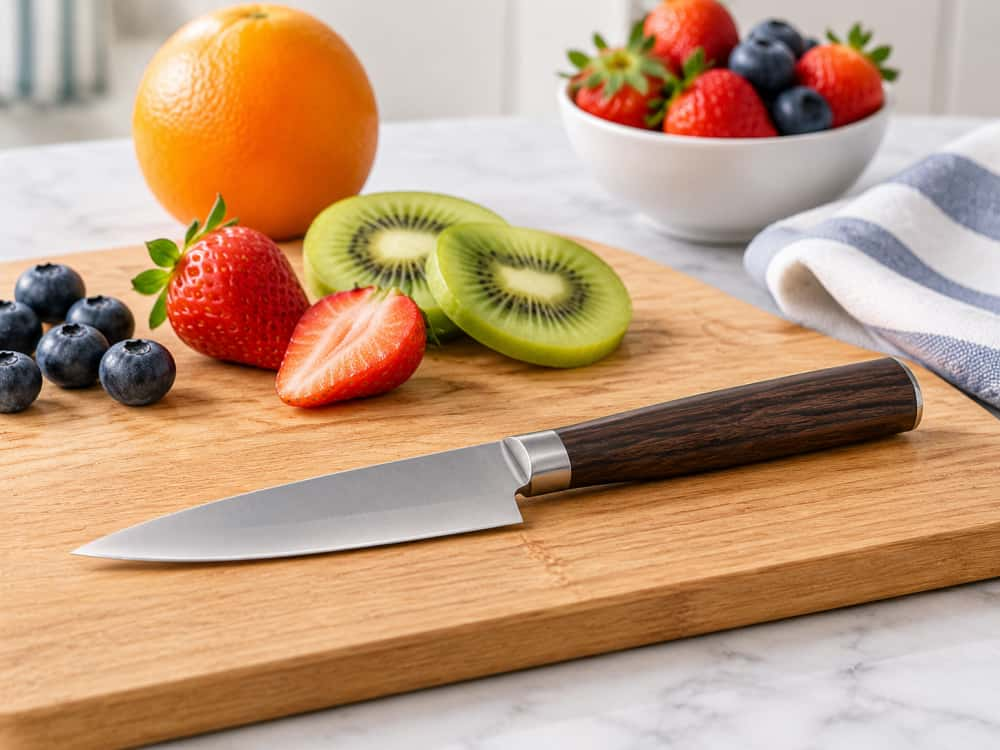
Quick Answer: A Petty knife is mainly used for small, precise kitchen tasks such as cutting fruit, slicing vegetables, trimming boneless meat, and preparing ingredients. It combines the convenience of a compact blade with the versatility of a small utility knife.
1. What Is a Petty Knife?
A Petty knife is a Japanese-style utility knife commonly used for detailed food preparation. The word "Petty" is derived from the French word "petit," meaning small. Compared with a full-size chef knife, a Petty knife has a shorter and narrower blade that is easier to maneuver around smaller ingredients.
Many Petty knives have blade lengths ranging from approximately 120 mm to 150 mm, although some models are shorter or longer. They commonly feature a pointed tip, a relatively narrow blade, and a cutting edge designed for controlled slicing and trimming.
Petty knives are available in different blade materials, handle styles, and edge configurations. Many models use a double-bevel edge, while some traditional Japanese-style designs may have different edge geometries.
Key Features of a Petty Knife
| Feature | Description | Practical Benefit |
|---|---|---|
| Blade Length | Commonly around 120–150 mm, depending on the model | Provides control for smaller cutting tasks |
| Blade Shape | Narrow and relatively slim | Allows precise movement around ingredients |
| Blade Tip | Usually pointed | Useful for trimming and detailed cutting |
| Edge Type | Often double-bevel, but designs vary | Many models are suitable for both left- and right-handed users |
| Main Purpose | Small and precise food preparation | Useful for fruits, vegetables, and suitable boneless ingredients |
2. What Is a Petty Knife Used For?
A Petty knife is designed for tasks that require precision and control. Its compact blade makes it convenient for preparing smaller ingredients, handling detailed cutting work, and performing tasks that may feel awkward with a larger kitchen knife.
Cutting and Slicing Fruits
One of the most common uses of a Petty knife is preparing fruit. Its narrow blade and pointed tip make it suitable for slicing apples, pears, strawberries, kiwis, and other fruits into smaller pieces.
It can also be used to remove stems, trim damaged areas, and cut fruit into wedges or cubes. For smaller fruit preparation tasks, its compact size provides better maneuverability than many full-size kitchen knives.
Peeling and Trimming Vegetables
A Petty knife can handle many vegetable preparation tasks, including trimming green beans, removing the ends of carrots, cutting small peppers, and preparing mushrooms.
Its pointed tip helps with detailed work around vegetable surfaces and small sections. However, for peeling large quantities of vegetables, a dedicated peeler may be faster and more convenient.
Slicing Small Vegetables
Petty knives are useful for slicing smaller vegetables such as garlic, shallots, radishes, cherry tomatoes, and small cucumbers.
The compact blade allows users to make controlled cuts without handling a larger knife for every small ingredient. It is particularly practical for preparing garnishes and ingredients in smaller quantities.
Trimming Boneless Meat
A Petty knife can also be used for certain meat preparation tasks. Its pointed tip and narrow blade are useful for trimming small pieces of boneless meat, removing visible connective tissue, and cutting smaller portions.
For example, it can help trim chicken breast, remove unwanted fat from a small piece of pork, or prepare boneless meat for cooking.
However, a Petty knife is not designed for cutting through bones, large joints, or frozen meat. A boning knife or another task-specific knife is more suitable for those jobs.
Preparing Herbs and Garnishes
A Petty knife can be used to trim small herbs, cut spring onions, slice garlic, and prepare decorative garnishes. Its compact size makes it useful when working with small quantities of ingredients or performing detailed preparation.
For large quantities of herbs, however, a chef knife may be more efficient because of its longer cutting edge.
Detailed Cutting and Trimming
The pointed tip of a Petty knife makes it useful for detailed cutting tasks that require precision. It can help remove blemishes from fruit, trim small vegetable sections, and separate unwanted parts from ingredients.
This makes it a convenient tool for cooks who regularly prepare a variety of ingredients and need more control than a large knife provides.
3. Petty Knife vs Paring Knife: What Is the Difference?
Petty knives and Paring knives are both small kitchen knives, and their uses can overlap. However, they are not exactly the same. A Petty knife is generally a small utility knife with a relatively longer blade, while a Paring knife is typically shorter and designed for close, detailed work.
| Comparison | Petty Knife | Paring Knife |
|---|---|---|
| Blade Length | Often around 120–150 mm | Often around 60–100 mm |
| Blade Shape | Usually narrow and elongated | Generally shorter and more compact |
| Main Purpose | Small utility and precision cutting | Peeling, trimming, and detailed preparation |
| Typical Uses | Slicing fruit, cutting small vegetables, trimming boneless meat | Peeling fruit, removing seeds, trimming small ingredients |
| Cutting Style | Often used on a cutting board | Often used for close-up or hand-held preparation |
| Versatility | Useful for a wider range of small cutting tasks | More focused on detailed preparation |
In simple terms, a Petty knife is a useful option when you want a small knife that can handle several everyday cutting tasks. A Paring knife is generally better suited to peeling, shaping, and very detailed work.
The exact differences depend on blade length and design, since some models overlap in size and intended use.
4. Petty Knife vs Utility Knife: Are They the Same?
Petty knives and utility knives share similar functions, but the terms are not always interchangeable. A Japanese Petty knife is a specific style of small kitchen knife, while utility knife is a broader category that can include different blade shapes and designs.
A Petty knife usually has a narrow blade and pointed tip for precise food preparation. Western-style utility knives may have different blade profiles and lengths, depending on their intended use.
Both can be used for slicing fruit, cutting smaller vegetables, and handling everyday kitchen tasks. The best choice depends on the blade design, intended use, and personal preference.
5. Can You Use a Petty Knife for Meat and Vegetables?
Yes. A Petty knife can be used for both vegetables and certain types of meat, provided the ingredients are suitable for its blade size and construction.
For Vegetables
It is suitable for small vegetables, trimming, slicing, and preparing ingredients such as garlic, mushrooms, shallots, and peppers. However, for chopping large quantities of vegetables or cutting large produce, a Nakiri knife or chef knife may be more efficient.
For Meat
A Petty knife can trim and slice small portions of boneless meat. Its pointed tip provides control when removing small pieces of fat or connective tissue.
For larger meat cuts, separating joints, or working around bones, choose a knife designed specifically for those tasks.
Important: A Petty knife is a compact utility knife, not a heavy-duty cutting tool. Avoid using it on bones, frozen food, or hard materials that may damage its edge.
6. How to Choose the Right Petty Knife
Choosing the right Petty knife depends on how you plan to use it. Blade length, steel type, edge geometry, handle design, and overall balance all influence its performance and comfort.
Choose the Right Blade Length
Petty knives are available in different sizes, with many models measuring approximately 120–150 mm. Shorter blades can provide more control for small ingredients, while longer blades offer additional cutting capacity for slicing fruit and preparing larger portions.
Consider your hand size, cutting habits, and the ingredients you prepare most often before selecting a blade length.
Consider the Blade Material
Blade material affects sharpness, edge retention, corrosion resistance, and maintenance requirements.
- Stainless steel: A practical choice for everyday kitchens because of its generally good corrosion resistance and convenient maintenance.
- Carbon steel: Often valued for its sharpening characteristics, but it requires more careful cleaning and drying to help prevent corrosion.
The right steel depends on the target user, expected maintenance habits, and product positioning.
Check the Edge Geometry
Many Petty knives use a double-bevel edge, which is sharpened on both sides. Some traditional Japanese-style knives may use different edge configurations.
Before choosing a knife, check whether its edge design matches the user's cutting habits and whether the manufacturer provides suitable sharpening and care guidance.
Look for a Comfortable Handle
Handle design plays an important role in control and comfort. Consider the handle shape, material, grip, weight, and connection to the blade.
A well-designed handle should feel secure during repeated cutting tasks without causing unnecessary hand fatigue.
Evaluate Balance and Construction
A good Petty knife should feel stable and controlled during use. Pay attention to blade alignment, handle fitting, finish quality, and the overall balance between the blade and handle.
7. How to Maintain a Petty Knife
Proper maintenance helps keep a Petty knife sharp, clean, and ready for everyday kitchen preparation. The correct care routine depends on its steel material and the manufacturer's recommendations.
Clean and Dry After Use
Clean the knife after use and dry the blade thoroughly before storing it. Avoid leaving food residues or moisture on the blade for extended periods, especially when using carbon steel knives.
Use a Suitable Cutting Board
Use a suitable cutting board made from wood or plastic. Avoid cutting directly on hard surfaces such as glass, stone, or ceramic, as they can accelerate edge wear or damage the cutting edge.
Sharpen When Necessary
A dull Petty knife may require more pressure and make precise cutting tasks less comfortable. Use an appropriate sharpening method based on the blade material and edge geometry.
Whetstones are commonly used for Japanese-style kitchen knives. However, sharpening angles and techniques vary by model, so follow the manufacturer's recommendations when possible.
Store the Knife Safely
Store the knife in a knife block, blade guard, magnetic knife holder, or another suitable storage solution. Avoid leaving it loose in a kitchen drawer where the blade may contact other utensils.
8. Is a Petty Knife Worth Having?
A Petty knife is a useful addition to a kitchen for people who regularly perform detailed food preparation. Its compact blade makes it convenient for tasks that may feel awkward with a larger chef knife.
It may be particularly useful for:
- Home cooks who frequently prepare fresh fruit and vegetables.
- Professional cooks who need a small utility knife for detailed preparation.
- Restaurants that handle frequent ingredient trimming and portioning.
- People who prefer a compact knife for everyday kitchen tasks.
- Kitchenware buyers looking to offer a wider selection of specialized knife designs.
However, a Petty knife does not replace a chef knife or a dedicated Paring knife in every situation. It works best as part of a kitchen knife collection where each knife serves a different purpose.
9. Petty Knife Selection for Kitchenware Buyers
For distributors, wholesalers, retailers, and private-label brands, a Petty knife can be a useful addition to a kitchen knife assortment. Its compact design appeals to customers looking for a smaller, versatile knife for everyday food preparation.
When sourcing Petty knives, buyers should consider the following factors:
- Target customers: Identify whether the product is intended for home cooks, professional kitchens, or premium Japanese-style knife collections.
- Blade specifications: Evaluate blade length, steel material, thickness, edge geometry, and finish.
- Handle options: Consider ergonomics, handle material, colors, and overall appearance.
- Product consistency: Check sharpening quality, blade alignment, handle fitting, and finish consistency across production batches.
- Packaging: Choose packaging that matches the product's retail positioning and market requirements.
- Private-label requirements: Confirm logo application, packaging design, and other customization details before production.
Working with an experienced kitchenware manufacturer can help buyers evaluate product specifications and develop a knife assortment suited to their target markets.
Learn more about FASAKA kitchen knives and our OEM and ODM kitchenware services.
10. Frequently Asked Questions About Petty Knives
What is a Petty knife mainly used for?
A Petty knife is mainly used for precise food preparation, including slicing fruit, cutting small vegetables, trimming boneless meat, and preparing smaller ingredients. Its compact blade offers control for tasks that may be difficult with a larger kitchen knife.
What is the difference between a Petty knife and a Paring knife?
A Petty knife usually has a longer, narrower blade and works as a small utility knife for slicing, trimming, and general detailed preparation. A Paring knife is generally shorter and more focused on peeling, shaping, and close-up cutting tasks.
Can a Petty knife cut meat?
Yes. A Petty knife can trim and slice small portions of boneless meat. However, it is not designed for cutting through bones, large joints, or frozen meat.
What size Petty knife should I choose?
Many Petty knives have blade lengths around 120–150 mm. Shorter blades offer control for small ingredients, while longer blades provide more cutting capacity. The best size depends on your hand size and intended use.
Is a Petty knife good for beginners?
Yes. A Petty knife can be useful for beginners who want a compact knife for fruit, vegetables, and small preparation tasks. However, it is best used alongside a general-purpose kitchen knife rather than as a complete replacement.
Can a Petty knife replace a chef knife?
No. A Petty knife is designed for smaller and more precise tasks. A chef knife has a longer and more versatile blade that is generally better suited to larger ingredients and a wider range of kitchen preparation tasks.
Is a Petty knife the same as a Japanese utility knife?
Petty knife is commonly used to describe a Japanese-style small utility knife. However, the term utility knife is broader and can refer to different small kitchen knife designs, depending on the manufacturer and market.
Is a Petty knife single bevel or double bevel?
Many Petty knives have a double-bevel edge, with both sides sharpened. However, some Japanese-style models may use different edge configurations. Always check the specifications of the individual knife.
Looking for Kitchen Knife Manufacturing Solutions?
FASAKA, under DKS Enterprises Co., Ltd., provides kitchen knife and kitchenware solutions for global buyers. Whether you are a distributor, wholesaler, or private-label brand, our team can help you discuss product requirements and OEM/ODM opportunities.
Contact us to discuss your kitchenware sourcing needs.
Get a Free Quote