




What Is a Nakiri Knife Used For? A Complete Guide
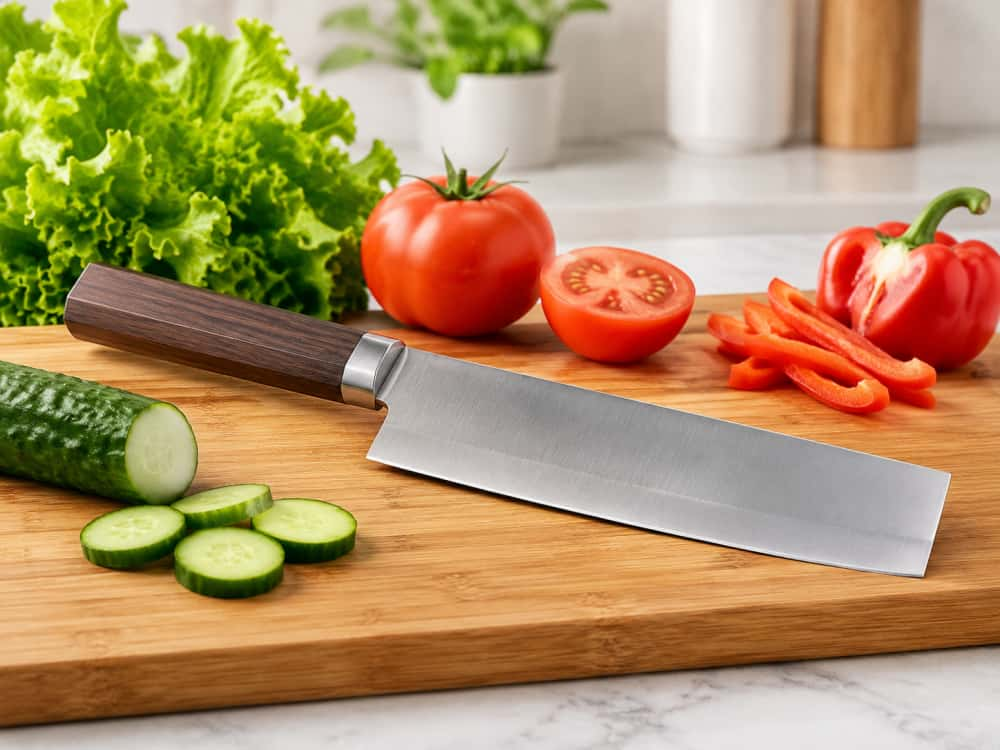
A Nakiri knife is a traditional Japanese-style vegetable knife designed primarily for cutting, slicing, and chopping vegetables. It is recognized by its wide rectangular blade, straight cutting edge, and squared-off tip. Unlike many Western chef knives, which have a curved blade profile, a Nakiri knife has a flatter edge that makes full contact with the cutting board during straight chopping motions.
So, what is a Nakiri knife used for? Its main purpose is preparing vegetables efficiently and consistently. It works well for slicing cucumbers, chopping cabbage, dicing onions, cutting carrots, and preparing leafy greens. Its broad blade can also help transfer chopped ingredients from the cutting board to a cooking pot or bowl.
Quick Answer: A Nakiri knife is mainly used for vegetable preparation. Its flat blade profile and thin cutting edge make it suitable for straight-down chopping, slicing, and dicing. It is a specialized kitchen knife rather than an all-purpose replacement for a chef knife.
1. What Is a Nakiri Knife?
A Nakiri knife, sometimes called a Japanese vegetable knife, is designed specifically for preparing vegetables. The name "Nakiri" is commonly associated with vegetable cutting in Japanese cuisine.
Its most recognizable feature is its rectangular blade. The blade usually has a straight or nearly straight cutting edge, a relatively tall profile, and a squared-off front. Many Nakiri knives have a double-bevel edge, meaning both sides of the blade are sharpened. However, blade geometry and edge construction can vary by manufacturer and model.
Unlike a traditional chef knife, which often uses a curved belly for rocking cuts, the Nakiri's flatter profile supports a more direct chopping motion. This makes it particularly useful when preparing large quantities of vegetables.
Key Features of a Nakiri Knife
| Feature | Description | Practical Benefit |
|---|---|---|
| Blade Shape | Wide, rectangular blade with a squared-off tip | Provides a tall cutting surface and useful blade clearance |
| Cutting Edge | Generally straight or nearly straight | Supports consistent contact with the cutting board |
| Blade Profile | Relatively tall compared with many other kitchen knives | Helps guide cuts and move prepared ingredients |
| Edge Type | Commonly double-bevel, though designs vary | Many models are suitable for both left- and right-handed users |
| Main Purpose | Vegetable preparation | Efficient slicing, chopping, and dicing |
2. What Is a Nakiri Knife Used For?
The Nakiri knife is primarily designed for vegetable preparation. Its straight cutting edge and wide blade make it useful for a variety of everyday kitchen tasks, from preparing leafy greens to cutting firm vegetables into even pieces.
Cutting Leafy Vegetables
A Nakiri knife works well for chopping cabbage, lettuce, spinach, kale, and other leafy vegetables. Its wide blade provides room for controlled chopping, while the straight edge helps make clean cuts through stacked or folded leaves.
It is especially useful when preparing ingredients for salads, stir-fries, soups, and vegetable side dishes.
Slicing Cucumbers, Carrots, and Other Firm Vegetables
The Nakiri knife is suitable for slicing vegetables such as cucumbers, carrots, zucchini, and radishes. Its relatively thin blade can make smooth, even cuts when the knife is sharp and used with a controlled motion.
For recipes that require uniform slices, the knife's straight cutting profile can help users maintain a consistent cutting rhythm.
Chopping and Dicing Onions
Onions are another common ingredient for Nakiri knife preparation. The blade can be used to make lengthwise cuts, crosswise cuts, and small dices for sauces, soups, stir-fries, and other dishes.
Its tall blade also gives the cook more space between the hand and the cutting board, which can make repeated chopping more comfortable.
Preparing Herbs and Smaller Vegetables
A Nakiri knife can also chop ingredients such as spring onions, mushrooms, bell peppers, and fresh herbs. Its wide blade can help gather the cut ingredients together and transfer them from the cutting board.
For very small or delicate trimming tasks, however, a paring knife may offer better control.
Preparing Vegetable Ingredients for Meal Prep
For home cooks, restaurants, and food preparation kitchens, a Nakiri knife can be useful when preparing multiple vegetables in one session. It can handle repeated slicing, chopping, and dicing tasks without requiring a different knife for every vegetable.
Its usefulness is particularly clear when preparing ingredients for vegetable-heavy menus, salads, soups, and stir-fried dishes.
3. Can You Use a Nakiri Knife for Meat?
A Nakiri knife is designed primarily for vegetables, but it can handle some boneless meat preparation when necessary. For example, a suitable Nakiri knife may be used to slice cooked boneless chicken or other soft, boneless ingredients.
However, it is not the best choice for general meat preparation. Its blade shape and cutting geometry are optimized for vegetables rather than tasks such as breaking down poultry, trimming large cuts of meat, or separating joints.
More importantly, a Nakiri knife should not be used to cut through bones, frozen food, or other hard materials. These tasks can damage the thin cutting edge.
Practical Tip: Use a Nakiri knife mainly for vegetables. Choose a chef knife, boning knife, or cleaver designed for the specific task when preparing meat or working with harder ingredients.
4. How Does a Nakiri Knife Work?
The Nakiri knife is designed around a relatively flat cutting edge. Instead of relying on a curved blade to rock across the cutting board, users typically move the knife in a controlled up-and-down chopping motion or a gentle push-cutting motion.
When the blade moves downward, more of its straight edge can make contact with the cutting board. This is useful for cutting vegetables into slices, strips, and cubes.
Why Does a Nakiri Knife Have a Straight Edge?
The straight edge is one of the main differences between a Nakiri knife and many Western-style chef knives.
- Consistent board contact: A flatter edge can make contact with the cutting board along more of the blade during straight chopping.
- Controlled chopping: It supports direct up-and-down cutting motions instead of relying mainly on a rocking technique.
- Even vegetable slices: Its blade profile can help users maintain a consistent cutting motion.
- Efficient preparation: It is useful for repetitive vegetable cutting tasks.
Although its straight edge is well suited to chopping, a Nakiri knife is not designed for every cutting technique. It is generally less suitable for rocking cuts than a chef knife with a pronounced curved belly.
5. Nakiri Knife vs. Chef Knife: What Is the Difference?
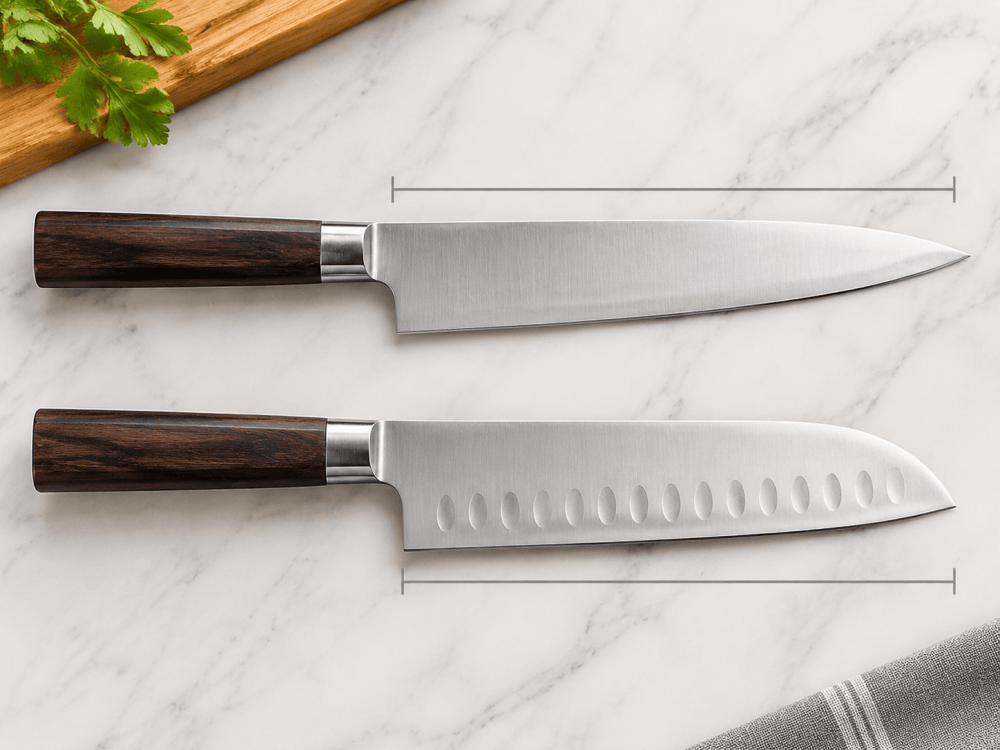
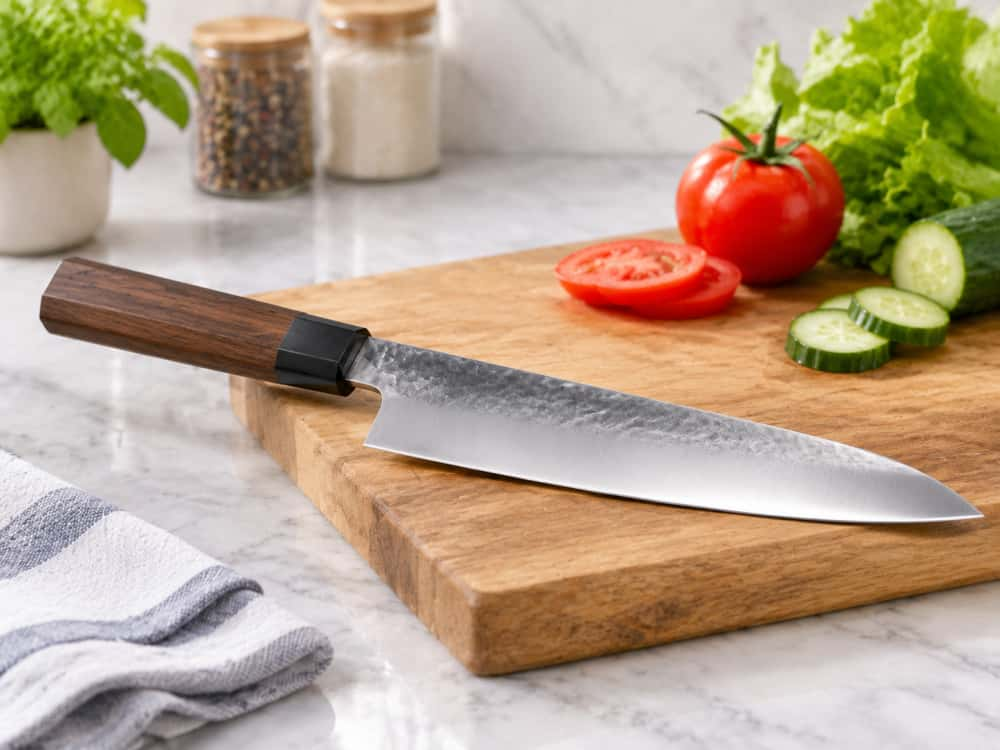
Both Nakiri knives and chef knives are common kitchen tools, but they are designed with different priorities. A Nakiri knife focuses on vegetable preparation, while a chef knife is a more versatile all-purpose kitchen knife.
| Comparison | Nakiri Knife | Chef Knife |
|---|---|---|
| Main Purpose | Vegetable preparation | General kitchen preparation |
| Blade Shape | Wide and rectangular | Usually tapered with a curved profile |
| Cutting Edge | Generally flat or nearly flat | Usually has a curved belly |
| Typical Cutting Motion | Up-and-down chopping and push cutting | Rocking, slicing, and chopping |
| Vegetable Preparation | Specialized for vegetables | Suitable for a wide range of vegetables |
| Meat Preparation | Limited to suitable boneless tasks | More versatile for boneless meat preparation |
Which Knife Should You Choose?
Choose a Nakiri knife if you frequently prepare vegetables and prefer a straight chopping motion. It is a practical option for cooks who regularly slice, dice, and chop vegetables.
Choose a chef knife if you want one versatile knife for a wider range of kitchen tasks, including vegetables, boneless meat, and general food preparation.
For a more detailed comparison of Japanese and Western-style chef knives, see our guide to kitchen knives.
6. How to Choose the Right Nakiri Knife
Choosing a Nakiri knife involves more than looking at its appearance. Blade length, steel, handle design, edge geometry, and overall balance all affect how the knife performs in everyday use.
Blade Length
Many Nakiri knives have blades around 165–180 mm long, although sizes vary by design and manufacturer. A shorter blade may feel easier to control for smaller hands or compact cutting boards, while a longer blade can provide more cutting capacity for larger vegetables.
Consider the size of the ingredients you prepare most often, your cutting board space, and how comfortable the knife feels in your hand.
Blade Material
Blade material affects edge retention, corrosion resistance, maintenance, and sharpening requirements.
- Stainless steel: A practical option for everyday kitchens because it generally offers better resistance to rust and staining than carbon steel.
- Carbon steel: Often valued for its sharpening characteristics and potential for high sharpness, but it requires more careful drying and maintenance to prevent corrosion.
The best material depends on the intended users, maintenance habits, target market, and product positioning.
Handle Design
A comfortable handle helps users maintain control during repetitive cutting tasks. Common handle considerations include shape, grip texture, material, weight, and the transition between the handle and blade.
For commercial buyers and private-label brands, handle material and appearance can also influence the product's retail positioning.
Blade Thickness and Edge Geometry
Blade thickness and edge geometry influence how a Nakiri knife moves through vegetables. A thinner blade may offer less resistance when slicing, while a thicker construction may provide a different balance of strength and cutting feel.
Buyers should evaluate blade thickness together with steel type, heat treatment, sharpening angle, and intended use rather than judging performance by thickness alone.
Balance and Overall Construction
A well-balanced knife should feel comfortable and controlled during repeated cutting. Pay attention to the handle-to-blade relationship, fit and finish, and the overall construction quality.
7. How to Maintain a Nakiri Knife
Proper care helps preserve the cutting edge and extend the service life of a Nakiri knife. Because many Nakiri knives have relatively thin cutting edges, correct handling and storage are especially important.
Clean and Dry the Blade After Use
Wash the knife according to the manufacturer's care instructions and dry it thoroughly before storage. Even stainless steel can develop stains or corrosion under unsuitable conditions, especially when exposed to moisture or acidic food residues for extended periods.
Use an Appropriate Cutting Surface
Use a suitable cutting board made from materials such as wood or plastic. Avoid repeatedly cutting on hard surfaces such as glass, stone, or ceramic, which can accelerate edge wear or damage the blade.
Sharpen the Knife When Needed
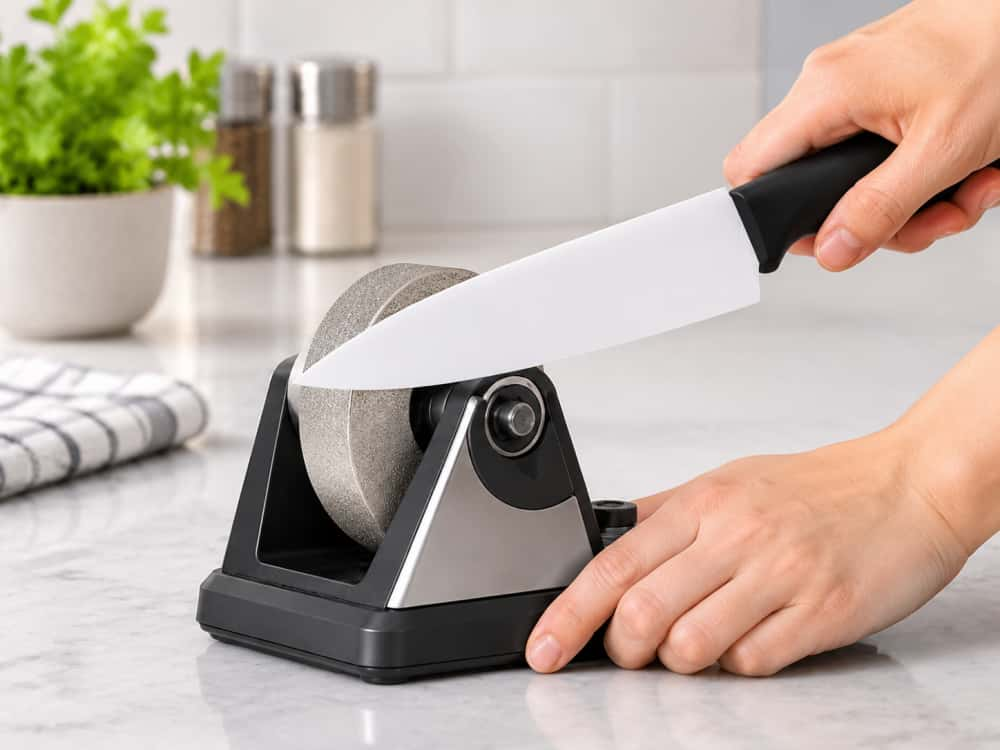
A dull Nakiri knife requires more force and may make vegetable preparation less controlled. Use a sharpening method suitable for the knife's steel and edge geometry. A whetstone is commonly used for Japanese-style knives, but the correct technique and sharpening angle depend on the specific model.
Store It Safely
Store the knife in a knife block, blade guard, magnetic knife holder, or another suitable storage solution. Avoid placing it loosely in a drawer where the edge may contact other utensils.
8. Is a Nakiri Knife Worth Having?
A Nakiri knife can be a valuable addition to a kitchen, especially for people who prepare vegetables frequently. Its rectangular blade and straight cutting edge make it a specialized tool for chopping, slicing, and dicing vegetables.
It may be particularly useful for:
- Home cooks who prepare fresh vegetables every day.
- Vegetarian and plant-based cooking enthusiasts.
- Restaurants with frequent vegetable preparation tasks.
- Professional kitchens that need dedicated vegetable-cutting tools.
- Retailers and kitchenware brands looking to offer different Japanese-style knife designs.
However, a Nakiri knife is not essential for every kitchen. If you prefer one knife for a wide range of ingredients and cutting techniques, a chef knife may be a more practical starting point.
9. Nakiri Knife Selection for Kitchenware Buyers
For distributors, wholesalers, retailers, and private-label brands, selecting a Nakiri knife requires attention to both product performance and market positioning.
Before sourcing a Nakiri knife range, consider the following factors:
- Target customers: Determine whether the product is intended for home cooks, professional kitchens, or premium Japanese-style knife collections.
- Blade specifications: Evaluate blade length, steel material, thickness, edge geometry, and finish.
- Handle options: Consider handle materials, colors, ergonomics, and overall appearance.
- Product consistency: Check blade alignment, sharpening quality, handle fitting, and finish consistency across production batches.
- Packaging: Select packaging that matches the product's price positioning and retail requirements.
- Private-label requirements: Confirm logo, packaging, and other customization details before placing an order.
Working with an experienced kitchenware manufacturer can help buyers evaluate product specifications, customization requirements, and supply arrangements for their target markets.
Learn more about FASAKA OEM and ODM kitchenware services or contact our team to discuss your sourcing requirements.
10. Frequently Asked Questions About Nakiri Knives
What is a Nakiri knife mainly used for?
A Nakiri knife is mainly used for cutting vegetables. Its wide rectangular blade and straight cutting edge are suitable for chopping, slicing, and dicing ingredients such as cabbage, carrots, cucumbers, onions, and leafy greens.
Can a Nakiri knife cut meat?
A Nakiri knife can handle some boneless meat preparation, but it is not designed for general meat processing. A chef knife or another task-specific knife is usually a better choice for meat preparation.
What is the difference between a Nakiri knife and a chef knife?
A Nakiri knife has a wide rectangular blade and a relatively straight edge designed mainly for vegetable preparation. A chef knife usually has a curved blade profile and is more versatile for different kitchen tasks.
Is a Nakiri knife good for beginners?
Yes. A Nakiri knife can be suitable for beginners who frequently prepare vegetables. Its straightforward chopping motion is relatively easy to understand, although users should still learn proper knife handling and cutting techniques.
What is the standard Nakiri knife size?
Many Nakiri knives have blade lengths around 165–180 mm, but there is no single universal standard. The best size depends on the user's hand size, cutting board, and typical ingredients.
Can a Nakiri knife cut through bones or frozen food?
No. A Nakiri knife is not designed for bones, frozen food, or other hard materials. Using it for these tasks can chip, bend, or otherwise damage its cutting edge.
Is a Nakiri knife single bevel or double bevel?
Many Nakiri knives use a double-bevel edge, with both sides sharpened. However, edge construction can vary by model, so buyers should check the manufacturer's specifications before choosing a knife.
Looking for Kitchen Knife Manufacturing Solutions?
FASAKA, under DKS Enterprises Co., Ltd., provides kitchen knife and kitchenware solutions for global buyers. Whether you are a distributor, wholesaler, or private-label brand, our team can help you discuss product requirements and OEM/ODM opportunities.
Contact us to discuss your kitchenware sourcing needs.
Get a Free Quote