



What Is a Knife Block? Types, Benefits, and How to Choose One
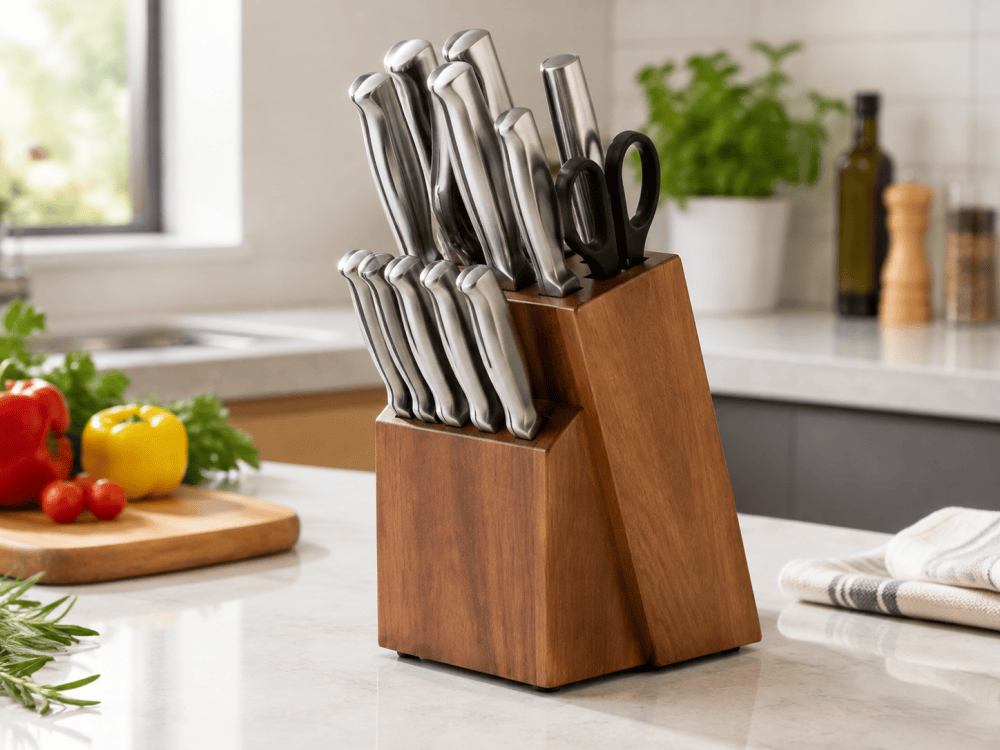
A knife block is a kitchen storage accessory designed to hold knives in an organized, accessible, and protected position. Commonly placed on a countertop, it may feature individual slots for different knives or a flexible insert that accommodates blades of various shapes and sizes. Some designs also include spaces for kitchen scissors, sharpening tools, or other accessories.
Choosing the right knife block depends on the knives you own, the space available in your kitchen, your preferred storage style, and how easily the block can be cleaned. This guide explains the main types of knife blocks, their advantages and disadvantages, and the key factors to consider before buying one.
Quick Answer: What Is a Knife Block?
A knife block is a storage unit that keeps kitchen knives organized and readily available when they are not in use. Traditional models have fixed slots, while universal and magnetic designs offer alternative ways to store knives. The best option is one that fits your knives securely, stays clean and dry, and suits your kitchen space.
1. What Is a Knife Block Used For?
A knife block provides a dedicated place to store kitchen knives between food-preparation tasks. Instead of leaving knives loose in a drawer or on a countertop, users can keep them in a designated storage system.
Depending on its design, a knife block can serve several purposes:
- Organizing knives: Keeps different knife types in designated positions or compartments.
- Protecting blades: Helps reduce contact with other utensils and hard surfaces when knives are stored correctly.
- Improving accessibility: Keeps frequently used knives close to the food-preparation area.
- Supporting kitchen safety: Provides a defined storage location instead of leaving sharp blades loose on a work surface.
- Complementing kitchen design: Offers a countertop storage solution in a range of materials, shapes, and finishes.
A knife block does not automatically keep knives clean or sharp. Its performance depends on the design, fit, storage conditions, and regular maintenance. Knives should always be cleaned and thoroughly dried before storage.
2. What Are the Different Types of Knife Blocks?
Knife blocks are available in several designs. Each type offers a different balance of storage capacity, flexibility, countertop use, and maintenance requirements.
2.1 Traditional Slotted Knife Block
A traditional knife block has individual slots designed to hold particular knives or blade sizes. It is commonly made from wood, bamboo, or plastic and is often sold as part of a kitchen knife set.
Advantages:
- Provides a designated place for each compatible knife.
- Keeps knives organized and close at hand.
- Can create a coordinated appearance when paired with a matching knife set.
Limitations:
- Fixed slots may not accommodate every knife shape or size.
- The block occupies countertop space.
- Internal slots can collect dust, crumbs, and moisture if not maintained properly.
Best for: Households that use a consistent set of kitchen knives and prefer organized countertop storage.
2.2 Universal Knife Block
A universal knife block is designed to accommodate a wider range of knife shapes and sizes than a traditional block with fixed, knife-specific slots. Many models use flexible rods, bristles, or a removable insert to hold the blades in position.
Advantages:
- Offers greater flexibility when storing knives from different sets.
- Can accommodate a changing collection of kitchen knives within its design limits.
- May be suitable for users who do not want to match every knife to a dedicated slot.
Limitations:
- Compatibility still depends on blade length, width, thickness, and the insert design.
- Some inserts may be difficult to clean unless they are removable.
- The internal material can contact the blade during insertion and removal.
Best for: Users who own knives from different sets or want more flexibility in their storage arrangement.
2.3 Magnetic Knife Block
A magnetic knife block uses magnets to hold compatible knives against its surface. Unlike a traditional slotted block, it may not require a separate slot for each knife. Some models sit on the countertop, while magnetic knife holders are also available as wall-mounted bars or racks.
Advantages:
- Can accommodate different knife shapes, subject to the magnetic design and holding capacity.
- May make the blades easier to see and select.
- Some designs reduce the need to insert blades into narrow slots.
Limitations:
- Knives must be placed and removed carefully to avoid blade contact or slipping.
- Holding strength and compatibility vary by model.
- Wall-mounted options require secure installation and suitable wall space.
Best for: Users who prefer visible knife storage and want an alternative to traditional fixed slots.
2.4 In-Drawer Knife Block or Organizer
An in-drawer knife organizer fits inside a kitchen drawer and separates knives into individual channels or compartments. It keeps knives out of sight while helping prevent them from moving freely among other utensils.
Advantages:
- Leaves the countertop available for food preparation.
- Keeps knives organized inside a dedicated drawer.
- Can reduce direct contact between blades and other kitchen tools.
Limitations:
- Requires sufficient drawer width, depth, and height.
- Knives are less visible and may be less convenient to access during cooking.
- The organizer and drawer need regular cleaning and drying.
Best for: Kitchens where countertop space is limited or users prefer concealed knife storage.
3. Knife Block Materials: Wood, Bamboo, and Plastic
Material affects the appearance, weight, maintenance, and overall design of a knife block. The right choice depends on the intended kitchen environment, cleaning requirements, and preferred product style.