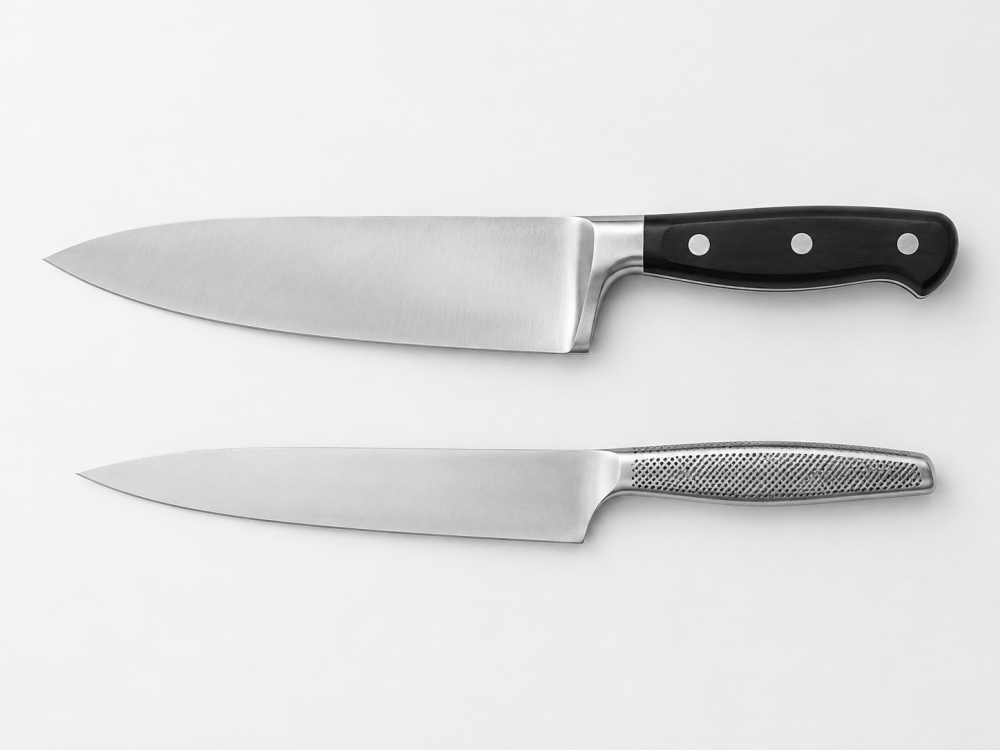




Can You Put Your Knife Set in the Dishwasher? A Complete Care Guide
Can You Put Your Knife Set in the Dishwasher? A Complete Care Guide
After preparing a meal, putting everything into the dishwasher may seem like the easiest way to clean up. But can you put your knife set in the dishwasher, or is hand washing a better option?
The answer depends on the knife's construction, including its blade material, handle material, and the manufacturer's care instructions. Although some knives are labeled dishwasher-safe, repeated machine washing can still affect their sharpness, finish, handles, and overall service life.
This guide explains how dishwasher washing affects different knife materials, which cleaning mistakes to avoid, and how to clean and store your kitchen knives correctly.

1. Can You Put a Kitchen Knife Set in the Dishwasher?
In most cases, hand washing is recommended for kitchen knives, especially chef's knives, forged knives, and knives with wooden handles. A dishwasher combines heat, detergent, water exposure, and contact with other utensils, creating conditions that may be harsher than necessary for a precision cutting tool.
Some manufacturers specifically label certain household knives as dishwasher-safe. However, this designation applies to the particular product, not automatically to every knife made from a similar material. Even when machine washing is permitted, hand washing may help preserve the knife's appearance and cutting performance over time.
Why are kitchen knives different from ordinary dishes?
- Sharp cutting edges: Contact with other knives, forks, or metal utensils can damage or wear the cutting edge.
- Heat exposure: Repeated hot washing and drying cycles may affect certain handle materials, adhesives, and assembled components.
- Strong detergents: Dishwasher detergents can contribute to staining, discoloration, or surface damage under certain conditions.
- Prolonged moisture: Water trapped around handles, rivets, or blade-to-handle joints may contribute to corrosion or deterioration.
The important distinction is that a knife may survive an occasional dishwasher cycle without obvious damage, but that does not mean repeated machine washing is the best maintenance method.
2. Dishwasher Cleaning Rules for Different Knife Handle Materials
When choosing how to clean a knife set, consider both the blade and the handle. The handle material is particularly important because it may respond differently to heat, moisture, detergent, and repeated washing.
| Handle Material | Main Cleaning Concern | Recommended Cleaning Method |
|---|---|---|
| Wood | Moisture and heat may cause swelling, drying, cracking, warping, or changes around rivets and joints. | Hand wash promptly with mild soap and water. Avoid soaking and dry immediately. Do not put wooden-handled knives in the dishwasher. |
| Plastic | Heat and detergent may affect the finish, color, shape, or handle-to-blade connection, depending on the plastic and construction. | Hand washing is preferred. Use a dishwasher only when the specific knife is explicitly labeled dishwasher-safe. |
| POM or other synthetic materials | Performance varies with material grade, handle design, assembly, and washing conditions. | Follow the manufacturer's instructions. Do not assume every synthetic handle is suitable for machine washing. |
| Stainless steel | Water spots, discoloration, corrosion under unfavorable conditions, and damage from contact with other utensils may occur. | Hand wash and dry thoroughly. Check whether the complete knife is approved for dishwasher use before machine washing. |
| Composite or mixed-material handles | Different materials, adhesives, decorative layers, or joints may respond differently to heat and moisture. | Use the cleaning method specified for the finished product. Hand washing is the safer default when instructions are unavailable. |
Wooden handle knife sets
Wooden handles offer a natural appearance and a distinctive feel, but they require more careful maintenance than many synthetic alternatives. Repeated dishwasher exposure can cause the wood to absorb and release moisture, potentially leading to swelling, cracking, warping, or deterioration around the handle joints.
To care for a wooden-handle knife, wash it by hand, avoid leaving it submerged in the sink, and wipe it dry immediately. Apply a suitable handle-care product only when recommended by the manufacturer.
Plastic handle knife sets
Plastic handles are common in everyday kitchen knife sets because they can be practical, easy to clean, and suitable for a variety of designs. However, plastic is a broad material category. Different polymers, thicknesses, shapes, and assembly methods can behave differently under repeated heat exposure.
Do not assume that a plastic handle automatically makes a knife dishwasher-safe. Check the product label or manufacturer instructions. For everyday care, mild soap, warm water, and prompt drying are usually the more conservative choice.
Stainless steel handle knife sets
Stainless steel handles provide a clean, modern appearance, but stainless steel is not completely immune to staining or corrosion. Dishwasher chemicals, mineral deposits, residual food, and contact with other metals may affect the surface under certain conditions.
For knives with stainless steel handles, check the care instructions for the complete knife. After washing, dry the blade and handle carefully, paying particular attention to joints, textured areas, and places where water may collect.
Composite and mixed-material knife sets
Some knife handles combine different materials to balance appearance, grip, durability, and cost. These designs may include synthetic polymers, decorative layers, metal components, or bonded parts.
Because performance depends on the complete construction, it is not possible to determine dishwasher suitability from the word “composite” alone. If the product does not clearly state that it is dishwasher-safe, hand washing is the safer option.
3. How Does Dishwasher Washing Affect a Knife Set?
1. It can reduce cutting-edge performance
Knife blades may strike other utensils or the dishwasher basket during a washing cycle. These repeated impacts can damage or wear the cutting edge. A knife may still look clean while becoming less effective at slicing, chopping, or making precise cuts.
For this reason, avoid placing loose knives together with forks, spoons, and other metal items. Hand washing also reduces unnecessary contact between the cutting edge and hard surfaces.
2. It may cause stains or corrosion
Stainless steel is corrosion-resistant, not corrosion-proof. Salt, acidic food residue, moisture, unsuitable detergent, and deposits from other metal items can contribute to staining or corrosion under certain conditions.
Leaving food residue on a blade for an extended period is also a poor practice. Clean knives soon after use, rinse away soap and food particles, and dry them thoroughly before storage.
3. It may damage handles or joints
Wooden handles are particularly vulnerable to repeated heat and moisture exposure. Other handles may also experience changes in color, finish, shape, or the integrity of their joints, depending on the materials and manufacturing process.
For assembled knives, the connection between the blade and handle deserves attention. Water and food residue should not be allowed to accumulate in this area.
4. It can shorten the useful life of the knife
The effect of machine washing depends on the individual product and the washing conditions. One cycle may not cause visible damage, but repeated exposure can increase wear on the blade, handle, and other components.
If you have invested in a quality knife set, hand washing and proper storage are simple ways to reduce avoidable wear and help maintain its performance.
4. The Right Way to Clean a Kitchen Knife Set
For most household kitchen knives, a simple hand-washing routine is effective and easy to follow.
Step 1: Clean the knife soon after use
Remove food residue promptly, especially after cutting salty, acidic, or strongly colored ingredients. Do not leave knives sitting in the sink or submerged in water.
Step 2: Use warm water and mild dish soap
Hold the knife securely and wash it with a soft sponge or cloth. Avoid abrasive pads and harsh cleaning products that may scratch the surface or damage the finish.
Step 3: Keep your hands away from the cutting edge
Always handle the blade carefully. Move the sponge along the blade with controlled strokes, keeping your fingers away from the sharp edge. Never reach blindly into a sink containing knives.
Step 4: Rinse thoroughly
Remove all food residue and soap. Pay attention to the junction between the blade and handle, where particles or moisture may remain.
Step 5: Dry immediately
Use a clean, soft towel to dry the blade and handle. Do not leave knives to air-dry in a pile or remain wet in a drying rack for an extended period.
Step 6: Store the knives safely
Once completely dry, return the knives to a knife block, protective sheath, drawer organizer, or another suitable storage system. Keep sharp edges protected and avoid storing loose knives where they can rub against other utensils.
- Clean soon after use.
- Use mild dish soap and a soft sponge.
- Avoid soaking knives or leaving them in the sink.
- Rinse and dry the entire knife thoroughly.
- Protect the cutting edge during storage.
- Follow the manufacturer's care instructions for each knife.
5. What If Your Knife Set Is Labeled Dishwasher-Safe?
If the manufacturer explicitly states that a knife is dishwasher-safe, follow the instructions for that specific product. Dishwasher-safe labeling means the product has been designated for that cleaning method under the manufacturer's stated conditions; it does not mean that machine washing will have no effect on appearance or cutting performance over time.
If you choose to use a dishwasher for a product approved for machine washing, take these precautions:
- Remove heavy food residue before loading.
- Position knives securely according to the dishwasher and knife manufacturer's instructions.
- Prevent blades from touching other metal utensils wherever possible.
- Avoid overloading the basket, which can increase contact between items.
- Use the recommended detergent and avoid excessive detergent dosing.
- Remove knives after the cycle and check that they are clean and dry before storage.
For large chef's knives, forged knives, wooden-handle knives, and valuable knife sets, hand washing remains the preferred general recommendation.
6. Common Knife Set Cleaning Mistakes to Avoid
- Assuming every stainless steel knife is dishwasher-safe: Blade material alone does not determine the care requirements of the entire knife.
- Putting wooden-handle knives in the dishwasher: Heat and repeated moisture exposure may damage the wood and handle joints.
- Leaving knives soaking in the sink: Prolonged contact with water and food residue can encourage staining or deterioration.
- Using abrasive scrubbers: Rough pads may scratch blades and decorative surfaces.
- Letting knives dry while touching other utensils: Contact can damage cutting edges and leave marks.
- Storing knives while wet: Trapped moisture can contribute to stains or corrosion, particularly around joints.
- Ignoring product-specific instructions: Knife designs vary, so the manufacturer's care guidance should take priority over general advice.
7. Frequently Asked Questions About Cleaning Knife Sets
Can I put my knife set in the dishwasher?
Hand washing is generally recommended. Some knife sets are labeled dishwasher-safe, but suitability depends on the complete product design and manufacturer instructions. Wooden-handle knives should not be put in the dishwasher.
Are stainless steel kitchen knives dishwasher-safe?
Not necessarily. Stainless steel offers corrosion resistance, but the handle, blade finish, joints, and overall construction also matter. Check the product instructions and hand wash when dishwasher suitability is not confirmed.
Can I put plastic handle knives in the dishwasher?
Only if the specific knife is labeled dishwasher-safe or its manufacturer confirms that machine washing is suitable. Different plastics and handle constructions can respond differently to heat and detergent.
Why do knives become dull in the dishwasher?
Knives can contact other utensils, racks, or hard surfaces during the washing cycle. These impacts may wear or damage the cutting edge. Hand washing reduces this unnecessary contact.
Can dishwasher detergent cause rust on knives?
Under certain conditions, detergent, moisture, food residue, mineral deposits, and contact with other metals can contribute to staining or corrosion. Rinse knives thoroughly, dry them promptly, and follow the recommended care instructions.
Can I put a wooden knife block in the dishwasher?
Do not put a wooden knife block in the dishwasher unless its manufacturer explicitly permits it. Heat and moisture may damage the wood, joints, or finish. Follow the block manufacturer's cleaning instructions.
How should I clean a knife block or knife set organizer?
Follow the manufacturer's instructions for the particular storage product. For a removable, washable organizer, clean it as directed and let it dry completely before returning knives. Avoid allowing moisture to remain trapped inside a block or storage compartment.
How often should I clean kitchen knives?
Clean kitchen knives after every use. When preparing different foods, clean the blade between tasks as appropriate to avoid transferring food residue or allergens. Dry the knife before storage.
Is hand washing better than using a dishwasher for knife sets?
For most kitchen knives, yes. Hand washing is gentler, helps limit contact between blades and other utensils, and makes it easier to inspect and dry the blade and handle carefully.
What should buyers look for in an easy-care kitchen knife set?
Buyers should evaluate blade material, handle material, handle-to-blade construction, cleaning instructions, storage requirements, and the intended use of the product. For wholesale and private-label projects, cleaning guidance should be consistent with the actual materials and product testing.
8. Choosing Kitchen Knife Sets for Wholesale and Private Label
For retailers, importers, distributors, and private-label brands, cleaning and maintenance are useful product-selection considerations. A knife set should not only meet the target market's expectations for appearance and usability; it should also come with clear, accurate care instructions.
When evaluating a kitchen knife set for a product line, consider:
- Blade material and finish: Evaluate corrosion resistance, intended use, and maintenance requirements.
- Handle material: Compare wood, plastic, synthetic, stainless steel, and composite options according to the target product design.
- Construction: Review the handle joints, rivets, and other assembled components.
- Care instructions: Ensure packaging and product documentation accurately state whether the knife is suitable for dishwasher use.
- Packaging and storage: Consider knife blocks, protective covers, and other storage solutions suitable for the product range.
FASAKA is a brand under DKS Enterprises Co., Ltd., a manufacturer and supplier based in Yangjiang, Guangdong, China, specializing in hardware knives and scissors, BBQ tools, and kitchenware. For B2B buyers developing kitchenware assortments, explore our kitchen knives and OEM/ODM kitchenware services.
Looking for a Kitchen Knife Set Supplier?
Whether you are sourcing kitchen knife sets for wholesale distribution or developing a private-label product line, clear product specifications and care instructions can help support a better customer experience.
Contact FASAKA to discuss your kitchenware sourcing requirements, product options, and customization needs.