
2026-07-09

What Are Kitchen Scissors Used For? 10 Common Uses Every Home Cook Should Know (2026 Guide)

What Are Kitchen Scissors Used For? 10 Common Uses Every Home Cook Should Know (2026 Guide)

Kitchen scissors are one of the most versatile yet often overlooked tools in the kitchen. While many people automatically reach for a knife and cutting board, professional chefs frequently use kitchen scissors to complete food preparation tasks faster, safer, and with greater precision.

From cutting herbs and trimming meat to preparing seafood and opening food packaging, a high-quality pair of kitchen scissors can replace several kitchen tools while saving time and reducing cleanup.

In this complete guide, you'll learn what kitchen scissors are used for, the 10 most common kitchen scissor uses, how they compare with kitchen knives, and how to choose the right scissors for home kitchens, restaurants, and commercial food preparation.

Quick Answer

Kitchen scissors (also called kitchen shears) are multipurpose cutting tools designed specifically for food preparation. They are commonly used to cut herbs, vegetables, poultry, meat, seafood, pizza, bacon, noodles, food packaging, and many other kitchen ingredients. Compared with knives, kitchen scissors often provide better control, increased safety, and faster food preparation for many everyday tasks.

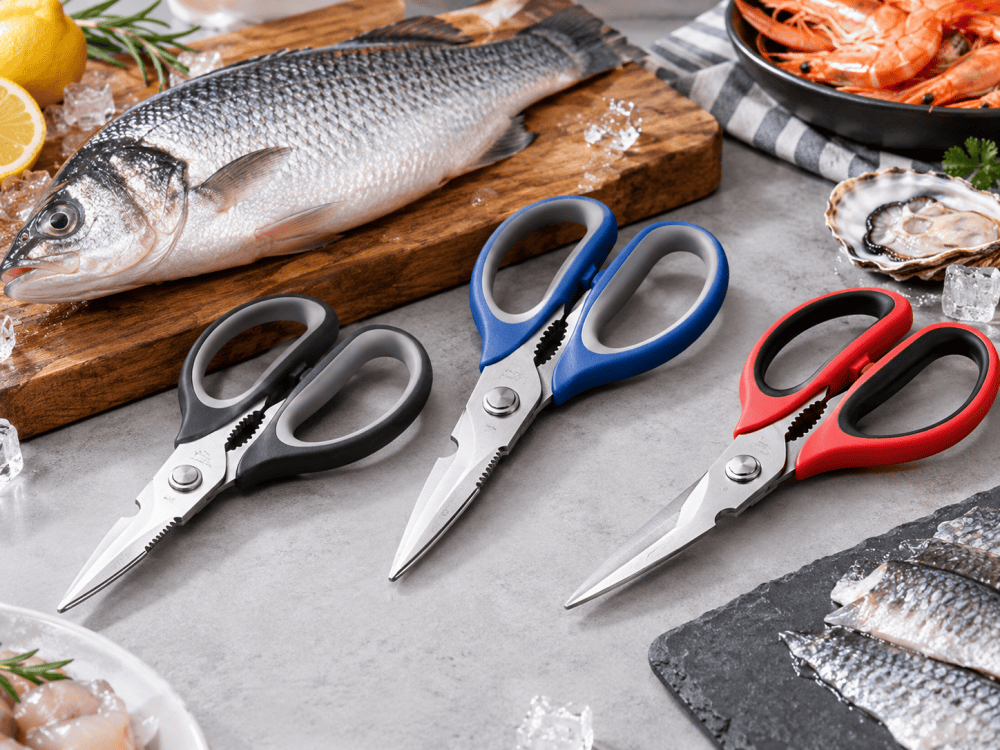
Professional stainless steel kitchen scissors for food preparation

What Are Kitchen Scissors?

Kitchen scissors are heavy-duty scissors specially designed for cutting food rather than paper, fabric, or other household materials. Unlike ordinary scissors, kitchen scissors are manufactured with food-grade stainless steel blades, ergonomic handles, and stronger pivot mechanisms that can withstand repeated contact with meat, poultry, vegetables, herbs, and seafood.

Modern kitchen scissors often include several built-in functions beyond cutting, such as bottle openers, nut crackers, fish scale scrapers, bone notches, herb strippers, and detachable blades for easier cleaning.

A quality pair of kitchen scissors can replace multiple kitchen tools and significantly improve food preparation efficiency.


Kitchen Scissors vs Kitchen Shears: Are They Different?

The terms kitchen scissors and kitchen shears are often used interchangeably, but there are subtle differences.

Feature Kitchen Scissors Kitchen Shears
Primary Use General food preparation Heavy-duty food cutting
Blade Thickness Medium Thicker
Suitable For Herbs, vegetables, packaging Chicken, meat, seafood
Extra Functions Basic Bone notch, bottle opener, nut cracker

Today, many manufacturers—including FASAKA—combine these features into one versatile product, making the terms "kitchen scissors" and "kitchen shears" practically interchangeable for most users.


Why Use Kitchen Scissors Instead of a Knife?

Although chef's knives remain essential in every kitchen, there are many situations where kitchen scissors offer significant advantages.

  • ✔ Faster food preparation for repetitive cutting tasks.
  • ✔ Better control when trimming poultry and meat.
  • ✔ Safer cutting with less risk of slipping.
  • ✔ No cutting board required for many jobs.
  • ✔ Reduced cleanup after cooking.
  • ✔ Easy access to tight spaces around bones and joints.
  • ✔ Perfect for cutting directly into pots, pans, or bowls.
Kitchen scissors cutting fresh herbs

Anatomy of Kitchen Scissors

Understanding the components of kitchen scissors helps buyers choose the right product for their cooking needs.

1. Stainless Steel Blades

The blades are manufactured from food-grade stainless steel such as 3Cr13, 5Cr15MoV, or 420J2, providing durability, corrosion resistance, and long-lasting sharpness.

2. Micro-Serrated Edge

Many professional kitchen scissors feature micro-serrated blades that grip slippery foods like chicken skin, fish, or herbs more effectively.

3. Ergonomic Handles

Soft-grip, non-slip handles reduce hand fatigue during extended food preparation.

4. Bone Notch

A small notch near the pivot allows users to cut through poultry bones and joints with greater stability.

5. Built-in Multi-Function Tools

Many premium kitchen scissors include additional functions such as:

  • Bottle opener
  • Nut cracker
  • Jar lid opener
  • Fish scaler
  • Herb stripper
  • Detachable blades for cleaning

Types of Kitchen Scissors

Not all kitchen scissors are designed for the same tasks. Choosing the right type improves cutting performance and extends product life.

Type Best For
Multipurpose Kitchen Scissors Daily household cooking
Heavy-Duty Kitchen Shears Meat and poultry preparation
Poultry Shears Chicken and turkey processing
Seafood Scissors Crab, shrimp, lobster, fish
Herb Scissors Fast herb cutting
Detachable Kitchen Scissors Easy cleaning and sanitation

In Part 2, we'll explore the 10 most common uses of kitchen scissors, compare kitchen scissors with knives, and explain which foods they can—and should not—be used to cut.


10 Common Uses of Kitchen Scissors

Kitchen scissors are among the most versatile tools in any kitchen. Professional chefs, restaurant cooks, and home bakers use them every day because they can perform many cutting tasks faster than a knife while providing greater control and reducing cleanup.

Below are the ten most common ways kitchen scissors are used in everyday cooking.


1. Cutting Fresh Herbs

Fresh herbs such as parsley, cilantro, basil, dill, mint, rosemary, thyme, and chives are much easier to cut using kitchen scissors than a chef's knife.

Instead of transferring herbs to a cutting board, you can simply hold the herb bundle over a bowl, pan, or soup and cut directly into the food, preserving freshness while minimizing cleanup.

Best For: Basil, parsley, cilantro, dill, green onions, thyme, rosemary


2. Trimming Meat

Kitchen scissors make trimming fat, connective tissue, silver skin, and uneven edges from beef, pork, and lamb much easier than using a knife.

Their pointed blades allow precise cuts while reducing waste and improving presentation.


3. Cutting Chicken and Poultry

Heavy-duty kitchen shears are ideal for preparing whole chickens. They can cut through skin, cartilage, wing joints, and small bones quickly, making tasks such as spatchcocking much easier.

Professional Tip: Poultry shears with a bone notch provide better leverage when cutting through chicken joints.


4. Preparing Seafood

Kitchen scissors are excellent for trimming fish fins, cutting shrimp shells, splitting lobster shells, preparing crab legs, and cleaning squid.

Unlike knives, scissors allow more precise cutting without damaging delicate seafood.


5. Opening Food Packaging

From vacuum-sealed meat bags to frozen food packaging and seasoning packets, kitchen scissors open food packages much faster and more safely than knives.

This is one of the reasons kitchen scissors are used constantly in commercial kitchens.


6. Cutting Pizza

Many people are surprised to learn that kitchen scissors can cut pizza remarkably well.

Instead of dragging toppings with a pizza wheel, scissors make clean cuts through crust, cheese, and toppings while keeping slices intact.


7. Cutting Bacon and Deli Meat

Kitchen scissors quickly cut bacon strips, ham, sausages, and deli meat into smaller portions for cooking or meal preparation.

Many chefs cut bacon directly into a frying pan, eliminating the need for a cutting board.


8. Cutting Noodles and Pasta

Long noodles such as spaghetti, ramen, udon, and rice noodles can be shortened easily with kitchen scissors.

Parents also commonly use scissors to cut noodles into child-friendly lengths.


9. Cutting Vegetables

Kitchen scissors work well for trimming leafy vegetables, mushrooms, asparagus, spinach, lettuce, and green onions.

Many cooks cut vegetables directly into salads, soups, and stir-fries without transferring ingredients to a cutting board.


10. Everyday Food Preparation

Kitchen scissors are also useful for cutting dried fruit, tortillas, seaweed, cheese, sandwiches, pastry dough, parchment paper, and numerous other kitchen tasks.

Their versatility makes them one of the most frequently used tools in both home and professional kitchens.


Kitchen Scissors vs Kitchen Knife

Although knives remain indispensable, kitchen scissors outperform them in many situations where speed, precision, and convenience matter most.

Task Kitchen Scissors Kitchen Knife
Cut Herbs ★★★★★ ★★★★☆
Trim Meat ★★★★★ ★★★★☆
Cut Chicken ★★★★★ ★★★☆☆
Slice Vegetables ★★★☆☆ ★★★★★
Precision Chopping ★★★☆☆ ★★★★★
Open Packaging ★★★★★ ★☆☆☆☆

The best-equipped kitchens don't choose between scissors and knives—they use both for the tasks they perform best.


What Should You NOT Cut with Kitchen Scissors?

Although kitchen scissors are extremely versatile, they are not designed for every material. Using them improperly can damage the blades or reduce cutting performance.

Avoid Cutting Reason
Frozen Meat May chip or dull the blades.
Large Animal Bones Can damage the pivot mechanism.
Metal Wire Not intended for non-food materials.
Plastic Zip Ties May create blade nicks.
Hard Frozen Seafood Too much cutting resistance.

Can Kitchen Scissors Replace a Knife?

Kitchen scissors are incredibly versatile, but they are not a complete replacement for chef's knives. They excel at trimming, snipping, cutting around bones, opening packaging, and portioning ingredients, while knives remain the preferred tool for chopping, slicing, and dicing large quantities of food.

Using both tools together creates a more efficient and productive kitchen workflow, whether you're cooking at home or preparing meals in a commercial kitchen.

In Part 3, we'll explain how to choose the best kitchen scissors, compare stainless steel blade materials, provide cleaning and maintenance tips, share an OEM buying guide from FASAKA, and answer the most frequently asked questions about kitchen scissors.


How to Choose the Best Kitchen Scissors

Not all kitchen scissors are created equal. The ideal pair depends on how you cook, what ingredients you prepare most often, and whether you're buying for personal use, a professional kitchen, or a commercial brand. Choosing high-quality kitchen scissors can improve efficiency, safety, and long-term durability.

When shopping for kitchen scissors, pay close attention to blade material, handle comfort, blade thickness, pivot construction, detachable design, and additional built-in functions.

Application Recommended Type Why
Home Kitchen Multipurpose Kitchen Scissors Versatile for everyday cooking tasks.
Restaurant Heavy-Duty Kitchen Shears Designed for frequent commercial use.
BBQ & Meat Preparation Heavy-Duty Poultry Shears Cuts poultry, ribs, and meat efficiently.
Seafood Processing Seafood Scissors Ideal for shrimp, crab, lobster, and fish.
Private Label Brand OEM Customized Kitchen Scissors Supports logo, packaging, and custom specifications.

Best Stainless Steel for Kitchen Scissors

Blade material has the greatest impact on cutting performance, corrosion resistance, and service life. Different stainless steels are suitable for different markets and price levels.

Steel Advantages Recommended For
420J2 Excellent corrosion resistance, affordable Entry-level kitchen scissors
3Cr13 Good balance of durability and price General household use
5Cr15MoV Higher hardness and better edge retention Professional kitchens
Japanese Stainless Steel Premium cutting performance High-end kitchen scissors

For most households, 3Cr13 stainless steel provides an excellent balance between durability, corrosion resistance, and cost.


How to Clean Kitchen Scissors Properly

Because kitchen scissors come into direct contact with raw meat, seafood, herbs, and vegetables, proper cleaning is essential for food safety.

Daily Cleaning Tips

  • ✔ Wash immediately after use.
  • ✔ Use warm water with mild dish soap.
  • ✔ Dry completely to prevent corrosion.
  • ✔ Clean around the pivot where food residue collects.
  • ✔ Separate detachable blades for deep cleaning if possible.

Can Kitchen Scissors Go in the Dishwasher?

Some stainless steel kitchen scissors are dishwasher safe, but hand washing is generally recommended because harsh detergents and high temperatures may shorten the lifespan of the blades and handles.


Kitchen Scissors Maintenance Tips

  • Sharpen blades regularly using a scissor sharpener.
  • Lubricate the pivot occasionally with food-grade mineral oil.
  • Store scissors in a dry location.
  • Never use kitchen scissors to cut wire, hard plastic, or frozen bones.
  • Inspect the pivot screw periodically to ensure smooth operation.

Kitchen Scissors Buying Checklist

  • ✔ Food-grade stainless steel blades
  • ✔ Comfortable ergonomic handles
  • ✔ Rust-resistant construction
  • ✔ Sharp precision-ground blades
  • ✔ Heavy-duty pivot screw
  • ✔ Detachable blades for cleaning
  • ✔ Built-in bottle opener and nut cracker
  • ✔ Bone notch for poultry preparation
  • ✔ Reliable manufacturer with quality certifications
  • ✔ OEM customization for wholesale buyers

Why Choose FASAKA for OEM Kitchen Scissors?

FASAKA is a professional manufacturer specializing in kitchen scissors, household scissors, poultry shears, BBQ scissors, seafood scissors, and other premium kitchen cutting tools. With decades of manufacturing experience, we provide OEM and ODM solutions for global brands, wholesalers, distributors, supermarkets, and retailers.

Our OEM Capabilities Include:

  • Custom blade materials (420J2, 3Cr13, 5Cr15MoV, etc.)
  • Laser logo engraving
  • Custom handle colors and materials
  • Private label packaging
  • Retail-ready gift boxes
  • Product development and mold customization
  • Bulk production with strict quality control

Partner with FASAKA

Looking for a reliable OEM kitchen scissors manufacturer? FASAKA offers complete private-label solutions, premium stainless steel kitchen scissors, and professional manufacturing services for global brands.

Explore Our OEM & ODM Services →

Browse more professional kitchen tools:

Kitchen & BBQ Tools Collection →

Need a quotation or product recommendation?

Contact FASAKA →


Frequently Asked Questions

What are kitchen scissors used for?

Kitchen scissors are used for cutting herbs, vegetables, meat, poultry, seafood, pizza, bacon, noodles, food packaging, and many other food preparation tasks.

Can kitchen scissors cut raw chicken?

Yes. Heavy-duty kitchen shears are specifically designed to cut raw chicken, joints, skin, and cartilage safely and efficiently.

Are kitchen scissors better than knives?

Neither tool is universally better. Kitchen scissors excel at trimming, snipping, and cutting around bones, while knives are better for chopping and slicing large ingredients.

Can kitchen scissors cut vegetables?

Absolutely. They work well for herbs, green onions, lettuce, mushrooms, spinach, asparagus, and many leafy vegetables.

How often should kitchen scissors be sharpened?

For average home use, sharpening every 6–12 months is sufficient. Professional kitchens may require more frequent maintenance depending on usage.

Are detachable kitchen scissors better?

Yes. Detachable kitchen scissors are easier to clean thoroughly, helping improve hygiene and reduce bacterial buildup around the pivot area.

What is the best stainless steel for kitchen scissors?

3Cr13 is an excellent choice for everyday household use, while 5Cr15MoV offers better edge retention and is preferred for premium kitchen scissors.

Can kitchen scissors go in the dishwasher?

Some models are dishwasher safe, but hand washing and drying immediately after use will maximize blade life and maintain cutting performance.


Final Thoughts

Kitchen scissors are far more than a simple cutting tool. From trimming poultry and seafood to cutting herbs, vegetables, pizza, and food packaging, they improve efficiency, safety, and convenience in both home and professional kitchens.

By understanding the different types of kitchen scissors, selecting the right blade material, and following proper cleaning and maintenance practices, you can enjoy reliable performance for years to come. Whether you're a home cook, restaurant owner, or wholesale buyer, investing in high-quality kitchen scissors is a smart choice.

If you're looking for a trusted OEM partner, FASAKA offers premium kitchen scissors with customizable materials, branding, packaging, and manufacturing solutions tailored to your business needs.

The best kitchen scissors aren't just another utensil—they're one of the most practical tools for faster, safer, and more efficient cooking every day.