



How to Clean a Knife Block and Keep It Hygienic
A knife block keeps kitchen knives organized and within reach, but its narrow slots can trap crumbs, moisture, grease, and other debris. If knives are returned while wet, the inside of the block may develop unpleasant odors and conditions that encourage mold growth.
Learning how to clean a knife block properly means more than wiping its exterior. You also need to remove debris from the slots, dry the interior thoroughly, and follow cleaning instructions suited to the block's material.
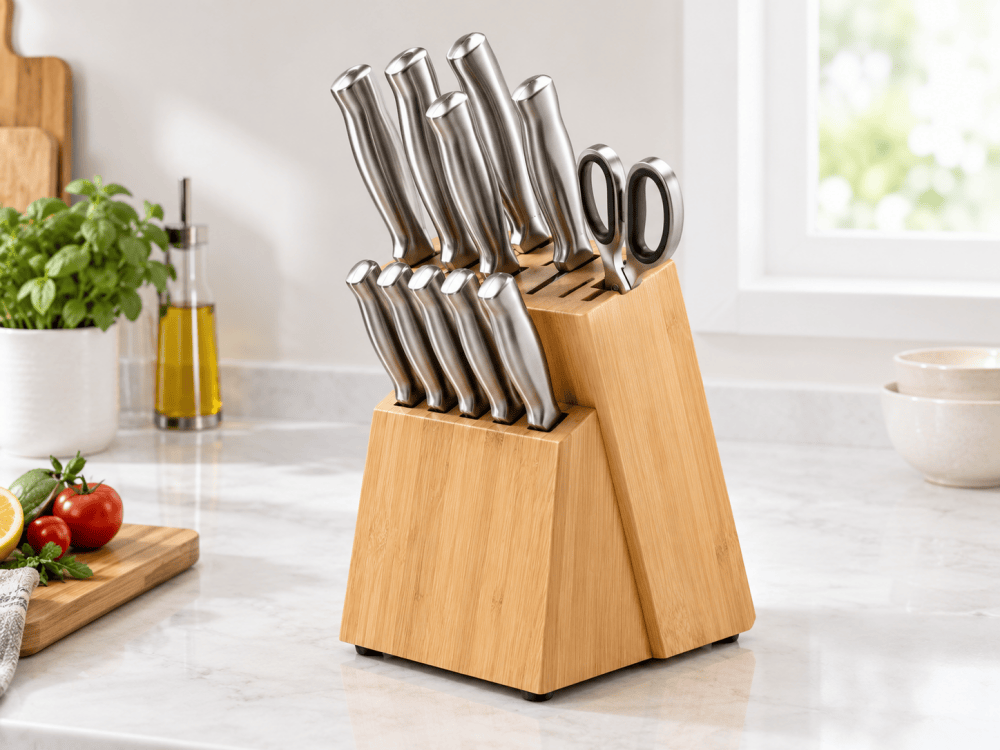
Remove the knives, turn the block upside down to release loose debris, and clean the slots with a suitable narrow brush. Wipe the exterior with a material-appropriate cleaner, remove any residue, and let the block dry completely before returning clean, dry knives. Avoid soaking wooden blocks or using harsh chemicals unless the manufacturer specifically permits them.
1. Why Knife Blocks Need Regular Cleaning
Knife blocks are different from flat kitchen surfaces. Their slots are narrow, deep, and difficult to inspect, so debris can remain hidden even when the outside looks clean.
- Food particles: Small pieces of food can enter the slots when knives are stored after preparation.
- Moisture: Putting away a damp knife can introduce water into an area with limited airflow.
- Odors: Trapped moisture and organic debris may contribute to unpleasant smells.
- Material deterioration: Repeated exposure to moisture or unsuitable cleaning products may damage some finishes, adhesives, or wooden components.
Cleaning the exterior alone is not enough. The slots and the block's drying conditions also need attention.
2. What You Need Before Cleaning
Prepare the following items before you begin:
- A clean, dry towel or microfiber cloth
- A narrow cleaning brush suitable for the slot dimensions
- Mild dish soap, if compatible with the block's material
- A small bowl of water for preparing a cleaning solution
- A clean, dry work surface with good ventilation
3. How to Clean a Knife Block Step by Step
The following method is suitable as a general starting point for many conventional knife blocks. Adjust it to the specific material and manufacturer's instructions.
Remove All Knives
Take every knife out of the block and place it safely away from the cleaning area. Handle blades carefully and keep them away from the edge of the counter.
Check each knife for moisture or food residue. Clean and dry the knives separately according to their own care instructions.
Turn the Block Upside Down
Hold the empty block securely and turn it upside down over a sink or waste bin. Gently shake it to release loose crumbs and other debris.
Avoid striking the block against a hard surface. Excessive impact may damage the finish, joints, or internal structure.
Brush the Knife Block Slots
Use a narrow, clean brush that fits into the slots. Work gently through each opening to loosen remaining debris, following the slot direction where possible.
Turn the block upside down again to remove loosened particles. Do not force a brush into a slot if it may damage an internal insert or become stuck.
Clean the Exterior
If the material permits, use a soft cloth lightly dampened with a mild cleaning solution. Wipe the exterior, paying attention to corners, the base, and areas that are frequently touched.
Avoid flooding the slots or allowing liquid to collect in seams. For wooden and bamboo blocks, use as little moisture as practical and follow the manufacturer's directions.
Remove Cleaning Residue
If you used soap or another cleaning product, wipe away residue according to the product and block manufacturer's instructions. Do not leave cleaning chemicals inside the slots.
Use only products suitable for the material and intended food-contact environment. Never mix bleach with vinegar, ammonia, or other cleaning chemicals.
Dry the Block Completely
Wipe accessible surfaces with a clean towel, then leave the block in a well-ventilated location until its interior is fully dry. Position it so air can circulate around the openings and base.
Do not return knives simply because the outside feels dry. The slots may retain moisture longer than the visible surfaces.
Return Only Clean, Dry Knives
Inspect the block for lingering moisture, debris, or unusual odors. Once it is completely dry and clean, return knives that have also been cleaned and dried.
4. How to Clean Different Types of Knife Blocks
The material affects how much moisture a block can tolerate, which cleaning products are appropriate, and how it should be dried.
| Block Material | Recommended Approach | What to Avoid |
|---|---|---|
| Wood | Remove debris with a suitable brush; wipe with a lightly damp cloth if permitted; dry promptly and thoroughly. | Soaking, prolonged moisture, and unapproved dishwasher or chemical cleaning. |
| Bamboo | Use gentle surface cleaning and minimize water exposure; follow the product's care instructions. | Leaving water in slots or allowing the block to remain damp. |
| Plastic | Use a compatible cleaning solution and clean the slots with a suitable brush. Follow any dishwasher guidance provided by the manufacturer. | High heat or harsh chemicals when the material is not rated for them. |
| Removable or bristle inserts | Remove the insert only if designed to be removable, then clean and dry each component as directed. | Forcing components apart or reinstalling an insert before it is completely dry. |
If the block combines wood, plastic, metal, adhesives, or removable inserts, use the care instructions for the complete product rather than assuming every component can be cleaned in the same way.
5. How to Clean Deep or Narrow Knife Block Slots
Deep slots are often the most difficult part of cleaning a knife block because they limit visibility and airflow. A simple surface wipe cannot reliably remove debris from the interior.
Use a Brush That Fits the Slot
Choose a clean brush with bristles that can reach into the opening without excessive force. Work carefully, then invert the block to release the loosened debris.
Do Not Pour Water Into the Slots
Filling a slot with water can make drying difficult, particularly in wooden or bamboo blocks. Use a dry brush for loose debris first, then follow the manufacturer's approved method for any additional cleaning.
Check for Removable Inserts
Some designs allow internal components to be removed for easier cleaning. Do not assume an insert is removable unless the manufacturer confirms that it is designed for removal.
6. Mold, Dark Spots, and Unpleasant Odors: What Should You Do?
A persistent musty smell, visible growth, or unexplained discoloration deserves attention. However, appearance alone cannot always establish whether a mark is mold, staining, or another type of material change.
| What You Notice | Possible Explanation | Recommended Action |
|---|---|---|
| Loose crumbs or visible food debris | Routine accumulation in the slots | Remove debris with a suitable brush and clean the accessible surfaces. |
| Musty or persistent unpleasant odor | Trapped moisture, retained debris, or possible microbial growth | Stop storing knives in the block until the cause is assessed. Clean only using an approved method. |
| Dark spots or visible growth | Possible mold, staining, or material deterioration | Do not assume ordinary wiping will resolve the problem. Assess the material, depth, and manufacturer's guidance. |
| Softened wood, cracks, swelling, or damaged joints | Moisture damage or structural deterioration | Consider replacement, especially if internal areas cannot be cleaned and inspected reliably. |
Can a Moldy Knife Block Be Saved?
It depends on the material, the extent of the suspected growth, and whether affected areas can be safely cleaned. Superficial contamination on an accessible, nonporous surface may be easier to address than suspected growth deep inside a porous wooden block.
If suspected mold is embedded in inaccessible slots, the odor persists after appropriate cleaning and drying, or the block shows material damage, replacing the block is the more cautious option. Do not return knives to a block that may remain contaminated.
7. Does Cleaning a Knife Block Also Sanitize It?
No. Cleaning and sanitizing are different processes. Cleaning removes soil and debris; sanitizing uses an appropriate method to reduce microorganisms to a specified level.
A household cleaning routine should not automatically be described as sanitizing. If sanitizing is necessary, choose a product or process specifically suitable for the material and intended food-contact use, and follow its label directions.
Do not apply a food-contact sanitizer to a knife block unless its directions and the block manufacturer's instructions support that use. Porous materials and narrow internal slots may present limitations that ordinary surface treatment cannot resolve.
8. How Often Should You Clean a Knife Block?
The appropriate cleaning frequency depends on how often the knives are used, the surrounding environment, and whether moisture or food debris regularly enters the slots.
- After use: Clean and dry knives before returning them to storage.
- During routine kitchen cleaning: Wipe the accessible exterior and check the base for debris or moisture.
- Periodically: Remove accumulated debris from the slots using a suitable brush.
- Whenever a problem appears: Investigate persistent odors, visible contamination, or signs of moisture damage rather than waiting for the next scheduled cleaning.
Instead of relying on a single fixed interval for every household, establish a routine based on usage and inspect the block whenever knives are removed for cleaning.
9. How to Prevent Mold and Odors in a Knife Block
Prevention is usually easier than dealing with contamination deep inside a storage block. The most important habits are controlling moisture, removing debris, and allowing airflow.
- Clean knives before putting them away.
- Dry blades and handles thoroughly after washing.
- Never store visibly wet knives in a block.
- Remove crumbs and loose debris from slots regularly.
- Keep the block in a dry, well-ventilated location.
- Inspect the base and surrounding countertop for trapped moisture.
- Follow the manufacturer's care instructions for the block's material.
- Address persistent odors or suspected mold promptly.
10. What Should B2B Buyers Consider When Sourcing Knife Storage Products?
For importers, distributors, retailers, and private-label brands, ease of cleaning can be an important product-selection consideration. A storage design that is difficult to inspect or dry may create more maintenance challenges for end users.
Slot Accessibility
Consider whether the slot openings can be cleaned with commonly available brushes and whether the internal structure creates areas that are difficult to inspect.
Material and Finish
Evaluate the material's moisture tolerance, surface finish, durability, and cleaning requirements. Avoid relying on a general material label alone; the finished product and its construction also matter.
Removable Components
If a design includes removable inserts, confirm that the components can be removed and reinstalled safely, and that their cleaning instructions are clear.
Care Instructions and Packaging
Clear maintenance guidance can help customers understand how to clean, dry, and store the product. Buyers should confirm the final product specifications, care recommendations, packaging details, and any applicable compliance requirements with the manufacturer before placing an order.
Learn more about FASAKA OEM and ODM kitchenware solutions or contact the team to discuss your sourcing requirements.
Frequently Asked Questions
Can I wash a wooden knife block with soap and water?
Use only the cleaning method permitted by the manufacturer. For many wooden blocks, a lightly damp cloth and prompt drying are preferable to soaking or flooding the slots.
How do I clean the inside of knife block slots?
Remove the knives, invert the block to release loose debris, and use a suitable narrow brush to clean accessible slots. Avoid pouring water into the openings, especially when the block is made from wood or bamboo.
Why does my knife block smell musty?
A musty smell may indicate trapped moisture, retained debris, or possible microbial growth. Stop using the block for knife storage until you have assessed the cause and determined whether it can be cleaned safely.
Can I put a knife block in the dishwasher?
Only if the manufacturer explicitly states that the complete block is dishwasher-safe. Many wooden and bamboo blocks are not designed for dishwasher cleaning.
Should I replace a knife block with suspected mold?
Replacement is the more cautious choice when suspected growth is embedded in inaccessible areas, the odor persists, or the material is damaged. Ordinary surface cleaning may not resolve contamination inside deep or porous sections.
How can I prevent mold from developing in a knife block?
Store only clean, dry knives, remove debris regularly, keep the block in a well-ventilated location, and make sure the interior is completely dry before returning the knives.
Looking for Kitchenware Manufacturing Solutions?
FASAKA, a brand under DKS Enterprises Co., Ltd., works with B2B buyers on kitchenware, hardware knives and scissors, and BBQ tool sourcing. Contact our team to discuss your product requirements and potential customization options.
Get a Free Quote