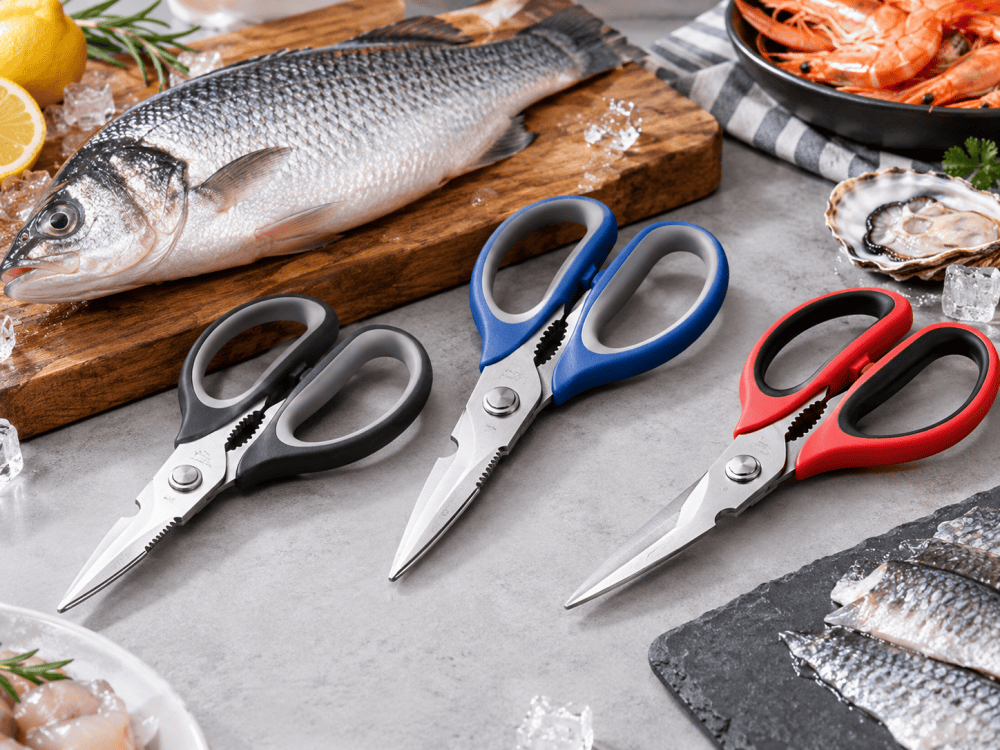



Scissors Buying Guide: What Features Should You Look For?
Scissors Buying Guide: What Features Should You Look For?
Choosing the right scissors may seem simple, but different scissors are designed for different cutting applications. The blade material, edge design, handle structure, and manufacturing quality all affect cutting performance, durability, and user experience.
Whether you are purchasing kitchen scissors, sewing scissors, household scissors, office scissors, or professional shears, understanding the key features of quality scissors can help you make a better decision.
For retailers, wholesalers, and brands, selecting the right scissors supplier is equally important because product quality directly affects customer satisfaction and market competitiveness.
This scissors buying guide explains the most important features to consider before purchasing scissors and how to identify high-quality cutting tools.

Quick Checklist: What Makes Good Scissors?
- ✔ High-quality blade material
- ✔ Sharp and durable cutting edge
- ✔ Comfortable ergonomic handle
- ✔ Strong blade connection
- ✔ Suitable design for specific applications
- ✔ Reliable manufacturing quality
Why Choosing the Right Scissors Matters
A pair of scissors is more than just two blades connected together. The design and manufacturing quality determine how efficiently and comfortably the scissors perform.
Low-quality scissors may experience problems such as:
- Blades becoming dull quickly
- Uneven cutting performance
- Loose pivot connection
- Uncomfortable handles
- Rust or corrosion issues
High-quality scissors provide smoother cutting, longer service life, and better user experience, making them a better choice for both consumers and commercial buyers.
1. Blade Material: The Most Important Factor
The blade material is one of the most important factors affecting scissors performance. Different materials provide different levels of sharpness, durability, and corrosion resistance.
Stainless Steel Scissors
Stainless steel is the most commonly used material for modern scissors because it offers an excellent balance between durability, maintenance, and cost.
Advantages:
- Excellent corrosion resistance
- Easy to clean and maintain
- Suitable for kitchen and household applications
- Good durability
Stainless steel scissors are widely used in kitchens, offices, homes, and professional environments.
Carbon Steel Scissors
Carbon steel provides higher hardness and excellent cutting performance, making it suitable for professional applications that require strong cutting ability.
Advantages:
- Excellent sharpness
- Strong blade strength
- Good edge retention
However, carbon steel requires more maintenance because it has lower corrosion resistance compared with stainless steel.
Titanium Coated Scissors
Titanium coated scissors feature a protective coating that improves blade hardness, wear resistance, and product appearance.
- Longer-lasting sharpness
- Better wear resistance
- Premium appearance
2. Blade Sharpness and Cutting Performance
Sharpness is one of the first things users notice when using scissors. A high-quality pair should cut smoothly without requiring excessive force.
Several factors influence cutting performance:
- Blade grinding precision
- Edge angle
- Blade alignment
- Steel hardness
- Manufacturing accuracy
Professional scissors manufacturers use precise grinding and quality control processes to ensure consistent cutting performance.
3. Blade Edge Design: Straight Blade vs Serrated Blade
Besides blade material, the edge design of scissors has a major impact on cutting performance. Different blade structures are developed for different materials and applications.
When choosing scissors, buyers should consider whether they need clean cutting, stronger grip, or heavy-duty performance.
Straight Blade Scissors
Straight blade scissors feature smooth cutting edges that create clean and precise cuts. They are commonly used where accuracy and smooth finishing are important.
Advantages:
- Clean and precise cutting
- Easy to sharpen
- Suitable for professional cutting tasks
- Ideal for fabrics, paper, and general applications
Straight blade scissors are commonly selected for sewing, office, household, and professional applications where a smooth cutting line is required.
Serrated Blade Scissors
Serrated blade scissors feature small teeth along the blade edge. These teeth grip materials during cutting and help prevent slipping.
Advantages:
- Stronger grip on materials
- Better cutting stability
- Suitable for thicker materials
- Reduces material movement during cutting
Serrated blades are often used in kitchen scissors, heavy-duty scissors, and multipurpose scissors because they provide stronger cutting control.
Micro Serrated Blade Scissors
Micro serrated blades use very fine teeth that combine the advantages of straight and serrated blades.
They provide better grip while maintaining relatively smooth cutting performance, making them popular for professional kitchen scissors and multipurpose scissors.
| Blade Type | Best For | Main Advantage |
|---|---|---|
| Straight Blade | Fabric, paper, precision cutting | Clean and accurate cuts |
| Serrated Blade | Food, thick materials, heavy-duty use | Strong grip and stability |
| Micro Serrated | Professional multipurpose use | Balance between grip and precision |
4. Handle Design and Comfort
A good pair of scissors should not only cut well but also feel comfortable during use. Handle design directly affects control, cutting force, and user fatigue.
Ergonomic Handle Design
Ergonomic handles are designed according to hand shape, helping users apply cutting force more naturally.
This is especially important for professional users who operate scissors frequently for long periods.
Benefits of Ergonomic Handles:
- Reduce hand fatigue
- Improve cutting control
- Provide better grip
- Increase user comfort
Handle Materials
Different handle materials provide different levels of comfort and durability.
| Handle Material | Features |
|---|---|
| PP Plastic | Lightweight, cost-effective, suitable for household scissors |
| TPR Soft Grip | Comfortable, non-slip, improves user experience |
| Metal Handle | Strong and durable, suitable for professional applications |
5. Choosing the Right Scissors Size
The size of scissors affects handling, cutting force, and application suitability. Larger scissors usually provide more cutting power, while smaller scissors offer better control.
Small Scissors
Small scissors are suitable for detailed work requiring precision.
Common applications:- Crafts
- Office work
- Small household tasks
- Fine cutting
Medium Scissors
Medium-sized scissors provide a balance between control and cutting ability.
Common applications:- Kitchen scissors
- Household scissors
- General-purpose cutting
Large Scissors and Shears
Large scissors are designed for stronger cutting performance and professional applications.
Common applications:- Garden shears
- Industrial cutting
- Heavy-duty materials
6. Durability and Manufacturing Quality
Durability is one of the most important factors when purchasing scissors, especially for professional users and commercial buyers.
High-quality scissors should have:
- Strong blade structure
- Stable pivot connection
- Precise blade alignment
- Smooth opening and closing action
- Consistent cutting performance
Important Quality Checks
- Sharpness testing
- Blade hardness testing
- Opening and closing testing
- Appearance inspection
- Rust resistance testing
For wholesalers and brands, choosing a reliable scissors manufacturer ensures stable quality and reduces product return risks.
How to Choose Scissors for Different Applications?
The best scissors depend on what you plan to cut. Different applications require different blade designs, materials, and structures. Choosing application-specific scissors improves cutting efficiency and extends product lifespan.
1. How to Choose Kitchen Scissors
Kitchen scissors are designed for food preparation and daily kitchen tasks. When selecting kitchen scissors, buyers should focus on hygiene, durability, and cutting strength.
Important Features:
- Food-grade stainless steel blades
- Corrosion resistance
- Strong cutting performance
- Ergonomic non-slip handles
- Easy cleaning design
For professional kitchens, poultry scissors, herb scissors, and heavy-duty kitchen scissors with reinforced structures are often preferred.
Explore FASAKA kitchen scissors:
2. How to Choose Sewing Scissors
Sewing scissors require excellent sharpness and precision because fabric cutting directly affects the final quality of garments and textile products.
Important Features:
- Sharp straight blades
- Precise blade alignment
- Comfortable handle design
- Smooth cutting action
- Suitable weight balance
Professional tailors and textile manufacturers usually choose scissors that maintain sharpness after frequent use.
3. How to Choose Household Scissors
Household scissors should provide versatility and comfort because they are used for different everyday tasks.
Recommended Features:
- Lightweight design
- Comfortable handles
- Durable stainless steel blades
- Affordable price-performance ratio
For retail markets, household scissors with attractive designs and reliable packaging are popular choices.
4. How to Choose Office Scissors
Office scissors should focus on comfort, safety, and daily usability.
Key Features:
- Lightweight structure
- Smooth opening and closing
- Comfortable grip
- Suitable for paper cutting
5. How to Choose Garden Scissors
Garden scissors require stronger construction because they are used for plants, stems, and branches.
Important Features:
- High-strength blades
- Rust resistance
- Strong cutting force
- Comfortable outdoor grip
How to Choose a Reliable Scissors Manufacturer?
For wholesalers, retailers, and brands, choosing the right scissors manufacturer is just as important as selecting the right product features.
A reliable supplier should provide consistent quality, customization capability, production capacity, and professional support.
1. Manufacturing Experience
Experienced manufacturers understand different market requirements and can provide suitable designs for different applications.
2. Material Control
Professional manufacturers should have strict control over steel materials, coatings, blade hardness, and production processes.
3. Quality Inspection System
Quality inspection ensures every pair of scissors meets performance and appearance standards before shipment.
4. OEM and ODM Capability
For brands developing private-label products, OEM and ODM services allow customization of:
- Blade design
- Handle colors and materials
- Logo printing
- Packaging design
- Product combinations
FASAKA provides professional scissors manufacturing solutions for global wholesalers, retailers, and brands.
Learn More About FASAKA Scissors Manufacturer
Scissors Set: A Complete Solution for Different Needs
For retailers and household markets, scissors sets provide customers with multiple cutting solutions in one package.
A well-designed scissors set may include:
- Kitchen scissors
- Household scissors
- Craft scissors
- Multipurpose scissors
- Special-purpose scissors
Scissors sets are popular because they provide convenience and better value for consumers.
Why Choose FASAKA for Scissors Supply?
FASAKA specializes in scissors manufacturing and provides reliable cutting tool solutions for international customers.
With professional production capabilities and experience in kitchen tools and hardware products, FASAKA supports customers with:
- Customized scissors development
- OEM and ODM production
- Strict quality control
- Flexible product solutions
- Competitive wholesale supply
Whether you need kitchen scissors, household scissors, sewing scissors, garden scissors, or complete scissors sets, FASAKA can provide customized solutions according to your market requirements.
Looking for a Professional Scissors Supplier?
Contact FASAKA for OEM scissors manufacturing, customized designs, and wholesale solutions.
Frequently Asked Questions About Buying Scissors
What features should I look for when buying scissors?
Important features include blade material, sharpness, blade design, handle comfort, durability, and manufacturing quality.
Are stainless steel scissors better?
Stainless steel scissors are popular because they provide good durability, corrosion resistance, and easy maintenance.
What type of scissors are best for kitchen use?
Kitchen scissors with stainless steel blades, strong cutting ability, and ergonomic handles are ideal for food preparation.
How long do quality scissors last?
High-quality scissors can last many years when made with durable materials and maintained properly.
Can scissors manufacturers customize products?
Yes. Professional scissors manufacturers can customize materials, designs, colors, logos, and packaging according to customer requirements.
Final Thoughts: Choose Scissors Based on Your Needs
The best scissors are not always the most expensive ones. The right choice depends on the intended application, cutting materials, frequency of use, and required performance.
For everyday users, durable stainless steel scissors with comfortable handles are usually the best option. For professionals and businesses, material quality, precision manufacturing, and customization capability are more important.
By understanding blade materials, edge designs, handle structures, and application requirements, buyers can select scissors that provide better performance and longer service life.
Build Your Scissors Product Line with FASAKA
Professional scissors manufacturer providing OEM and wholesale solutions worldwide.