




Petty Knife vs Paring Knife: What's the Difference?
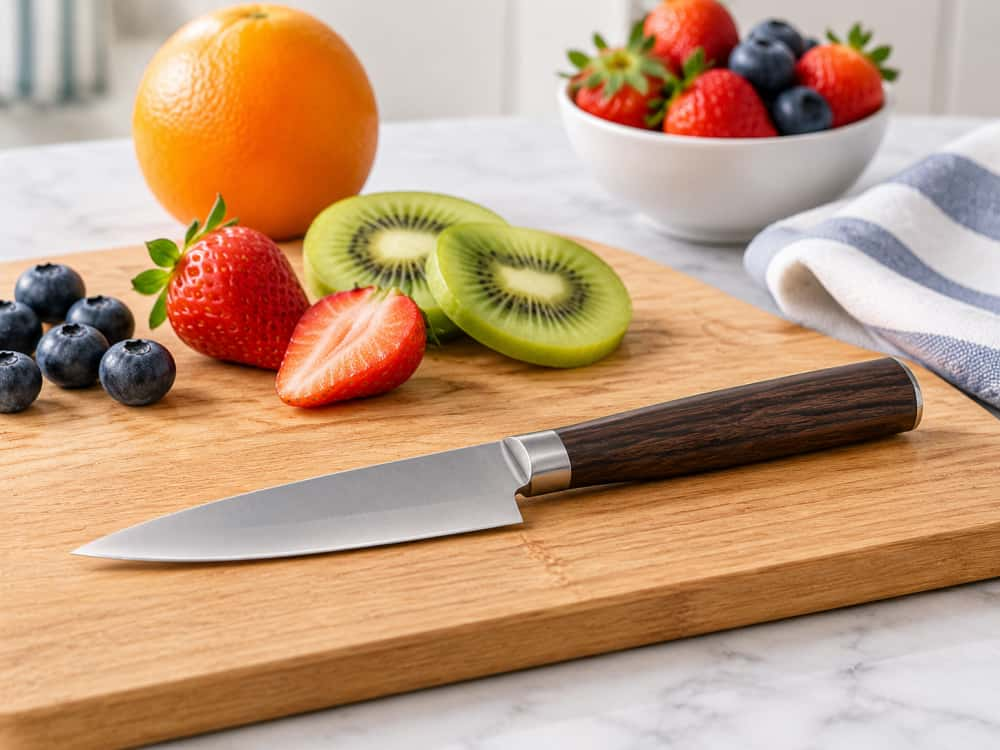
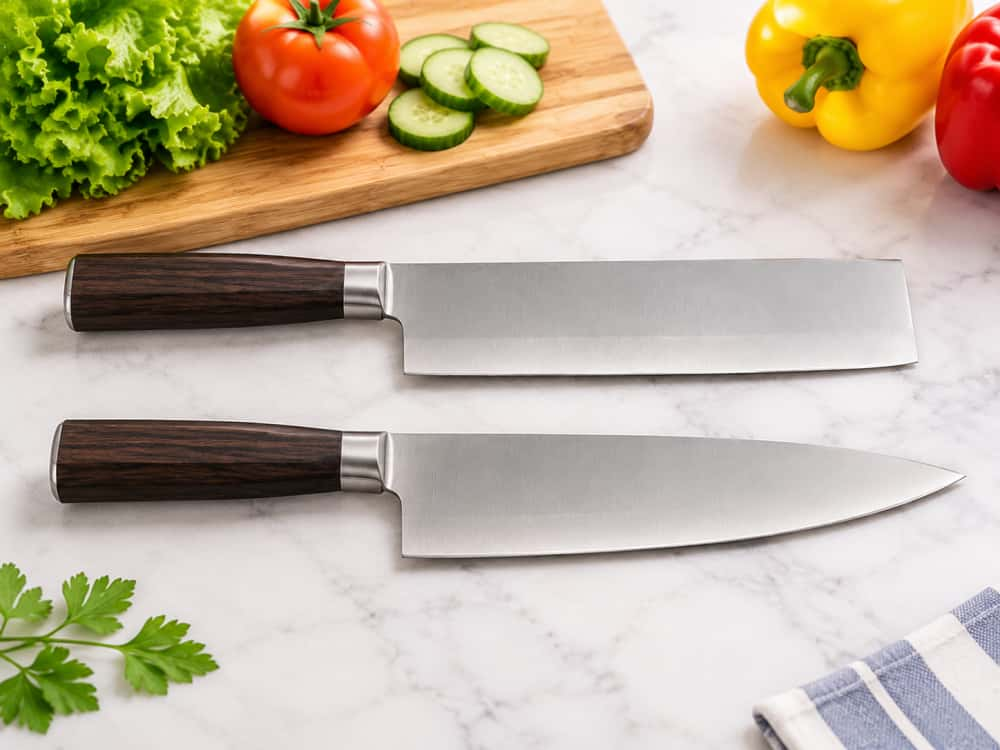
When comparing a Petty knife vs Paring knife, the main differences are blade length, design, and intended use. A Petty knife is generally a small Japanese-style utility knife with a longer, narrower blade for slicing, trimming, and preparing small ingredients. A Paring knife is usually shorter and more compact, making it especially useful for peeling, shaping, and detailed hand-held cutting.
Both knives are designed for precision rather than heavy-duty cutting, and their functions overlap. However, choosing the right one depends on whether you need a small all-purpose kitchen knife or a compact tool for detailed preparation.
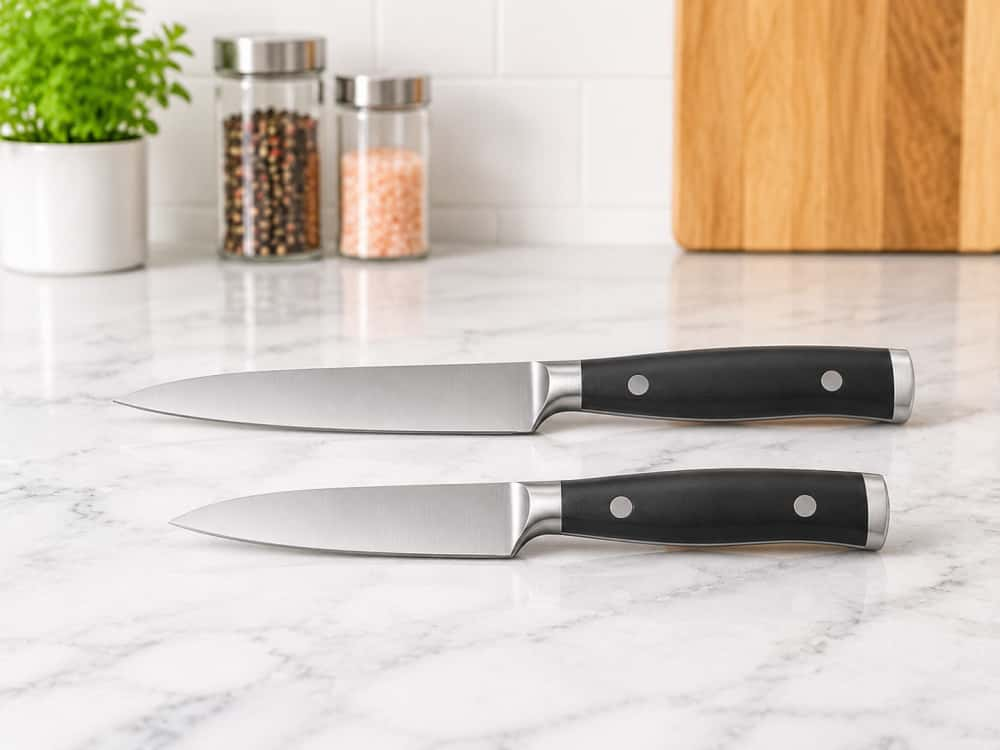
Quick Answer: Choose a Petty knife if you want a versatile small knife for slicing fruit, cutting vegetables, and trimming boneless meat. Choose a Paring knife if you mainly need a compact blade for peeling fruit, removing seeds, and performing delicate cutting tasks.
1. What Is a Petty Knife?
A Petty knife is a Japanese-style utility knife designed for small and precise food preparation tasks. Its name comes from the French word "petit," meaning small. It is often considered a smaller companion to larger kitchen knives such as the Gyuto or Santoku.
Many Petty knives have blade lengths around 120–150 mm, although dimensions vary between manufacturers and models. Their blades are typically narrow and pointed, allowing users to control the cutting edge when working with smaller ingredients.
Common Petty knife uses include:
- Slicing apples, pears, strawberries, and other fruits.
- Cutting small vegetables such as garlic, shallots, and mushrooms.
- Trimming boneless meat and removing small pieces of fat.
- Preparing herbs and garnishes.
- Performing detailed cutting tasks on a cutting board.
Because of its relatively longer blade, a Petty knife can handle more general cutting tasks than many shorter Paring knives.
2. What Is a Paring Knife?
A Paring knife is a small kitchen knife mainly used for peeling, trimming, shaping, and other detailed preparation tasks. It usually has a short blade, a pointed tip, and a compact design that makes it easy to control when working close to an ingredient.
Many Paring knives have blade lengths around 60–100 mm, although sizes and blade shapes differ by design. Some models have straight blades, while others feature curved or specialized shapes for particular preparation tasks.
Common Paring knife uses include:
- Peeling apples, potatoes, and other small fruits or vegetables.
- Removing seeds, stems, and blemishes.
- Trimming small vegetables and fruits.
- Shaping decorative fruit and vegetable cuts.
- Performing detailed cutting work that requires close control.
Unlike a larger utility knife, a Paring knife is often used directly in the hand rather than primarily on a cutting board. This makes it especially convenient for peeling and shaping small ingredients.
3. Petty Knife vs Paring Knife: Key Differences
Although both knives are small and versatile, their designs support slightly different cutting styles. The following table summarizes their main differences.
| Comparison | Petty Knife | Paring Knife |
|---|---|---|
| Knife Type | Japanese-style small utility knife | Compact kitchen knife for detailed preparation |
| Typical Blade Length | Often around 120–150 mm | Often around 60–100 mm |
| Blade Shape | Generally narrow and elongated | Shorter and more compact, with different blade profiles available |
| Blade Tip | Usually pointed | Usually pointed, with shape varying by model |
| Main Purpose | Small utility cutting and slicing | Peeling, trimming, and detailed cutting |
| Typical Cutting Style | Often used on a cutting board | Often used for close-up or hand-held preparation |
| Fruit Preparation | Slicing, cutting, and trimming | Peeling, shaping, and removing blemishes |
| Vegetable Preparation | Slicing small vegetables and trimming ingredients | Peeling and detailed vegetable preparation |
| Meat Preparation | Can trim and slice small portions of boneless meat | Can handle very small trimming tasks, depending on blade design |
| Versatility | Generally more suitable for a wider range of small cutting tasks | Especially useful for peeling and precise hand-held work |
The biggest difference: A Petty knife offers more blade length for small-scale slicing and general food preparation, while a Paring knife offers a shorter blade for close, detailed work. These are common design tendencies rather than strict rules, since individual knife models can overlap.
4. Blade Length and Design: Which One Is Easier to Control?
Blade length is one of the most noticeable differences between a Petty knife and a Paring knife. It affects how much cutting surface is available and how the knife feels during different tasks.
Petty Knife: More Cutting Length
A Petty knife's longer blade provides more cutting edge for slicing and trimming ingredients. It is useful when preparing fruit, cutting small vegetables, or trimming boneless meat on a cutting board.
For users who want a compact knife but still need enough blade length for everyday preparation, a Petty knife can be a practical choice.
Paring Knife: More Compact Handling
A Paring knife's shorter blade is convenient for small, detailed movements. It can be easier to maneuver when peeling fruit, removing small blemishes, or shaping ingredients by hand.
Its compact design is also useful when working with ingredients that are too small or awkward to handle comfortably with a longer blade.
Buying Tip: A shorter blade is not automatically easier or safer for everyone. Choose a knife based on the task, hand comfort, and the amount of cutting control you need.
5. Petty Knife vs Paring Knife: Which Is Better for Different Tasks?
Neither knife is universally better. The best choice depends on the ingredients you prepare and the way you prefer to work.
For Cutting and Slicing Fruit
A Petty knife is often more convenient for slicing apples, pears, citrus fruit, and other ingredients on a cutting board. Its longer blade can make continuous slicing movements easier.
A Paring knife is better suited to peeling fruit, removing small blemishes, and shaping smaller pieces. If your main task is preparing fruit by hand, its compact design may be more comfortable.
For Peeling Vegetables
A Paring knife is generally the more suitable option for peeling potatoes, apples, and small vegetables by hand. Its short blade allows close control around curved surfaces.
A Petty knife can also peel and trim vegetables, but its longer blade may feel less convenient for some small, detailed tasks. For frequent peeling, a dedicated vegetable peeler may be even more efficient.
For Slicing Small Vegetables
A Petty knife is often the better choice for slicing garlic, shallots, mushrooms, and small peppers on a cutting board. Its longer cutting edge provides more room for controlled slicing.
A Paring knife can handle some of these tasks too, especially when the ingredients are very small. However, it may be less comfortable for repeated slicing.
For Trimming Meat
A Petty knife is generally more useful for trimming small portions of boneless meat because its longer blade provides more cutting length. It can help remove small pieces of fat and connective tissue.
A Paring knife may be suitable for very small trimming tasks, but it is not usually the first choice for general meat preparation. Neither knife should be used to cut through bones or frozen meat unless specifically designed for that purpose.
For Decorative Cutting
Both knives can be used for decorative food preparation. A Paring knife is particularly useful for small, detailed shaping tasks, while a Petty knife can provide more cutting length for shaping and slicing larger pieces of fruit or vegetables.
6. Petty Knife or Paring Knife: Which One Should You Choose?
If you are deciding between a Petty knife and a Paring knife, start by considering your most frequent kitchen tasks.
| Your Main Need | Recommended Knife | Reason |
|---|---|---|
| Slicing fruit on a cutting board | Petty Knife | Longer blade provides more cutting length. |
| Peeling apples and potatoes | Paring Knife | Compact blade is convenient for hand-held peeling. |
| Cutting garlic and small vegetables | Petty Knife | Useful for controlled slicing and trimming. |
| Removing seeds and blemishes | Paring Knife | Short blade offers close control for detailed work. |
| Trimming small portions of boneless meat | Petty Knife | More blade length for general trimming. |
| Decorative fruit preparation | Either | Depends on the size and detail of the cutting task. |
Choose a Petty Knife If:
- You want a small but versatile kitchen knife.
- You frequently slice fruit and small vegetables.
- You prepare small portions of boneless meat.
- You prefer working with a knife on a cutting board.
- You want a compact companion to a chef knife or Santoku.
Choose a Paring Knife If:
- You frequently peel fruit and vegetables by hand.
- You need a compact knife for detailed preparation.
- You often remove seeds, stems, or small blemishes.
- You prefer a shorter blade for close-up cutting tasks.
- You want a dedicated knife for small ingredients and decorative work.
7. Can You Have Both a Petty Knife and a Paring Knife?
Yes. Having both knives can be useful because they complement each other rather than serving exactly the same purpose.
A Petty knife can handle small-scale slicing, trimming, and general ingredient preparation. A Paring knife can take care of peeling, shaping, and detailed hand-held work.
For a home kitchen, the choice depends on cooking habits and available storage space. For professional kitchens, having both may improve workflow by allowing cooks to select the right tool for each preparation task.
For kitchenware retailers and distributors, offering both knife types can also help create a more complete kitchen knife assortment for different customer needs.
8. What Should Buyers Consider When Sourcing Small Kitchen Knives?
For distributors, wholesalers, retailers, and private-label brands, Petty knives and Paring knives can serve different positions within a kitchen knife collection. When sourcing these products, buyers should evaluate more than just blade length and appearance.
- Blade specifications: Confirm blade length, steel material, thickness, edge geometry, and finish.
- Intended application: Match the blade design to the target use, such as peeling, slicing, or detailed trimming.
- Handle design: Evaluate grip comfort, material, weight, and overall balance.
- Manufacturing consistency: Check blade alignment, sharpening quality, handle fitting, and surface finish.
- Product positioning: Consider whether the knife is intended for everyday household use, professional kitchens, or premium knife collections.
- Packaging and customization: Review retail packaging, logo requirements, and private-label options.
Clear product specifications and consistent quality standards help buyers build a kitchen knife assortment that meets the expectations of their target markets.
Explore FASAKA kitchen knives and learn more about our OEM and ODM kitchenware services.
9. Frequently Asked Questions
Is a Petty knife the same as a Paring knife?
No. A Petty knife is generally a small Japanese-style utility knife with a longer blade, while a Paring knife is usually shorter and designed for peeling and detailed cutting. Their uses overlap, but they are not exactly the same knife.
Which is better, a Petty knife or a Paring knife?
A Petty knife is generally better for slicing fruit, cutting small vegetables, and trimming boneless meat. A Paring knife is usually better for peeling, removing seeds, and detailed hand-held preparation. The right choice depends on your main kitchen tasks.
Is a Petty knife bigger than a Paring knife?
In many cases, yes. Petty knives commonly have blade lengths around 120–150 mm, while Paring knives are often around 60–100 mm. However, actual dimensions vary by manufacturer and model.
Can a Paring knife be used instead of a Petty knife?
Yes, for some small cutting and trimming tasks. However, its shorter blade may be less convenient for slicing fruit, cutting small vegetables, or preparing larger portions of ingredients on a cutting board.
Can a Petty knife peel fruit?
Yes. A Petty knife can peel fruit and remove small blemishes. However, a shorter Paring knife may offer more convenient control for detailed hand-held peeling.
Is a Paring knife good for cutting vegetables?
Yes. A Paring knife can cut small vegetables and handle detailed preparation. For repeated slicing or preparing larger quantities, a Petty knife or a larger kitchen knife may be more comfortable.
Should beginners buy a Petty knife or a Paring knife?
Beginners who want a versatile small knife may prefer a Petty knife. Those who mainly peel fruit and perform detailed preparation may find a Paring knife more useful. Both can complement a standard chef knife.
Can a Petty knife and a Paring knife be used for meat?
A Petty knife can trim and slice small portions of boneless meat. A Paring knife can handle very small trimming tasks, but neither is intended for cutting through bones or frozen meat.
Looking for Kitchen Knife Manufacturing Solutions?
FASAKA, under DKS Enterprises Co., Ltd., provides kitchen knife and kitchenware solutions for global buyers. Whether you are a distributor, wholesaler, or private-label brand, our team can help you discuss product requirements and OEM/ODM opportunities.
Contact us to discuss your kitchenware sourcing needs.
Get a Free Quote