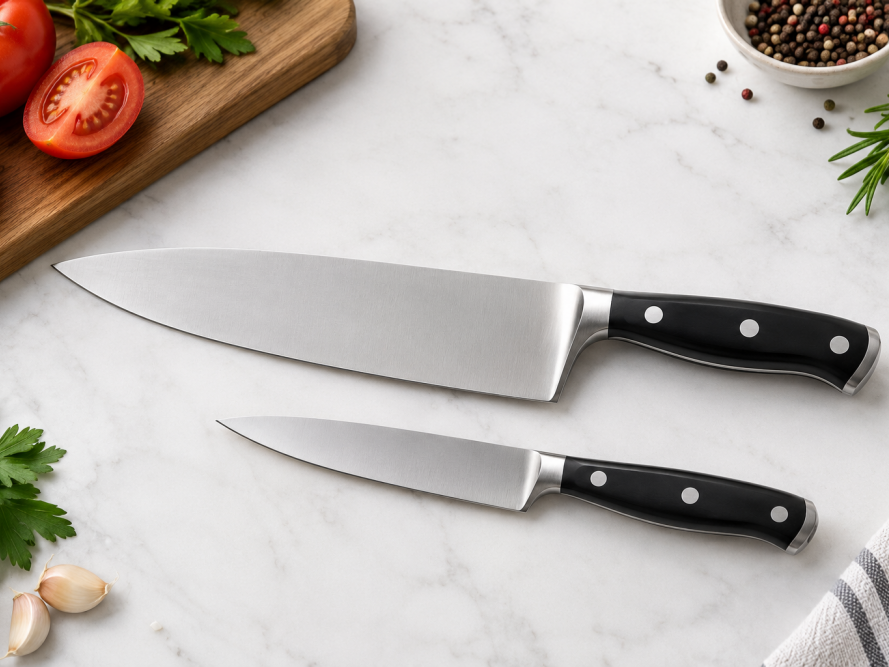

Why Do European Regions Frequently Need Kitchen Knife Sets?
Published by FASAKA | Kitchen Knife Market & Sourcing Guide
European households, retailers, restaurants, and hospitality businesses have diverse cooking habits and product requirements. As a result, kitchen knife sets are often more practical than purchasing individual knives, especially for consumers and businesses that need several essential cutting tools in one coordinated collection.
For kitchenware importers, distributors, retailers, and private-label brands, understanding why European markets frequently purchase kitchen knife sets can provide valuable insights when developing products for different regional markets.
From German-style chef knives and French carving knives to Japanese-inspired Santoku knives and multi-purpose kitchen knife sets, European consumers have access to a wide range of knife formats. However, the ideal combination of knives can vary depending on cooking habits, household size, retail positioning, and regional preferences.

For European kitchenware buyers, a well-designed kitchen knife set can simplify product selection, improve retail presentation, and create opportunities for private-label branding. The most successful knife sets are usually based on the actual cooking habits and price positioning of the target market.
Table of Contents
- Why Kitchen Knife Sets Are Popular in Europe
- How Kitchen Knife Preferences Differ Across European Regions
- What Knives Are Commonly Included in European Kitchen Knife Sets?
- Why Retailers Prefer Kitchen Knife Sets
- OEM & ODM Opportunities for European Buyers
- How to Choose a Kitchen Knife Set for the European Market
- Frequently Asked Questions
Why Kitchen Knife Sets Are Popular in Europe
Kitchen knife sets offer a convenient way to combine several essential cutting tools into one product. Instead of purchasing a chef knife, utility knife, paring knife, and other tools separately, consumers can purchase a coordinated set designed for different food preparation tasks.
This format is particularly attractive in European retail markets because consumers often value product organization, coordinated design, practical functionality, and clear product value.
1. Different Knives Serve Different Cooking Tasks
A single kitchen knife cannot efficiently handle every preparation task. A chef knife may be suitable for chopping vegetables and meat, while a paring knife is more convenient for peeling and small cutting jobs.
- Chef knives for general food preparation
- Paring knives for small ingredients
- Utility knives for everyday cutting
- Bread knives for crusty bread and baked goods
- Carving knives for meat and larger food items
- Santoku knives for versatile slicing and chopping
2. Kitchen Knife Sets Provide Better Product Value
For many consumers, buying several knives as a set can be more convenient and cost-effective than purchasing each knife separately. A coordinated set can also provide consistent blade design, handle materials, and appearance.
From a retail perspective, kitchen knife sets can also create a higher-value product package compared with individual knife SKUs.
3. Knife Sets Are Suitable for Different Household Needs
European households vary significantly in size, cooking frequency, and food preparation habits. Manufacturers can therefore develop different knife set configurations for different customer segments.
- 3-piece starter knife sets
- 5-piece everyday kitchen knife sets
- 6-piece or 7-piece family sets
- Professional chef knife collections
- Premium knife sets with storage blocks
How Kitchen Knife Preferences Differ Across European Regions
Europe is not a single kitchenware market. Cooking traditions, food preferences, household habits, and retail channels vary significantly between countries and regions.
Western Europe
Markets such as Germany, France, the Netherlands, Belgium, and the United Kingdom have mature kitchenware retail channels and a broad consumer interest in practical and durable kitchen tools.
Kitchen knife sets sold in these markets often emphasize functionality, ergonomic handles, corrosion resistance, attractive packaging, and reliable everyday performance.
Southern Europe
Countries such as Italy, Spain, Portugal, and Greece have strong culinary traditions and extensive use of fresh vegetables, meat, seafood, bread, and other ingredients.
As a result, knife collections may need to accommodate a broader range of preparation tasks, from vegetable cutting and slicing to meat preparation and bread cutting.
Northern Europe
Northern European consumers often place strong emphasis on functionality, clean design, durability, and ease of maintenance.
For these markets, minimalist knife designs, practical storage solutions, corrosion-resistant materials, and easy-to-clean handles can be attractive product features.
Central and Eastern Europe
Central and Eastern European markets include a wide range of consumer price segments. Kitchen knife sets can therefore be developed from entry-level stainless steel collections to more premium forged knife products.
For distributors and retailers, offering multiple price tiers can help reach different consumer groups without relying on a single product configuration.
What Knives Are Commonly Included in European Kitchen Knife Sets?
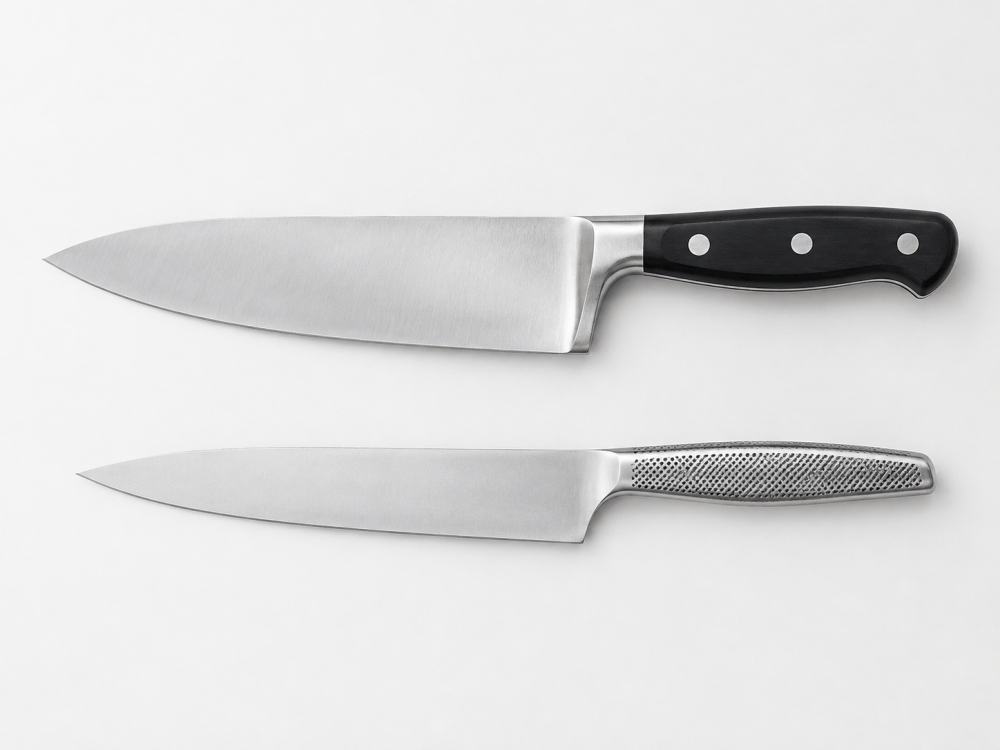
The ideal knife combination depends on the target market and price point. However, several knife types are frequently used as the foundation of kitchen knife sets.
| Knife Type | Main Use | Typical Position |
|---|---|---|
| Chef Knife | Chopping, slicing and general preparation | Essential |
| Paring Knife | Peeling and small cutting tasks | Essential |
| Utility Knife | Everyday medium-size cutting | Common |
| Bread Knife | Bread and baked foods | Common in larger sets |
| Santoku Knife | Slicing, chopping and vegetables | Growing option |
Why Retailers Prefer Kitchen Knife Sets
Kitchen knife sets are not only convenient for consumers. They can also provide several advantages for retailers, importers, and distributors.
Higher Per-Order Value
A set containing multiple knives can achieve a higher selling price than an individual knife. This allows retailers to create different product tiers and promotional packages.
Better Shelf Presentation
Coordinated knife sets can create a stronger visual presentation, particularly when products are supplied with branded boxes, knife blocks, sleeves, or other retail packaging.
Easier Private-Label Branding
Knife sets provide more opportunities for private-label branding because manufacturers can customize the knives, handles, packaging, inserts, and overall product presentation as one coordinated project.
OEM & ODM Opportunities for European Kitchenware Buyers
European retailers and kitchenware brands often require products that fit specific market positioning. OEM and ODM manufacturing allows buyers to create knife sets that are different from standard catalog products.
Possible Customization Options
- Blade shape and dimensions
- Blade steel selection
- Handle material
- Handle color
- Logo application
- Packaging design
- Knife set configuration
- Storage block or protective accessories
- Retail carton and barcode requirements
For example, a European private-label brand may choose a 5-piece knife set with a stainless steel blade, Pakkawood handle, customized logo, and retail packaging designed around the brand's visual identity.
How to Choose a Kitchen Knife Set for the European Market
Before developing or sourcing a kitchen knife set, B2B buyers should consider more than the number of knives included in the package.
1. Understand the Target Consumer
A premium chef-focused market may require higher-grade materials and more refined handle designs, while mass-market retailers may prioritize competitive pricing and practical configurations.
2. Select Appropriate Blade Materials
Common kitchen knife materials include stainless steel grades such as 3CR13, 5CR15, 7CR17, 420, and other steel options. The appropriate material depends on the desired balance between hardness, corrosion resistance, edge retention, cost, and target positioning.
3. Consider Handle Materials
Popular handle options include PP, TPR, ABS, stainless steel, natural wood, and Pakkawood. Each material offers different advantages in appearance, grip, durability, and production cost.
4. Develop the Right Set Configuration
Adding more knives does not automatically make a set more attractive. A practical five-piece set can sometimes provide better value than a larger collection containing redundant knife types.
The best kitchen knife set is not necessarily the largest one. Product configuration should reflect actual cooking habits, target retail price, packaging requirements, and the positioning of the brand.
FASAKA Kitchen Knife Set OEM & ODM Solutions
FASAKA provides kitchen knife manufacturing and OEM/ODM solutions for international importers, distributors, retailers, and private-label brands.
Our product range includes different kitchen knife configurations, allowing buyers to develop products according to market requirements, price positioning, and branding strategies.
- Kitchen knife sets
- Forged kitchen knives
- Wood handle kitchen knives
- Pakkawood handle knives
- Plastic handle knives
- Hollow handle kitchen knives
- Custom logo and packaging
- OEM and ODM product development
For buyers looking to develop kitchen knife sets for European markets, FASAKA can support product selection, customization, packaging coordination, and production requirements.
Explore FASAKA Kitchen Knife Products →
Learn About FASAKA OEM & ODM Services →
Frequently Asked Questions (FAQ)
Why are kitchen knife sets popular in Europe?
Kitchen knife sets provide consumers with several essential knives in one coordinated package, making them convenient for different food preparation tasks and attractive for retail merchandising.
What knives should be included in a European kitchen knife set?
A typical set may include a chef knife, paring knife, utility knife, bread knife, or Santoku knife depending on the target market and product positioning.
Are kitchen knife sets suitable for private-label brands?
Yes. Kitchen knife sets are well suited to private-label programs because manufacturers can customize the knife configuration, handle design, logo, packaging, and other product elements.
Can Chinese manufacturers produce kitchen knife sets for European retailers?
Yes. Chinese kitchen knife manufacturers can provide OEM, ODM, private-label, and wholesale production for international markets. Buyers should confirm product specifications, testing requirements, packaging, MOQ, and compliance requirements before placing orders.
Looking for a Kitchen Knife Set Manufacturer for the European Market?
FASAKA supports OEM and ODM kitchen knife projects for international retailers, distributors, importers, and private-label brands. Contact us to discuss your product configuration, materials, branding, packaging, and sourcing requirements.
Start Your Kitchen Knife Project