
2026-09-02

Kitchen Knife Blade Protector: How to Choose the Right Knife Guard for Safe Storage

Kitchen Knife Blade Protector: How to Choose the Right Knife Guard for Safe Storage

Published by FASAKA | Kitchen Knife Guide

A kitchen knife blade protector is a simple but practical accessory designed to cover the blade of a kitchen knife during storage, transportation, or handling. It helps protect the cutting edge from contact with other kitchen tools while reducing the risk of accidental cuts.

For households, professional kitchens, culinary schools, retailers, and kitchenware brands, choosing the right knife blade protector can improve both knife safety and storage efficiency. The right protector should fit the blade securely without putting unnecessary pressure on the cutting edge.

In this guide, we explain what a kitchen knife blade protector is, why it is useful, the most common materials and designs, how to choose the right size, and what buyers should consider when sourcing knife protectors for retail or OEM projects.

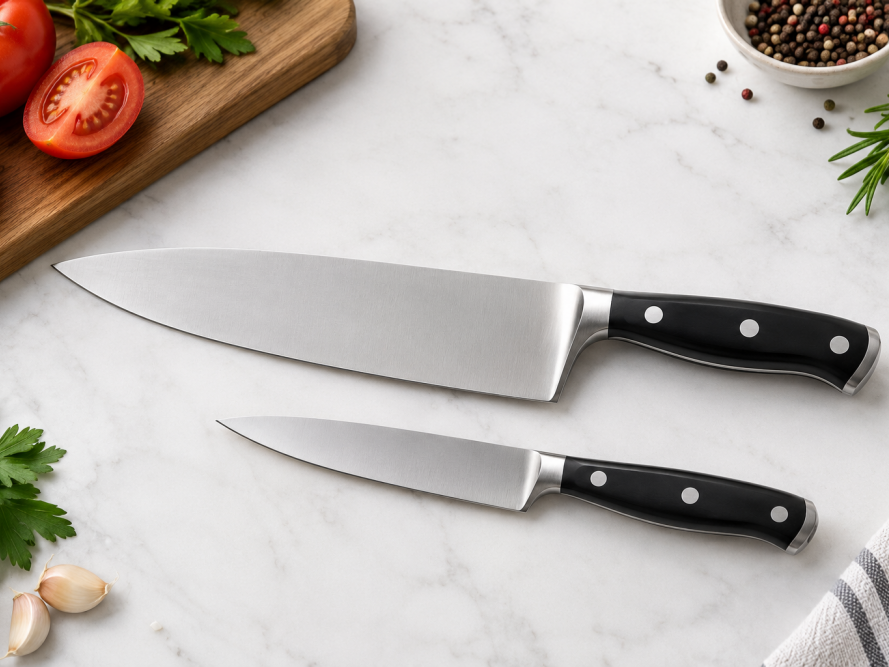
Kitchen knives with different types of blade protectors for safe storage

What Is a Kitchen Knife Blade Protector?

A kitchen knife blade protector, also called a knife guard, blade guard, knife sheath, or knife edge protector, is a cover designed to protect the exposed blade of a kitchen knife.

Unlike a knife block or magnetic knife holder, a blade protector stays directly around the individual knife blade. This makes it particularly useful when knives are stored inside drawers, knife bags, kitchen cabinets, or shipping packages.

A properly designed protector should cover the sharp edge and tip while keeping the knife securely in place. It should also be easy to put on and remove without damaging the blade surface.

Term Typical Meaning Main Purpose
Kitchen Knife Blade Protector Individual blade cover Protect blade and improve storage safety
Knife Guard Protective blade cover Cover edge and prevent accidental contact
Knife Sheath Full or partial knife cover Storage and transportation
Knife Edge Protector Cover focused on the cutting edge Reduce edge contact and damage

Why Do Kitchen Knives Need a Blade Protector?

A sharp kitchen knife can be damaged even when it is not being used. When knives are stored loosely in a drawer, their blades may contact forks, spoons, other knives, or hard surfaces. Repeated contact can cause scratches, edge damage, and premature dulling.

1. Protect the Cutting Edge

The cutting edge is one of the most important parts of a kitchen knife. A blade protector creates a physical barrier between the edge and other objects during storage and transportation.

2. Improve Kitchen Safety

Uncovered knives can create a safety risk when stored inside drawers or bags. A properly fitted blade guard covers the sharp edge and tip, reducing accidental contact when users reach for other kitchen tools.

3. Make Knife Transportation Safer

Professional chefs, culinary students, caterers, and foodservice workers may need to transport knives between locations. A blade protector helps keep individual knives covered during transportation and reduces contact between blades and other equipment.

4. Keep Knife Storage Organized

Blade protectors allow individual knives to be stored inside drawers, cabinets, knife bags, and other compact storage systems without leaving sharp edges exposed.

What Types of Kitchen Knife Blade Protectors Are Available?

Kitchen knife blade protectors are available in different designs depending on the knife type, storage method, material, and target market.

Plastic Knife Blade Protectors

Plastic blade protectors are widely used because they are lightweight, easy to clean, and suitable for everyday kitchen storage. Common plastic materials include polypropylene (PP), ABS, and other durable polymers.

For mass-market kitchenware products, plastic protectors can offer a practical combination of cost efficiency, durability, and easy production.

Soft-Lined Knife Guards

Some blade protectors use a rigid or semi-rigid outer structure with a soft inner lining. The lining can help reduce direct contact between the protector and the blade surface.

This type of construction can be useful for premium knives where surface protection and appearance are important.

Wooden Knife Sheaths

Wooden sheaths, commonly associated with Japanese-style kitchen knives, provide a more traditional appearance and are often designed for specific knife shapes.

Because wooden sheaths are usually less universal than plastic guards, buyers need to pay close attention to blade length, blade height, spine thickness, and tip shape.

Universal Knife Blade Guards

Universal blade guards are designed to accommodate a range of knives with similar dimensions. They are often selected for household, retail, and general kitchen applications where flexibility is important.

Which Materials Are Used for Kitchen Knife Blade Protectors?

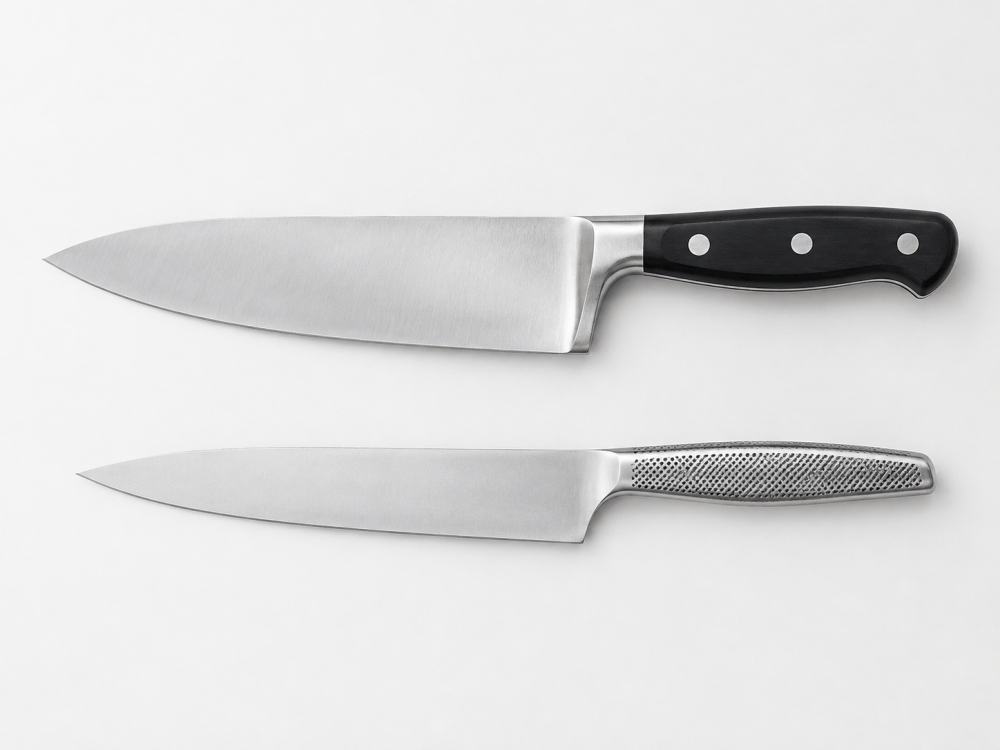
Material selection affects the durability, flexibility, appearance, cost, and cleaning requirements of a knife blade protector.
Material Advantages Typical Applications
PP Lightweight, durable, practical, easy to clean Mass-market kitchen knives and retail sets
ABS Rigid structure, good impact resistance, durable Protective knife guards and storage accessories
Wood Natural appearance, premium positioning Japanese-style and premium kitchen knives
Soft Lining Helps reduce direct blade contact Premium blade protection solutions

How to Choose the Right Kitchen Knife Blade Protector

Choosing a blade protector is not simply about finding a cover that is long enough. The protector should match the actual dimensions and shape of the knife.

1. Check the Blade Length

Measure the actual blade length before selecting a protector. The guard should cover the cutting edge and tip adequately without leaving a significant section of the blade exposed.

2. Check the Blade Height

Blade height is just as important as blade length. A protector that is too narrow may not fully cover the blade, while one that is excessively wide may not hold the knife securely.

3. Consider Blade Thickness

The thickness of the knife spine and the overall blade profile can affect how securely the protector fits. The guard should provide sufficient clearance without being excessively loose.

4. Match the Protector to the Knife Shape

Chef knives, santoku knives, bread knives, utility knives, and paring knives have different blade geometries. A protector designed for one knife type may not fit another knife properly even if the blade lengths are similar.

5. Consider the Storage Environment

For kitchen drawers, compact plastic blade guards are often practical. For professional chefs who transport several knives, blade guards may be combined with knife rolls or bags. Premium knives may require more carefully fitted protectors to minimize surface contact.

Kitchen Knife Blade Protector vs Knife Block vs Knife Roll

A blade protector is only one of several knife storage solutions. The best option depends on the number of knives, available storage space, transportation requirements, and target customer.

Storage Solution Best For Main Advantage
Blade Protector Drawer storage and individual knives Compact blade protection
Knife Block Countertop storage Convenient access and organized storage
Knife Roll Professional chefs and transportation Carries multiple knives together
Wooden Sheath Premium and Japanese-style knives Traditional appearance and fitted protection

How Should You Use a Kitchen Knife Blade Protector?

Always clean and completely dry the knife before putting on a blade protector. Moisture trapped between the blade and the protector can create an unfavorable storage environment and may increase the risk of corrosion, especially during long-term storage.

Slide the protector onto the blade carefully and make sure the guard is securely positioned. Do not force a protector onto a blade that is too wide or too thick for its design.

  • Clean and dry the knife before storage.
  • Make sure the entire cutting edge is covered.
  • Check that the protector fits securely.
  • Avoid forcing oversized blades into undersized guards.
  • Keep the protector clean and dry.
  • Inspect the guard regularly for cracks, deformation, or damaged locking components.

Can a Blade Protector Prevent a Kitchen Knife from Getting Dull?

A kitchen knife blade protector cannot make a knife sharper or stop normal edge wear caused by cutting. However, it can help reduce unnecessary contact between the cutting edge and other objects during storage and transportation.

This is particularly useful for sharp kitchen knives that are stored in drawers or transported together with other kitchen equipment. Preventing repeated contact with hard objects can help preserve the condition of the edge between uses.

Knife sharpness still depends primarily on blade steel, heat treatment, edge geometry, sharpening quality, and how the knife is used.

Kitchen Knife Blade Protectors for Retail and OEM Projects

For kitchenware brands, distributors, and wholesalers, a knife blade protector can also be developed as part of a complete kitchen knife product or accessory program.

Instead of using a standard protector, brands may customize the design according to the knife dimensions, product positioning, packaging requirements, and target market.

Common OEM Customization Options

  • Size: Customized length, width, and blade clearance.
  • Material: PP, ABS, or other suitable materials.
  • Color: Custom colors based on brand identity.
  • Logo: Brand logo printing, embossing, or other suitable methods.
  • Structure: Slide-on, snap-fit, hinged, or other designs.
  • Knife Compatibility: Custom fit for chef knives, santoku knives, bread knives, utility knives, or knife sets.
  • Packaging: Individual packaging, knife-set packaging, retail cards, boxes, or customized packaging solutions.

For private label projects, the blade protector can also be designed together with the knife handle, blade shape, packaging, and overall product appearance to create a consistent product line.

What Should Buyers Ask a Kitchen Knife Manufacturer?

When sourcing kitchen knives with blade protectors, buyers should evaluate more than the appearance of the accessory. Proper fit, material selection, production consistency, and packaging should all be considered.

  • What blade sizes does the protector support?
  • What material is used for the blade guard?
  • Is the protector customized for a specific knife model?
  • How securely does the protector stay on the blade?
  • Can the material and color be customized?
  • Can the logo be added?
  • Can the protector be included in a complete knife set?
  • Can retail packaging be customized?
  • What are the MOQ and production lead time?
  • Can samples be provided for approval before mass production?

Why Include a Blade Protector with a Kitchen Knife?

For retailers and kitchenware brands, adding a blade protector can increase the functional value of a kitchen knife without significantly changing the core product design.

A protector can be particularly useful for kitchen knife sets, portable knives, professional chef knives, and products positioned around safe storage and transportation.

For brands developing new knife collections, the protector can also become part of the overall product experience, packaging presentation, and storage solution.

Frequently Asked Questions About Kitchen Knife Blade Protectors

1. What is a kitchen knife blade protector?

A kitchen knife blade protector is a cover designed to protect the blade edge and tip during storage, transportation, and handling. It is also commonly called a knife guard, blade guard, or knife sheath.

2. Do kitchen knives need blade protectors?

Blade protectors are especially useful when knives are stored in drawers, transported, or kept together with other kitchen tools. They help reduce accidental contact with the sharp blade and protect the edge from unnecessary contact with other objects.

3. What is the best material for a knife blade protector?

There is no single best material for every application. PP and ABS are practical options for many everyday kitchen applications, while wooden or lined protectors may be selected for premium or specific knife designs.

4. How do I choose the right size knife blade protector?

Check the knife's blade length, blade height, spine thickness, and overall blade shape. The protector should cover the blade securely without being excessively tight or loose.

5. Can a knife blade protector prevent rust?

A blade protector is not a substitute for proper knife maintenance. Always clean and dry the knife before storage. Trapped moisture can contribute to corrosion, so the blade and protector should be kept clean and dry.

6. Can blade protectors be customized for kitchen knife sets?

Yes. For OEM and private label projects, blade protectors can be customized according to blade dimensions, knife types, materials, colors, branding, packaging, and set configurations.

Final Thoughts

A kitchen knife blade protector is a small accessory that can provide meaningful benefits for knife storage, transportation, and everyday safety. By covering the cutting edge and tip, it helps reduce unwanted contact with other objects while keeping knives more organized.

For consumers, the most important factors are proper fit, safe construction, easy maintenance, and compatibility with the knife. For kitchenware brands and wholesalers, material, customization, packaging, MOQ, and production consistency are equally important.

If you are developing a new kitchen knife collection or sourcing customized kitchen knives with blade protectors, working with an experienced OEM/ODM manufacturer can help you integrate blade protection into the complete product solution.

Looking for Customized Kitchen Knives with Blade Protectors?

FASAKA provides OEM and ODM kitchen knife manufacturing solutions for global retailers, wholesalers, distributors, and private label brands. From blade design and materials to handles, blade protectors, packaging, and product customization, we support complete kitchen knife development.

Request a Quote