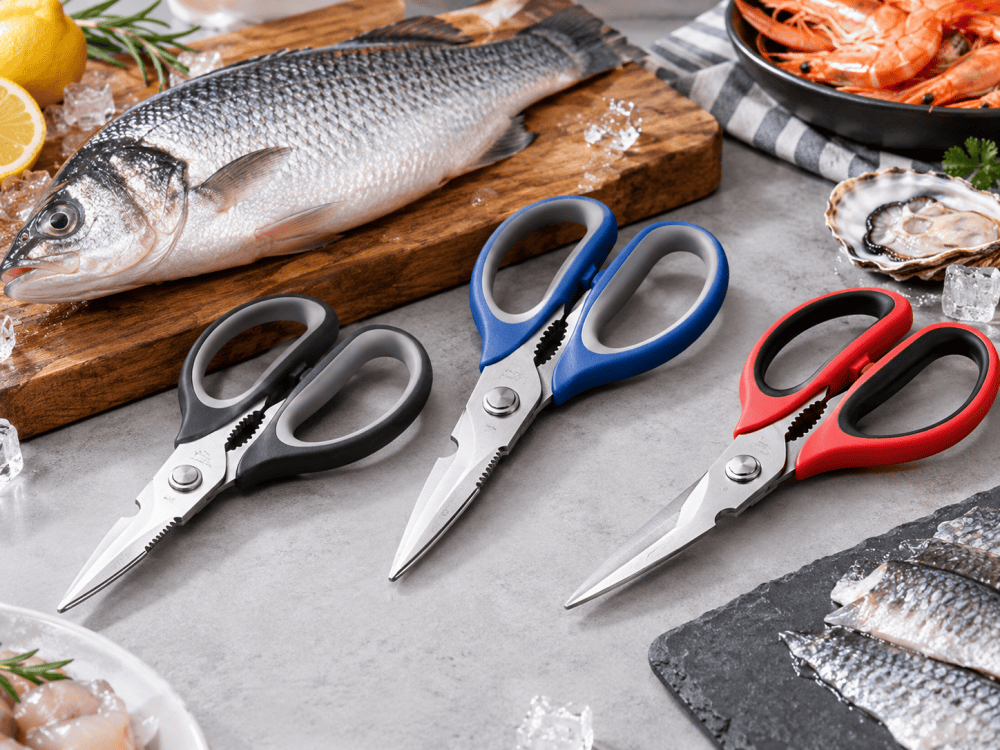

Heavy Duty Kitchen Scissors vs Lightweight Kitchen Scissors: Which One Is Better?
Kitchen scissors may look similar at first glance, but different designs are created for completely different cutting tasks. Some scissors are built for heavy-duty food preparation, while others focus on comfort, speed, and everyday kitchen convenience.
Choosing between heavy duty kitchen scissors and lightweight kitchen scissors depends on what you cook, how often you use them, and whether you need them for home cooking, restaurant preparation, BBQ, seafood processing, or commercial applications.
In this guide, we will compare heavy duty kitchen scissors vs lightweight kitchen scissors in terms of blade design, materials, cutting performance, durability, comfort, and practical applications to help you choose the right kitchen cutting tool.
Quick Answer: Heavy Duty vs Lightweight Kitchen Scissors
Heavy duty kitchen scissors are better for demanding tasks such as cutting poultry, meat, seafood shells, herbs in large quantities, and tough ingredients because they have thicker blades, stronger construction, and higher cutting force.
Lightweight kitchen scissors are better for everyday cooking tasks such as cutting herbs, vegetables, packaging, pizza, and small ingredients because they are easier to handle and create less hand fatigue.
For professional kitchens, many chefs use both types because each design performs better in different situations.
What Are Heavy Duty Kitchen Scissors?
Heavy duty kitchen scissors are professional-grade cutting tools designed for tasks that require greater strength, durability, and cutting power.
Compared with standard kitchen scissors, heavy duty models usually feature thicker stainless steel blades, stronger handles, reinforced pivot joints, and ergonomic designs that allow users to cut tougher ingredients with less effort.
Key Features of Heavy Duty Kitchen Scissors
- ✔ Thicker and stronger stainless steel blades
- ✔ Higher cutting force for tough ingredients
- ✔ Reinforced pivot construction
- ✔ Comfortable handles for extended use
- ✔ Serrated blade edges for better grip
- ✔ Bone notch for poultry preparation
- ✔ Suitable for commercial kitchens
Heavy duty kitchen scissors are designed when strength matters more than minimum weight.
Common Uses of Heavy Duty Kitchen Scissors
- Cutting whole chicken and poultry joints
- Trimming meat and removing fat
- Preparing seafood such as crab and lobster
- Cutting thick herbs and vegetables in bulk
- BBQ food preparation
- Commercial food processing
- Opening tough food packaging
What Are Lightweight Kitchen Scissors?
Lightweight kitchen scissors are designed for daily kitchen tasks where comfort, flexibility, and easy handling are more important than maximum cutting power.
They are usually made with thinner blades and lighter handles, making them ideal for quick cutting jobs that do not require excessive force.
Key Features of Lightweight Kitchen Scissors
- ✔ Lightweight construction
- ✔ Easy one-hand operation
- ✔ Comfortable for frequent use
- ✔ Suitable for precision cutting
- ✔ Faster for small food preparation tasks
- ✔ Easier storage and handling
Common Uses of Lightweight Kitchen Scissors
- Cutting fresh herbs
- Trimming vegetables
- Cutting green onions and leafy greens
- Opening food packages
- Cutting pizza and sandwiches
- Preparing simple meals at home
Lightweight kitchen scissors focus on comfort, speed, and everyday convenience.
Main Structural Differences Between Heavy Duty and Lightweight Kitchen Scissors
The biggest differences between these two types of kitchen scissors come from their construction. Blade thickness, weight, handle design, and pivot strength directly influence cutting performance.
| Feature | Heavy Duty Kitchen Scissors | Lightweight Kitchen Scissors |
|---|---|---|
| Blade Thickness | Thicker and stronger | Thinner and lighter |
| Weight | Heavier | Lightweight |
| Cutting Force | High | Medium |
| Comfort During Long Use | Good with ergonomic design | Excellent |
| Best Application | Meat, poultry, seafood | Herbs, vegetables, daily cooking |
In Part 2, we will compare heavy duty and lightweight kitchen scissors in real cooking situations, including cutting performance, durability, comfort, restaurant use, BBQ applications, and which type is the better investment.
Heavy Duty Kitchen Scissors vs Lightweight Kitchen Scissors: Side-by-Side Comparison
Although both types of kitchen scissors can perform many of the same tasks, they are designed with different priorities in mind. Heavy duty kitchen scissors emphasize strength and durability, while lightweight kitchen scissors focus on speed, comfort, and precision.
The comparison below highlights the major differences between these two types of kitchen scissors.
| Comparison | Heavy Duty Kitchen Scissors | Lightweight Kitchen Scissors |
|---|---|---|
| Blade Thickness | ★★★★★ | ★★★☆☆ |
| Cutting Power | ★★★★★ | ★★★☆☆ |
| Precision | ★★★★☆ | ★★★★★ |
| Comfort | ★★★★☆ | ★★★★★ |
| Durability | ★★★★★ | ★★★★☆ |
| Daily Household Use | ★★★★☆ | ★★★★★ |
| Commercial Kitchen | ★★★★★ | ★★★☆☆ |
Which Offers Better Cutting Performance?
If your primary concern is cutting power, heavy duty kitchen scissors are the clear winner. Their thicker blades, reinforced pivot, and stronger handles allow them to generate greater leverage with every cut.
They can easily cut through poultry joints, thick meat, lobster shells, crab legs, and other tough ingredients that may damage ordinary kitchen scissors.
Lightweight kitchen scissors, however, excel in delicate food preparation. Their thinner blades move more smoothly through herbs, leafy vegetables, mushrooms, and soft ingredients, making repetitive cutting faster and more comfortable.
Winner for Power: Heavy Duty Kitchen Scissors
Which Is More Comfortable to Use?
Comfort becomes increasingly important when scissors are used for extended periods. Lightweight kitchen scissors typically weigh 20–40% less than heavy-duty models, reducing wrist and hand fatigue during repetitive food preparation.
For home cooks preparing everyday meals, lightweight scissors often feel more natural and require less grip strength.
Heavy-duty scissors compensate for their extra weight with ergonomic handles and larger finger loops, but they may still feel bulky for simple cutting tasks.
Winner for Comfort: Lightweight Kitchen Scissors
Which Lasts Longer?
Because heavy duty kitchen scissors are built with thicker stainless steel, reinforced rivets, and stronger pivot mechanisms, they generally offer a longer service life under demanding conditions.
Restaurants, butcher shops, catering companies, and BBQ professionals often choose heavy-duty scissors because they can withstand continuous daily use without losing cutting performance.
Lightweight scissors are durable enough for normal household cooking but may wear more quickly if used regularly on hard materials.
Winner for Durability: Heavy Duty Kitchen Scissors
Which Foods Can Each Type Handle?
Different foods require different cutting strengths. The following table shows which type of kitchen scissors performs better for common kitchen tasks.
| Food | Heavy Duty | Lightweight |
|---|---|---|
| Whole Chicken | ★★★★★ | ★★☆☆☆ |
| Raw Meat | ★★★★★ | ★★★☆☆ |
| Fish & Seafood | ★★★★★ | ★★★★☆ |
| Fresh Herbs | ★★★★☆ | ★★★★★ |
| Vegetables | ★★★★☆ | ★★★★★ |
| Pizza | ★★★★☆ | ★★★★★ |
| Food Packaging | ★★★★★ | ★★★★★ |
| Frozen Food | ★★★★☆ | ★☆☆☆☆ |
Which Is Better for Restaurants?
Professional kitchens demand tools that can withstand continuous use. Heavy duty kitchen scissors are generally the preferred choice because they offer greater durability, stronger cutting performance, and better resistance to wear.
Restaurant chefs often use heavy-duty scissors for trimming meat, preparing poultry, processing seafood, and cutting bulk ingredients. Their robust construction minimizes downtime caused by blade damage or loose pivot joints.
However, many commercial kitchens also keep lightweight kitchen scissors available for quick tasks such as cutting herbs, garnishes, food packaging, and pastry decorations.
Which Is Better for BBQ?
BBQ preparation usually involves trimming brisket, cutting ribs, removing excess fat, portioning chicken, and handling thick cuts of meat. These jobs require strong blades and excellent leverage.
For this reason, heavy duty kitchen scissors are the clear favorite among BBQ enthusiasts and pitmasters. They provide the strength needed to prepare large cuts of meat while maintaining precise control.
Professional Recommendation
If you cook frequently, owning both heavy duty and lightweight kitchen scissors is often the best solution. Heavy-duty scissors handle demanding cutting jobs, while lightweight scissors make everyday food preparation faster, easier, and more comfortable.
In Part 3, we'll explain how to choose the right kitchen scissors based on your needs, compare stainless steel blade materials, provide a buying checklist, and explore why OEM buyers choose FASAKA for professional kitchen scissors manufacturing.
How to Choose the Right Kitchen Scissors
The best kitchen scissors aren't necessarily the strongest or the lightest—they're the ones that match your cooking habits. Before purchasing, consider how often you cook, the types of ingredients you prepare, and whether the scissors will be used in a home kitchen, restaurant, butcher shop, or commercial food processing environment.
| User | Recommended Type | Reason |
|---|---|---|
| Home Cook | Lightweight Kitchen Scissors | Comfortable for everyday food preparation. |
| Restaurant Chef | Heavy Duty Kitchen Scissors | Designed for continuous professional use. |
| BBQ Enthusiast | Heavy Duty Kitchen Scissors | Ideal for trimming meat and poultry. |
| Seafood Preparation | Heavy Duty Kitchen Scissors | Better for shells, fins, and tough seafood. |
| Office or Apartment Kitchen | Lightweight Kitchen Scissors | Easy to store and comfortable for quick tasks. |
| Wholesale / Private Label Brand | OEM Customized Kitchen Scissors | Supports branding, packaging, and market positioning. |
Choosing the Right Stainless Steel
The blade material determines sharpness, corrosion resistance, durability, and edge retention. Selecting the appropriate stainless steel is especially important for OEM buyers and commercial users.
| Steel | Advantages | Recommended Use |
|---|---|---|
| 420J2 | Excellent corrosion resistance, economical | Entry-level household scissors |
| 3Cr13 | Good hardness and affordability | Most home kitchen scissors |
| 5Cr15MoV | Superior edge retention and durability | Professional kitchen scissors |
For most consumers, 3Cr13 stainless steel provides the best balance between cost, durability, and cutting performance.
Kitchen Scissors Buying Checklist
Before purchasing kitchen scissors, look for these essential features:
- ✔ Food-grade stainless steel blades
- ✔ Comfortable ergonomic handles
- ✔ Strong pivot screw or rivet construction
- ✔ Corrosion-resistant finish
- ✔ Micro-serrated cutting edge for better grip
- ✔ Bone notch for poultry preparation (heavy-duty models)
- ✔ Detachable blades for easier cleaning
- ✔ Dishwasher-safe construction (if required)
- ✔ Non-slip handle material
- ✔ Reliable manufacturer with quality certifications
Why Global Buyers Choose FASAKA
FASAKA is a professional manufacturer of kitchen scissors, poultry shears, seafood scissors, household scissors, and other premium kitchen cutting tools. We provide OEM and ODM manufacturing services for distributors, wholesalers, supermarkets, retailers, and international kitchenware brands.
OEM & ODM Capabilities
- Custom blade materials (420J2, 3Cr13, 5Cr15MoV, etc.)
- Laser logo engraving
- Custom handle colors and materials
- Private label packaging
- Retail-ready gift box design
- Custom molds and product development
- Strict quality inspection throughout production
- Bulk manufacturing with stable lead times
Looking for a Reliable Kitchen Scissors Manufacturer?
Whether you're sourcing lightweight kitchen scissors for retail or heavy-duty kitchen scissors for commercial use, FASAKA offers complete OEM and ODM solutions tailored to your market.
Explore our OEM manufacturing services and discover premium kitchen scissors designed for global brands.
Frequently Asked Questions
Are heavy duty kitchen scissors worth buying?
Yes. If you regularly prepare poultry, seafood, meat, or BBQ, heavy-duty kitchen scissors provide better cutting power, durability, and long-term value.
Can lightweight kitchen scissors cut chicken?
They can handle boneless chicken and small trimming tasks, but heavy-duty kitchen scissors are a better choice for cutting through joints, cartilage, and thicker meat.
Which type lasts longer?
Heavy-duty kitchen scissors generally last longer because they are built with thicker blades and reinforced pivot mechanisms designed for demanding use.
What do professional chefs use?
Professional kitchens often keep both types on hand. Heavy-duty scissors are used for meat and poultry, while lightweight scissors are preferred for herbs, vegetables, garnishes, and quick preparation tasks.
Can heavy-duty kitchen scissors replace lightweight scissors?
Not completely. Heavy-duty scissors are excellent for demanding tasks but may feel bulky for delicate work. Lightweight scissors provide better control for everyday food preparation.
What is the best stainless steel for kitchen scissors?
For most users, 3Cr13 stainless steel offers an excellent balance of sharpness, corrosion resistance, and affordability. Premium professional models often use 5Cr15MoV for enhanced edge retention.
Final Thoughts
There is no single "best" kitchen scissors for every user. Heavy-duty kitchen scissors are the superior choice for demanding jobs such as trimming meat, cutting poultry, preparing seafood, and commercial food processing. Their robust construction, thicker blades, and stronger leverage make them ideal for professional environments.
Lightweight kitchen scissors, on the other hand, shine in everyday cooking. Their reduced weight, comfortable handling, and excellent precision make them perfect for herbs, vegetables, pizza, packaging, and routine meal preparation.
For the most efficient kitchen setup, many chefs and experienced home cooks keep both types available—using heavy-duty scissors when strength is required and lightweight scissors when speed and comfort matter most.
The right kitchen scissors don't just make cooking easier—they improve safety, increase efficiency, and help every cut feel effortless.