



Ceramic Knife vs Stainless Steel Knife: Which Is Better?
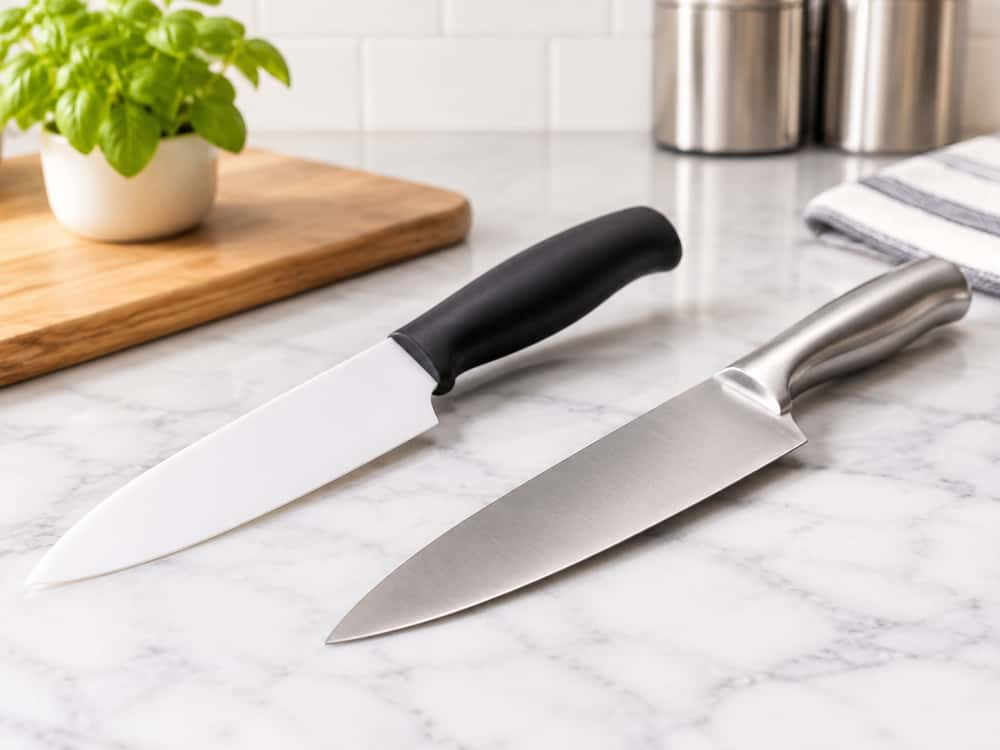
When comparing a ceramic knife vs stainless steel knife, the main differences come down to sharpness, edge retention, durability, maintenance, and intended use. Ceramic knives are known for their hardness, lightweight feel, and excellent resistance to blade corrosion. Stainless steel knives, on the other hand, offer greater toughness, versatility, and easier sharpening.
So, which one is better for everyday cooking? The answer depends on what you cut, how often you use your knife, and what matters most to you. In this guide, we compare ceramic and stainless steel kitchen knives to help home cooks, professional buyers, distributors, and private-label brands make an informed decision.
Quick Answer: Ceramic or Stainless Steel?
Choose a ceramic knife if you mainly slice fruits and vegetables, prefer a lightweight knife, and want a blade that resists rust and holds its edge well during normal use.
Choose a stainless steel knife if you need an all-purpose kitchen knife for different ingredients, want better resistance to impact, and prefer a blade that can be sharpened with conventional knife-sharpening methods.
1. What Are Ceramic and Stainless Steel Knives Made Of?
Ceramic Knives: Usually Made from Zirconia
Most modern ceramic kitchen knives use zirconia, a high-performance ceramic material. The blade is produced through a specialized manufacturing process that involves shaping and high-temperature sintering.
Zirconia ceramic is extremely hard and has excellent wear resistance. It also does not rust like metal blades because it does not contain iron in the same way steel does. These properties help ceramic knives maintain a sharp cutting edge during normal food preparation.
However, ceramic is relatively brittle compared with steel. A ceramic blade can chip or break if it is dropped, twisted during cutting, or used to apply excessive sideways pressure.
Stainless Steel Knives: Made from Corrosion-Resistant Steel Alloys
Stainless steel kitchen knives are made from iron-based alloys containing chromium and, depending on the grade, other elements such as carbon, molybdenum, or vanadium.
Different stainless steel grades offer different combinations of hardness, corrosion resistance, toughness, and edge retention. This makes stainless steel a versatile material for many types of kitchen knives, from chef knives and paring knives to utility knives and knife sets.
For example, you can learn more about individual steel grades in our guides to 5Cr15MoV stainless steel and 420J2 stainless steel kitchen knives.
2. Ceramic Knife vs Stainless Steel Knife: Key Differences
The table below summarizes the main differences between ceramic and stainless steel kitchen knives.
| Comparison | Ceramic Knife | Stainless Steel Knife |
|---|---|---|
| Blade Material | Usually zirconia ceramic | Iron-based stainless steel alloy |
| Hardness | Very high | Varies by steel grade and heat treatment |
| Edge Retention | Generally excellent in normal use | Depends on steel grade, hardness, and blade design |
| Impact Resistance | Relatively brittle; may chip or break | Generally tougher and more impact-resistant |
| Rust Resistance | Blade does not rust like steel | Corrosion-resistant, but care is still required |
| Weight | Usually lightweight | Varies by blade and handle construction |
| Sharpening | Requires suitable diamond abrasives or professional service | Can be sharpened with common knife-sharpening tools |
| Best Uses | Fruits, vegetables, and suitable boneless foods | General food preparation and a wider range of kitchen tasks |
| Versatility | More specialized | Suitable for a wider range of cutting tasks |
Neither material is automatically better in every category. Blade geometry, manufacturing quality, heat treatment for steel, and proper use all influence real-world cutting performance.
3. Which Knife Is Sharper: Ceramic or Stainless Steel?
Both ceramic and stainless steel knives can be very sharp. The actual cutting performance depends on blade geometry, edge angle, finishing quality, and manufacturing precision—not simply the material.