


Kitchen Knife Manufacturing Process: Complete Guide to Steel, OEM & Global Sourcing (2026)
Kitchen Knife Manufacturing Process: Complete Guide to Steel, OEM & Global Sourcing (2026)
Published by FASAKA | Kitchen Knife Manufacturing & Sourcing Guide
The global kitchen knife industry continues to grow as retailers, distributors, wholesalers, and private label brands look for reliable manufacturing partners with strong quality control, advanced production technology, and international compliance capabilities.
Understanding the complete kitchen knife manufacturing process helps buyers evaluate supplier capability, select suitable materials, control product quality, and build long-term cooperation with professional manufacturers.
This complete guide explains how kitchen knives are manufactured, including steel selection, forging and stamping processes, heat treatment, grinding, polishing, handle assembly, quality inspection, OEM production, and global sourcing strategies.

Why Understanding Kitchen Knife Manufacturing is Important for Buyers
For importers and global brands, choosing the right kitchen knife manufacturer is not only about price. Manufacturing capability directly affects blade performance, product consistency, delivery reliability, and customer satisfaction.
A professional kitchen knife factory should have control over the entire production process, from raw material selection to final inspection.
- Stable stainless steel sourcing
- Advanced blade processing technology
- Professional heat treatment control
- Strict quality inspection procedures
- OEM and private label development capability
How Are Kitchen Knives Manufactured?
The kitchen knife manufacturing process includes multiple production stages. Each step influences the final performance, durability, appearance, and market positioning of the knife.
Professional manufacturers usually follow the following production workflow:
Steel Selection ↓ Cutting or Forging ↓ Heat Treatment ↓ Grinding ↓ Polishing ↓ Handle Assembly ↓ Sharpness Testing ↓ Final Inspection ↓ Packaging
1. Steel Selection and Material Preparation
Steel selection is the foundation of kitchen knife performance. Different steel grades provide different levels of hardness, corrosion resistance, edge retention, and cost efficiency.
Common kitchen knife materials include:
- 3Cr13 Stainless Steel: Cost-effective option for mass retail products
- 5Cr15MoV Stainless Steel: Balanced performance with good durability and sharpness retention
- 420J2 Stainless Steel: Excellent corrosion resistance and lightweight performance
Learn more about blade materials: 5Cr15MoV vs 3Cr13 vs 420J2 Kitchen Knife Steel Comparison
2. Forging or Stamping Process
Kitchen knives are mainly produced through two manufacturing methods: forging and stamping.
Forged Kitchen Knives
Forged knives are produced by heating and shaping steel under pressure. This process creates a stronger blade structure and is commonly used for premium kitchen knife products.
- Higher durability
- Better balance
- Premium market positioning
Stamped Kitchen Knives
Stamped knives are cut from steel sheets and processed into finished blades. They are lightweight, efficient to produce, and suitable for large-volume retail markets.
- Lower production cost
- Lightweight design
- Suitable for mass-market applications
3. Heat Treatment Process
Heat treatment is one of the most important steps in kitchen knife production because it determines blade hardness, strength, flexibility, and long-term performance.
Professional manufacturers carefully control heating and cooling processes to achieve the desired blade characteristics.
- Improved blade hardness
- Better edge retention
- Enhanced durability
- Reduced risk of blade deformation
4. Grinding, Sharpening and Blade Edge Processing
After forging or stamping, the blade enters the grinding stage. This process shapes the blade profile, creates the cutting angle, and determines the sharpness performance of the final product.
Professional kitchen knife manufacturers use different grinding methods depending on product positioning and customer requirements.
- Blade shaping and thickness adjustment
- Edge angle processing
- Sharpness improvement
- Surface consistency control
Precise grinding technology ensures that kitchen knives achieve a balance between sharpness, durability, and safety.
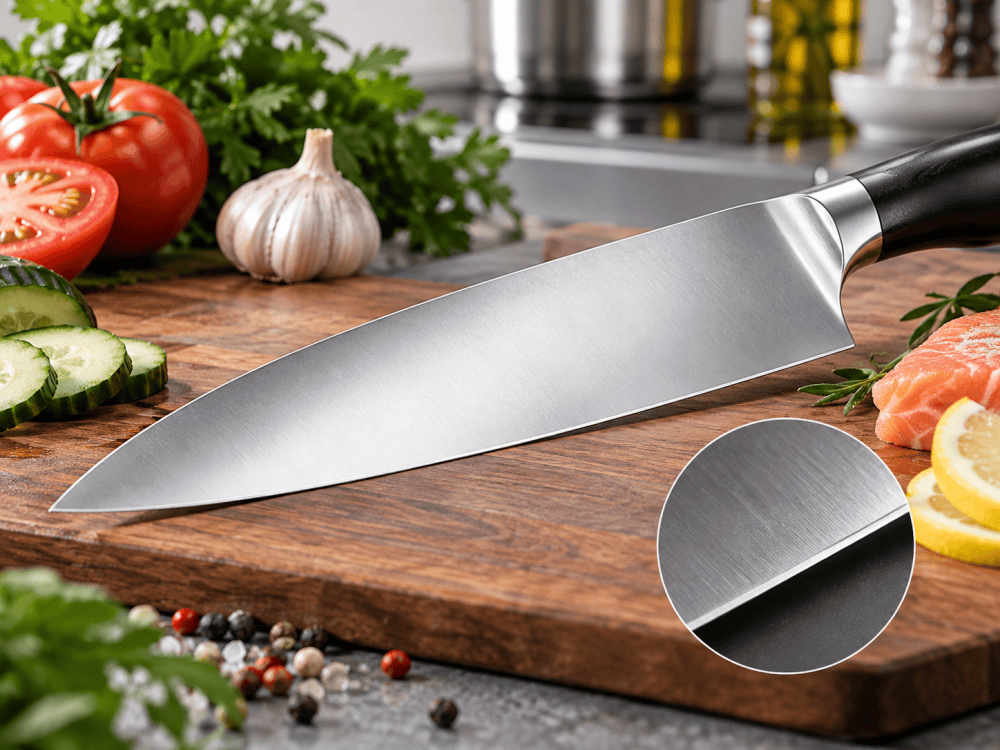
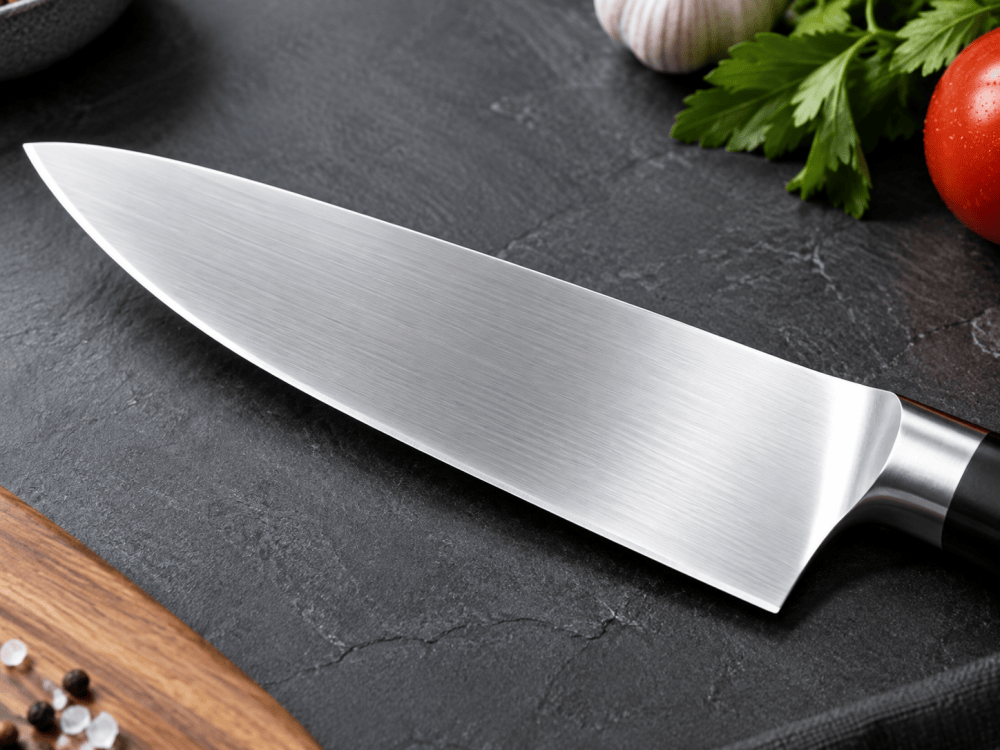
5. Polishing and Surface Finishing
Polishing improves the appearance, smoothness, and corrosion resistance of kitchen knives. It is also an important step for premium product positioning.
Common surface finishes include:
- Mirror polishing for premium kitchen knives
- Satin finishing for professional appearance
- Brushed finishing for modern designs
- Coating finishes for special applications
A professional kitchen knife factory controls polishing quality to ensure consistent appearance across large production batches.
6. Handle Manufacturing and Assembly
The handle plays an important role in user comfort, safety, and product positioning. Different markets have different preferences for kitchen knife handle designs.
Common handle materials include:
- Wood Handles: Premium appearance and traditional style
- Plastic Handles: Cost-effective and practical for mass retail
- Stainless Steel Hollow Handles: Modern design with lightweight construction
- Soft Grip Handles: Improved comfort and ergonomic performance
Explore more about knife handle materials: Best Handle Materials for Kitchen Knives
7. Quality Inspection and Final Testing
Quality control is essential in kitchen knife manufacturing. Reliable manufacturers perform inspections throughout the entire production process.
A complete quality control system usually includes:
- Raw material inspection
- Blade dimension checking
- Hardness testing
- Sharpness testing
- Handle strength testing
- Appearance inspection
- Final shipment inspection
Strict quality control helps manufacturers maintain product consistency and reduce customer complaints in global markets.
Choosing the Right Stainless Steel for Kitchen Knives
Steel selection directly affects knife performance, pricing, and market positioning. Different stainless steel grades are suitable for different customer groups and applications.
| Steel Type | Main Features | Suitable Market |
|---|---|---|
| 3Cr13 Stainless Steel | Affordable, corrosion resistant, easy maintenance | Mass retail and entry-level products |
| 5Cr15MoV Stainless Steel | Balanced hardness, durability and edge retention | Mid-range kitchen knife markets |
| 420J2 Stainless Steel | Excellent corrosion resistance and lightweight design | Kitchen and outdoor applications |
Professional manufacturers select suitable steel grades based on product requirements, target markets, and customer budgets.
FDA & LFGB Compliance Requirements for Kitchen Knife Manufacturing
For international kitchen knife trade, compliance with food-contact safety requirements is essential.
Different markets may require different standards:
- FDA: Food-contact requirements for the United States market
- LFGB: Strict food safety requirements commonly required in European markets
- Material Testing: Ensuring safe contact with food
- Documentation Support: Helping importers complete compliance requirements
Learn more: LFGB vs FDA: Kitchen Knife Compliance Guide
OEM vs ODM Kitchen Knife Manufacturing
Many global brands choose OEM or ODM manufacturing models when developing kitchen knife products.
| Model | Description |
|---|---|
| OEM | Manufacturer produces products based on buyer designs, specifications, materials and branding requirements. |
| ODM | Manufacturer provides existing designs with customization options such as logo and packaging. |
For brands looking for customized solutions, working with an experienced OEM & ODM kitchenware manufacturer can reduce development risks and improve market competitiveness.
MOQ and Global Kitchen Knife Sourcing Strategy
MOQ (Minimum Order Quantity) is an important factor when sourcing kitchen knives from China. It affects manufacturing cost, production efficiency, packaging requirements, and overall supply chain planning.
Different kitchen knife projects may have different MOQ requirements depending on:
- Product structure and complexity
- Steel material selection
- Handle customization requirements
- Packaging design
- Logo and private label requirements
Standard kitchen knife products usually have lower MOQ requirements, while fully customized OEM projects may require higher quantities due to tooling, material preparation, and production setup.
Professional suppliers can help buyers optimize purchasing strategies through mixed orders, product combinations, and long-term production planning.
Read more: Minimum Order Quantity (MOQ) Guide for Kitchenware Buyers
How to Choose a Reliable Kitchen Knife Manufacturer in China
Selecting the right kitchen knife manufacturer is one of the most important decisions for importers, retailers, and private label brands.
Before cooperation, buyers should evaluate the following factors:
1. Manufacturing Experience
Experienced manufacturers usually have better production processes, skilled workers, stable suppliers, and knowledge of international market requirements.
2. Production Capability
A reliable factory should have sufficient production capacity to support both standard orders and customized projects.
3. Quality Control System
Professional manufacturers should have inspection procedures covering raw materials, production processes, finished products, and shipment quality.
4. OEM & Customization Ability
For brands, customization capability is essential. A professional supplier should support:
- Custom knife designs
- Logo customization
- Packaging development
- Material selection
- Private label production
5. Export and Compliance Experience
Manufacturers with international export experience understand different market regulations, packaging standards, and customer requirements.
For a detailed supplier selection guide, read: How to Choose a Reliable Kitchen Knife Supplier in China
Why Choose FASAKA as Your Kitchen Knife Manufacturing Partner?
FASAKA is a professional kitchen knife manufacturer providing integrated manufacturing solutions for global wholesalers, distributors, retailers, and private label brands.
With decades of experience in kitchen knife production, FASAKA combines manufacturing expertise, supply chain management, quality control, and customization capabilities to support international customers.
- 28+ years manufacturing experience in kitchen knives and kitchenware
- Complete production capability from material preparation to final inspection
- OEM & ODM services for global brands and retailers
- FDA & LFGB compliance support for international markets
- Strict quality control procedures throughout production
- Stable supply chain management for bulk orders
Explore FASAKA kitchen knife solutions:
- Forged Kitchen Knife Sets
- Wood Handle Kitchen Knife Sets
- Hollow Handle Kitchen Knife Sets
- Plastic Handle Kitchen Knife Sets
Frequently Asked Questions About Kitchen Knife Manufacturing
1. What are the main steps of kitchen knife manufacturing?
The main steps include steel preparation, forging or stamping, heat treatment, grinding, polishing, handle assembly, quality inspection, and packaging.
2. What steel is commonly used for kitchen knives?
Common kitchen knife steels include 3Cr13, 5Cr15MoV, and 420J2. The best choice depends on product positioning, performance requirements, and target markets.
3. What is the difference between forged and stamped kitchen knives?
Forged knives are produced through shaping heated steel and usually offer stronger construction, while stamped knives are lightweight and cost-effective for mass production.
4. Can kitchen knife manufacturers provide OEM services?
Yes. Professional manufacturers can provide OEM services including custom designs, materials, packaging, branding, and product development.
5. What certifications are required for kitchen knives?
Requirements depend on the target market. FDA and LFGB compliance are common requirements for international kitchen knife products.
6. How long does kitchen knife production take?
Production time depends on product type, order quantity, customization requirements, and packaging complexity.
7. What MOQ is required for OEM kitchen knives?
MOQ depends on materials, customization level, and production requirements. Buyers should discuss specific requirements with manufacturers.
8. How do I find a reliable kitchen knife manufacturer in China?
Check manufacturing experience, production capability, quality control systems, certifications, OEM ability, and export history before choosing a supplier.
Conclusion: Building a Successful Kitchen Knife Supply Chain
Kitchen knife manufacturing involves many important factors, including steel selection, production technology, quality control, compliance requirements, and supplier capability.
For global buyers, working with an experienced kitchen knife manufacturer can reduce sourcing risks, improve product quality, and create long-term business value.
FASAKA provides professional kitchen knife manufacturing, OEM/ODM customization, and global sourcing support for customers worldwide.
Looking for a Professional Kitchen Knife Manufacturer?
Partner with FASAKA for OEM kitchen knife manufacturing, custom solutions, compliance support, and reliable global supply.
OEM & ODM Solutions Contact FASAKA