


LFGB vs FDA for Kitchen Knives: Complete Food Contact Compliance Guide for Importers (2026)
LFGB vs FDA for Kitchen Knives: Complete Food Contact Compliance Guide for Importers (2026)
Published by FASAKA | Kitchen Knife Compliance & Manufacturing Guide
When importing kitchen knives for global markets, product compliance is one of the most important considerations for distributors, retailers, and private-label brands.
A kitchen knife is not only a cutting tool but also a food-contact product. The materials used in the blade, handle, coating, and other components must meet food safety requirements before entering international markets.
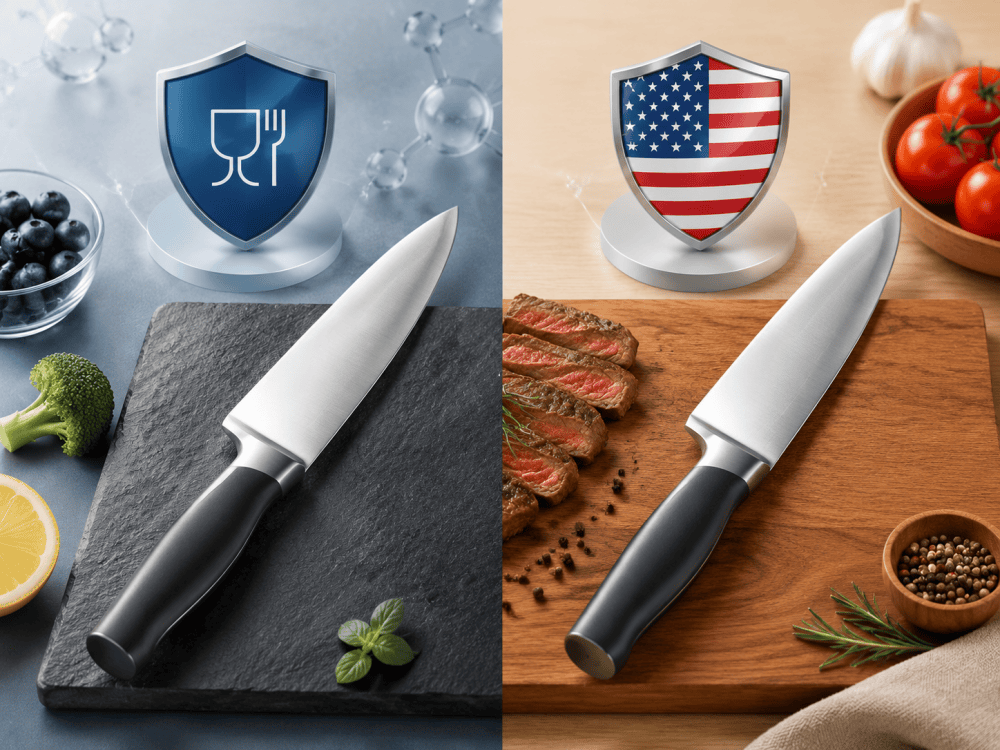
Among the most recognized food-contact regulations, FDA (United States) and LFGB (European Union, especially Germany) are two standards frequently requested by professional buyers.
Although both FDA and LFGB aim to ensure consumer safety, they have differences in regulatory systems, testing requirements, and market applications.
This guide explains the differences between LFGB and FDA compliance for kitchen knives, helping importers understand which standard they need when sourcing from a professional kitchen knife manufacturer.
What Are Food Contact Regulations for Kitchen Knives?
Food contact regulations are safety requirements designed to ensure that materials touching food do not release harmful substances during normal use.
For kitchen knives, compliance usually focuses on:
- Blade material safety
- Handle material compliance
- Chemical migration limits
- Heavy metal restrictions
- Manufacturing hygiene and quality control
Professional importers usually request compliance documents from suppliers to reduce risks during customs inspection, retail approval, and market entry.
This is especially important for supermarkets, online marketplaces, and private-label brands that require reliable product documentation.
What Is FDA Compliance for Kitchen Knives?
FDA compliance refers to meeting the food-contact material requirements established by the United States Food and Drug Administration.
In the United States, kitchen knives are considered food-contact articles. The FDA does not issue a traditional "certificate approval" for every knife product, but manufacturers and suppliers must ensure that all materials comply with applicable FDA regulations.
Key FDA Compliance Requirements
- Use of food-safe stainless steel materials
- Safe handle materials suitable for food contact
- Compliance with FDA CFR Title 21 requirements
- Control of chemical migration into food
- Supplier responsibility for material documentation
Common materials used in FDA-compliant kitchen knives include food-grade stainless steel such as 3Cr13, 420J2, and other suitable grades depending on product requirements.
For US importers, choosing a supplier familiar with FDA requirements helps avoid compliance issues during product registration and distribution.
What Is LFGB Certification for Kitchen Knives?
LFGB stands for the German Food and Commodities Act (Lebensmittel- und Futtermittelgesetzbuch). It is one of the most recognized food-contact safety standards in Europe.
Although LFGB originated in Germany, many European buyers request LFGB testing because it represents a higher level of confidence in food safety.
Key LFGB Testing Requirements
- Detailed chemical migration testing
- Evaluation of harmful substance release
- Material safety verification
- Long-term food contact safety assessment
- Stricter requirements for certain materials
For European retailers and distributors, LFGB compliance can improve product acceptance, especially in markets where consumers have high expectations for food safety.
Key Point:
FDA and LFGB are not competing certifications. They are market-specific food-contact safety standards designed for different regions.
LFGB vs FDA: Key Differences for Kitchen Knives
Although FDA and LFGB both focus on food-contact safety, they are different regulatory systems designed for different markets. Understanding these differences helps importers select the right compliance requirements before purchasing kitchen knives.
| Comparison | FDA Compliance | LFGB Compliance |
|---|---|---|
| Main Market | United States | Germany and European Union markets |
| Regulation System | US food contact material regulations | German Food and Commodities Law |
| Testing Focus | Material safety and migration requirements | More comprehensive chemical migration testing |
| Common Buyers | US distributors, retailers, online sellers | European retailers, supermarkets, premium brands |
| Typical Requirement | FDA-compliant materials | LFGB testing report and compliance documentation |
Is LFGB Stricter Than FDA?
Many importers ask whether LFGB is stricter than FDA. The answer is that LFGB is generally considered a more demanding food-contact safety standard, especially regarding chemical migration testing.
However, "stricter" does not mean FDA is less reliable. Both standards are designed to protect consumers and ensure that food-contact materials are safe.
The main difference is the testing approach:
- FDA focuses on compliance with approved food-contact materials and safety requirements in the US market.
- LFGB often requires broader migration testing and stricter evaluation of material safety.
- European buyers commonly request LFGB because of its strong reputation in food safety.
LFGB vs FDA Testing Requirements for Kitchen Knives
For kitchen knife manufacturers, compliance testing mainly focuses on whether materials can safely contact food without releasing harmful substances.
Important testing areas include:
| Testing Item | Purpose |
|---|---|
| Chemical Migration Test | Ensures materials do not release harmful substances into food |
| Heavy Metal Testing | Checks restricted elements such as lead and cadmium |
| Material Safety Verification | Confirms stainless steel and handle materials meet requirements |
| Overall Product Inspection | Ensures finished products meet quality expectations |
Which Compliance Standard Do Kitchen Knife Importers Need?
The required compliance standard depends mainly on the target sales market.
| Target Market | Recommended Compliance |
|---|---|
| United States | FDA food-contact compliance |
| Germany | LFGB testing is commonly requested |
| European Union | LFGB is widely accepted by many buyers |
| Global Distribution | Many buyers prefer suppliers supporting both FDA and LFGB |
For international brands and distributors, choosing a kitchen knife manufacturer that understands both FDA and LFGB requirements can simplify product approval and reduce import risks.
Materials That Affect Kitchen Knife Compliance
The materials used in kitchen knives directly influence food safety compliance. Professional manufacturers carefully select materials that meet international standards.
- Stainless Steel Blade: Food-grade stainless steel provides durability and corrosion resistance.
- Handle Materials: Plastic, PP, ABS, and composite materials must meet food-contact requirements.
- Coatings: Any surface coating should be tested for safety and stability.
Common kitchen knife materials used by professional manufacturers include 3Cr13, 420J2, 5Cr15MoV, and other stainless steel grades depending on product requirements.
How Kitchen Knife Manufacturers Ensure FDA and LFGB Compliance
For global kitchen knife buyers, compliance depends not only on testing reports but also on the manufacturer's production process, material control, and quality management system.
A reliable kitchen knife manufacturer should have a complete compliance process from raw material selection to final inspection.
1. Selecting Food-Grade Raw Materials
The first step in compliance is choosing suitable materials. Professional manufacturers use verified stainless steel and food-safe handle materials to reduce safety risks.
Material selection may include:
- Food-grade stainless steel blade materials
- Safe plastic or composite handle materials
- Approved coatings and surface treatments
- Traceable material documentation
2. Strict Production Quality Control
Compliance is not only about materials. Manufacturing processes also affect product safety and consistency.
Professional quality control includes:
- Incoming material inspection
- Blade processing inspection
- Handle assembly checking
- Sharpness testing
- Appearance inspection
- Final product inspection before shipment
3. Supporting Third-Party Compliance Testing
For international buyers, third-party testing reports provide additional confidence when introducing kitchen knives into new markets.
Experienced manufacturers can support customers with:
- FDA-related compliance documentation
- LFGB testing support
- Material certificates
- Quality inspection reports
Why Choose FASAKA as Your Kitchen Knife Manufacturer?
Choosing the right supplier is one of the most important decisions for importers. A professional kitchen knife manufacturer should provide not only products but also compliance support, manufacturing experience, and reliable communication.
FASAKA specializes in kitchen knives and kitchen tools, providing OEM and ODM solutions for global wholesalers, retailers, and private-label brands.
- Professional kitchen knife manufacturing experience
- Food-grade stainless steel material options
- Support for FDA and LFGB compliance requirements
- OEM and ODM customization services
- Quality inspection before shipment
- Customized packaging solutions
With experience serving international markets, FASAKA helps customers develop reliable kitchen knife products suitable for different regions and retail channels.
Learn more about our OEM & ODM kitchenware solutions .
Frequently Asked Questions About LFGB vs FDA Kitchen Knife Compliance
1. Is LFGB certification better than FDA for kitchen knives?
LFGB is often considered stricter because it usually requires more detailed migration testing. However, FDA compliance is also essential for kitchen knives sold in the United States.
2. Do kitchen knives need FDA approval?
The FDA does not approve every individual kitchen knife product. Instead, manufacturers must ensure that food-contact materials comply with FDA requirements.
3. Do kitchen knives need LFGB certification in Europe?
Many European buyers, especially German retailers and distributors, request LFGB testing because of its strong reputation for food safety.
4. Can one kitchen knife pass both FDA and LFGB testing?
Yes. Kitchen knives made with suitable food-grade materials and controlled production processes can meet both FDA and LFGB requirements.
5. What materials are commonly used for compliant kitchen knives?
Common materials include food-grade stainless steel such as 3Cr13, 420J2, and 5Cr15MoV, together with safe handle materials suitable for food contact.
6. What documents should kitchen knife suppliers provide?
Professional suppliers may provide material certificates, testing reports, inspection records, and compliance documentation according to customer requirements.
7. Why do importers need a compliant kitchen knife manufacturer?
Working with an experienced manufacturer reduces compliance risks, improves product approval efficiency, and helps brands enter international markets successfully.
8. How can buyers verify kitchen knife compliance?
Buyers should review material information, testing reports, supplier experience, and quality control procedures before placing large orders.
Conclusion: Choosing the Right Compliance Standard for Kitchen Knives
Both FDA and LFGB play an important role in ensuring kitchen knife safety. The right compliance standard depends mainly on the target market and customer requirements.
For US markets, FDA compliance is essential. For European markets, LFGB testing is widely recognized and often requested by professional buyers.
For global brands and importers, working with a kitchen knife manufacturer that understands both standards can simplify sourcing and reduce international trade risks.
FASAKA provides professional kitchen knife manufacturing, OEM/ODM customization, and compliance support for worldwide customers.
Looking for FDA & LFGB Compliant Kitchen Knives?
Contact FASAKA for professional kitchen knife manufacturing, compliance support, OEM/ODM solutions, and customized products.
Explore Kitchen Knives Contact FASAKA