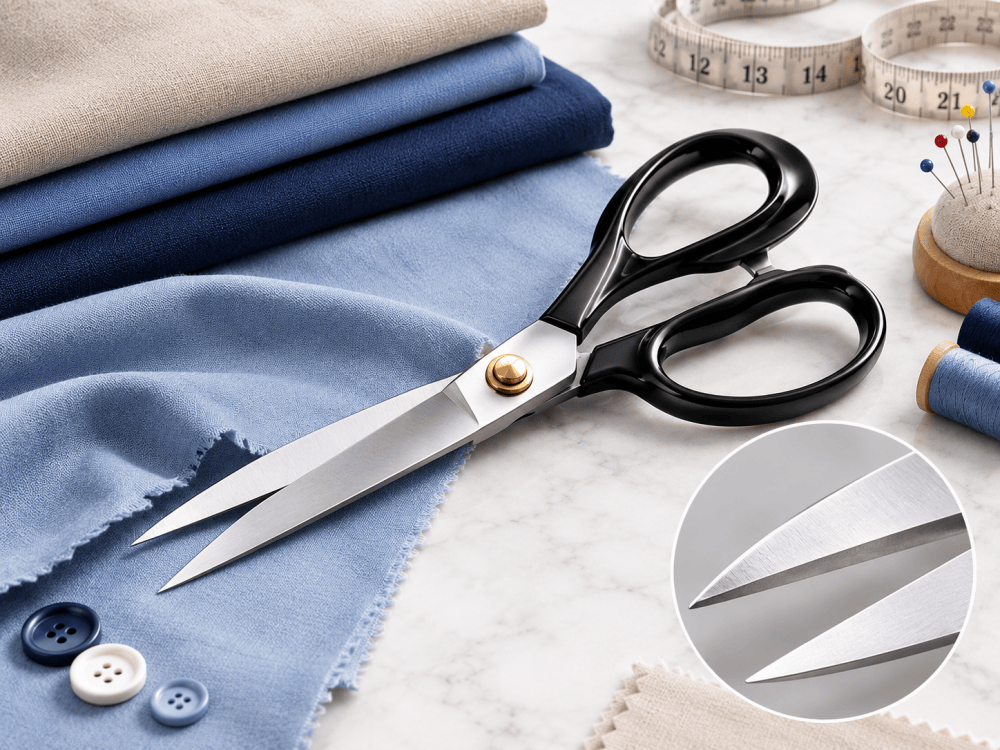



Chinese Scissors: Why Yangjiang Is a Leading Scissors Manufacturing Hub
Chinese Scissors: Why Yangjiang Is a Leading Scissors Manufacturing Hub
Published by FASAKA | Scissors Manufacturing & Sourcing Guide
When international buyers search for Chinese scissors, one city appears repeatedly in the global scissors supply chain: Yangjiang, Guangdong. Known for its long history of knife and scissors production, Yangjiang has developed into one of China's most important manufacturing hubs for cutting tools.
Today, manufacturers in Yangjiang produce a wide range of scissors for household, kitchen, sewing, tailoring, crafts, gardening, professional and industrial applications. The region also supports OEM and ODM projects for overseas retailers, distributors, importers and private-label brands.
But why is Yangjiang so closely associated with scissors manufacturing? And what should international buyers know when sourcing Yangjiang scissors from China?
In this guide, FASAKA explains why Yangjiang has become a major scissors manufacturing hub, what types of scissors are produced there, how the local supply chain works, and what buyers should consider when choosing a Chinese scissors manufacturer.

Yangjiang's biggest advantage is not simply the number of scissors factories. Its strength comes from a concentrated manufacturing ecosystem that includes material suppliers, forging and stamping facilities, heat treatment, grinding, polishing, handle production, packaging and export services.
Table of Contents
- What Are Chinese Scissors?
- Why Is China a Major Scissors Manufacturing Country?
- Why Is Yangjiang Famous for Scissors?
- How the Yangjiang Scissors Supply Chain Works
- What Types of Scissors Are Made in Yangjiang?
- How Are Yangjiang Scissors Manufactured?
- What Materials Are Used for Chinese Scissors?
- Can You Customize Chinese Scissors?
- Advantages of Sourcing Scissors from Yangjiang
- How to Choose a Scissors Manufacturer in China
- FASAKA Chinese Scissors Manufacturing Solutions
- Frequently Asked Questions
What Are Chinese Scissors?
The term Chinese scissors generally refers to scissors manufactured in China. It does not describe a single scissors design or material. Chinese manufacturers produce many different types of scissors for different applications and international markets.
Depending on the factory and product category, Chinese scissors may include household scissors, kitchen scissors, sewing scissors, tailor scissors, craft scissors, office scissors, gardening scissors and specialized cutting tools.
Chinese manufacturers also produce scissors at different price and quality levels. Some factories specialize in high-volume mass-market products, while others focus on professional scissors, premium materials or customized OEM projects.
- Kitchen and food preparation scissors
- Sewing and fabric scissors
- Tailor scissors
- Household scissors
- Craft and DIY scissors
- Office scissors
- Gardening scissors
- Professional cutting scissors
This broad product range is one reason China has become an important sourcing destination for international scissors buyers.
Why Is China a Major Scissors Manufacturing Country?
China's position in the global scissors industry is closely related to its large manufacturing base and highly developed supply chains. Scissors may look like relatively simple products, but consistent production requires control over materials, blade geometry, heat treatment, grinding, assembly and quality inspection.
1. Complete Manufacturing Supply Chain
A scissors factory may need to work with suppliers for stainless steel, carbon steel, plastic handles, metal components, packaging and other production materials. In major manufacturing clusters, many of these resources can be sourced locally or from nearby industrial areas.
2. Large-Scale Production Experience
Chinese factories serve both domestic and international markets. This gives manufacturers experience producing large quantities of standardized products while also supporting customized specifications for different customers.
3. OEM and Private-Label Flexibility
Many Chinese scissors suppliers offer customization options such as logo application, handle colors, blade finishes, packaging and product specifications. This makes China particularly attractive to retailers and private-label brands.
4. Competitive Manufacturing Costs
China's established industrial infrastructure can help manufacturers achieve competitive production costs while maintaining the ability to produce products across different market segments.
The cost advantage of Chinese scissors should not be evaluated only by the unit price. Manufacturing consistency, customization capability, MOQ, packaging, quality control and communication can have a major impact on the total sourcing cost.
Why Is Yangjiang Famous for Scissors?
Yangjiang is a city in Guangdong Province with a long-established tradition of knife and scissors manufacturing. Over time, the region has developed from traditional blade-making activities into a modern industrial cluster serving both domestic and international markets.
The importance of Yangjiang comes from the combination of manufacturing experience and supply-chain concentration. Instead of relying on a single factory for every production process, manufacturers can work within a broader regional network of specialized suppliers.
A Long Manufacturing Tradition
Knife and scissors making has been an important traditional industry in Yangjiang for generations. This accumulated manufacturing knowledge has contributed to the development of modern production techniques and skilled workers in the local cutting-tool industry.
A Concentrated Industrial Cluster
Today, the Yangjiang area supports businesses involved in blades, scissors, kitchen knives, hardware products, handles, finishing and packaging. This concentration makes the city particularly attractive to companies involved in cutting-tool manufacturing.