




Ceramic Knives: Pros, Cons, Are They Good & Can You Sharpen Them?
Ceramic Knives: Pros, Cons, Are They Good & Can You Sharpen Them?
Published by FASAKA | Kitchen Knife Guide
Ceramic knives have become increasingly popular in modern kitchens because of their exceptional sharpness, lightweight design, and resistance to rust. Unlike traditional kitchen knives made from stainless steel, ceramic knives typically use zirconium oxide, an extremely hard material that can maintain a sharp cutting edge for a long time.
However, ceramic knives are not suitable for every cutting task. While they offer impressive advantages for slicing fruits, vegetables, and boneless foods, they can also be more brittle than steel knives and may require special care during use and sharpening.
So, are ceramic knives good? Can ceramic knives replace stainless steel kitchen knives? And can you sharpen ceramic knives once they become dull? This guide explains the major advantages and disadvantages of ceramic knives, compares them with traditional steel knives, and answers the most common questions about ceramic knife maintenance.
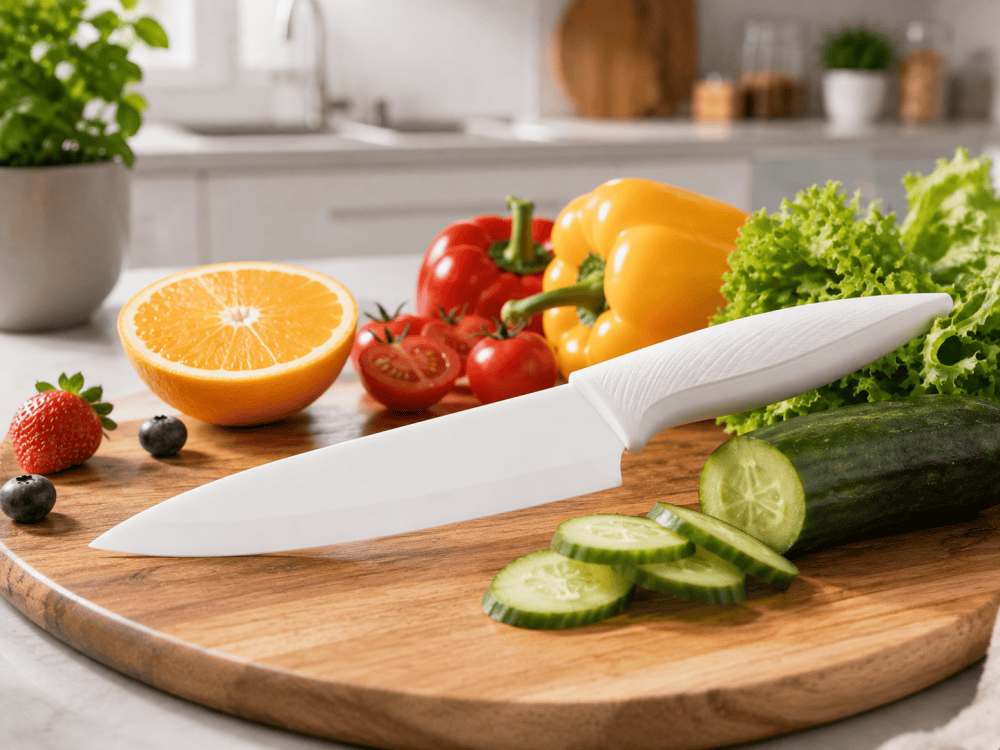
Quick Answer: Are Ceramic Knives Good?
Yes, ceramic knives are good for specific kitchen tasks. They are extremely sharp, lightweight, rust-resistant, and excellent for slicing fruits, vegetables, and boneless foods. However, they are more brittle than stainless steel knives and are not recommended for cutting bones, frozen food, or other hard materials.
What Are Ceramic Knives?
Ceramic kitchen knives are cutting tools made primarily from advanced ceramic materials rather than metal. Most high-quality ceramic knife blades are manufactured using zirconium dioxide, also known as zirconia.
Zirconia is an extremely hard material. After processing and sintering at high temperatures, the ceramic material becomes dense and durable enough to create an exceptionally sharp knife blade.
Because ceramic is significantly harder than many conventional stainless steel materials, ceramic knives can maintain a sharp edge for a long period when used correctly.
- Extremely sharp cutting edge
- Excellent edge retention
- Very lightweight construction
- No risk of rust or corrosion
- Non-reactive with many foods
These characteristics make ceramic knives particularly suitable for consumers who want a lightweight knife for everyday food preparation.
Are Ceramic Knives Good for Everyday Use?
The answer depends on how the knife will be used. Ceramic knives perform extremely well for soft and medium-density foods, especially when clean, precise slicing is required.
For example, ceramic knives are suitable for:
- Fruits
- Vegetables
- Boneless meat
- Herbs
- Fish fillets
- Soft cooked foods
However, ceramic knives are generally not designed for heavy-duty cutting. Tasks involving bones, frozen foods, hard shells, or twisting force can increase the risk of blade chipping or breakage.
For this reason, many professional kitchens and home users choose ceramic knives as a complementary tool rather than a complete replacement for traditional stainless steel kitchen knives.
Ceramic Knife Advantages
Ceramic knives offer several important advantages that make them attractive to home users, retailers, and kitchenware buyers.
1. Excellent Edge Retention
One of the biggest advantages of ceramic knives is their ability to remain sharp for a long period. Because zirconia is extremely hard, the cutting edge wears more slowly than many standard stainless steel blades.
For consumers who primarily use their knives for slicing fruits and vegetables, this can mean less frequent sharpening and consistently clean cutting performance.
This long-lasting sharpness is one reason why many buyers searching for the best ceramic knives focus heavily on blade material quality and manufacturing precision.
2. Extremely Lightweight
Ceramic blades are much lighter than many traditional steel blades. This lightweight construction can reduce hand fatigue during food preparation and make the knife easier to control for certain users.
A lightweight knife can be especially attractive for:
- Older users
- Users with limited hand strength
- Home cooks preparing vegetables
- Consumers who prefer compact kitchen tools
3. Rust and Corrosion Resistance
Unlike metal knives, ceramic blades do not rust. This is a major benefit for users living in humid environments or consumers who want a low-maintenance kitchen knife.
Ceramic also does not react with moisture in the same way as steel, making it easier to maintain from a corrosion perspective.
4. Non-Reactive Blade Material
Ceramic is generally non-reactive with many foods. When cutting acidic fruits and vegetables, users do not need to worry about the blade rusting or developing metallic corrosion.
This characteristic makes ceramic knives particularly suitable for preparing foods such as tomatoes, citrus fruits, apples, and other fresh ingredients.
5. Clean and Precise Cutting
A sharp ceramic blade can make very clean and precise cuts. This can be useful when slicing delicate fruits and vegetables because the blade can pass through food with minimal tearing or crushing.
For this reason, ceramic knives are often marketed as precision cutting tools for everyday kitchen preparation.
Ceramic Knife Disadvantages
Although ceramic knives offer excellent sharpness and edge retention, they also have several important limitations. Understanding these disadvantages is essential before choosing a ceramic knife for everyday use or retail product development.
1. Ceramic Knives Are More Brittle Than Steel Knives
The biggest disadvantage of ceramic knives is brittleness. Ceramic is extremely hard, but hardness does not always mean toughness.
A ceramic blade can chip or break if it is dropped on a hard surface or subjected to excessive sideways force. Twisting the blade inside hard food can also damage the edge.
Stainless steel knives generally provide better impact resistance and are more suitable for demanding kitchen tasks.


