


How Much Should You Pay for a Good Chef Knife? A Price Guide
How Much Should You Pay for a Good Chef Knife? A Price Guide
How much should you expect to pay for a good quality chef knife? In the US market, a basic chef knife may cost less than $30, while well-made mid-range and premium models can cost $100, $200, or more.
The right budget depends on how often you cook, what you expect from the blade, and how much you value edge retention, comfort, construction, and finish. A higher price does not automatically guarantee a better knife for every user.
This guide explains how much a good chef knife costs, what you can expect at different price points, which factors influence the price, and how to choose a knife that offers good value for money. It also covers the cost considerations that matter to kitchenware brands, importers, and wholesale buyers.
For a useful starting point, consider these broad US retail price ranges for an individual chef knife:
- Under $30: Basic budget options for occasional cooking.
- $30–$60: Entry-level knives worth comparing for everyday home use.
- $60–$100: A wider range of options with different blade materials, designs, and construction.
- $100–$200: Knives aimed at frequent home cooks and some professional users.
- $200 and above: Premium models that may offer specialized steel, refined craftsmanship, distinctive designs, or brand value.
These are indicative budgeting ranges, not guaranteed quality grades. Compare the actual knife specifications, cutting performance, comfort, and maintenance requirements before buying.
1. What Is a Reasonable Budget for a Good Chef Knife?
For many home cooks, an individual chef knife in the $50–$100 range is a reasonable starting point for comparing everyday options. Buyers who cook frequently may also find worthwhile choices below or above that range.
Some professional kitchen knives cost more than $100, while certain budget models perform well for routine preparation. The best purchase is the knife that matches your cooking habits, preferred handling, maintenance routine, and budget.
| Retail price range | What to look for | Who may consider it? |
|---|---|---|
| Under $30 | Basic construction, comfortable grip, acceptable cutting performance | Occasional cooks and shoppers with a limited budget |
| $30–$60 | Reliable everyday performance, suitable handle design, practical maintenance | Home cooks looking for an affordable daily-use knife |
| $60–$100 | Blade geometry, balance, edge performance, and finish | Regular home cooks comparing long-term value |
| $100–$200 | Steel properties, edge retention, ergonomics, and manufacturing quality | Frequent cooks and users with specific performance preferences |
| $200+ | Specialized materials, craftsmanship, design, and brand support | Enthusiasts and buyers who value particular premium features |
Remember that these ranges describe possible retail positioning. They do not mean every knife in a particular bracket will outperform every knife in a lower bracket.
2. What Makes Some Chef Knives More Expensive Than Others?
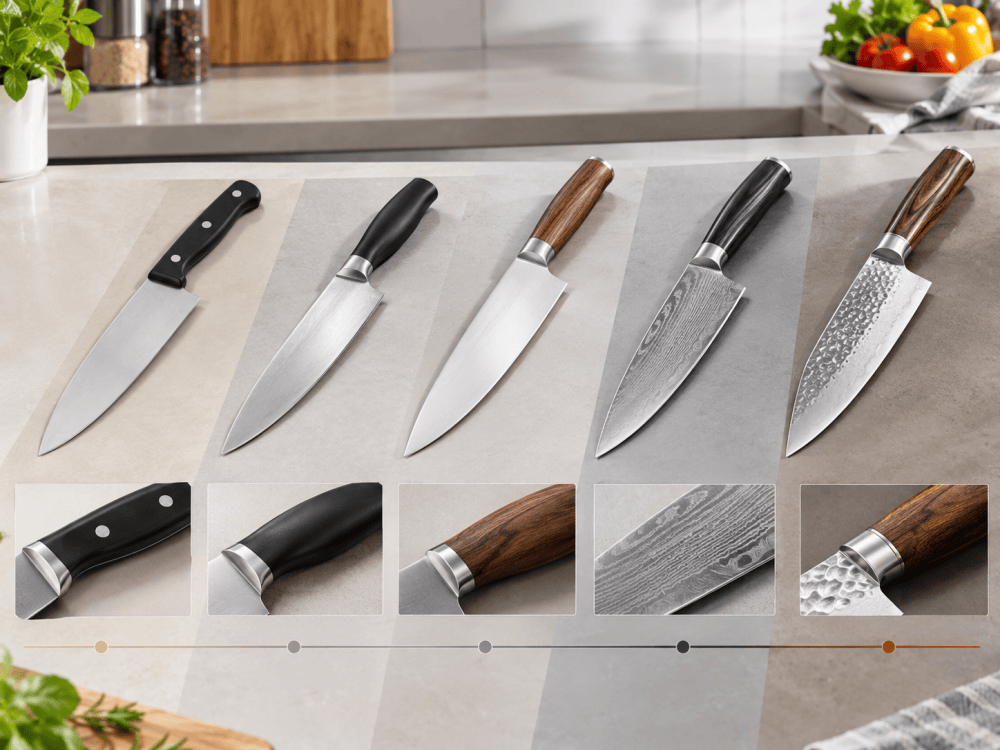
Two chef knives may look similar but have very different prices. The difference often comes from the blade material, geometry, heat treatment, manufacturing process, handle construction, finishing, and brand positioning.
Blade steel and material properties
Steel affects corrosion resistance, hardness, toughness, sharpening behavior, and edge retention. Different steel grades involve different trade-offs, and the steel name alone cannot predict the finished knife's performance.
Heat treatment and the finished blade geometry are also important. A suitable steel processed correctly can outperform a more expensive material that has not been manufactured or finished well.
Blade geometry and cutting performance
Blade thickness, grind, edge angle, and overall profile influence how a knife moves through food. A well-designed blade may cut efficiently without requiring an unusually high price or decorative finish.
For everyday cooking, practical cutting performance is often more useful than appearance alone. Buyers should look at how the knife handles vegetables, herbs, and other ingredients commonly prepared in their kitchen.
Manufacturing method and finishing
Forged and stamped knives can both be good products. Forging may involve additional shaping and finishing operations, while stamped knives can offer efficient production and competitive pricing. Neither method alone guarantees superior cutting performance.
Consistency matters: blade alignment, handle fit, edge finishing, surface quality, and quality control all influence the finished product.
Handle material, comfort, and balance
Handle materials may include wood, synthetic polymers, composites, or other materials. The cost depends on the material, construction, finish, and assembly process.
A comfortable handle should fit the user's hand and provide secure control. Balance is also personal: some cooks prefer a blade-heavy knife, while others prefer a more neutral or handle-heavy feel.
Brand reputation and design
Established brands may charge more for product development, distribution, customer service, warranties, and brand recognition. Distinctive finishes, decorative patterns, and limited production can also increase the retail price.
These features may be valuable to some buyers, but they should not replace an assessment of cutting performance, usability, and care requirements.
3. Is an Expensive Chef Knife Always Better?
No. A more expensive knife may offer better materials, finer finishing, or specialized performance, but the benefits depend on the individual model and the user.
A home cook who prepares dinner a few times a week may not need the same knife as a professional chef who spends hours preparing ingredients. A premium blade may also require more careful handling or a more specific sharpening routine.
Before paying extra, consider the following questions:
- Does the knife feel comfortable and secure in your hand?
- Does the blade perform well on the ingredients you cut most often?
- Is the steel suitable for your preferred balance of edge retention, toughness, and corrosion resistance?
- Can you maintain and sharpen the knife properly?
- Are you paying for useful performance improvements or mainly for appearance and brand prestige?
4. What Is the Best Chef Knife Price for Home Cooks?
The best price depends on how you cook and what you expect from your knife. Instead of selecting a budget solely by price, begin with the intended use.
For occasional home cooking
A basic or entry-level chef knife may be enough if you prepare simple meals and do not need specialized performance. Prioritize safe handling, a comfortable grip, and acceptable cutting performance over decorative features.
For everyday home cooking
If you prepare meals regularly, compare knives with dependable cutting performance, comfortable handles, practical maintenance needs, and consistent construction. A modest increase in budget may provide more choices, but evaluate each knife individually.
For enthusiastic home cooks
Frequent cooks may value better edge retention, a particular blade profile, a thinner cutting geometry, or a handle designed for extended use. A higher price can be worthwhile if the features genuinely match your preferences.
For professional kitchens
Professional users should consider cutting performance, comfort during repeated use, ease of maintenance, durability, and replacement or sharpening costs. A knife that fits the task and can be maintained reliably may offer better long-term value than a more expensive knife with unsuitable characteristics.
5. How Much Should You Spend on Different Chef Knife Types?
Not every chef knife is designed in the same style. Blade shape, size, steel, and construction affect both the intended use and the price. The categories below are useful for comparing products, but prices vary widely within each type.
Western-style chef knives
Western-style chef knives often have a relatively robust blade and are commonly used with a rocking or chopping motion. They are available across budget, mid-range, and premium price tiers.
Japanese-style chef knives
Japanese-style chef knives include several designs with different blade profiles, steel choices, and cutting characteristics. Some prioritize a thin edge and precise cutting, while others are designed for broader everyday use.
Do not assume that every Japanese knife is harder, sharper, or more expensive than every Western knife. Compare the actual specifications and intended use.
Damascus-style chef knives
Damascus-pattern blades may feature layered construction or a decorative surface pattern. The appearance can add visual appeal, but the pattern alone does not establish the quality of the cutting edge or the steel used.
High-carbon stainless steel chef knives
High-carbon stainless steels are used in many kitchen knives. Their performance depends on the specific alloy, heat treatment, blade geometry, and finishing. Check the manufacturer's specifications rather than relying only on broad material labels.
6. What Other Costs Should You Consider?
The purchase price is only part of the cost of owning a chef knife. A useful budget should also consider maintenance, accessories, and replacement needs.
| Cost item | Why it matters | How to plan for it |
|---|---|---|
| Sharpening tools or service | Edges gradually wear during use and require maintenance | Choose a method suitable for the knife's steel and edge geometry |
| Knife storage | Suitable storage helps protect the edge and improve safety | Consider a block, drawer insert, magnetic holder, or blade guard |
| Cutting board | The cutting surface affects edge wear | Use a suitable board rather than hard surfaces such as glass or stone |
| Maintenance time | Different steels and knife designs may require different care | Choose a knife you can maintain consistently |
For most users, proper cleaning, drying, storage, and suitable sharpening help preserve cutting performance. A higher initial purchase price does not eliminate the need for maintenance.
For more information, read our guide on how to clean and store a chef knife safely.
7. How Can You Tell Whether a Chef Knife Offers Good Value?
A good-value chef knife balances performance, comfort, construction, and price. Before buying, look beyond product photos and marketing claims.
- Blade specifications: Check the stated steel grade and blade dimensions.
- Cutting performance: Look for credible product testing or assess the knife directly when possible.
- Edge quality: Check whether the knife cuts consistently and whether its edge is appropriate for the intended tasks.
- Handle comfort: Consider grip, balance, weight, and control.
- Construction: Inspect the blade, handle, joints, and finish.
- Maintenance: Understand cleaning, storage, honing, and sharpening requirements.
- Product support: Review warranty terms, customer service, and replacement options.
- Total value: Compare the complete product and ownership experience rather than the price alone.
8. How Much Does a Chef Knife Cost for Wholesale or OEM Buyers?
Retail prices and factory quotations are not directly comparable. A consumer usually sees the final retail price, while an importer or private-label brand must evaluate the factory price together with packaging, freight, duties, quality control, distribution, and other costs.
For B2B buyers, the cost of a chef knife depends on the product specifications and the commercial terms of the order.
Key factors affecting wholesale chef knife prices
- Steel grade: The specified material and its processing requirements can affect material and production costs.
- Blade construction: Forged or stamped construction, blade thickness, geometry, and finishing requirements affect manufacturing.
- Handle design: Material, shape, assembly, and surface finish influence cost.
- Quality requirements: Edge consistency, inspection standards, packaging protection, and any required testing affect the overall quotation.
- Customization: Logo application, colors, exclusive designs, and customized packaging may add setup or production costs.
- Order quantity: MOQ, batch size, and production planning can influence unit pricing.
- Shipping and import costs: Freight, duties, insurance, and other charges should be considered separately from the factory quotation.
How should importers compare factory quotations?
Request quotations based on the same specifications. Comparing two prices is not meaningful if the blade steel, dimensions, handle material, packaging, or quality requirements differ.
Ask suppliers to identify what is included in the quoted price, which costs are excluded, and whether sample, tooling, packaging, or customization charges apply.
9. What Should You Include in a Chef Knife OEM Request for Quotation?
A clear RFQ helps manufacturers understand the product you want and makes quotations easier to compare. If some specifications are not finalized, state your preferences and ask the supplier to recommend suitable options.
- Product type and intended market.
- Blade length, overall dimensions, and preferred profile.
- Preferred steel grade or target performance requirements.
- Handle material, color, shape, and finish.
- Construction method, if specified.
- Logo application and branding requirements.
- Packaging type and retail presentation.
- Estimated order quantity and target price range.
- Required product testing or documentation.
- Sample requirements, delivery destination, and expected timeline.
Buyers should also request samples when practical and evaluate them against the agreed specifications before committing to a large order.
10. How Can FASAKA Support Kitchen Knife Sourcing?
FASAKA is a brand under DKS Enterprises Co., Ltd., a manufacturer and supplier based in Yangjiang, Guangdong, China, specializing in hardware knives and scissors, BBQ tools, and kitchenware.
For importers, wholesalers, distributors, and private-label brands, sourcing decisions should begin with a clear product brief. The right specifications depend on the intended retail price, target customer, desired design, order quantity, and quality requirements.
FASAKA's OEM/ODM services provide a starting point for discussing product requirements and potential customization. Contact the team to confirm which options are available for your specific chef knife project.
Frequently Asked Questions
How much should I pay for a good quality chef knife?
A budget of around $50–$100 is a reasonable starting point for comparing many everyday chef knives. However, suitable options exist below and above this range. Evaluate blade performance, comfort, construction, and maintenance requirements rather than relying on price alone.
Is a $30 chef knife good enough?
A $30 chef knife may be sufficient for basic home cooking if its construction, cutting performance, and handle suit your needs. Inspect the specific product and do not assume that all knives at this price offer the same quality.
Is a $100 chef knife worth it?
It can be worth it if the knife offers improvements that matter to you, such as cutting performance, edge retention, comfort, or construction. Compare the actual product with less expensive alternatives before deciding.
Are $200 chef knives better than cheaper knives?
Some premium knives offer specialized steel, refined geometry, distinctive craftsmanship, or better finishing. However, a higher price does not guarantee better performance for every user. The right choice depends on the knife and your needs.
What makes a chef knife expensive?
Steel, heat treatment, blade geometry, manufacturing and finishing processes, handle materials, quality control, brand positioning, and distribution costs can all affect the price.
Does Damascus steel mean a chef knife is better?
No. A Damascus pattern may provide a distinctive appearance, but it does not independently establish cutting performance or steel quality. Evaluate the blade's actual construction, core steel where applicable, heat treatment, and geometry.
How much does a chef knife cost for wholesale buyers?
Wholesale pricing depends on the specified product, order quantity, customization, packaging, quality requirements, and commercial terms. Request a quotation using consistent specifications so that suppliers can be compared fairly.
What affects the cost of a private-label chef knife?
Blade materials, construction, handle design, branding, packaging, tooling or setup requirements, order quantity, testing, and logistics can all affect the total cost. Confirm which items are included in the quotation.
Conclusion: Pay for Performance, Not Just Price
A good chef knife does not have to be the most expensive one on the shelf. For many home cooks, the best choice is a knife that feels comfortable, cuts reliably, suits their maintenance habits, and fits their budget.
When comparing knives, consider the blade material, geometry, heat treatment, handle design, construction, and overall quality. Premium features can be worthwhile, but only when they provide benefits relevant to your needs.
For B2B buyers, the same principle applies: define the product requirements first, compare equivalent specifications, and evaluate the complete sourcing cost rather than focusing only on the factory unit price.
Looking for a Kitchen Knife OEM/ODM Partner?
Discuss your target price, product specifications, branding, and packaging requirements with FASAKA to explore suitable kitchen knife sourcing options.
Explore FASAKA OEM/ODM Services Request a Quote