



Is a Santoku Knife Good for Cutting Meat?
Yes, a Santoku knife is good for cutting many types of meat, especially boneless chicken, beef, pork, and other tender cuts. Its sharp edge and relatively straight blade profile make it suitable for slicing, dicing, and cutting meat into smaller pieces for everyday cooking.
However, a Santoku knife is not designed for every meat-cutting task. Its relatively thin blade is not suitable for chopping through bones, frozen meat, or hard joints. For those jobs, a cleaver, boning knife, or other specialized knife is a better choice.
In this guide, we explain what types of meat a Santoku knife can handle, where it performs best, its limitations, and how it compares with a Western chef knife.
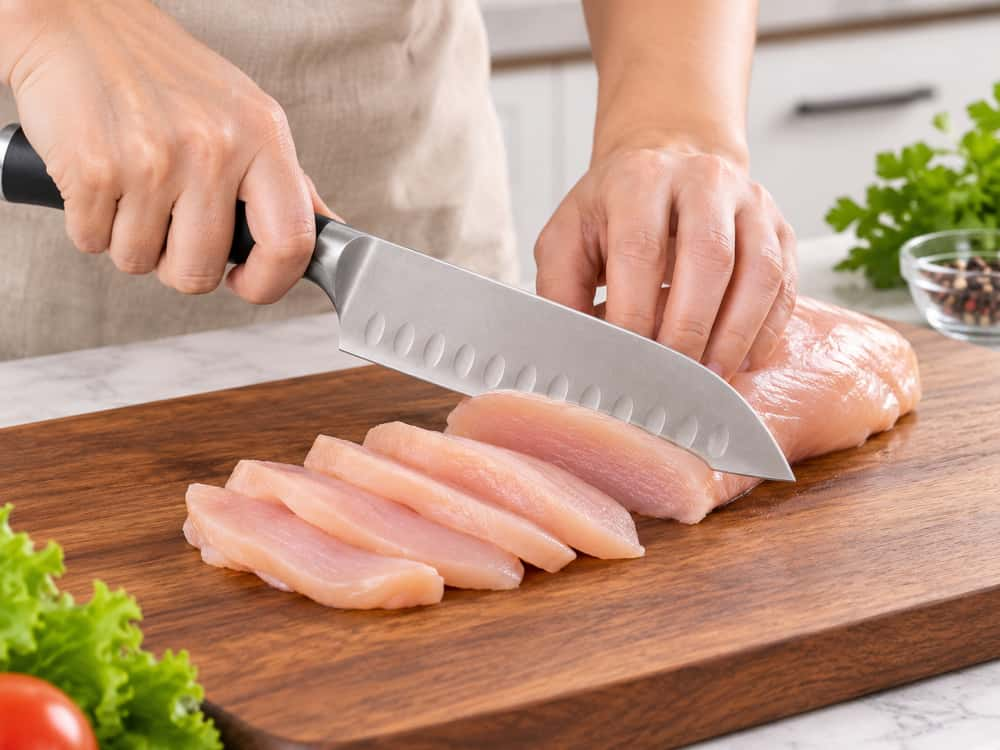
Yes. A Santoku knife works well for slicing and cutting boneless meat, including chicken breast, beef strips, and pork. Avoid using it to cut through bones, frozen meat, or hard joints because these tasks can damage the blade.
1. What Types of Meat Can a Santoku Knife Cut?
A Santoku knife is a versatile kitchen knife commonly used for slicing, dicing, and chopping. Although it is often associated with vegetable preparation, it can also handle many everyday meat-cutting tasks.
Chicken
A Santoku knife is suitable for cutting boneless chicken breast, chicken thighs, and other boneless portions. Its sharp edge can help you slice chicken into strips, cubes, or thin pieces for stir-fries, salads, and other dishes.
For raw chicken, use a clean cutting board reserved for raw meat or follow appropriate food-safety practices to prevent cross-contamination. Clean and sanitize the knife and work surface after preparation.
Beef
A Santoku knife can cut many boneless beef cuts, including tenderloin, sirloin, and other suitable steaks. It is useful for preparing beef strips, cubes, and thin slices for stir-fries or everyday meals.
For tender cooked beef, a sharp Santoku can also produce neat slices. When slicing cooked meat, cutting across the grain can help make each piece easier to chew.
For large roasts or very long slicing cuts, a longer slicing or carving knife may provide better control and a more continuous cutting stroke.
Pork
Boneless pork tenderloin, pork loin, and other boneless cuts can be prepared with a Santoku knife. It can slice pork into portions, cut strips for stir-fries, and dice meat for recipes.
A sharp blade is particularly useful when trimming small amounts of fat or connective tissue. For detailed trimming around bones or joints, however, a boning knife is usually easier to maneuver.
Fish and Other Boneless Proteins
Some Santoku knives can also handle boneless fish portions and other soft proteins. However, if you regularly prepare whole fish or need to remove skin and fillet around bones, a flexible fillet knife is generally more suitable.
2. What Meat-Cutting Tasks Is a Santoku Knife Best For?
The best use of a Santoku knife for meat is controlled cutting through boneless ingredients. Its blade shape works well for several common kitchen tasks.
| Meat-Cutting Task | Suitable? | Notes |
|---|---|---|
| Slicing boneless chicken | Yes | Useful for strips and thin slices. |
| Dicing beef or pork | Yes | Works well for boneless portions. |
| Slicing cooked meat | Yes | A sharp edge helps produce clean slices. |
| Trimming small amounts of fat | Yes, with care | A boning knife offers more precision for detailed trimming. |
| Cutting through bones | No | Use a suitable cleaver or bone saw. |
| Cutting frozen meat | No | Use an appropriate method or tool designed for frozen food. |
| Filleting whole fish | Not ideal | A flexible fillet knife is generally more suitable. |
The key distinction is between cutting through meat and cutting through hard structures. A Santoku knife is designed for food preparation, not heavy-duty chopping.
3. Why Does a Santoku Knife Work Well for Boneless Meat?
Several design characteristics make a Santoku knife useful for everyday meat preparation.
A Sharp Cutting Edge
A properly sharpened Santoku knife can cut through boneless meat with controlled pressure. A sharp edge helps produce cleaner cuts and reduces the need to force the blade through the ingredient.
A Relatively Straight Blade Profile
Many Santoku knives have a flatter cutting profile than Western chef knives. This shape supports push-cutting and straight slicing techniques, which are useful when cutting boneless meat into strips or portions.
The exact blade profile varies by model, so the cutting feel will depend on the knife's geometry and design.
A Practical Blade Length
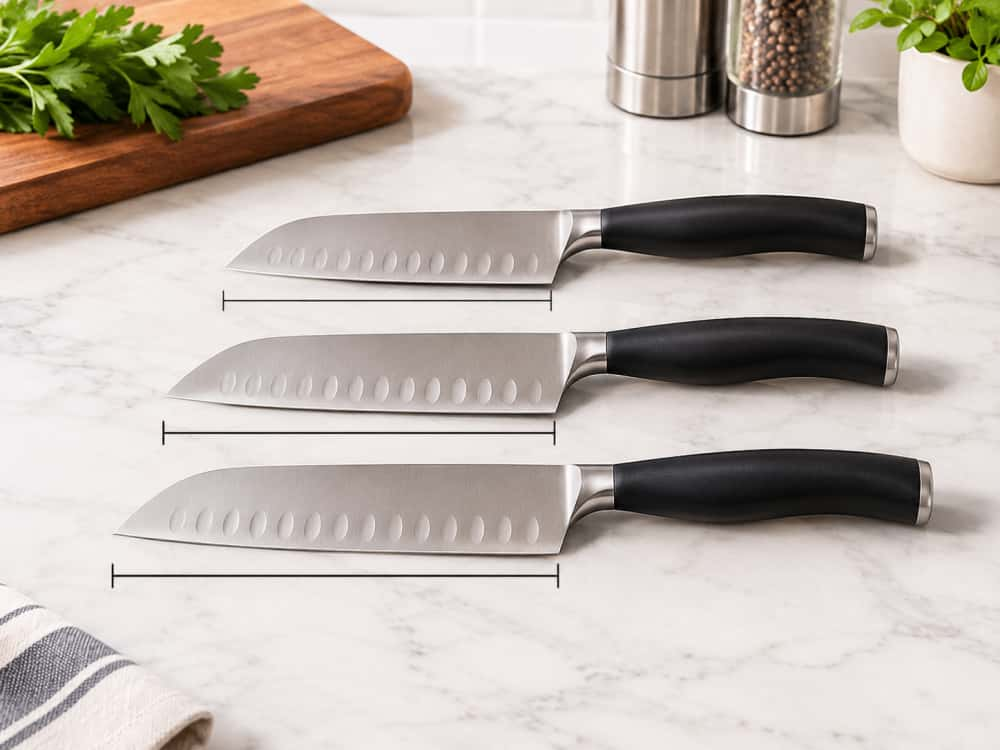
Santoku knives commonly come in blade lengths of around 5 to 7 inches, although other sizes are available. These lengths can be convenient for everyday portions of chicken, beef, and pork.
A 7-inch Santoku is a versatile option for many home cooks, while a shorter blade may feel easier to manage for smaller portions or compact workspaces.