



Can You Bring Scissors on a Plane? TSA Rules, Carry-On Limits and Travel Guide (2026)
Can you bring scissors on a plane? In the United States, the answer is generally yes, but the rules depend on where you pack them and how long the blades are.
Small sewing scissors, nail scissors, and other compact scissors may be permitted in carry-on baggage. Larger scissors, including many kitchen scissors and professional shears, are often better packed in checked luggage.
This guide explains the TSA scissors rule, how to measure blade length correctly, what to know about kitchen shears, and how to prepare scissors for domestic and international flights.
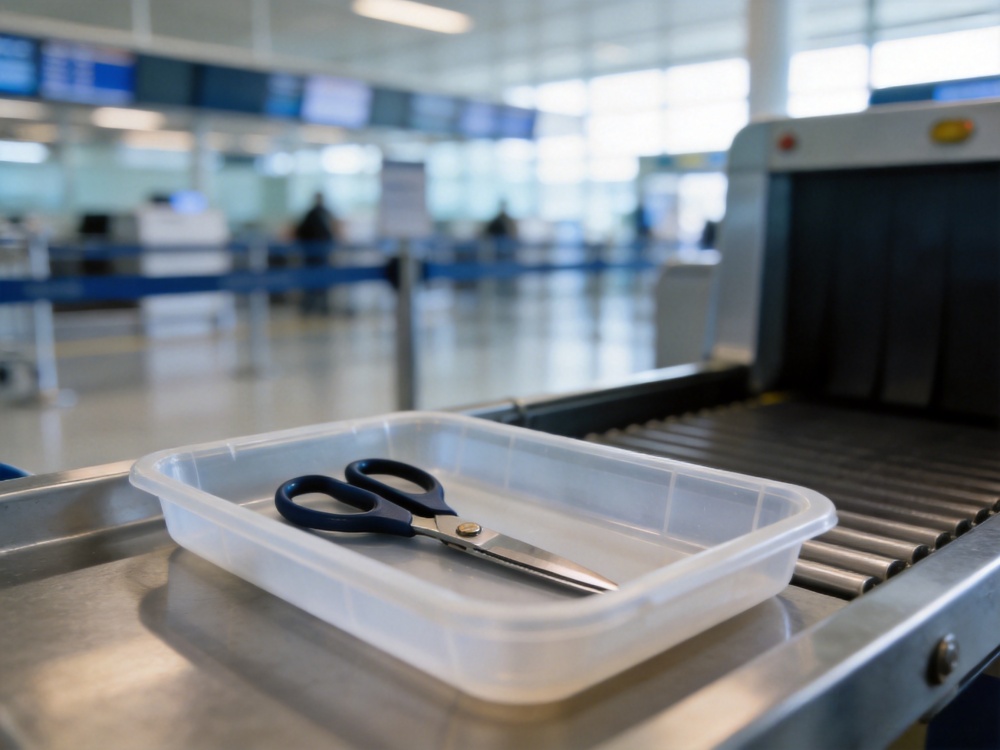
According to the TSA, scissors are permitted in carry-on bags when their blades measure less than 4 inches from the pivot point to the tip. Scissors may also be packed in checked baggage. Sharp edges in checked bags should be sheathed or securely wrapped. The TSA officer makes the final decision at the checkpoint.
1. TSA Scissors Rules: Carry-On vs. Checked Baggage
The key distinction is blade length. For U.S. airport security screening, the TSA allows scissors in carry-on baggage when the blades are less than 4 inches long, measured from the pivot point. Scissors can also be transported in checked baggage.
| Scissors Type | Carry-On Baggage | Checked Baggage | What to Check |
|---|---|---|---|
| Nail scissors | Generally allowed if blades are under 4 inches | Allowed | Measure the blade, not the overall tool. |
| Small sewing or embroidery scissors | Generally allowed if blades are under 4 inches | Allowed | Check the actual blade length. |
| Craft scissors | Generally allowed if blades are under 4 inches | Allowed | Do not rely on the product's total length. |
| Large office or fabric scissors | Not allowed if blades are 4 inches or longer | Allowed | Measure from the pivot point to the tip. |
| Kitchen scissors and kitchen shears | Depends on the actual blade length and applicable screening rules | Allowed | For full-size models, checked baggage is the safer choice. |
| Professional or industrial scissors | Depends on the blade length and screening decision | Allowed | Pack securely to protect handlers and inspectors. |
This table summarizes general TSA rules for U.S. airport security. Individual screening decisions and other applicable requirements may affect whether an item is accepted. When in doubt, check the official TSA guidance before departure.
2. How to Measure Scissors for Carry-On Luggage
One common mistake is measuring the entire scissors from handle to tip. The TSA's rule refers to the blade length measured from the pivot point to the tip.
Follow These Steps
- Locate the pivot point—the screw or hinge where the two blades meet.
- Identify the tip of the blade.
- Measure from the pivot point to the blade tip.
- Compare that measurement with the TSA limit of less than 4 inches.
For example, a pair of scissors may be 6 inches long overall but have blades shorter than 4 inches. The overall length alone does not determine whether it meets the TSA's blade-length rule.
Conversely, a compact-looking pair of scissors may still exceed the permitted blade length. Measure the actual item rather than relying solely on the packaging or product listing.
The requirement is less than 4 inches—not 4 inches or less. If your scissors are close to the limit, verify the measurement carefully and consider placing them in checked baggage.
3. Can You Bring Kitchen Scissors on a Plane?
Kitchen scissors are not automatically prohibited simply because they are designed for food preparation. Under the TSA's general scissors rule, the relevant measurement is the blade length.
However, many full-size kitchen scissors have longer blades than small personal scissors. If the blades are 4 inches or longer, they do not meet the TSA carry-on requirement and should be packed in checked baggage.
For kitchen scissors with blades under 4 inches, check the applicable TSA guidance and allow for the possibility of additional screening. If you are carrying a valuable or specialized pair, checking it in may be the more practical option.
4. Can You Bring Kitchen Shears on a Plane?
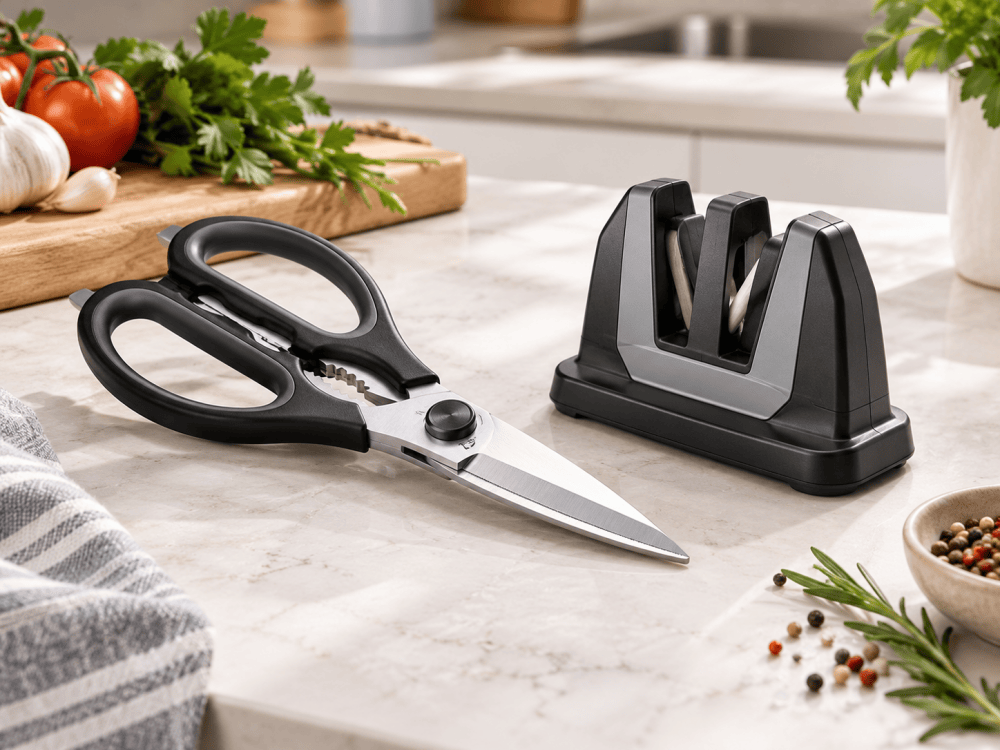
Kitchen shears are commonly used for cutting poultry, trimming meat, preparing seafood, and cutting herbs or food packaging. Some models also include serrated edges, bone-cutting notches, or other features.
These features do not replace the TSA's blade-length measurement. Check the actual blade length of the shears you intend to carry.
If the blades are 4 inches or longer, pack the shears in checked baggage. Even when a pair appears compact, do not assume it qualifies for carry-on baggage without measuring it.
When checking kitchen shears, close the blades, use a blade guard or protective case if available, and secure the tool so the cutting edges cannot injure baggage handlers or inspectors.
5. Can You Bring Sewing Scissors on a Plane?
Small sewing scissors, embroidery scissors, and compact craft scissors are often suitable for carry-on travel because their blades may be shorter than 4 inches.
Before packing them, measure from the pivot point to the blade tip. If the measurement is less than 4 inches, the scissors generally meet the TSA's size requirement for carry-on baggage.
This is particularly useful for:
- Sewing and embroidery enthusiasts.
- Quilters and craft hobbyists.
- Fashion and textile professionals.
- Travelers who need compact scissors for small projects.
Remember that meeting the blade-length requirement does not guarantee that every item will pass screening in every circumstance. Keep scissors easy to identify and follow instructions from security officers.
6. Can You Put Scissors in Checked Luggage?
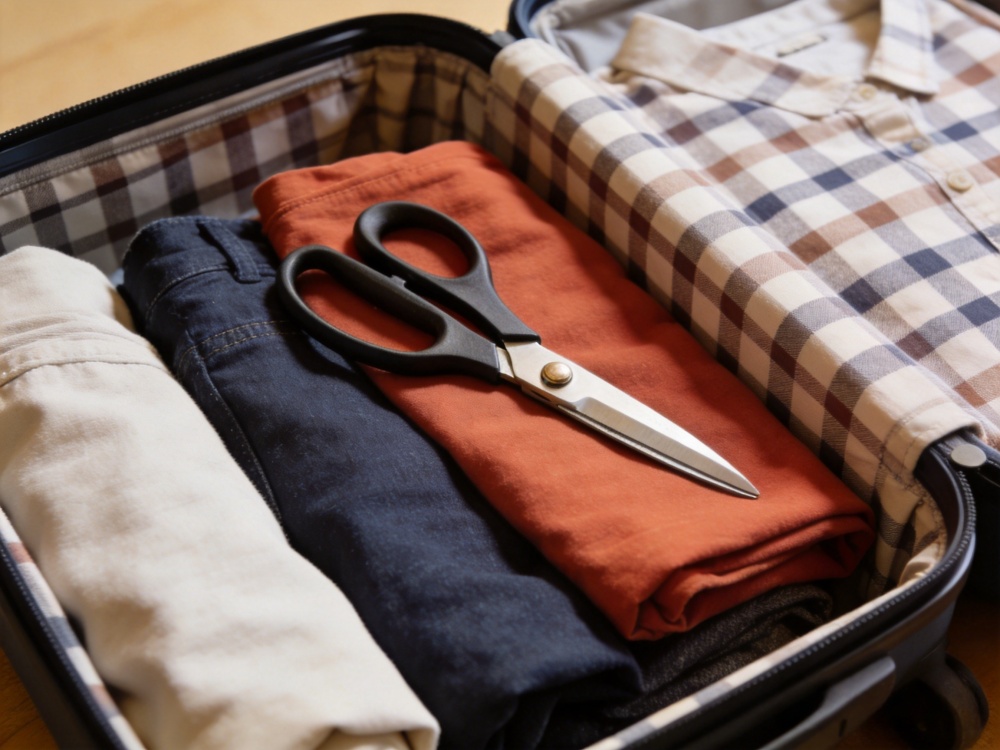
Yes. Scissors can be packed in checked baggage, making it a practical option for larger scissors, fabric shears, kitchen scissors, and professional cutting tools.
To pack them safely:
- Close the blades completely.
- Use a blade guard or protective sheath where possible.
- Place the scissors in a protective pouch, case, or tool organizer.
- Secure the item to prevent it from moving around in the suitcase.
- Ensure sharp edges cannot accidentally expose themselves through the packaging.
These steps help protect the scissors from damage and reduce the risk of injury to baggage handlers and inspectors.
Before departure, also check your airline's baggage policies, particularly when transporting multiple tools or specialized equipment.
7. Do International Flights Follow the Same Scissors Rules?
No single rule should be assumed to apply at every airport worldwide. The TSA's guidance applies to U.S. airport security screening. Other countries and transit airports may have their own security requirements.
Before an international trip, check:
- The departure airport's security rules.
- The destination country's applicable requirements.
- The rules at any connecting or transit airports.
- Your airline's baggage policies.
If your itinerary includes multiple security checkpoints, an item accepted at one airport may not necessarily be treated identically at another. For larger scissors and professional shears, checked baggage can help avoid carry-on size issues, subject to the applicable baggage and security rules.
8. What Happens If Your Scissors Do Not Meet the Carry-On Rule?
If scissors do not meet the carry-on requirements, security staff may prevent them from passing through the checkpoint. Depending on the airport and circumstances, you may need to place the item in checked baggage if that option is available, arrange another permitted way to transport it, or surrender it.
Do not assume you will be allowed to return to the airline check-in counter after reaching security. If you are unsure about the blade length, check the item before leaving for the airport.
The TSA also notes that the final decision rests with the security officer. Items may receive additional screening or be refused when security concerns arise.
9. Practical Tips for Traveling with Scissors
Measure Before Packing
Measure the blade from the pivot point to the tip. Do not use the total length of the scissors as a substitute.
Use Protective Packaging
Protective covers and cases help prevent accidental contact with sharp edges and reduce the risk of damage during transit.
Choose Checked Baggage for Larger Tools
If the blades are 4 inches or longer, pack the scissors in checked baggage rather than trying to take them through the carry-on checkpoint.
Check the Official Rules Before Departure
Security requirements can change, and international itineraries may involve different authorities. Review the latest guidance relevant to your trip.
Allow Time for Additional Screening
If you are traveling with specialized tools, keep them accessible for inspection when appropriate and allow extra time for security procedures.
10. Frequently Asked Questions
Can you bring scissors on a plane in your carry-on?
Yes. Under TSA guidance, scissors are generally permitted in carry-on baggage when their blades measure less than 4 inches from the pivot point to the tip. Screening officers make the final decision.
Does the TSA measure the whole scissors or just the blade?
The TSA rule refers to blade length, measured from the pivot point to the tip—not the total length from handle end to blade tip.
Can you bring 4-inch scissors on a plane?
The TSA's carry-on requirement is less than 4 inches. Scissors with blades measuring exactly 4 inches do not meet that size requirement and should be placed in checked baggage.
Can you bring nail scissors on a plane?
Generally, yes, if the blades are less than 4 inches long and no other security concern applies. Measure the actual blades before packing.
Can you bring kitchen scissors in a carry-on bag?
It depends on the actual blade length. Kitchen scissors with blades under 4 inches may meet the TSA size requirement; larger blades should be packed in checked baggage.
Can you bring kitchen shears in checked luggage?
Yes. Pack the shears securely, using a blade guard or protective case where possible, so that sharp edges cannot injure baggage handlers or inspectors.
Can TSA confiscate scissors?
Yes. Security officers have final authority at the checkpoint and may refuse an item when they determine it presents a security concern or does not meet the applicable requirements.
Are scissors allowed on international flights?
Rules vary by country and airport. Check the requirements for your departure airport, destination, transit points, and airline before traveling.
What should I do if I am unsure about my scissors?
Check the official security guidance and measure the blade. If the scissors are too large or you cannot verify that they meet the carry-on limit, consider transporting them in checked baggage.
11. FASAKA Kitchen Scissors and OEM/ODM Solutions
Beyond travel requirements, choosing the right scissors also depends on their intended application, blade design, handle construction, and product specifications.
FASAKA is a brand under DKS Enterprises Co., Ltd., a manufacturer and supplier based in Yangjiang, Guangdong, China, specializing in hardware knives and scissors, BBQ tools, and kitchenware.
For importers, wholesalers, distributors, and private label brands sourcing kitchen scissors or related cutting tools, product discussions may cover model selection, material options, branding, packaging, and other customization requirements, depending on the product.
Explore FASAKA scissors manufacturing or learn more about OEM and ODM kitchenware solutions.
Final Thoughts
So, can you bring scissors on a plane? In the United States, scissors are generally allowed in carry-on baggage when the blades measure less than 4 inches from the pivot point to the tip. Scissors can also be packed in checked baggage, provided sharp edges are securely protected.
For kitchen scissors, sewing scissors, craft scissors, and professional shears, the most useful first step is to measure the actual blade and check the rules for your route. When traveling internationally or carrying specialized tools, verify the requirements before departure.
Looking for Kitchen Scissors Manufacturing Solutions?
FASAKA supports product sourcing and OEM/ODM discussions for kitchen scissors, kitchen shears, and related cutting tools. Contact our team to discuss your product requirements, customization needs, and target market.
Explore OEM & ODM Contact FASAKA