


Top 10 Best-Selling Kitchen Knife Types on Amazon in 2026: Brands, Prices & Market Trends
Top 10 Best-Selling Kitchen Knife Types on Amazon in 2026: Brands, Prices & Market Trends
Amazon remains one of the most competitive online marketplaces for kitchen knives. In 2026, thousands of products compete across categories such as chef knives, kitchen knife sets, Santoku knives, Damascus-style knives, steak knives and complete knife block sets.
For kitchen knife brands, importers, distributors and OEM buyers, Amazon best sellers provide valuable market information. The products that achieve strong sales can reveal what consumers are currently looking for in terms of price, design, product configuration, materials, convenience and perceived value.
Based on publicly available 2026 Amazon marketplace tracking data, several clear patterns stand out. Affordable multi-piece kitchen knife sets remain highly competitive, while knife block sets, compact household sets and branded individual knives continue to serve different consumer segments.
For example, July 2026 tracking data for Amazon US kitchen knife sets showed an average Top 10 product price of approximately $43.95, while leading products ranged from budget sets below $20 to more complete knife block sets around $40 and above. Astercook products performed strongly, while Amazon Basics maintained significant visibility in the affordable knife set segment.
Amazon's 2026 kitchen knife market is not dominated by one single product type. Budget multi-piece sets generate strong volume, while mid-range knife block sets, forged knives and established brands remain important in higher-value market segments. For B2B suppliers, this means product strategy should focus on specific price points and consumer needs rather than simply producing more expensive knives.
Table of Contents
- How We Analyzed Amazon Kitchen Knife Trends
- Quick Comparison of 10 Best-Selling Kitchen Knife Types
- Top 10 Best-Selling Kitchen Knife Types on Amazon
- What Amazon Best Sellers Tell Us About the 2026 Market
- Kitchen Knife Price Analysis
- Popular Materials and Product Features
- Leading Brands and Competitive Strategies
- Opportunities for Private Label and OEM Buyers
- What Manufacturers Should Develop in 2026
- Frequently Asked Questions
How We Analyzed Amazon Kitchen Knife Trends
This article focuses on major kitchen knife product types that continue to appear across Amazon's competitive knife categories and examines the market through a B2B sourcing perspective.
The analysis considers several important factors:
- Popular knife categories
- Representative brands
- Typical Amazon price ranges
- Estimated sales performance from publicly available marketplace tracking
- Consumer-friendly product features
- Review and rating patterns
- Private-label opportunities
- OEM product development potential
It is important to understand that Amazon prices, rankings and sales performance can change frequently because of promotions, Prime events, coupons, seasonal demand and inventory availability. Therefore, the figures in this article should be used as market reference points rather than fixed long-term prices.
High Amazon sales do not automatically mean that a product is technically superior. In many cases, successful products combine an attractive price, useful product configuration, strong listing presentation and clear consumer value. For OEM development, understanding this combination is often more useful than copying one individual product.
Quick Comparison: 10 Popular Kitchen Knife Types on Amazon
| Rank | Knife Type | Typical Price Range | Representative Brands | Main Consumer Appeal |
|---|---|---|---|---|
| 1 | Budget Multi-Piece Knife Set | $15–$30 | Astercook, Amazon Basics | High value and complete kitchen coverage |
| 2 | Knife Block Set | $30–$80 | Astercook, McCook, HENCKELS | Convenient storage and complete assortment |
| 3 | Chef Knife | $20–$80+ | Victorinox, PAUDIN, Mercer | Everyday versatility |
| 4 | Santoku Knife | $20–$70+ | Mercer, HENCKELS, imarku | Vegetable and multi-purpose preparation |
| 5 | Premium Forged Knife | $40–$150+ | HENCKELS, ZWILLING | Durability and premium positioning |
| 6 | Japanese-Style Knife Set | $30–$100+ | imarku, PAUDIN | Modern design and gift appeal |
| 7 | Paring Knife Set | $15–$45 | HENCKELS, Victorinox | Daily food preparation |
| 8 | Steak Knife Set | $20–$80+ | HENCKELS, Amazon brands | Dining and entertaining |
| 9 | Small Kitchen Knife Block Set | $20–$50 | Astercook and similar brands | Compact kitchen convenience |
| 10 | Private-Label Custom Knife Set | Varies by specification | OEM brands | Differentiation and brand development |
Top 10 Best-Selling Kitchen Knife Types on Amazon in 2026
1. Budget Multi-Piece Kitchen Knife Sets
Affordable multi-piece knife sets are among the strongest product formats in the Amazon kitchen knife market. These products appeal to consumers because they provide multiple cutting tools at a price that can be lower than a single premium chef knife.
One of the most notable examples is the Astercook 13-piece kitchen knife set, which was listed at approximately $17.96 in July 2026 marketplace tracking and showed an estimated 30,000 monthly units sold in the tracked category. The product combined stainless steel knives with protective blade guards and a low entry price.
The Amazon Basics color-coded knife set also remained highly competitive in the budget segment. Its product strategy is simple: affordable pricing, recognizable brand trust, multiple knives and practical blade guards.
Why This Type Sells
- Consumers receive multiple knives in one purchase
- Low purchase price reduces buying hesitation
- Blade guards add perceived value
- Sets are suitable for first apartments and new kitchens
- Bright colors or coated blades create stronger visual differentiation
- Products work well as practical gifts
B2B Sourcing Insight
For private-label buyers, this segment offers strong opportunities because the core knife construction can remain relatively simple while visual differentiation can be created through blade coatings, handle colors, packaging and product configuration.
A supplier can develop multiple versions from the same product platform by changing the blade color, handle design, packaging and number of pieces. This can reduce development complexity while creating multiple retail price points.
2. Kitchen Knife Sets with Knife Blocks
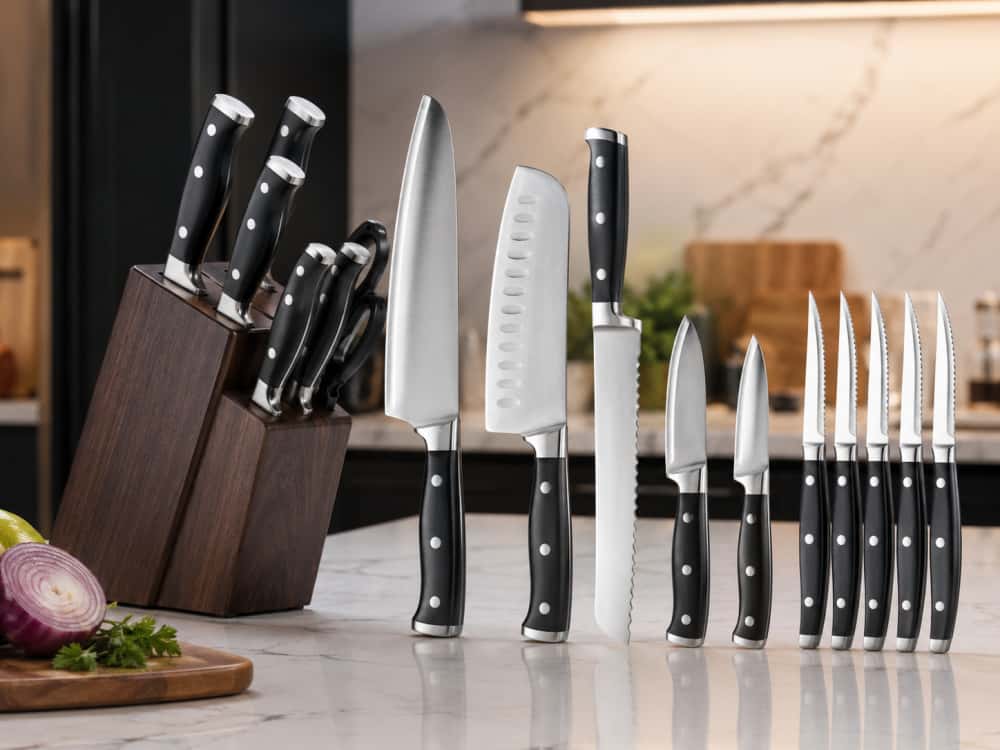
Knife block sets continue to occupy an important position because they provide consumers with both cutting tools and countertop storage. Unlike simple blade-guard sets, the knife block creates a more complete kitchen solution.
Astercook's 15-piece knife block set appeared as one of the strong-performing products in 2026 tracking, with a price around $39.88 in July. The product combines multiple kitchen knives with a storage block and built-in sharpener, creating a strong feature-to-price ratio.
Premium brands also continue to use knife blocks as part of their product strategy. HENCKELS offers knife block sets across significantly higher price ranges, demonstrating that the same basic product category can target both mass-market and premium consumers.
What Consumers Look For
- Complete knife assortment
- Convenient countertop storage
- Built-in sharpeners
- Full-tang or forged construction
- Attractive wooden or modern blocks
- Gift-ready presentation
B2B Opportunity
For OEM buyers, the knife block itself can become an important differentiation point. A similar knife set can be positioned differently through a pinewood block, bamboo block, acrylic block or self-sharpening storage system.
3. Individual Chef Knives

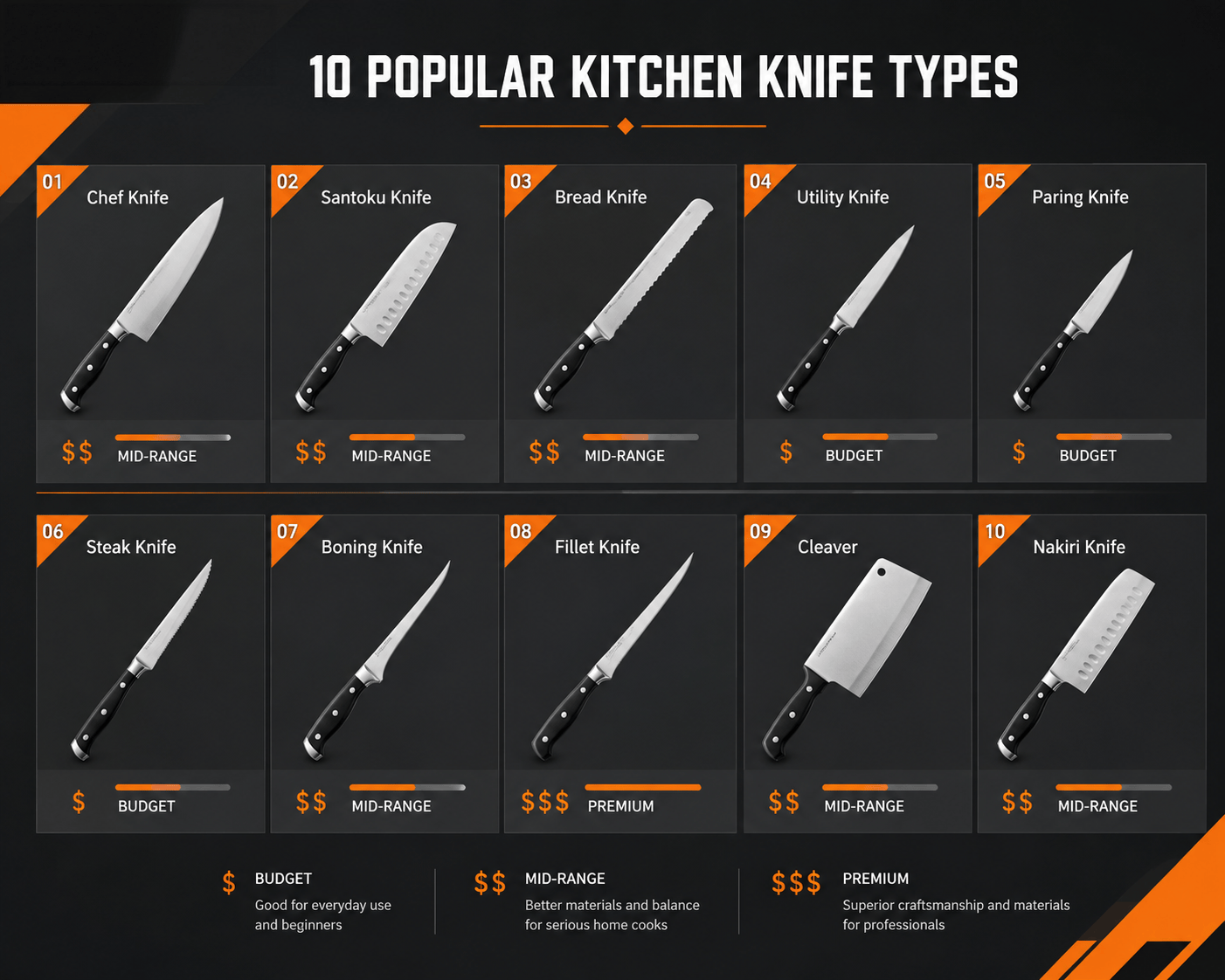
The chef knife remains one of the most important individual kitchen knife categories. Unlike large knife sets, a single chef knife focuses on one major consumer need: an all-purpose tool that can perform most everyday cutting tasks.
Budget and professional-style chef knives remain competitive because consumers often search for an upgrade rather than an entire knife collection. Strong products usually focus on sharpness, comfortable handles, balanced weight and easy maintenance.
2026 Amazon market analysis also shows that established brands and newer value-focused brands compete strongly in this segment. Astercook has achieved significant volume in tracked chef knife categories, while traditional professional brands maintain their position through quality perception and brand recognition.
What Makes a Chef Knife Competitive?
- Versatile blade shape
- Comfortable ergonomic handle
- Clear sharpness positioning
- High-carbon stainless steel marketing
- Gift-ready packaging
- Strong product photography
OEM Development Direction
Manufacturers should consider developing multiple chef knife tiers from one basic product family. For example, an entry-level version can use a stamped stainless steel blade and PP handle, while a premium version can use a forged blade and pakkawood handle.
4. Santoku Knives

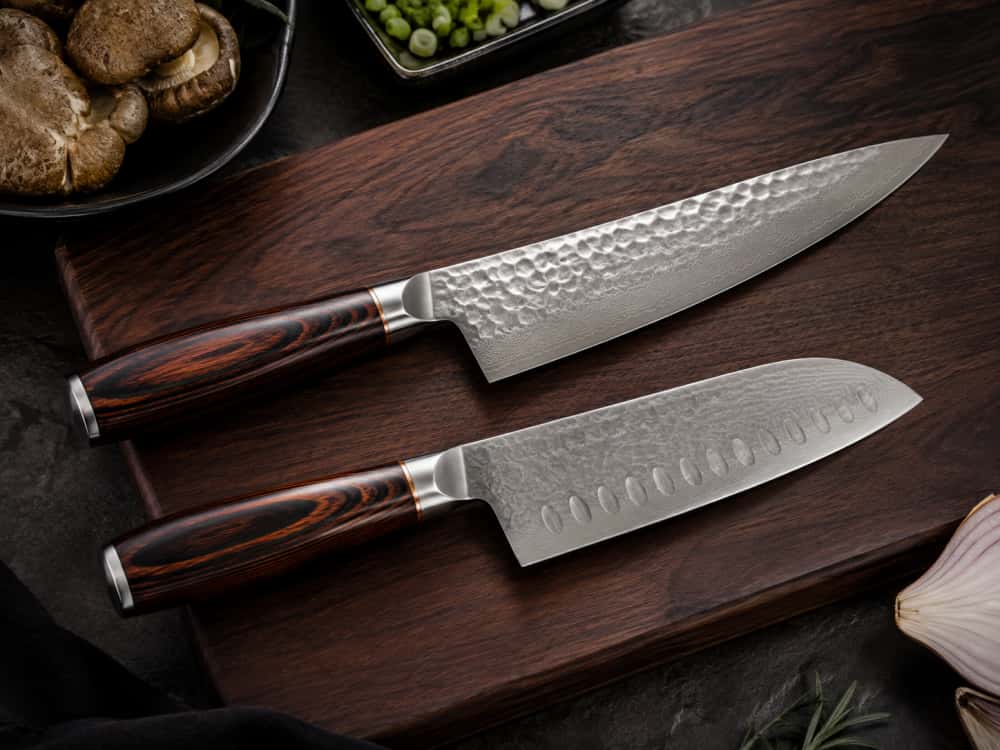
Santoku knives continue to attract consumers who prefer a shorter and wider blade compared with traditional Western chef knives. Their popularity is supported by their versatility and strong association with Japanese-inspired kitchen design.
Many Amazon products position the Santoku knife as a multi-purpose kitchen tool suitable for vegetables, meat and general food preparation. Some models also use granton edges or hammered blade finishes to create a more distinctive appearance.
Why Santoku Knives Remain Popular
- Modern Japanese-inspired appearance
- Comfortable compact blade size
- Suitable for vegetables and boneless meat
- Works well in 2-piece or 3-piece gift sets
- Easy to combine with premium handle materials
B2B Sourcing Opportunity
A Santoku knife is a strong product for brands that want to create a more premium appearance without developing an expensive full knife set. The product can be sold individually, paired with a chef knife or included in a compact 3-piece collection.
5. Forged Kitchen Knives

Forged kitchen knives represent an important higher-value market segment. Consumers often associate forged construction with better durability, strength and premium quality.
HENCKELS and ZWILLING continue to demonstrate the importance of established premium knife branding. Their products are typically positioned at much higher prices than entry-level marketplace brands, showing that Amazon's knife market is not driven by low price alone.
For manufacturers, forged knives provide greater opportunities for material and design differentiation. Buyers may specify blade steel, bolster construction, handle materials, blade finishing and packaging.
Premium Product Features
- Forged blade construction
- Full tang structure
- Bolster design
- Pakkawood or premium composite handles
- Precision grinding
- Gift-box packaging
Market Insight
While low-priced knife sets can generate strong unit volume, premium forged products can generate significantly higher revenue per unit. For manufacturers, developing both volume-oriented and premium collections can create a more balanced product portfolio.
6. Japanese-Style Kitchen Knife Sets
Japanese-inspired kitchen knife designs remain popular because they combine modern styling with strong consumer perceptions of precision and performance.
Products in this category often emphasize blade patterns, pakkawood-style handles, hammered finishes or premium-looking packaging. These visual elements can significantly influence online purchase decisions.
For example, imarku's 3-piece knife set has been promoted on Amazon at a price level around $60 during major promotions, demonstrating that consumers are willing to consider a higher price when a product presents a clear combination of design and value.
OEM Opportunity
This category is particularly suitable for private-label differentiation because manufacturers can create visual identity through:
- Blade finishing
- Hammered textures
- Patterned blade surfaces
- Handle colors
- Wood-grain designs
- Premium gift boxes
7. Paring Knife Sets
Paring knives may not have the visual impact of large chef knives, but they remain essential in almost every complete kitchen knife collection.
On Amazon, paring knives are commonly sold as individual products, two-piece sets or included in larger kitchen knife assortments. Their smaller size allows brands to offer premium materials and established brand positioning at relatively accessible prices.
HENCKELS, for example, continues to offer forged paring knife products that target consumers looking for recognizable brand quality in a smaller product format.
B2B Sourcing Strategy
Paring knife sets can be particularly effective as:
- Entry-level branded products
- Add-on products for retailers
- Gift bundles
- Promotional items
- Components in larger knife sets
8. Steak Knife Sets
Steak knives serve a different consumer need from preparation knives. They are often purchased for dining tables, entertaining and household replacement rather than everyday food preparation.
Because steak knife sets are commonly sold in multiples, they also create opportunities for different price points. Budget versions can focus on simple stainless steel construction, while premium sets can include forged blades, full tang structures and wooden presentation boxes.
Why This Category Is Useful for Manufacturers
Steak knife products can complement broader kitchen knife collections. A brand may use the same handle design across chef knives, Santoku knives and steak knives to create a coordinated product family.
9. Compact Kitchen Knife Block Sets
One of the interesting developments in the 2026 market is the popularity of compact knife sets. Not every consumer needs a 15-piece collection. Smaller households, apartment residents and first-time buyers may prefer a more manageable knife block set.
Astercook's compact 6-piece knife block products demonstrate this market direction. By reducing the number of pieces while maintaining useful core knives and storage, brands can offer a product that feels complete without reaching a higher price.
Core Product Configuration
- Chef knife
- Santoku or utility knife
- Paring knife
- Kitchen shears
- Knife block
Private-Label Potential
Compact knife sets are particularly suitable for private-label development because they can target multiple sales channels, including supermarkets, e-commerce platforms, department stores and promotional retail.
10. Customized Private-Label Kitchen Knife Collections
For B2B buyers, one of the most important lessons from Amazon's best-selling knife market is that long-term success often requires differentiation.
A brand can begin with a proven product category, but simply copying a popular marketplace product may result in direct price competition. A stronger strategy is to use proven market demand as a starting point and then develop a differentiated product.
Possible Customization Options
- Custom blade shape
- Blade material selection
- Non-stick or colored blade coating
- Custom handle materials
- Wood-grain handle appearance
- Custom logo application
- Private-label packaging
- Knife block customization
- Product bundle configuration
For example, a brand may identify strong demand for a budget 6-piece knife set but choose to differentiate its version with a more premium handle, custom packaging and a coordinated cutting board or kitchen tool.
The strongest OEM strategy is often not to invent an entirely new knife category. It is to identify an existing demand pattern and improve the product's design, materials, configuration or brand presentation for a specific target market.
What Amazon Best Sellers Tell Us About the 2026 Kitchen Knife Market
Looking across popular Amazon products, several clear market trends emerge.
1. Value Continues to Drive High Sales Volume
Budget knife sets continue to generate significant demand. Consumers are attracted to products that offer multiple knives, storage accessories and practical features at accessible prices.
This does not mean that premium knives are disappearing. Instead, the market has become more segmented. Low-price products compete for unit volume, while premium brands compete through quality perception and brand reputation.
2. Product Configuration Is a Major Selling Tool
Consumers often compare the number of pieces included in a set. A product containing six knives, six blade guards and additional accessories can appear to offer significantly more value than a single product.
For manufacturers, product configuration can sometimes be more important than making small changes to the knife itself.
3. Convenience Features Create Differentiation
- Dishwasher-safe positioning
- Built-in sharpeners
- Blade guards
- Universal knife blocks
- Rust-resistant coatings
- Ergonomic handles
These features are easy for consumers to understand and communicate clearly through e-commerce product listings.
4. Premium Brands Still Command Higher Prices
Brands such as HENCKELS and ZWILLING demonstrate that consumers are still willing to pay more for established reputation, forged construction and premium materials.
HENCKELS, for example, continues to sell knife block sets at prices ranging from approximately $100 to several hundred dollars, creating a strong contrast with the sub-$50 marketplace segment.
Kitchen Knife Price Analysis: Where Is the Market Sweet Spot?
Public Amazon tracking data suggests that the overall knife set market contains significant competition across multiple price levels. The July 2026 tracked kitchen knife set data showed that the $50–$100 range represented a highly competitive assortment segment, while several top-selling products were priced well below this level.
Budget: Under $30
This segment focuses on volume. Products typically use stamped stainless steel blades, PP or simple ergonomic handles, protective blade covers and multi-piece configurations.
Best for:
- Online marketplace sellers
- Promotional retailers
- Mass-market private labels
- Entry-level product programs
Mid-Range: $30–$80
This segment allows brands to introduce better product presentation, knife blocks, premium-looking handles and additional features.
Best for:
- Amazon private labels
- Kitchenware retailers
- Gift-oriented products
- Mid-market brands
Premium: $80 and Above
At higher prices, consumers expect stronger differentiation. Materials, brand reputation, forged construction and presentation become more important.
Best for:
- Premium kitchenware brands
- Professional-style knife collections
- Specialty retailers
- High-end gift markets
Recommended B2B Strategy
Instead of developing only one knife collection, brands can consider a three-tier strategy: an affordable entry-level set for volume, a mid-range knife block collection for higher conversion value and a premium forged collection for brand positioning.
Popular Kitchen Knife Materials and Product Features
Blade Materials
Stainless steel remains the dominant material for mass-market kitchen knives. Product listings frequently use terms such as:
- High-carbon stainless steel
- German stainless steel
- Stainless steel
- Forged steel
- Japanese-style steel
For OEM buyers, the actual material specification should always be discussed separately from marketing language. Steel grade, heat treatment, hardness and edge performance can vary significantly between products.
Handle Materials
- PP handles
- TPR soft-grip handles
- Pakkawood handles
- Natural wood handles
- Stainless steel handles
- Wood-grain plastic handles
Popular Blade Finishes
- Polished stainless steel
- Black non-stick coatings
- Colored coatings
- Hammered textures
- Patterned premium finishes
In online retail, blade finish can have a significant effect on product photography. This means the visual design of the knife is often part of the product's commercial value.
Leading Brand Strategies in the Amazon Knife Market
Astercook: Competitive Pricing and Product Configuration
Astercook's strong performance in several 2026 tracked categories highlights the importance of aggressive value positioning. Products often combine multiple knives with practical features such as blade guards, knife blocks and built-in sharpeners.
The strategy focuses heavily on giving consumers a clear impression of value.
Amazon Basics: Trust and Low-Price Accessibility
Amazon Basics benefits from strong marketplace visibility and simple product positioning. Its color-coded kitchen knife set demonstrates that a relatively simple product can remain competitive when price, function and brand familiarity are combined effectively.
HENCKELS: Premium Brand Positioning
HENCKELS demonstrates the continued strength of established knife brands. Its product range covers multiple price points, but its core advantage is consumer trust built around long-term knife industry experience.
Victorinox and Professional Brands: Function First
Professional-oriented brands often focus less on large product configurations and more on the performance of individual knives. This approach appeals to consumers who want one reliable cutting tool rather than a large collection.
A successful kitchen knife brand does not need to compete directly with every market segment. A stronger strategy is to choose one clear competitive position, such as value, design, premium quality or professional performance.
Opportunities for Private Label and OEM Kitchen Knife Buyers
The 2026 Amazon market provides several useful directions for brands developing private-label kitchen knives.
Opportunity 1: Upgrade the Budget Knife Set
Budget products already demonstrate strong demand. A private-label brand can differentiate through improved packaging, stronger color consistency, upgraded handles or more attractive blade coatings.
Opportunity 2: Develop Compact Complete Sets
A 5–8 piece collection may be easier to position than a large 15-piece set. Compact sets are particularly suitable for apartments, small kitchens and gift buyers.
Opportunity 3: Combine Knives with Related Kitchen Products
For broader kitchenware brands, knife sets can be bundled with:
- Kitchen scissors
- Cutting boards
- Knife sharpeners
- BBQ tools
- Kitchen storage products
This type of cross-category development can help brands create stronger product bundles and increase order value.
Opportunity 4: Build a Coordinated Product Family
One handle design can be used across multiple knife types. This allows a brand to create:
- Chef knife
- Santoku knife
- Utility knife
- Paring knife
- Steak knife
- Kitchen knife set
Coordinated design creates a stronger brand identity while allowing the manufacturer to use related production processes.
What Kitchen Knife Manufacturers Should Develop in 2026
Based on current market trends, manufacturers should avoid relying on only one traditional knife collection.
Recommended Product Development Portfolio
- Budget Multi-Piece Set: Focus on strong value and high-volume retail.
- Compact Knife Block Set: Target small households and gift buyers.
- Mid-Range Kitchen Collection: Use improved handles and packaging.
- Premium Forged Series: Target specialty and higher-value retail.
- Japanese-Style Collection: Focus on modern design and visual differentiation.
- Private-Label Custom Platform: Allow buyers to customize handles, blades and packaging.
Why a Multi-Tier Strategy Matters
Different buyers have different sourcing requirements. A discount retailer may need a low-cost 13-piece knife set, while a kitchenware brand may want a forged chef knife collection.
A manufacturer with multiple product platforms can respond to these different opportunities without rebuilding every product from the beginning.
Frequently Asked Questions
What kitchen knife products sell best on Amazon?
Affordable multi-piece kitchen knife sets, knife block sets, chef knives and compact kitchen knife collections remain important product categories. Low-priced sets can generate high unit volume, while premium forged knives target higher-value consumers.
What is a competitive price for a kitchen knife set?
The answer depends on the product configuration. Budget sets often compete below $30, while knife block sets commonly occupy the $30–$80 range. Premium branded and forged sets can reach $100 or several hundred dollars.
Are knife block sets still popular?
Yes. Knife block sets remain popular because they combine multiple knives with organized storage. Built-in sharpeners and modern block designs can create additional consumer appeal.
Which knife type should a new private-label brand develop first?
A practical starting point is a product with proven demand and clear differentiation potential. This could be a compact knife set, a chef knife, a Santoku knife or a knife block collection.
What can be customized for OEM kitchen knife production?
Depending on the manufacturer, buyers may customize blade shape, blade materials, surface finish, handle materials, colors, logos, knife blocks and retail packaging.
How can a new knife brand compete with established brands?
New brands should avoid competing only on price. A clearer strategy is to focus on a specific target customer and offer differentiation through design, product configuration, packaging or material selection.
Looking for a Kitchen Knife Manufacturer for Your Next Product?
FASAKA supports kitchen knife OEM and ODM projects for international brands, retailers, importers and distributors. From kitchen knife sets and forged knives to custom packaging and coordinated kitchenware sourcing, our team can help turn market opportunities into practical product solutions.
Start Your Kitchen Knife ProjectConclusion
The Amazon kitchen knife market in 2026 shows that consumers continue to look for a combination of value, convenience, product variety and visual appeal.
Affordable multi-piece sets can generate strong sales volume, while knife block sets create higher perceived value and premium brands continue to command significantly higher prices through reputation and product positioning.
For manufacturers and private-label buyers, the biggest opportunity is not simply to copy the current best seller. The stronger approach is to study the market, identify the consumer need behind successful products and then develop a knife collection with clearer differentiation.
Whether the goal is a $20 budget knife set, a $50 compact knife block collection or a premium forged kitchen knife range, successful product development begins with understanding the target market and matching the right manufacturing strategy to the right consumer segment.
For buyers developing their next kitchen knife collection, FASAKA can support OEM and ODM projects across kitchen knives, kitchen scissors and related kitchenware categories.