

2026-08-24

Best-Selling Santoku Knives on Amazon: Brand, Price & Feature Comparison (2026)

Best-Selling Santoku Knives on Amazon: Brand, Price & Feature Comparison (2026)

Published by FASAKA | Santoku Knife Market & Product Analysis

Santoku knives continue to be one of the most popular Asian-style kitchen knife categories in the global market. Originally developed in Japan, the Santoku knife has become a mainstream product in supermarkets, kitchenware stores, e-commerce platforms, and private label kitchen knife collections.

Amazon sales data and product trends provide useful insights into what consumers are actually buying. From budget-friendly Santoku knives priced below US$30 to premium Japanese and German knives priced above US$150, the market shows clear differences in blade materials, handle designs, manufacturing methods, and brand positioning.

For retailers, distributors, Amazon sellers, and private label brands, analyzing popular Santoku knives can help identify practical product opportunities. This guide compares several well-known Santoku knife brands and examines their prices, features, materials, target markets, and potential lessons for kitchen knife sourcing in 2026.
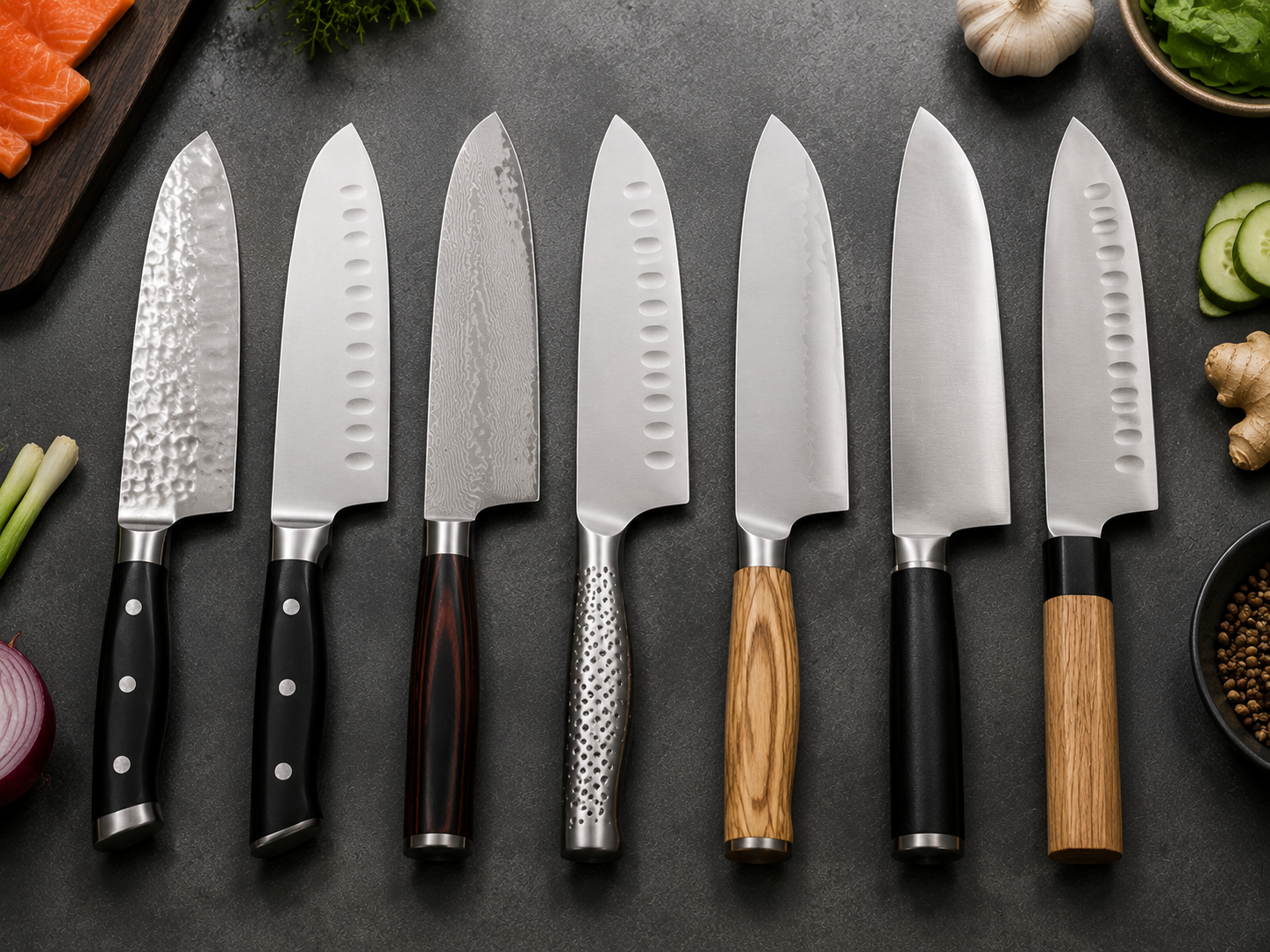
best-selling santoku knives comparison 2026

Quick Answer: What Santoku Knives Are Popular in 2026?

The current Santoku knife market covers several major product positions:

  • Value segment: imarku and similar high-volume Amazon brands
  • Mainstream segment: HENCKELS and other established retail brands
  • Professional segment: Victorinox and Mercer Culinary
  • Premium German segment: WÜSTHOF
  • Premium Japanese segment: Shun and other high-performance Japanese knife brands

1. Santoku Knife Market Overview: What Is Selling in 2026?

A Santoku knife is designed for slicing, chopping, dicing, and mincing. Compared with a traditional Western chef knife, it usually features a shorter and flatter blade profile, making it especially suitable for precise push-cutting.

Amazon market data shows that the keyword "santoku knife" covers products across a wide price range. In a 2026 analysis of Amazon Santoku knife search results, the average price of the top-selling products was approximately US$41.76, while product ratings among the leading listings averaged around 4.7 stars.

This shows that the market is not controlled only by premium brands. Affordable and mid-range Santoku knives with strong product presentation, clear features, and competitive reviews can also achieve significant sales volume.

Market Segment Typical Price Range Key Selling Points Typical Buyer
Value US$20–40 Sharpness, price, gift packaging Household users and online buyers
Mainstream US$30–80 Brand recognition, practicality, durability Mass retail customers
Professional US$40–100 Grip, reliability, easy maintenance Chefs and serious home cooks
Premium US$100–200+ Forged construction, premium steel, brand value Premium consumers and enthusiasts

2. Why 7-Inch Santoku Knives Are a Core Product Size

Although Santoku knives are available in several sizes, 7 inches is one of the most common and commercially important specifications. This size provides a practical balance between cutting surface and maneuverability.

  • Long enough for everyday vegetable and meat preparation
  • Shorter and more compact than many 8-inch chef knives
  • Suitable for most household kitchens
  • Easy to include in knife sets and retail collections
  • Common among value, professional, and premium brands

For B2B buyers, the 7-inch Santoku knife is often a strong core SKU because it can be developed across multiple price levels. The same basic blade category can be positioned differently through steel grade, blade thickness, handle material, edge design, packaging, and branding.

B2B Product Development Insight

A retailer or private label brand can build an entire Santoku product ladder around one core 7-inch specification. For example, a plastic-handle model can target mass retail, a Pakkawood version can target the mid-range market, while a forged premium model can serve higher-end customers.

3. Best-Selling Santoku Knife Brands: Quick Comparison

The following comparison highlights several influential Santoku knife products and brands across different market segments. Prices are reference retail prices and may change depending on retailer, promotion, and product version.
Brand Reference Product Reference Price Market Position Main Selling Point
imarku 7" Santoku Knife Approx. US$26–40 Value / Amazon Price, sharpness, Pakkawood handle
HENCKELS 7" Santoku Knife Approx. US$30–85 Mainstream Brand recognition and retail distribution
Victorinox 6.7–7" Santoku Approx. US$45–60 Professional Practicality and grip
Mercer Culinary 7" Genesis Santoku Approx. US$40 Professional / Commercial Forged construction and value
WÜSTHOF 7" Classic Santoku Approx. US$170 Premium German Forged quality and brand value
Shun 7" Classic Santoku Approx. US$150–190 Premium Japanese VG-MAX steel and Damascus appearance

4. imarku 7-Inch Santoku Knife: Why Value Positioning Works

The imarku 7-inch Santoku knife is an interesting example of how a modern kitchen knife brand can compete successfully through product presentation and value positioning. In recent Amazon market data, the product has appeared among high-selling Santoku-related listings.

The reference product combines a Japanese-style Santoku blade profile with a Pakkawood handle and a full-tang structure. Depending on the retail period and promotion, the product has been listed in approximately the US$26–40 range.

Key Product Features

  • 7-inch Santoku blade size
  • High-carbon stainless steel positioning
  • Pakkawood-style handle
  • Japanese-inspired knife design
  • Full-tang construction positioning
  • Gift-oriented retail presentation

Why This Product Attracts Buyers

The success of value-oriented Santoku knives shows that consumers do not always require premium steel or heritage branding. Many online buyers are looking for a combination of sharpness, attractive appearance, ergonomic design, and a price point that feels accessible.

For B2B product development, this creates an important opportunity. A private label Santoku knife does not necessarily need to compete directly with US$150–200 premium brands. A well-designed product in the US$20–50 retail segment can offer strong market potential if the product has clear differentiation.

What B2B Buyers Can Learn from imarku

  • 7-inch is a strong mainstream Santoku size
  • Pakkawood helps create a more premium visual impression
  • Gift packaging can increase perceived value
  • Clear feature communication is important for e-commerce sales
  • Mid-range materials can be successfully positioned through design and branding

5. HENCKELS Santoku Knives: The Strength of Mainstream Brand Positioning

HENCKELS represents a different Santoku knife strategy. Rather than competing only through aggressive pricing or premium Japanese steel, the brand benefits from strong market recognition and broad retail distribution.

Its Santoku products are available in different collections and price levels, making the brand a useful example for retailers planning a multi-tier kitchen knife assortment.

HENCKELS Classic Razor-Sharp Hollow Edge Santoku Knife 5 inch, German Engineered Informed by 100+ Years of Mastery

Typical HENCKELS Santoku Product Characteristics

  • 7-inch Santoku blade size in major collections
  • Stainless steel construction
  • Hollow-edge or granton-edge designs on selected models
  • Synthetic or triple-riveted handle structures
  • Established German-inspired brand positioning
  • Strong availability through mainstream retail channels

One important lesson from this product positioning is that retailers can build multiple price levels around the same knife category. A Santoku knife can remain part of a consistent brand identity while using different materials, manufacturing methods, and packaging to target different consumer budgets.

Product Line Insight for Retailers

Instead of offering only one Santoku knife, a retailer can develop an entry-level stamped version, a mid-range model with an upgraded handle, and a premium forged version. This creates clear price differentiation without changing the core product category.

For more kitchen knife product options, explore FASAKA's kitchen knife collection .

6. Victorinox Santoku Knife: Professional Performance at a Practical Price

Victorinox is one of the most recognizable knife brands in the professional kitchen market. While the brand is widely known for Swiss Army knives, its kitchen knife collections are also used by chefs, restaurants, catering businesses, and serious home cooks.

Compared with premium Japanese Santoku knives, Victorinox products usually focus more on practical performance, easy maintenance, reliable sharpness, and comfortable handling. This makes the brand an important example for buyers looking to develop Santoku knives for professional and commercial markets.

Typical Victorinox Santoku Knife Positioning

Brand Victorinox
Typical Blade Length Approximately 6.7–7 inches
Reference Price Approximately US$45–60
Blade Material Stainless steel
Handle Style Ergonomic synthetic handle
Target Market Professional kitchens, restaurants, serious home cooks

Why Victorinox Santoku Knives Remain Competitive

  • Comfortable and practical handle design
  • Reliable performance for daily food preparation
  • Easy maintenance for commercial use
  • Recognizable international brand reputation
  • Balanced pricing between household and premium knife categories

For restaurants and commercial kitchens, extreme hardness is not always the most important factor. A knife must also be easy to maintain, durable enough for frequent use, and comfortable for employees working for long periods.

This explains why the professional knife market can be very different from the premium consumer market. A highly polished Damascus blade may attract consumers, but a practical stainless steel Santoku knife with a comfortable non-slip handle may be more suitable for commercial kitchens.

B2B Lesson from Victorinox

Professional Santoku knives should focus on reliability, comfort, easy cleaning, and long-term usability. For restaurant supply distributors, a practical ergonomic handle can sometimes be more important than decorative blade finishes.

7. Mercer Culinary Santoku Knife: A Strong Example of Commercial Value

Mercer Culinary has built a strong position in the professional and culinary education markets. Its Santoku knives demonstrate how a product can combine professional construction with a relatively accessible price point.

The Mercer Genesis Santoku is one example frequently associated with commercial kitchen applications. Compared with premium luxury knives, the product focuses on practical construction, comfortable handling, and professional usability.

Brand Mercer Culinary
Typical Product Genesis Santoku Knife
Typical Blade Length 7 inches
Reference Price Approximately US$35–50
Construction Professional forged-style positioning
Target Market Restaurants, culinary schools, foodservice and professional kitchens

Why Commercial Buyers Like This Type of Product

  • Professional-looking construction
  • Comfortable ergonomic handle
  • Suitable for frequent daily use
  • Competitive professional price range
  • Easy to include in restaurant supply catalogs

For B2B buyers, the Mercer example shows that a Santoku knife does not need an extremely high retail price to create professional positioning. Construction details, handle design, product specifications, and brand communication can all help increase perceived value.

A factory-developed Santoku knife can use similar product logic for private label customers: offer a practical full-size blade, an ergonomic handle, controlled hardness, and durable stainless steel, then customize branding and packaging for restaurant supply companies or professional retailers.

8. WÜSTHOF Santoku Knife: Premium German Forged Positioning

WÜSTHOF represents the premium German kitchen knife market. Its Santoku knives are positioned significantly higher than value-oriented Amazon products, with the brand emphasizing German knife-making heritage, forged construction, precision manufacturing, and long-term performance.

The WÜSTHOF Classic 7-inch Santoku Knife is a useful example of how a traditional Western knife brand has adapted the Santoku blade shape for premium global consumers.

Brand WÜSTHOF
Product Type Classic 7-inch Santoku Knife
Reference Price Approximately US$150–180+
Manufacturing Positioning Premium forged construction
Handle Triple-riveted synthetic handle
Target Market Premium consumers and professional users

What Creates the Premium Price Difference?

A premium Santoku knife is not defined by blade material alone. Brands such as WÜSTHOF build value through several factors working together:

  • Forged manufacturing positioning
  • Established knife-making heritage
  • Consistent quality control
  • Precise blade finishing
  • Recognizable premium brand identity
  • Strong consumer trust

For private label buyers, this is an important lesson. Simply increasing blade hardness does not automatically create a premium product. The entire product system — including handle design, balance, finish quality, packaging, photography, branding, and after-sales positioning — contributes to the final retail value.

Premium Market Insight

For brands targeting higher-end retailers, a forged Santoku knife can become a flagship product. However, premium positioning requires consistency across the entire product presentation, not only a higher manufacturing cost.

9. Shun Santoku Knife: Premium Japanese Design and Damascus Appeal

Shun is one of the most recognizable premium Japanese-style kitchen knife brands in the global market. Its Santoku knives demonstrate how advanced materials, Japanese-inspired craftsmanship, and strong visual design can support a high retail price.

The Shun Classic 7-inch Santoku is positioned as a premium consumer product and is known for combining high-performance steel with a layered Damascus-style blade appearance.

Brand Shun
Typical Product Classic 7-inch Santoku
Reference Price Approximately US$150–190
Blade Positioning Premium VG-MAX steel with layered Damascus-style appearance
Handle Premium D-shaped Pakkawood handle
Target Market Premium home cooks and knife enthusiasts

Why the Shun Santoku Has Strong Premium Appeal

  • Japanese-style premium brand positioning
  • High-performance blade steel
  • Strong visual appeal through layered blade design
  • Premium Pakkawood handle
  • High edge retention positioning
  • Gift-oriented consumer appeal

One of the most important factors in premium kitchen knife marketing is visual differentiation. Consumers can immediately see the difference between a basic stamped blade and a highly finished layered blade.

This is especially important in e-commerce. When shoppers compare products online, visible product features such as Damascus-style patterns, premium handles, polished finishes, and sophisticated packaging can strongly influence perceived value before the customer even uses the knife.

10. Santoku Knife Comparison: Steel, Handle, Price and Market Position

The major differences between popular Santoku knife brands become clearer when comparing product positioning side by side.

Brand Blade Positioning Handle Price Level Primary Market
imarku High-carbon stainless steel positioning Pakkawood Value Amazon and household
HENCKELS Stainless steel Synthetic / riveted designs Mainstream Mass retail
Victorinox Professional stainless steel Ergonomic synthetic Mid-range Foodservice
Mercer Professional steel positioning Ergonomic synthetic Mid-range Restaurants
WÜSTHOF Premium forged stainless steel Triple-riveted Premium Premium retail
Shun Premium VG-MAX positioning Pakkawood Premium Premium consumers

11. What Can Retailers Learn from These Best-Selling Santoku Knives?

The most important lesson from the Amazon Santoku knife market is that there is no single "best" Santoku knife for every buyer. Different products succeed because they target different customer groups.

Retail Strategy Recommended Santoku Positioning
Supermarkets Affordable stainless steel, practical handle, easy maintenance
Amazon Sellers Strong visual design, clear product features, attractive packaging
Restaurant Supply Ergonomic handle, durability, practical blade design
Premium Retailers Forged construction, premium materials, strong brand presentation
Private Label Brands Customizable steel, handle, packaging and logo options

For a B2B kitchen knife supplier, this market structure creates opportunities to develop several Santoku knife versions instead of relying on only one product. A multi-level Santoku product line can help customers target different price points and retail channels.

How to Choose the Best Santoku Knife

Choosing the best Santoku knife depends on more than brand popularity or retail price. Buyers should consider blade material, blade construction, hardness, handle design, balance, maintenance requirements, and target customer preferences.

The right Santoku knife for a professional chef may be very different from the right product for a supermarket, online retailer, or private label kitchenware brand.

Buying Factor What to Consider Best For
Blade Steel Corrosion resistance, sharpness and edge retention All markets
Blade Hardness Balance between edge retention and toughness Professional and premium markets
Handle Material Comfort, appearance and maintenance Retail positioning
Blade Length Cutting area and handling preference Different consumer groups
Blade Finish Visual appearance and perceived value Premium retail
Packaging Brand presentation and shelf appeal Retail and private label

Which Santoku Knife Is Best for Different Buyers?

Different Santoku knife designs are suitable for different customer segments. Retailers and importers should match product specifications with the needs of their target market.

For Entry-Level Retail Markets

For supermarkets, discount retailers, promotional programs, and high-volume sales channels, buyers often focus on practical performance and stable cost control.

  • Corrosion-resistant stainless steel
  • Easy-to-maintain handle materials
  • Practical blade design
  • Competitive production cost
  • Retail-friendly packaging

These products are usually designed for everyday household use and large-scale distribution.

For Mid-Range Kitchenware Brands

Mid-range brands often need a balance between performance, appearance, and retail value. Product differentiation becomes increasingly important in this segment.

  • Higher-quality stainless steel
  • Improved edge retention
  • Ergonomic handle design
  • Modern blade finishing
  • Stronger packaging presentation

Granton edges, textured finishes, color customization, and branded packaging can help products stand out in competitive retail markets.

For Premium Knife Collections

Premium Santoku knives typically focus more heavily on blade performance, materials, craftsmanship, and brand storytelling.

  • Higher-performance steel
  • Improved heat treatment
  • High hardness and edge retention
  • Premium handle materials
  • Professional balance
  • Detailed finishing and packaging

For premium positioning, buyers should avoid evaluating a knife based on price alone. Manufacturing consistency and long-term quality control are equally important.

Why Amazon Best Sellers Are Useful for Kitchen Knife Product Research

Amazon best-selling products can provide useful market insights for kitchen knife buyers. Although an Amazon ranking should not be the only factor used for product development, it can help buyers understand which product features are attracting consumer attention.

By comparing popular Santoku knife products, buyers can identify several recurring market preferences:

  • 6–7 inch Santoku knives are widely accepted
  • Lightweight designs remain popular for daily use
  • Comfortable handles strongly influence purchasing decisions
  • Granton edge designs are commonly used
  • Clear brand positioning increases perceived product value
  • Product presentation and packaging affect online conversion

For private label brands, these insights can be used as references when developing new products, improving product features, and positioning Santoku knife collections for different markets.

What B2B Buyers Should Compare Beyond Amazon Retail Prices

Amazon retail prices can help buyers understand market positioning, but they should not be directly compared with factory quotations. A retail price includes multiple costs beyond the manufacturing cost of the knife.

For example, the final retail price may include:

  • Brand marketing costs
  • Amazon platform fees
  • Warehousing and fulfillment costs
  • Advertising expenses
  • Retail packaging
  • Distribution margins
  • Customer service costs

For B2B sourcing projects, buyers should focus more on the complete product specification and total sourcing cost.

Key Questions to Ask a Santoku Knife Supplier

  • What stainless steel grade is used?
  • What is the target blade hardness?
  • How is the blade heat-treated?
  • What handle materials are available?
  • Can the knife be customized for private label?
  • What packaging options are available?
  • What is the minimum order quantity?
  • How is quality consistency controlled?

Developing a Private Label Santoku Knife Collection

For importers and kitchenware brands, private label Santoku knives provide an opportunity to create products that match specific market requirements instead of simply competing with existing retail products.

A customized Santoku knife project may include:

  • Custom blade steel selection
  • Customized blade thickness
  • Different blade finishes
  • Granton edge customization
  • Custom handle materials and colors
  • Laser logo or etched branding
  • Retail packaging customization
  • Matching knife set development

Instead of copying a popular product directly, buyers can combine proven market features with their own branding and product positioning.

For example, a brand targeting supermarkets may choose a practical stainless steel blade with an easy-to-maintain handle, while a premium kitchenware brand may develop a higher-end Santoku knife with a premium handle and more refined blade finishing.

Explore FASAKA's OEM and ODM kitchenware manufacturing solutions to learn more about private label development and customization options.

Santoku Knife vs Chef Knife: Which Should Retailers Stock?

For most kitchen knife product lines, retailers do not need to choose between Santoku knives and chef knives. Both can serve different customer preferences.

Feature Santoku Knife Chef Knife
Blade Shape Flat edge with rounded tip Curved belly design
Typical Length 5–7 inches 6–10 inches
Best For Precision slicing and chopping Versatile general preparation
Handling Lightweight and compact Versatile with larger cutting area
Popular Markets Japan, Europe, North America Global markets

For retailers building a complete kitchen knife assortment, offering both knife types can help cover different consumer preferences.

Learn more about common kitchen knife types and their uses .

Final Thoughts: What Makes a Santoku Knife Successful?

The most successful Santoku knives do not rely on a single feature. Their popularity is usually the result of a combination of practical performance, comfortable handling, attractive design, and clear market positioning.

The comparison of popular Santoku knife brands shows that there is no single "best" product for every buyer. A knife designed for a professional kitchen may require different materials and specifications than one developed for supermarkets or online retail.

For kitchenware buyers and private label brands, the key is to identify the target market first and then select the right combination of:

  • Blade material
  • Blade hardness
  • Knife size
  • Handle design
  • Product appearance
  • Retail price positioning
  • Packaging and branding

By understanding the features that make popular Santoku knives successful, B2B buyers can develop products that better match their own market requirements.

Explore FASAKA Kitchen Knife Solutions

FASAKA provides a wide range of kitchen knife solutions for global retailers, distributors, wholesalers, and private label brands.

  • Forged kitchen knife sets
  • Wood handle kitchen knives
  • Plastic handle kitchen knives
  • Hollow handle kitchen knives
  • Chef knives
  • Santoku knives
  • Customized OEM knife projects

Explore our complete kitchen knife collection for more product options.

Frequently Asked Questions About Santoku Knives

What is a Santoku knife mainly used for?

A Santoku knife is mainly used for slicing, chopping, and dicing vegetables, boneless meat, and fish. Its wide blade and relatively flat cutting edge make it suitable for efficient everyday food preparation.

What size Santoku knife is most popular?

Santoku knives around 6 to 7 inches are widely used because they provide a balance between cutting surface and easy handling. Smaller versions may be preferred by users who want a more compact knife.

Is a Santoku knife better than a chef knife?

Neither is universally better. Santoku knives are often preferred for compact handling and precise chopping, while chef knives provide greater versatility for larger food preparation tasks.

Why do some Santoku knives have a Granton edge?

Granton edges feature shallow indentations along the blade. They can help reduce the surface contact between the food and the blade during slicing, making the knife a popular option for food preparation tasks.

Can Santoku knives be customized for private label brands?

Yes. Private label Santoku knives can be customized through blade material, handle design, blade finish, logo placement, packaging, and product specifications.

What should wholesalers consider when sourcing Santoku knives?

Wholesalers should consider the target market, blade steel, hardness, handle material, product positioning, minimum order quantity, packaging requirements, and supplier quality control capabilities.

Looking for a Santoku Knife Manufacturer?

FASAKA supports global retailers, distributors, wholesalers, and private label brands with customized kitchen knife manufacturing solutions. From Santoku knives and chef knives to complete kitchen knife collections, we provide flexible OEM and ODM support based on your market requirements.

Contact FASAKA