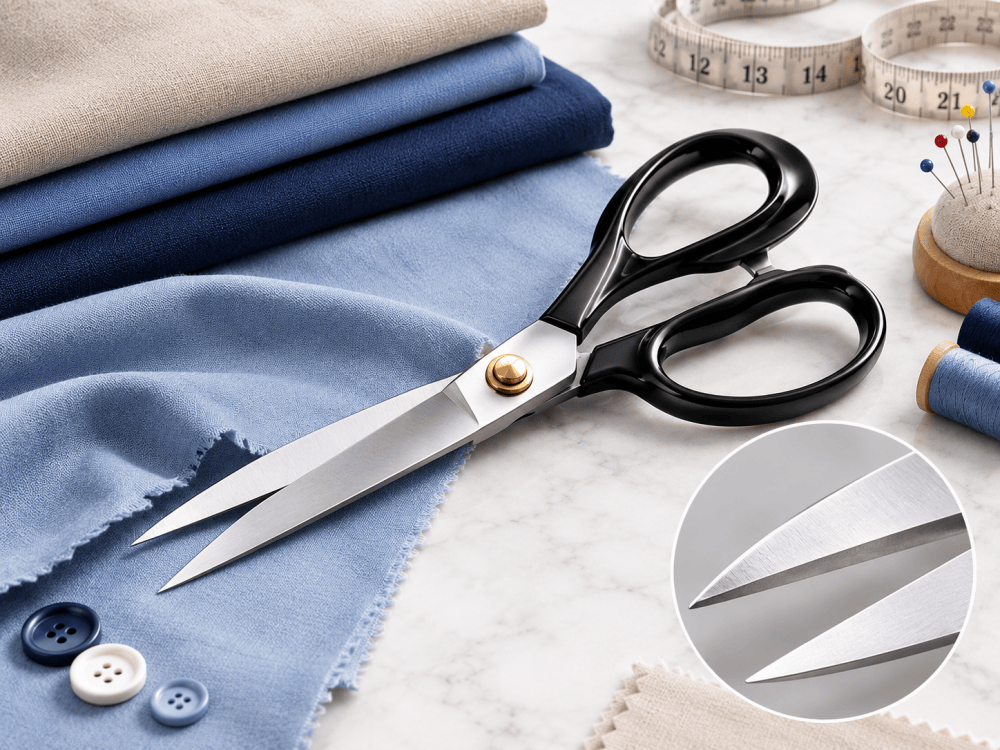



3Cr13 Stainless Steel Scissors: Is It a Good Choice?
3Cr13 Stainless Steel Scissors: Is It a Good Choice?
Published by FASAKA | Scissors Steel & Material Guide
When choosing scissors for household, kitchen, craft, sewing, or industrial applications, the blade material has a major influence on cutting performance, durability, corrosion resistance, and overall product cost. Among the stainless steels commonly used in mass-market cutting tools, 3Cr13 stainless steel is a practical option that offers a balance between hardness, corrosion resistance, manufacturability, and price.
But is 3Cr13 stainless steel actually a good choice for scissors?
For many everyday and commercial scissors, the answer is yes. 3Cr13 can provide good corrosion resistance, adequate hardness, easy processing, and cost-effective performance when the steel is properly heat treated and the blades are correctly ground and finished.
However, 3Cr13 is not automatically the best steel for every type of scissors. Professional cutting applications may require higher hardness, greater edge retention, or more specialized steel grades.
In this guide, FASAKA explains what 3Cr13 stainless steel is, why it is used for scissors, its advantages and limitations, and how it compares with other common materials from a product development and B2B sourcing perspective.
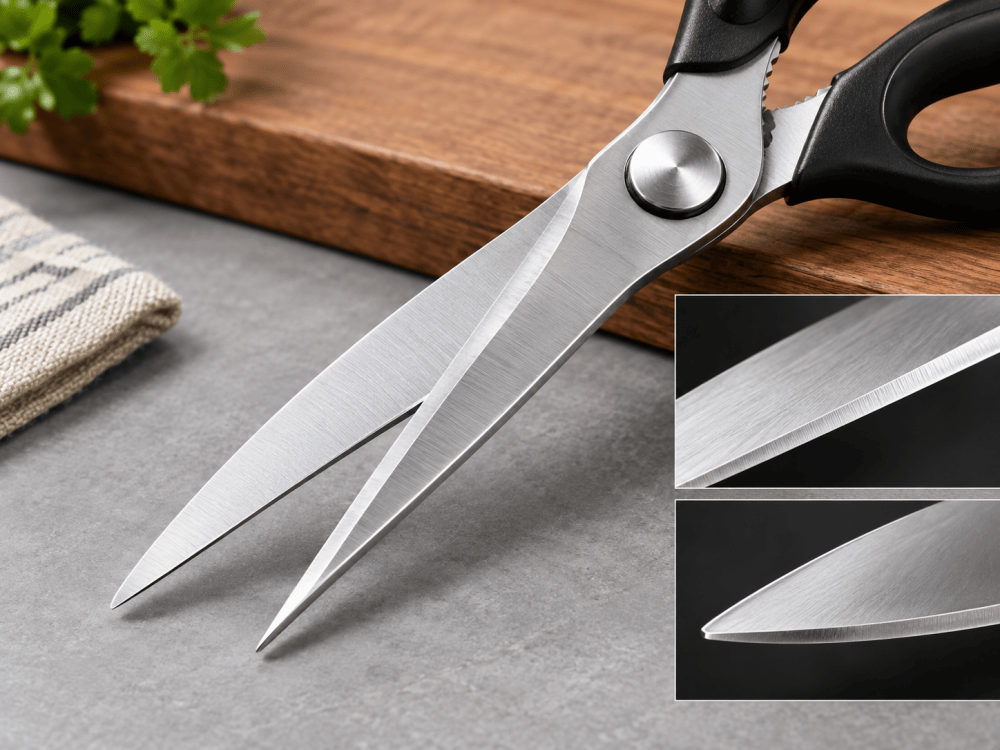
3Cr13 stainless steel is a good choice for many household, kitchen, craft, and general-purpose scissors because it offers a useful combination of corrosion resistance, moderate hardness, manufacturability, and affordability. For demanding professional applications, however, buyers may consider higher-performance steels depending on the required edge retention and hardness.
Table of Contents
- What Is 3Cr13 Stainless Steel?
- Why Is 3Cr13 Used for Scissors?
- Advantages of 3Cr13 Stainless Steel Scissors
- Limitations of 3Cr13 Scissors
- What Types of Scissors Use 3Cr13?
- 3Cr13 vs Other Stainless Steels for Scissors
- Why Heat Treatment Matters for 3Cr13 Scissors
- What Should B2B Buyers Consider?
- FASAKA 3Cr13 Stainless Steel Scissors Solutions
- Frequently Asked Questions
What Is 3Cr13 Stainless Steel?
3Cr13 is a martensitic stainless steel commonly used in knives, scissors, household cutting tools, hardware products, and other applications where a combination of corrosion resistance, hardness, and affordability is required.
The "Cr" in 3Cr13 refers to chromium, while the material belongs to the family of chromium-containing martensitic stainless steels. Its properties allow manufacturers to produce cutting edges that are harder than those of many common austenitic stainless steels while still maintaining useful corrosion resistance.
For scissors, this balance is important. A blade needs sufficient hardness to maintain a functional cutting edge, but the material also needs to withstand exposure to moisture and normal household environments.
Key Characteristics of 3Cr13
- Martensitic stainless steel
- Good general corrosion resistance
- Moderate hardness after suitable heat treatment
- Good machinability and grindability
- Suitable for mass production
- Relatively cost-effective compared with many premium steels
- Commonly used in cutting tools and household products
These characteristics make 3Cr13 particularly attractive for manufacturers producing scissors for large retail markets where product performance and manufacturing cost both matter.
Why Is 3Cr13 Used for Scissors?
Scissors are different from simple metal products. The blades must be formed, heat treated, ground, sharpened, aligned, and assembled accurately. The steel therefore needs to provide a suitable combination of mechanical properties and manufacturing performance.
3Cr13 is often selected because it provides a practical balance across several important factors.
1. Good Corrosion Resistance
Scissors are frequently exposed to water, humidity, food residue, skin oils, and other sources of moisture. Stainless steel helps reduce the risk of rust and surface corrosion compared with ordinary carbon steel.
This makes 3Cr13 suitable for scissors used in kitchens, households, crafts, sewing, and general-purpose applications where resistance to everyday moisture is important.
2. Suitable Hardness for General-Purpose Scissors
The hardness of a scissor blade affects edge durability, wear resistance, and cutting performance. 3Cr13 can achieve useful hardness through appropriate heat treatment, allowing manufacturers to produce functional and durable cutting edges.
The actual performance of a 3Cr13 scissor blade depends not only on the steel grade but also on heat treatment, blade geometry, grinding precision, sharpening, and final assembly.
3. Easy to Process and Manufacture
From a manufacturing perspective, steel selection must also consider forming, grinding, polishing, sharpening, and production efficiency.
3Cr13 can be processed efficiently using common manufacturing methods, making it suitable for medium- and high-volume scissor production.
4. Cost-Effective for Large-Volume Production
For B2B buyers, material cost is an important part of the final product cost. Premium steels can offer higher performance, but they may also increase material, processing, and manufacturing costs.
3Cr13 offers a practical middle ground for products where manufacturers need reliable everyday performance without positioning the scissors as a premium specialty tool.
Advantages of 3Cr13 Stainless Steel Scissors
When properly manufactured, 3Cr13 scissors can provide several advantages for both consumers and B2B buyers.
Good Balance of Performance and Price
One of the biggest advantages of 3Cr13 is its balance between performance and cost. It can provide suitable cutting performance for everyday applications while remaining economical enough for large-scale production.
Good Resistance to Everyday Moisture
The chromium content provides useful corrosion resistance, which is especially important for kitchen and household scissors that may regularly encounter moisture.