



What Is a Santoku Knife Used For? Uses, Benefits & Cutting Tips
A Santoku knife is a versatile Japanese kitchen knife designed for everyday food preparation. It is commonly used for slicing, dicing, and chopping vegetables, meat, and fish. With its distinctive blade shape and balanced design, a Santoku knife is a popular choice for both home cooks and professional kitchens.
But what exactly can you cut with a Santoku knife? Is it suitable for meat, fish, and vegetables? And how is it different from a traditional chef knife?
In this guide, we explain what a Santoku knife is used for, its main benefits, the foods it can handle, and the tasks it is not designed for. We also share practical tips to help you choose and maintain the right Santoku knife.
Quick Answer: What Is a Santoku Knife Used For?
A Santoku knife is mainly used for slicing, dicing, and chopping vegetables, boneless meat, and fish. Its relatively wide blade, pointed or rounded-down tip, and versatile cutting edge make it suitable for many everyday kitchen tasks. However, it is not designed for cutting through bones, frozen food, or other hard materials.
1. What Is a Santoku Knife?
A Santoku knife is a Japanese all-purpose kitchen knife. The word "Santoku" is commonly translated as "three virtues" or "three uses," referring to its versatility in preparing meat, fish, and vegetables.
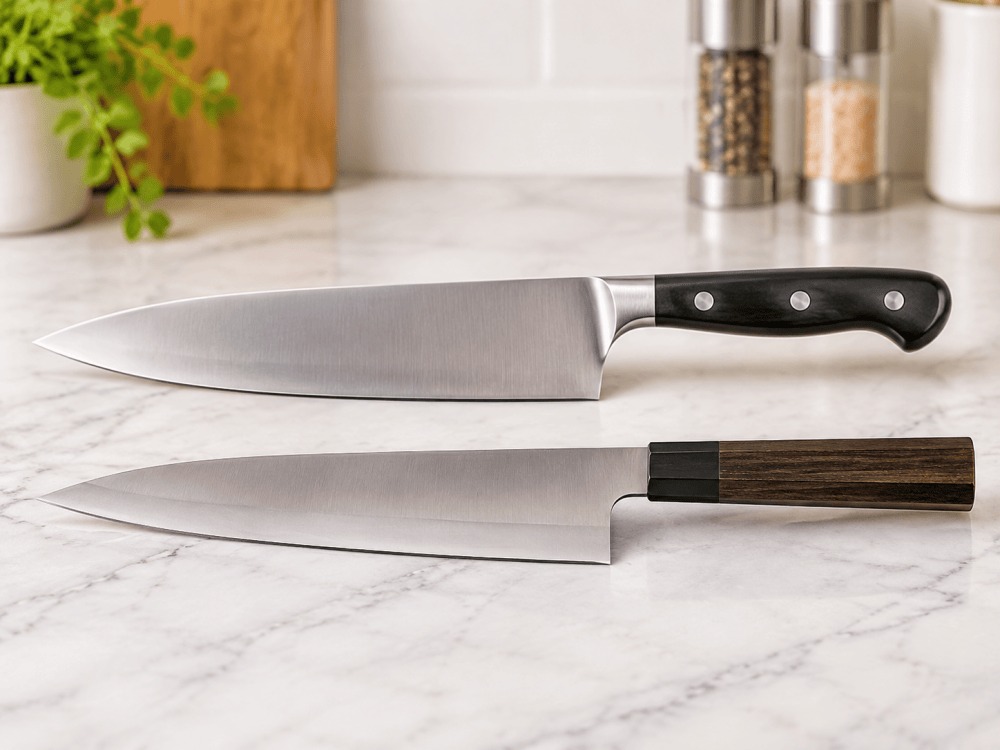
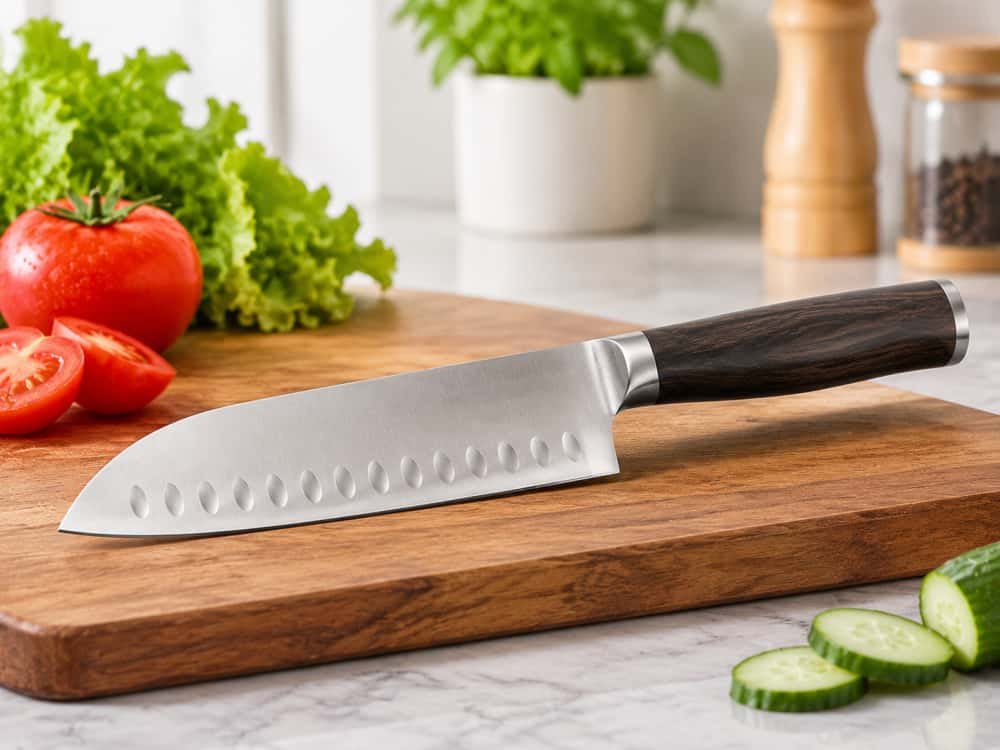
Unlike specialized knives designed for one particular task, a Santoku is intended to handle a variety of everyday cutting jobs. It typically has a relatively wide blade, a straight or gently curved cutting edge, and a tip that slopes down toward the cutting edge.
Many Santoku knives have a double-bevel edge, meaning both sides of the blade are sharpened. Blade length, thickness, handle style, steel type, and edge design vary between models.
Common Santoku knife features include:
- Wide blade: Provides knuckle clearance and can help transfer chopped ingredients from the cutting board.
- Distinctive blade profile: Usually has a relatively flat cutting edge compared with many Western chef knives.
- Versatile cutting edge: Suitable for slicing, dicing, and chopping different ingredients.
- Compact design: Many Santoku knives are shorter than full-size chef knives, making them convenient for everyday preparation.
2. What Is a Santoku Knife Used For?
A Santoku knife is designed to handle three major categories of food preparation: vegetables, meat, and fish. Its versatility makes it useful in home kitchens, restaurants, and other food preparation environments.
2.1 Cutting Vegetables
Vegetable preparation is one of the most common uses of a Santoku knife. Its relatively flat cutting profile works well for chopping, dicing, and slicing a wide range of vegetables.
You can use a Santoku knife to prepare:
- Onions, garlic, and shallots
- Carrots, cucumbers, and bell peppers
- Cabbage, lettuce, and leafy greens
- Potatoes, zucchini, and eggplant
- Tomatoes, mushrooms, and other soft vegetables
The wide blade provides room for your fingers when using a proper grip and can also be used to move chopped vegetables from the cutting board to a cooking pot or bowl.
2.2 Slicing and Cutting Meat
A Santoku knife can be used to prepare boneless meat, including chicken breast, beef, pork, and other cuts. Its sharp edge and versatile blade shape make it suitable for slicing meat into strips, cubes, or smaller portions.
Common uses include:
- Slicing boneless chicken and beef
- Cutting pork into smaller portions
- Dicing meat for stir-fries
- Preparing boneless meat for soups and stews
However, a standard Santoku knife is not designed for cutting through bones, joints, or frozen meat. Use a suitable cleaver, butcher knife, or other specialized tool for those tasks.
2.3 Preparing Fish
A Santoku knife can also handle many everyday fish preparation tasks. It is suitable for cutting boneless fish portions, slicing fish fillets, and dividing fish into smaller pieces for cooking.
For example, it can be used to:
- Cut boneless fish fillets into portions
- Slice fish for everyday cooking
- Prepare fish pieces for soups and stir-fries
A Santoku is not a dedicated fish filleting knife. If you need to remove skin, work closely around bones, or make long, precise filleting cuts, a flexible fillet knife or another specialized fish knife is generally more suitable.
2.4 Slicing Fruits and Other Ingredients
Beyond meat, fish, and vegetables, a Santoku knife can be used for many other kitchen ingredients. It works well for slicing apples, pears, melons, and other fruits, as well as cutting cheese and preparing herbs.
For very small ingredients or detailed tasks such as peeling, trimming, and removing seeds, a paring knife may provide better control.
3. What Should You Not Cut with a Santoku Knife?
Although a Santoku knife is versatile, it is not suitable for every cutting task. Its blade construction and edge geometry are generally intended for food preparation rather than heavy-duty cutting.