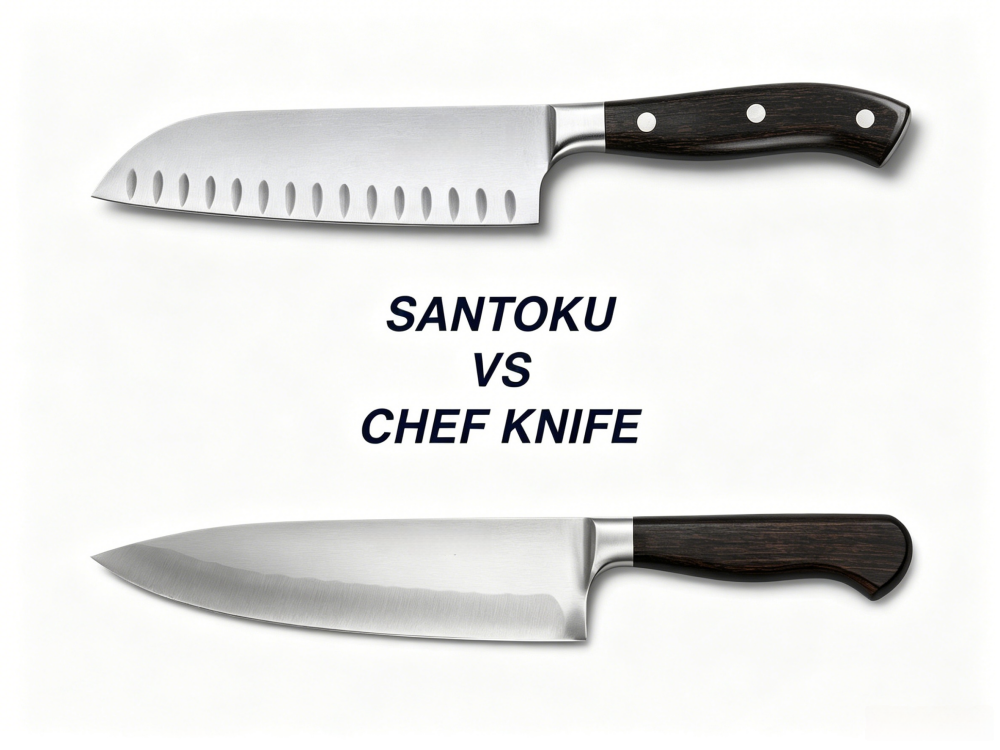




German vs French Chef Knife: What's the Difference?
German and French chef knives are two traditional Western kitchen knife styles. Although both are designed for general food preparation, they can differ in blade shape, tip design, cutting profile, and overall handling. Understanding these differences can help home cooks, professional chefs, and kitchenware buyers choose the right knife for their needs.
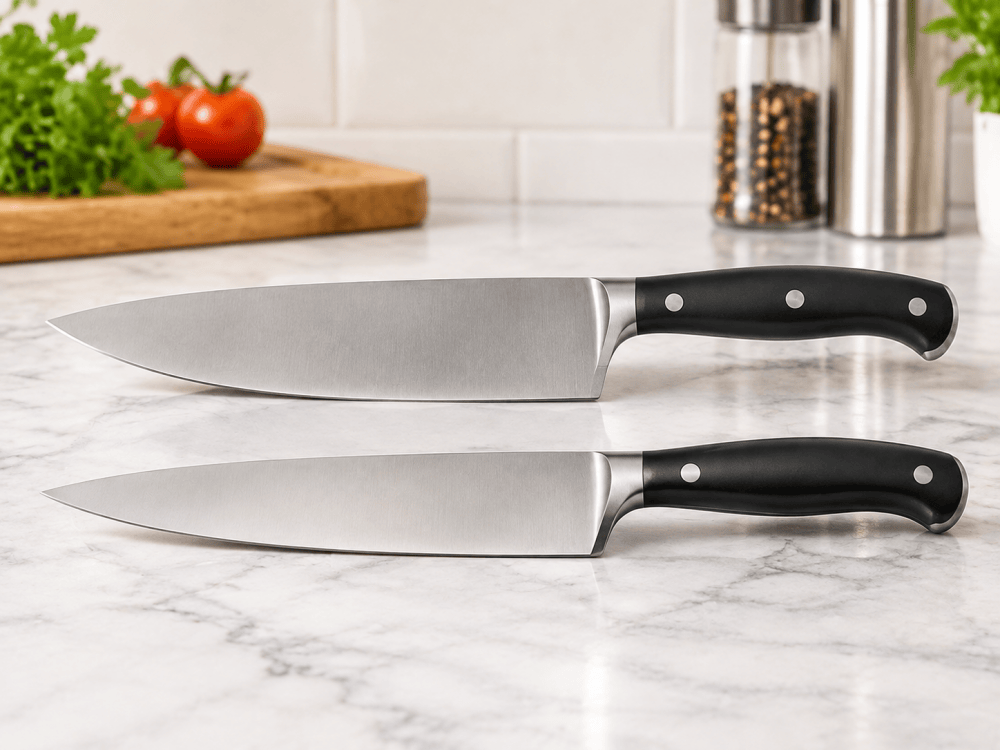
A traditional German-style chef knife often has a more curved cutting edge and a relatively broad blade, making it suitable for rocking cuts and general food preparation. A traditional French-style chef knife typically has a more triangular blade profile, a narrower appearance, and a more gradual curve toward the tip, making it well suited to push cutting and controlled slicing. However, modern designs vary by manufacturer and model, so blade geometry matters more than the country label alone.
1. What Is a German Chef Knife?
A German chef knife is a traditional Western kitchen knife style associated with German cutlery manufacturing. It is commonly designed with a broad blade, a substantial handle, and a curved cutting edge.
The curved profile allows the user to keep part of the blade in contact with the cutting board while lifting and lowering the handle. This movement is commonly known as the rocking cutting technique.
Many traditional German-style chef knives also have a relatively robust blade profile. Depending on the model, they may feature a full bolster, a thicker spine, or a substantial handle. These features can influence the knife's weight, balance, and handling, but they are not universal requirements for every German chef knife.
Common Characteristics of German Chef Knives
- Blade shape: Often broad with a noticeable curve along the cutting edge.
- Blade profile: Commonly designed with a relatively substantial feel.
- Cutting style: Well suited to rocking cuts and general kitchen preparation.
- Handle design: Frequently features ergonomic synthetic or traditional riveted handles.
- Construction: Available in both forged and stamped designs, depending on the product series.
German-style chef knives are commonly used for chopping vegetables, slicing meat, mincing herbs, and handling a wide range of everyday kitchen tasks.
2. What Is a French Chef Knife?
A French chef knife is another traditional Western kitchen knife style. It is often recognized by its more triangular blade profile, with a relatively straight cutting edge toward the heel and a gradual curve leading to the tip.
Compared with many traditional German-style designs, a French-style chef knife may have a less pronounced belly. This geometry can make it suitable for push cutting, slicing, and controlled forward cutting movements.
Traditional French chef knives are often associated with professional kitchen preparation and classic European cutlery design. However, modern French-style knives vary considerably in blade thickness, weight, handle construction, and overall geometry.
Common Characteristics of French Chef Knives
- Blade shape: Often has a triangular profile with a relatively straight heel section.
- Blade curve: Typically features a more gradual curve toward the tip.
- Cutting style: Well suited to push cutting and controlled slicing.
- Blade feel: Some traditional models have a comparatively lighter or more agile feel.
- Construction: Available in different blade and handle constructions depending on the manufacturer.
French-style chef knives can be used for slicing vegetables, preparing meat, cutting herbs, and other general food preparation tasks.
3. German vs French Chef Knife: Key Differences
The main differences between traditional German and French chef knives are related to blade geometry and the cutting movements they accommodate. The following table summarizes their typical characteristics.
| Feature | German Chef Knife | French Chef Knife |
|---|---|---|
| Blade profile | Often broad with a more noticeable belly | Often more triangular with a straighter heel section |
| Cutting edge | Commonly has a more pronounced curve | Often has a more gradual curve toward the tip |
| Tip design | Usually curves upward toward the point | Often has a more gradual transition to the tip |
| Typical cutting style | Rocking cuts and general chopping | Push cuts and controlled slicing |
| Handling | Some models feel more substantial | Some models feel more agile |
| Common uses | Vegetables, meat, herbs, and everyday chopping | Vegetables, meat, herbs, and controlled slicing |
| Construction | Forged and stamped options | Forged and stamped options |