


What Is a BBQ Fork Used For? Complete Guide to BBQ Fork Uses, Benefits and Grilling Tips
What Is a BBQ Fork Used For? Complete Guide to BBQ Fork Uses, Benefits and Grilling Tips
Outdoor grilling requires more than just a quality grill and great ingredients. The right barbecue tools can significantly improve cooking efficiency, food handling, and overall grilling results. Among these essential accessories, the BBQ fork remains one of the most commonly used yet often misunderstood tools.
Many beginner grillers ask:
- What is a BBQ fork used for?
- Is a BBQ fork better than tongs?
- Do professional grillers use BBQ forks?
- What foods should be handled with a grilling fork?
The answer is simple: a BBQ fork is designed to help grillers safely lift, turn, transfer, and serve large cuts of meat and other grilled foods. While modern BBQ tongs and spatulas have become increasingly popular, the barbecue fork remains an important tool for many grilling tasks.
A high-quality stainless steel BBQ fork provides precision, control, and durability when handling large cuts of meat on the grill.
In this complete guide, we'll explain exactly what a BBQ fork is used for, how it compares to other grilling tools, and how to choose the best BBQ fork for outdoor cooking.

What Is a BBQ Fork?
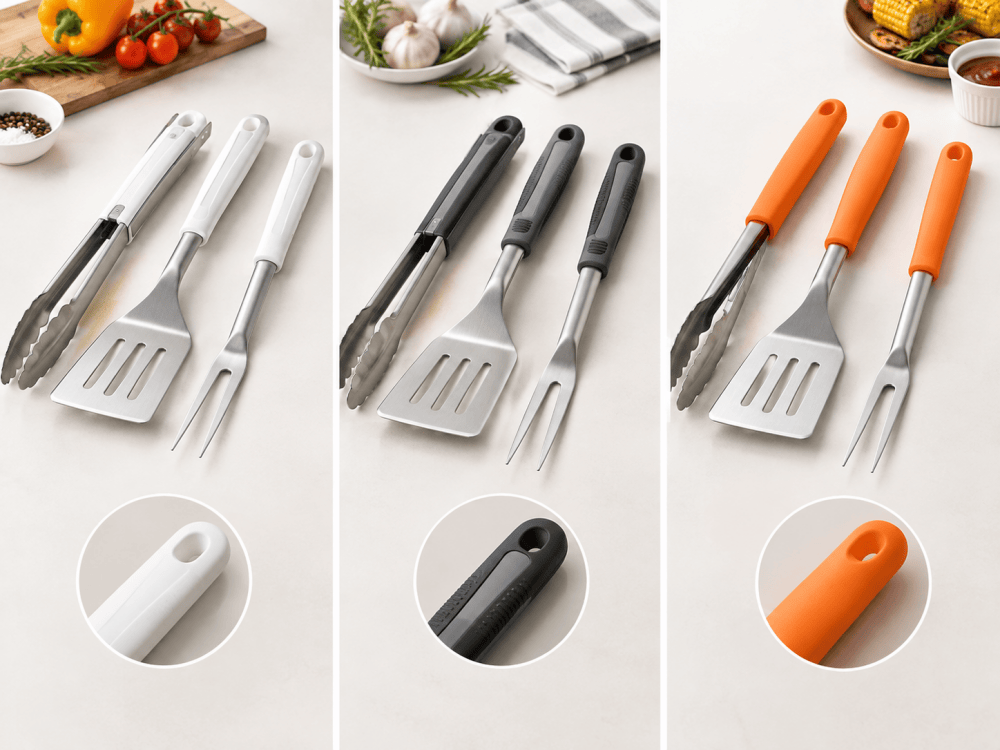
A BBQ fork, also known as a grilling fork or barbecue fork, is a long-handled grilling tool featuring two sharp stainless steel tines designed for handling food during outdoor cooking.
The extended handle keeps the user's hands safely away from heat, flames, and hot grill surfaces, while the fork's sharp prongs provide secure control when moving large or heavy foods.
BBQ forks are commonly included in professional grilling tool sets and are widely used for:
- Steaks
- Large roasts
- Whole chickens
- Turkey
- Pork shoulders
- Brisket
- Large vegetables

Main Components of a BBQ Fork
Although BBQ forks appear simple, high-quality models are carefully designed for strength, comfort, and durability.
| Component | Function |
|---|---|
| Fork Tines | Pierce and hold food securely |
| Long Handle | Provides safe distance from heat |
| Grip Section | Improves comfort and control |
| Hanging Loop | Convenient storage option |
Premium BBQ forks are typically manufactured from food-grade stainless steel, offering excellent corrosion resistance and long-term durability in outdoor cooking environments.
What Is a BBQ Fork Used For?
A BBQ fork serves several important functions during grilling. While some tasks can also be performed using tongs or spatulas, the barbecue fork excels when handling larger, heavier foods that require extra control.
1. Turning Large Cuts of Meat
One of the primary uses of a BBQ fork is turning large cuts of meat on the grill.
Examples include:
- Ribeye steaks
- T-bone steaks
- Pork chops
- Lamb racks
- Large burgers
The fork's pointed tines securely grip food, making it easier to flip without dropping or tearing the meat.
2. Lifting Roasts and Large Proteins
When handling heavy foods, tongs may not always provide enough support.
A BBQ fork can be used to lift:
- Whole chickens
- Turkey breasts
- Beef roasts
- Pork shoulders
- Brisket portions
The sharp tines create a secure hold, reducing the risk of food slipping back onto the grill.

3. Moving Food Around the Grill
Different areas of a grill often have different temperatures.
A BBQ fork allows grillers to quickly reposition food from direct heat zones to indirect heat zones for better temperature control.
4. Checking Food Stability During Cooking
Many grillers use a BBQ fork to gently test whether food is ready to turn.
If the meat releases easily from the grill grates, it's often a sign that proper searing has occurred.
5. Serving Finished Food
After cooking, a BBQ fork makes transferring large foods from the grill to serving trays easier and safer.
This is especially useful when handling hot foods immediately after cooking.
Explore Professional BBQ Tool Manufacturing
FASAKA provides OEM and ODM manufacturing solutions for BBQ forks, BBQ tool sets, grilling accessories, and outdoor cooking products.
In the next section, we'll compare BBQ forks with tongs and spatulas, explain the advantages of stainless steel BBQ forks, and discuss proper grilling techniques for maximum performance and safety.
BBQ Fork vs BBQ Tongs: Which Tool Is Better?
One of the most common questions among grilling enthusiasts is whether a BBQ fork or BBQ tongs are better for outdoor cooking.
The truth is that both tools serve important but slightly different purposes. Professional grillers often keep both within reach because each tool excels in specific situations.

| Feature | BBQ Fork | BBQ Tongs |
|---|---|---|
| Large Cuts of Meat | Excellent | Good |
| Small Foods | Limited | Excellent |
| Food Control | Very Secure | Flexible |
| Serving Roasts | Excellent | Good |
| Preventing Juice Loss | Less Ideal | Better |
Tongs are generally preferred for delicate foods because they do not puncture the surface. However, when handling large roasts or heavy proteins, a BBQ fork often provides superior control and stability.
Professional Grilling Tip
Use BBQ tongs for flipping steaks, burgers, and vegetables. Use a BBQ fork when lifting large roasts, whole chickens, or oversized cuts that require extra support.
BBQ Fork vs BBQ Spatula
A BBQ spatula is another essential grilling tool commonly found in outdoor cooking sets.
While a spatula works exceptionally well for burgers and fish fillets, it cannot always provide the same secure grip as a BBQ fork.
| Task | BBQ Fork | BBQ Spatula |
|---|---|---|
| Large Steaks | Excellent | Good |
| Burgers | Good | Excellent |
| Fish Fillets | Poor | Excellent |
| Whole Chicken | Excellent | Limited |
Many experienced grillers consider the fork, tongs, and spatula to be complementary tools rather than direct competitors.

Advantages of Stainless Steel BBQ Forks
When shopping for grilling accessories, material selection is one of the most important factors.
Stainless steel remains the preferred material for professional-grade BBQ forks because it offers an ideal combination of durability, hygiene, and performance.
Excellent Corrosion Resistance
Outdoor cooking often exposes tools to moisture, sauces, marinades, and changing weather conditions.
High-quality stainless steel helps prevent rust and corrosion, extending the life of the fork.
High Strength and Durability
Large cuts of meat can be surprisingly heavy.
A stainless steel BBQ fork provides the strength needed to lift and move food without bending.
Easy Cleaning
Food-grade stainless steel is easy to clean and maintain, making it ideal for repeated outdoor cooking sessions.
Professional Appearance
Premium stainless steel BBQ tools create a polished, professional look that appeals to both home grillers and commercial users.
How to Use a BBQ Fork Safely
Like any grilling tool, proper usage improves safety and helps protect food quality.
Avoid Excessive Piercing
Repeatedly piercing meat can allow juices to escape, potentially reducing moisture and tenderness.
Use the fork only when necessary and avoid excessive puncturing.
Keep Hands Away from Direct Heat
Always use the full length of the handle to maintain a safe distance from hot grill grates and open flames.
Inspect Before Use
Before grilling, check that the fork's tines are straight and the handle is securely attached.
Use Appropriate Protective Gear
Heat-resistant grilling gloves can provide additional protection during high-temperature cooking.
Common Mistakes When Using a BBQ Fork
Even experienced grillers occasionally misuse BBQ forks. Avoiding these mistakes can improve both safety and cooking results.
| Mistake | Potential Result |
|---|---|
| Repeatedly Piercing Meat | Loss of juices |
| Using a Short Fork | Heat exposure |
| Using Damaged Tools | Reduced safety |
| Using Fork for Delicate Fish | Food breakage |
| Poor Cleaning Habits | Hygiene concerns |
In the final section, we'll discuss how to choose the best BBQ fork, maintenance tips, OEM BBQ fork manufacturing solutions, and answer the most frequently asked questions about barbecue forks.
How to Choose the Best BBQ Fork
Not all BBQ forks are created equal. While many grilling forks look similar at first glance, differences in material quality, construction, handle design, and overall durability can significantly affect performance.
Whether you're a weekend griller or a professional barbecue enthusiast, selecting the right BBQ fork can improve safety, comfort, and cooking efficiency.
Choose Food-Grade Stainless Steel
Food-grade stainless steel remains the preferred material for premium grilling tools.
Benefits include:
- Rust resistance
- Excellent durability
- Easy cleaning
- Long service life
- Professional appearance
Many professional BBQ forks use SS430 or higher-grade stainless steel for optimal performance.
Look for a Long Handle
A longer handle provides better protection from high grilling temperatures.
For most outdoor grills, a fork length between 16 and 20 inches offers an ideal balance between safety and control.
Check Fork Strength
The fork should be strong enough to support heavy foods without bending.
A solid one-piece stainless steel construction typically offers superior durability compared to welded or thin-gauge alternatives.
Prioritize Comfortable Grip Design
A comfortable handle improves control during extended grilling sessions.
Popular options include:
- Wood handles
- PP handles
- TPR soft-grip handles
- Stainless steel hollow handles
BBQ Fork Maintenance Tips
Proper maintenance helps maximize the lifespan of your BBQ fork while ensuring food safety.
Clean Immediately After Use
Food residue, grease, and barbecue sauces can harden quickly after cooking.
Cleaning tools immediately after grilling prevents buildup and simplifies maintenance.
Dry Thoroughly
Although stainless steel is corrosion resistant, drying the fork after washing helps maintain its appearance and longevity.
Inspect Regularly
Check for:
- Loose handles
- Bent tines
- Surface corrosion
- Excessive wear
Replacing damaged tools improves safety and performance.
Store in a Dry Location
Many premium BBQ forks include hanging loops for convenient storage.
Keeping tools organized also helps prevent accidental damage.
Why Professional Grillers Still Use BBQ Forks
Despite the popularity of BBQ tongs and spatulas, professional grillers continue to rely on BBQ forks for specific applications.
The primary reason is control.
When handling:
- Whole chickens
- Large steaks
- Pork shoulders
- Prime rib
- Turkey breasts
A BBQ fork provides a secure grip that can be difficult to achieve with other tools.
For this reason, many commercial barbecue restaurants and competition grill teams continue to include a professional-grade BBQ fork in their standard tool kits.
OEM BBQ Fork Manufacturing with FASAKA
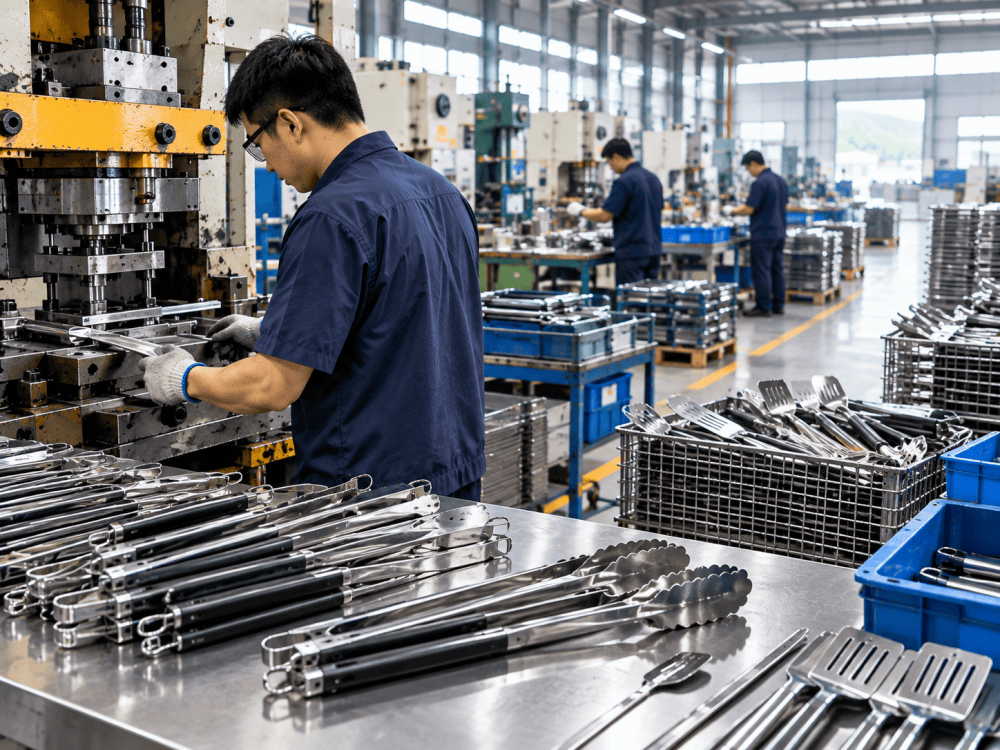
As a professional manufacturer of BBQ tools and kitchenware products, FASAKA provides comprehensive OEM and ODM solutions for global brands, wholesalers, distributors, retailers, and importers.
Our BBQ fork manufacturing capabilities include:
- Custom stainless steel BBQ forks
- Wood handle BBQ forks
- Hollow handle grilling forks
- Private label production
- Custom logo engraving
- Retail packaging solutions
- BBQ tool set development
Work with FASAKA
Looking for a reliable BBQ tool manufacturer?
Explore our OEM & ODM services:
//www.fasaka.com/oem-odm-kitchenware.html
Browse our BBQ tool collection:
//www.fasaka.com/bbq-tool-sets.html
Contact our team:
Frequently Asked Questions
What is a BBQ fork used for?
A BBQ fork is primarily used for lifting, turning, transferring, and serving large cuts of meat during grilling. It provides secure control when handling foods such as steaks, roasts, and whole poultry.
Is a BBQ fork better than BBQ tongs?
Neither tool is universally better. BBQ forks are excellent for large foods requiring a firm grip, while tongs are often preferred for delicate foods and tasks where preserving juices is important.
Do BBQ forks pierce meat?
Yes. The fork's tines pierce the food surface to provide a secure grip. However, excessive piercing should be avoided to minimize juice loss.
What material is best for a BBQ fork?
Food-grade stainless steel is widely considered the best material because it offers durability, corrosion resistance, easy cleaning, and long service life.
Can a BBQ fork be used indoors?
Yes. Although designed for outdoor grilling, BBQ forks can also be useful for handling roasts, poultry, and large cuts of meat in indoor kitchens.
Why do BBQ tool sets include a fork?
Because a BBQ fork provides control and stability when handling large foods, making it a valuable complement to tongs and spatulas in a complete grilling tool set.
Final Thoughts
So, what is a BBQ fork used for?
The answer goes far beyond simply turning meat. A quality BBQ fork helps grillers safely lift, move, serve, and control large foods while improving efficiency during outdoor cooking.
When combined with BBQ tongs and a spatula, a professional-grade stainless steel BBQ fork becomes an essential component of any serious grilling setup.
Whether you're a backyard barbecue enthusiast or a global BBQ tool buyer seeking OEM manufacturing solutions, investing in a well-designed BBQ fork can enhance both grilling performance and user experience.