


Plastic Handle Kitchen Knives: Why They Are Still Popular in Retail Markets
Plastic Handle Kitchen Knives: Why They Are Still Popular in Retail Markets
Published by FASAKA | Kitchen Knife Market Insight
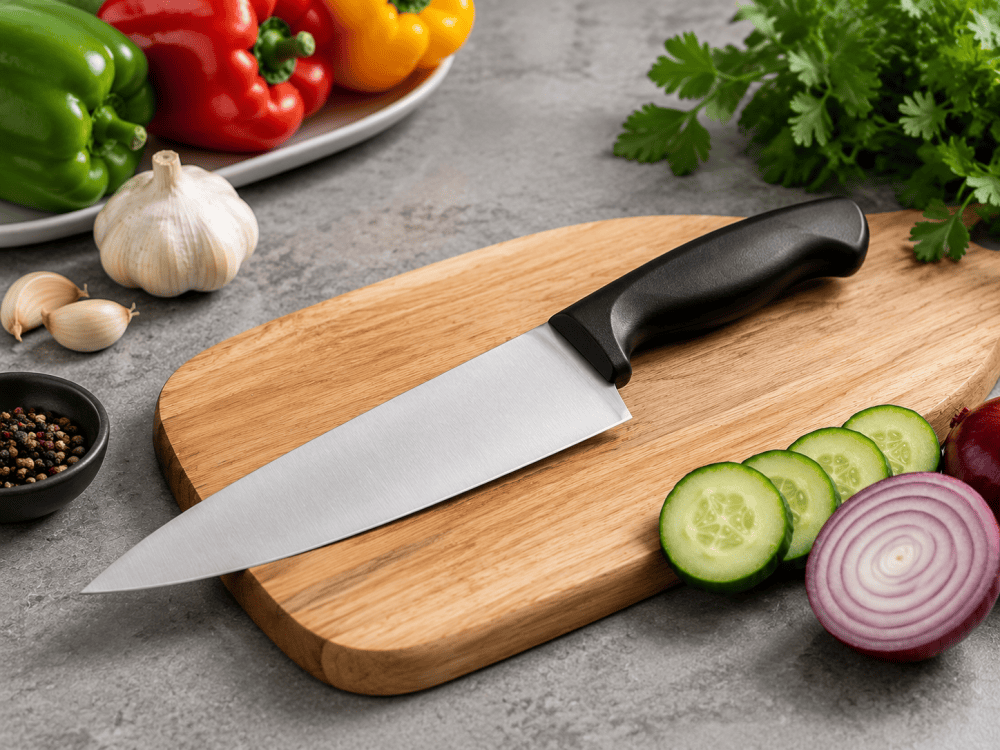
Plastic handle kitchen knives remain an important product category in the global kitchenware market. Although premium kitchenware brands increasingly use wood, stainless steel, and other specialty materials, plastic handle knives continue to perform strongly in supermarkets, mass retail channels, household stores, and private label collections.
For buyers, the appeal is not simply about purchase price. Plastic handles offer manufacturers greater control over production cost, weight, ergonomics, color, maintenance, and product consistency. These advantages make them particularly suitable for large-volume retail programs where suppliers need to balance functionality, appearance, and cost efficiency.
For wholesalers and distributors searching for cheap kitchen knives wholesale, the more useful question is not whether plastic handle knives are "cheap," but whether they provide the right combination of cost control, easy maintenance, scalable production, and mass-market appeal.
Why Are Plastic Handle Kitchen Knives Still Popular?
The continued popularity of plastic handle kitchen knives comes from their suitability for high-volume retail environments.
Supermarkets and large retailers often need products that can be produced consistently across thousands of units while maintaining predictable specifications, packaging, and pricing. Plastic handle construction can support these requirements while giving brands considerable flexibility in product design.
- Efficient production for large-volume orders
- Consistent handle dimensions and appearance
- Wide range of colors and ergonomic shapes
- Easy everyday maintenance
- Competitive total product cost
- Suitable for supermarket and mass retail programs
- Flexible private label and packaging options
These advantages make the plastic handle kitchen knife an important choice for buyers developing practical household kitchenware collections.
1. Mass Retail: Designed for High-Volume Distribution
Mass retail has different requirements from premium specialty retail.
A supermarket may need several thousand or even tens of thousands of units of the same product. The knife must therefore be easy to manufacture consistently, simple to package, convenient for consumers, and suitable for a clearly defined retail price point.
Plastic handles are particularly suitable for this environment because manufacturers can reproduce the same shape, color, weight, and surface finish with a high degree of consistency.
For buyers, this can simplify:
- Product planning
- Production scheduling
- Quality control
- Packaging development
- Inventory management
- Multi-store distribution
Instead of focusing only on the lowest unit price, professional buyers should evaluate the overall efficiency of the product throughout the supply chain.
2. Supermarket Applications: Practicality Matters
Supermarkets typically serve a broad consumer base. A kitchen knife displayed on a supermarket shelf needs to appeal to different household users without requiring complicated maintenance.
Plastic handle knives can meet this requirement with practical designs that are familiar to consumers.
Common supermarket applications include:
- Chef knives
- Utility knives
- Paring knives
- Bread knives
- Vegetable knives
- Multi-piece kitchen knife sets
For retailers, plastic handle construction also makes it easier to create coordinated collections using different handle colors and blade sizes.
For example, a retailer can develop a complete collection with black, white, red, or other branded handle colors while maintaining the same basic manufacturing platform.
3. Cost Control Without Sacrificing Functionality
Cost control is one of the most important considerations in mass-market kitchenware sourcing.
However, cost control does not mean simply choosing the lowest-cost material. Professional buyers need to consider the relationship between material cost, manufacturing efficiency, durability, packaging, logistics, and expected retail price.
Plastic handle construction can provide manufacturers with an efficient production process while maintaining practical performance for everyday kitchen use.
This is especially important for buyers looking for cheap kitchen knives wholesale. A reliable wholesale program should focus on:
- Stable material specifications
- Consistent production quality
- Efficient manufacturing
- Predictable packaging costs
- Suitable MOQ
- Stable long-term supply
The goal is to achieve a competitive landed cost while maintaining acceptable product quality and consumer satisfaction.
4. Easy Maintenance for Everyday Consumers
Another reason plastic handle kitchen knives remain popular is their practical maintenance.
Unlike natural wood, plastic does not require regular conditioning or oiling. It is generally easy to wipe and clean after everyday food preparation.
This makes plastic handles particularly attractive for household users who prioritize convenience.
For retailers, easy maintenance can also be a useful product-selling point because consumers often prefer kitchen tools that fit easily into busy daily routines.
5. Ergonomic Design Is More Important Than Material Alone
A common misconception is that plastic handle knives are basic products with limited design potential.
Modern manufacturing allows plastic handles to incorporate ergonomic shapes, textured surfaces, finger rests, soft-touch areas, and different grip profiles.
A well-designed plastic handle can provide:
- Comfortable grip
- Stable handling
- Better control
- Reduced hand fatigue
- Consistent dimensions across production batches
For retailers, ergonomic design can therefore become a stronger selling point than the handle material itself.
A professionally designed plastic handle kitchen knife can combine practical performance with attractive retail presentation.
6. Which Plastic Materials Are Commonly Used for Kitchen Knife Handles?
Not all plastic handles are the same. Different plastic materials can provide different levels of durability, flexibility, grip, appearance, and production efficiency. For kitchen knife buyers, selecting the right handle material is an important part of product development and cost control.
Common handle materials used in plastic handle kitchen knives include PP, ABS, and TPR-based combinations.
- PP (Polypropylene): Lightweight, practical, and widely used for mass-market kitchen knives.
- ABS: Offers good rigidity, surface appearance, and design flexibility.
- TPR: Often used as a soft-touch or non-slip component to improve grip comfort.
- PP + TPR: Combines a durable structural body with a softer grip area.
The best material depends on the intended market, product positioning, target retail price, and required handle design. For high-volume supermarket programs, material selection should balance performance with manufacturing efficiency.
7. Plastic Handles Offer More Design Flexibility for Retail Products
One of the major advantages of plastic handle kitchen knives is the flexibility available during product development. Unlike some traditional handle materials, molded plastic can be shaped into many different forms and combined with different surface treatments.
This gives retailers and private label brands more opportunities to create recognizable product collections.
- Multiple handle colors
- Ergonomic grip profiles
- Textured or non-slip surfaces
- Finger protection areas
- Brand-colored handles
- Custom logo applications
- Different handle shapes for different knife types
For example, a supermarket brand can develop one coordinated kitchen knife collection using the same handle design across chef knives, utility knives, paring knives, and bread knives.
This creates a consistent visual identity while simplifying product development and retail merchandising.
8. Plastic Handle Kitchen Knives Are Suitable for Private Label Programs
Private label buyers often need products that can be customized without making the manufacturing process unnecessarily complicated. Plastic handle knives can be a practical solution because manufacturers can customize several visible product elements while maintaining an efficient production structure.
Depending on the project, buyers may customize:
- Handle color
- Handle shape
- Blade size and profile
- Blade material
- Logo and branding
- Retail packaging
- Knife set combinations
This makes plastic handle kitchen knives suitable for supermarket private labels, household brands, kitchenware distributors, and other high-volume retail programs.
For buyers developing a new collection, using an established product structure with customized colors, branding, and packaging can also reduce development complexity compared with creating a completely new knife design from scratch.
9. Plastic Handle vs Wood Handle Kitchen Knives
Plastic and wood handles serve different market positions. Choosing between them should depend on the target customer, retail channel, product positioning, and maintenance expectations.
| Feature | Plastic Handle | Wood Handle |
|---|---|---|
| Retail Positioning | Mass retail and mainstream | Premium and traditional |
| Maintenance | Easy everyday maintenance | Requires more care |
| Color Options | Highly flexible | Depends on wood species and finish |
| Production Consistency | High | Natural variation possible |
| Mass Retail Suitability | Excellent | More suitable for selected premium ranges |
| Design Flexibility | High | Dependent on construction and material |
For a premium kitchenware collection, a wood handle kitchen knife may create a stronger natural and traditional impression. For supermarkets and high-volume household collections, plastic handles can provide greater flexibility in cost control, design consistency, and maintenance.
10. How Plastic Handle Knives Help Buyers Control Product Costs
For B2B buyers, product cost should be evaluated across the complete sourcing process rather than by looking at the handle material alone.
A well-designed plastic handle kitchen knife can help manufacturers control several cost factors at the same time, including material utilization, production efficiency, product weight, packaging requirements, and transportation costs.
- Efficient molded handle production
- Consistent material consumption
- Lightweight product structure
- Potentially lower packaging requirements
- Efficient carton utilization
- Suitable for high-volume production
These factors are particularly relevant when sourcing cheap kitchen knives wholesale for supermarket and mass-retail programs. The objective should be a competitive total sourcing cost while maintaining the quality level required by the target market.
11. What Should Buyers Check Before Ordering Plastic Handle Kitchen Knives?
Before placing a bulk order, buyers should evaluate more than the appearance of the knife. A professional sourcing process should consider materials, construction, quality control, packaging, and supplier production capability.
- Blade material: Confirm the stainless steel grade and required performance.
- Handle material: Verify the plastic type and construction.
- Grip design: Check comfort, stability, and surface finish.
- Blade-to-handle connection: Ensure the construction is secure and consistent.
- Quality control: Confirm inspection procedures for bulk production.
- Packaging: Make sure the packaging matches the retail channel.
- MOQ: Confirm whether the order quantity fits your sales plan.
- Customization: Check available options for colors, logos, and packaging.
For supermarket and distributor orders, these factors can have a significant impact on the final product quality and overall sourcing efficiency.
12. Plastic Handle Kitchen Knives for Different Retail Channels
The same plastic handle construction can be developed into different products depending on the retail channel and target customer.
- Supermarkets: Practical knife sets with retail-ready packaging.
- Household stores: Everyday chef, utility, and paring knives.
- Wholesale distributors: Multi-SKU collections for different customer segments.
- Private label brands: Customized handles, logos, and packaging.
- E-commerce brands: Coordinated knife sets with attractive product presentation.
This versatility is one of the main reasons plastic handle kitchen knives continue to have a strong role in global retail markets.
How Plastic Handle Kitchen Knives Fit Different Retail Markets
The biggest advantage of a plastic handle kitchen knife is its ability to adapt to different retail strategies. For importers and distributors, the handle material can be selected according to target consumers, selling price, packaging format, and expected usage.
For mass-market products, plastic handles provide manufacturers with greater control over production costs while maintaining a practical and consistent appearance. This makes them suitable for supermarkets, department stores, kitchenware retailers, and private-label brands.
- Supermarkets: practical knife sets with retail-friendly packaging
- Mass retail: consistent products for high-volume distribution
- Private-label brands: customized colors, logos, and packaging
- Kitchenware wholesalers: flexible product combinations for different markets
- Promotional programs: standardized products for large-volume campaigns
This flexibility is one reason plastic handle knives remain an important category for professional kitchenware sourcing.
Plastic Handle vs Wood Handle vs Stainless Steel Handle
Choosing a kitchen knife handle is ultimately a balance between appearance, performance, production requirements, and market positioning. There is no single handle material that is ideal for every retail segment.
| Handle Type | Main Advantage | Typical Market | Maintenance | Market Positioning |
|---|---|---|---|---|
| Plastic Handle | Cost control and easy maintenance | Supermarkets, mass retail | Easy | Mass market / practical |
| Wood Handle | Natural appearance and premium feeling | Premium retail, specialty stores | Moderate | Premium / traditional |
| Stainless Steel Handle | Modern appearance and durability | Modern kitchenware markets | Easy | Modern / mid-to-premium |
For buyers focused on high-volume retail, a plastic handle kitchen knife can provide a more predictable manufacturing and pricing structure than many alternative handle materials.
What Should Buyers Check When Sourcing Plastic Handle Kitchen Knives?
For B2B buyers, the handle material itself is only one part of the purchasing decision. A reliable supplier should be able to provide consistent material quality, stable production, and customization options for different retail programs.
1. Handle Material
Ask the supplier what type of plastic is used and whether the material is suitable for the intended application. PP, ABS, and other engineered plastics can provide different combinations of strength, appearance, and production performance.
2. Handle Construction
Check whether the handle is securely connected to the blade and whether the construction remains stable during repeated daily use. Riveted and injection-molded structures may be selected according to the product design and target market.
3. Grip and Ergonomics
A retail kitchen knife should be comfortable to hold and easy to control. Handle shape, thickness, surface texture, and overall weight distribution can significantly influence the user experience.
4. Blade and Handle Matching
The handle should match the blade structure and intended application. For example, a lightweight plastic handle may be suitable for everyday vegetable knives, chef knives, utility knives, and complete household knife sets.
5. Packaging and Retail Presentation
For supermarket and mass-retail programs, packaging can be just as important as the knife itself. Suppliers should be able to support blister packaging, paper boxes, knife sets, barcode labels, private-label branding, and other retail requirements.
Why Plastic Handle Knives Work Well for Private Label Programs
Private-label buyers often need products that can be manufactured consistently across large quantities while maintaining a clearly defined brand image. Plastic handle kitchen knives offer several customization opportunities without requiring a completely new product structure.
- Custom handle colors to match brand identity
- Custom logo and branding
- Different blade finishes
- Customized knife combinations
- Retail-ready packaging
- Customized labels and product information
This makes plastic handle knives particularly suitable for supermarket private labels and large kitchenware distribution programs.
For buyers searching for cheap kitchen knives wholesale, the key consideration should not simply be the lowest unit price. A more reliable sourcing strategy focuses on total cost control, consistent quality, packaging efficiency, and long-term supply stability.
Why Choose FASAKA for Plastic Handle Kitchen Knives?
FASAKA provides kitchen knife manufacturing solutions for wholesalers, distributors, supermarkets, retailers, and private-label brands. Our product development and manufacturing capabilities allow buyers to select different blade structures, handle designs, packaging formats, and product combinations according to their target markets.
- Plastic handle kitchen knife manufacturing
- OEM and ODM customization
- Custom handle colors and branding
- Customized knife sets and combinations
- Retail packaging support
- Bulk production for international buyers
- Quality control throughout production
Explore our plastic handle kitchen knife sets to see product options suitable for different retail markets.
For customized requirements, learn more about our OEM & ODM kitchenware manufacturing solutions.
Frequently Asked Questions About Plastic Handle Kitchen Knives
Are plastic handle kitchen knives good for everyday use?
Yes. Plastic handle kitchen knives are widely used for everyday food preparation because they are lightweight, practical, and generally easy to maintain.
Why are plastic handle knives popular in supermarkets?
They provide a practical combination of manufacturing efficiency, consistent appearance, easy maintenance, and cost control, making them suitable for high-volume supermarket programs.
Are plastic handle kitchen knives suitable for private label brands?
Yes. Manufacturers can customize handle colors, logos, blade finishes, packaging, and knife combinations to create private-label product lines.
Are plastic handle knives suitable for wholesale?
Yes. Their standardized production structure and broad consumer appeal make them suitable for wholesale and high-volume retail distribution.
What should I consider when buying plastic handle kitchen knives wholesale?
Buyers should evaluate blade material, handle construction, ergonomics, quality consistency, packaging, MOQ, customization capability, and the supplier's production experience rather than focusing only on unit price.
Looking for Plastic Handle Kitchen Knives for Mass Retail?
FASAKA supports wholesalers, supermarkets, distributors, and private-label brands with plastic handle kitchen knives, customized knife sets, OEM/ODM production, and retail packaging solutions.
View Plastic Handle Knife Sets Contact FASAKA