



Wood vs Plastic vs Stainless Steel vs Composite Knife Handles: Wet Grip, Chemical Resistance and Aging Risk
When selecting a kitchen knife, blade steel and sharpness are only part of the decision. The handle also affects grip, comfort, cleaning, durability, and long-term product appearance. A handle that performs well in a dry showroom may feel different when wet, while repeated exposure to water, detergents, heat, and everyday handling can affect different materials in different ways.
For kitchenware importers, wholesalers, distributors, and private label brands, comparing knife handle materials by appearance alone is not enough. A more practical evaluation considers three questions: How securely can the user hold the knife with wet hands? How does the material respond to common cleaning chemicals? What types of aging or damage may develop over time?
This guide compares natural wood, plastic, stainless steel, and composite handles, with practical testing considerations and an application matrix for B2B product selection.
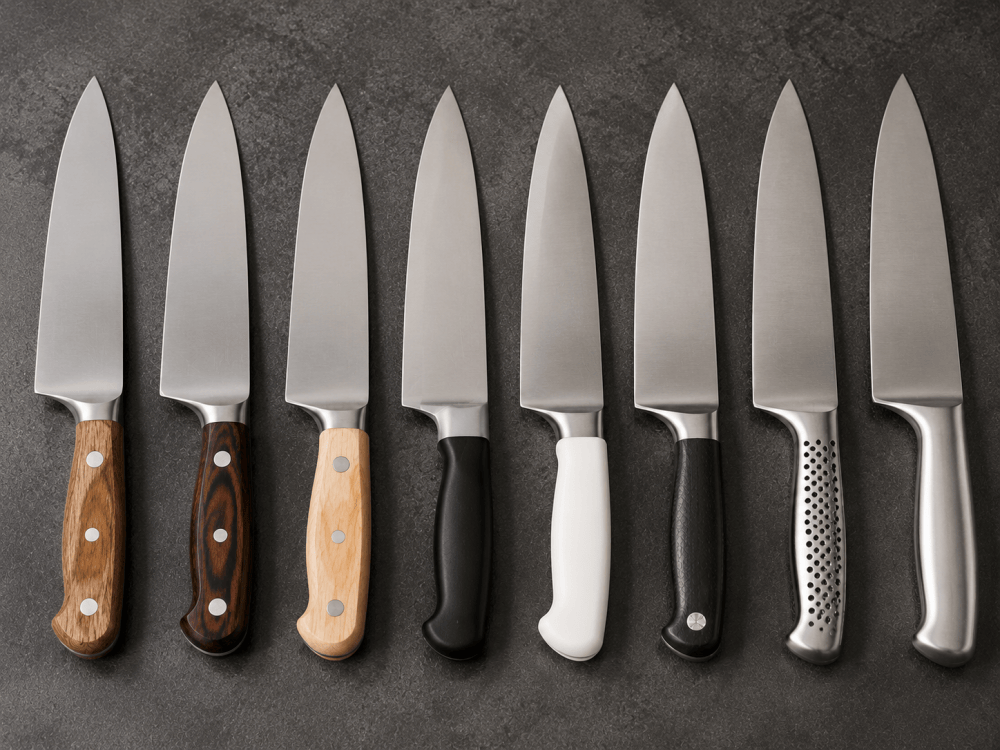
There is no universal winner. Plastic handles can offer practical cleaning and design flexibility; textured or well-shaped stainless steel can suit modern designs but may be slippery when wet if the surface is smooth; natural wood offers distinctive appearance but may need more moisture care; and engineered composites can provide a balance of appearance and dimensional consistency. The exact material, surface finish, handle geometry, and construction determine real-world performance.
1. What Determines Knife Handle Performance?
A knife handle's performance is not determined by its material name alone. The same material can behave differently depending on its surface texture, shape, finish, construction, and exposure conditions.
- Wet grip: How secure the handle feels when exposed to water or other expected kitchen conditions.
- Chemical resistance: How well the material tolerates the cleaning agents and concentrations specified for the product.
- Moisture response: Whether repeated exposure to water can cause swelling, dimensional changes, staining, or damage.
- Aging risk: The potential for cracking, fading, discoloration, surface wear, loss of texture, or deterioration of the handle-to-blade joint.
- Cleanability: Whether the surface and joints can be cleaned effectively without damaging the handle.
- Construction quality: Whether the handle remains securely attached and the joint avoids gaps or other defects.
These factors should be assessed together. A material with good chemical resistance may still provide poor wet grip if its surface is too smooth. A naturally textured handle may feel secure but require more care to maintain its appearance.
2. Knife Handle Materials Compared at a Glance
The following table provides a preliminary comparison for product selection. These are general tendencies, not guaranteed performance ratings for every handle. Actual results depend on material grade, formulation, surface treatment, design, and manufacturing quality.
| Material | Wet Grip Considerations | Chemical Resistance | Potential Aging Risks | Typical Applications |
|---|---|---|---|---|
| Natural Wood | Depends on grain, finish, shape, and moisture condition; evaluate the finished handle when damp. | Depends on the wood species and protective finish; avoid assuming compatibility with every detergent or disinfectant. | Swelling, drying-related cracks, warping, finish wear, staining, or changes around joints. | Traditional, gift-oriented, and premium-style knives. |
| Plastic | Depends on polymer, texture, contours, and handle shape; textured designs may improve perceived control. | Varies by polymer and chemical. Some agents can cause discoloration, swelling, stress cracking, or surface changes. | Scratches, fading, embrittlement, deformation, or wear; risk varies by formulation and exposure. | Everyday knives, mass retail, and many private label programs. |
| Stainless Steel | Smooth surfaces may become slippery when wet; grooves, contours, and surface texture can influence control. | Generally suitable for many routine cleaning conditions when the correct stainless grade and finish are used, but not immune to all chemicals. | Scratches, staining, corrosion under unsuitable conditions, finish changes, or joint-related problems. | Contemporary knife collections and coordinated metallic designs. |
| Composite | Depends on the base material, resin system, texture, and finish. | Depends on the specific resin, reinforcement, pigments, and manufacturing process. | Possible discoloration, surface wear, cracking, delamination, or joint deterioration depending on construction. | Wood-look designs, differentiated collections, and selected mid-range or premium products. |
Important: “Plastic” and “composite” are broad categories rather than single material specifications. Ask the manufacturer to identify the actual material and provide relevant care instructions before making comparative performance claims.
3. Wet Grip: Why Surface Texture Matters
Wet grip describes how securely a user can hold a handle when moisture is present. It is especially relevant for kitchen knives because water, food juices, and cleaning residue may change the feel of the handle during normal use.
It is not possible to rank all wood, plastic, stainless steel, and composite handles from best to worst based on material category alone. A smooth plastic handle may offer less control than a textured one, while a contoured stainless steel handle may feel more secure than a flat, highly polished design.
Wood Handles and Wet Grip
Wood grain and surface finish influence the tactile feel of a wood handle. Some finishes may become smoother when wet, while rougher surfaces may provide a different sensation. However, surface texture should not be treated as a substitute for evaluating moisture-related changes or cleaning requirements.
For buyer evaluations, inspect whether the finish remains consistent after the handle has been exposed to the product's intended cleaning and drying routine. Also examine the area where the handle meets the blade, as moisture entering a poorly finished joint may create long-term problems.
Plastic Handles and Wet Grip
Plastic handles can be molded with contours, grooves, or textured areas. These design options allow manufacturers to tailor the handle to a product's intended use. But a molded texture does not automatically guarantee secure handling: the texture depth, shape, polymer, and overall ergonomics all matter.
When comparing plastic handles, assess whether the grip remains comfortable and controllable when damp, and whether repeated cleaning causes the texture or surface to change.
Stainless Steel Handles and Wet Grip
A smooth stainless steel handle may feel slippery when wet, particularly if it has a highly polished surface and limited contouring. Textured finishes, grooves, and ergonomic shapes may alter the handling experience, but the finished knife still needs to be assessed directly.
For a retail collection with metallic styling, buyers should pay particular attention to the surface finish and handle geometry rather than assuming that stainless steel alone provides sufficient grip.
Composite Handles and Wet Grip
Composite handles include a wide range of engineered materials. Some are designed to resemble natural wood; others may prioritize strength, consistency, or a particular surface feel. Their wet-grip behavior depends on the specific formulation and finish.
Request samples of the actual proposed material and finish. If a supplier offers several colors or surface treatments, check whether the production options share the same texture and handling characteristics.
4. How to Evaluate Wet Grip in a Practical Test
A simple comparison can help a buyer screen samples before ordering. It should be treated as an internal evaluation unless a validated test method, controlled conditions, and appropriate measurement equipment are used. Do not present an informal hand-feel check as a certified slip-resistance result.
Suggested Sample Evaluation Procedure
- Prepare comparable samples. Select knives with similar handle dimensions where possible, and record each handle's material, finish, and construction.
- Inspect the dry condition first. Check the handle surface, contours, visible defects, and blade-to-handle joint.
- Apply a consistent moisture condition. Use clean water and a repeatable procedure to dampen the handle surface. Avoid introducing food oils or cleaning chemicals unless these are part of a separately defined test.
- Assess grip without cutting. With the blade safely secured and kept away from the hand, assess the handle using a controlled, non-cutting method. Do not perform a forceful slip test with an exposed blade.
- Compare comfort and control. Record whether the handle feels secure, whether the shape fits the intended user, and whether the surface becomes noticeably more slippery when damp.
- Repeat consistently. Use the same moisture application and assessment procedure for every sample, and document any differences.
- Inspect after drying. Check for visible changes, residue, discoloration, roughness, or changes in the handle-to-blade joint.
Keep the sample type, moisture condition, assessment method, and inspection criteria consistent. If wet-grip performance is a formal product requirement, define an appropriate instrumented or standardized method with a qualified testing provider. Do not compare informal results as though they were laboratory measurements.
5. Chemical Resistance: What Buyers Need to Know
Chemical resistance refers to a material's ability to withstand exposure to specified substances without unacceptable changes in appearance, dimensions, surface condition, or performance. It is not a blanket property: a handle may tolerate one cleaning agent but react differently to another.
For kitchen knives, relevant exposure may include dishwashing liquid, routine household detergents, disinfectants used according to their instructions, and—where applicable—dishwasher detergents or elevated-temperature cleaning cycles. The actual test conditions should reflect the product's intended use and the manufacturer's care instructions.
Wood: Finish and Moisture Exposure Matter
Wood handles may be affected by moisture and by cleaning chemicals that are unsuitable for the wood or its protective finish. Repeated exposure can contribute to finish deterioration, staining, surface roughness, or dimensional changes, depending on the material and construction.
Buyers should confirm the recommended cleaning method and whether the handle requires drying or other maintenance. Do not assume a wood handle is dishwasher-safe unless the specific finished product has been designed and validated for that use.
Plastic: Resistance Depends on the Polymer
Different plastics have different chemical-resistance profiles. The behavior of polypropylene (PP), polyoxymethylene (POM), nylon, and other polymers can differ, and additives, pigments, molding quality, and mechanical stress may also affect results.
Potential issues under unsuitable exposure conditions include discoloration, swelling, surface changes, or stress cracking. Request the actual polymer specification and verify compatibility with the intended cleaning agents rather than relying on the generic term “plastic.”
Stainless Steel: Grade and Exposure Conditions Matter
Stainless steel generally performs well in many routine kitchen cleaning conditions when an appropriate grade and finish are selected. However, “stainless” does not mean stain-proof or corrosion-proof in every environment.
Certain chemicals, concentrated cleaners, prolonged exposure, deposits, or unsuitable cleaning practices may cause staining or corrosion. The exact risk depends on the stainless steel grade, surface finish, exposure conditions, and maintenance routine.
Composite: Confirm the Exact Formulation
Composite handles may contain resin, wood-based layers, fibers, reinforcement, pigments, or other components. Chemical resistance depends on the formulation and how the material is manufactured and finished.
For resin-based or layered materials, ask whether the supplier has evaluated the finished handle—not just the raw material—for the cleaning conditions expected in the target market.
| Exposure or Cleaning Condition | What to Inspect | Buyer Follow-up |
|---|---|---|
| Routine hand washing | Color, surface condition, residue, joint condition | Confirm the recommended detergent and drying procedure. |
| Repeated wetting and drying | Swelling, warping, cracking, finish changes, gaps | Ask whether the finished product has been evaluated under repeated-use conditions. |
| Disinfectant exposure | Discoloration, surface damage, loss of finish, material changes | Specify the chemical, concentration, contact time, and cleaning procedure. |
| Dishwasher use | Heat-related deformation, finish damage, joint changes, corrosion | Confirm that dishwasher use is permitted for the complete knife, not just the handle material. |
Do not use an arbitrary chemical or concentration to represent all cleaning environments. A useful chemical-resistance assessment must identify the substance, concentration, temperature, contact time, rinse procedure, and inspection criteria.
6. Aging Risk: What Can Happen Over Time?
Aging risk refers to changes that may develop during repeated use, cleaning, storage, or exposure to the environment. These changes can affect the appearance, feel, and structural integrity of a handle. The risk cannot be predicted accurately from the material category alone.
| Material | Potential Aging Signs | Factors That May Contribute | What to Check on Samples |
|---|---|---|---|
| Wood | Cracks, warping, staining, finish wear, surface roughness | Moisture cycling, drying, wood species, finish quality, storage, joint construction | Grain and finish consistency, visible cracks, gaps, and care instructions |
| Plastic | Scratches, fading, embrittlement, deformation, surface wear | Polymer selection, heat, UV exposure, chemicals, mechanical stress, molding quality | Surface defects, handle shape consistency, cracks, and changes after defined exposure |
| Stainless Steel | Scratches, staining, corrosion, changes in finish, joint-related deterioration | Steel grade, surface finish, chemical exposure, deposits, assembly quality | Finish uniformity, signs of corrosion, joint gaps, and areas that retain residue |
| Composite | Discoloration, surface wear, cracking, delamination, joint changes | Resin or binder, reinforcement, manufacturing process, moisture, heat, chemicals | Layer separation, cracks, edge condition, surface consistency, and attachment integrity |
These are potential failure modes, not predictions that every handle of a given material will develop them. Proper design, suitable material selection, manufacturing controls, and use according to the care instructions can all influence service life.
7. A Practical Durability and Aging Test Plan
For B2B buyers, a structured evaluation can help compare candidate handles before approving a product. The test plan should be proportionate to the product's intended use, risk level, and target-market requirements.
Test 1: Initial Visual and Construction Inspection
- Check for cracks, scratches, discoloration, sharp edges, and uneven finishing.
- Inspect the handle-to-blade joint for visible gaps, excess adhesive, or inconsistent assembly.
- Record the handle dimensions, material description, finish, and sample identification.
- Confirm that the handle is securely assembled and that there are no obvious manufacturing defects.
Test 2: Wet-Grip Screening
Compare samples using the same controlled moisture condition and non-cutting assessment procedure. Record changes in perceived grip, comfort, and handling. For a formal slip-resistance claim, use a suitable validated test method rather than subjective assessment alone.
Test 3: Repeated Cleaning and Drying
Follow a defined cleaning and drying routine consistent with the intended care instructions. After predetermined intervals, inspect the handle for color changes, finish wear, cracks, deformation, roughness, or changes around the joint.
Test 4: Chemical Compatibility
Identify the actual cleaning agents and use conditions relevant to the market. Record concentration, contact time, temperature, rinsing, and drying. Inspect for surface changes and any deterioration that could affect use. A raw-material data sheet alone may not demonstrate the performance of the assembled knife.
Test 5: Heat and Dishwasher Exposure, Where Applicable
Only conduct this evaluation if the product is intended to tolerate the specified exposure. Follow a defined procedure and check for deformation, finish damage, joint movement, corrosion, or other visible changes. Do not assume that a handle's material makes the entire knife dishwasher-safe.
Test 6: Post-Test Construction Review
After the planned exposures, compare the sample against the initial inspection record. Look for cracks, loosening, separation, changes in fit, or new gaps. Any functional or structural assessment should be carried out using a suitable controlled procedure.
Document the sample specification, test conditions, number of cycles, observed changes, acceptance criteria, and final result. Avoid statements such as “lasts for years” or “resistant to all chemicals” unless those claims are supported by relevant evidence for the actual product.
8. Application Matrix: Which Handle Material Fits Which Market?
The best handle material depends on the target customer, selling price, design direction, cleaning requirements, and intended operating environment. Use the following matrix as a shortlist for further sample evaluation—not as a substitute for product testing.
| Application or Sales Channel | Materials to Consider | Priority Checks |
|---|---|---|
| Premium retail | Wood, selected composites, finished stainless steel | Appearance, finish consistency, grip, care instructions, packaging |
| Supermarkets and mass retail | Plastic and selected stainless steel designs | Target price, production consistency, routine cleaning, sample quality |
| Gift-oriented knife sets | Wood, Pakkawood, and selected composites | Visual consistency, finish quality, moisture-care guidance, packaging |
| Contemporary kitchen collections | Stainless steel, plastic, or composite | Wet grip, surface finish, weight, ergonomics, appearance |
| Frequent-use food preparation | Purpose-designed plastic or composite; other materials when appropriately specified | Grip under expected conditions, cleaning compatibility, durability, joint integrity |
| Private label development | Any material that meets the product specification | Material documentation, sample approval, test criteria, MOQ, cost, production consistency |
For professional or high-frequency use, prioritize the complete product's suitability for the working environment. The intended cleaning procedure, grip requirements, handle construction, and applicable product requirements should be confirmed before a material is selected.
9. Wood vs Plastic vs Stainless Steel vs Composite: How to Choose
Choose Wood When Natural Appearance Is Important
Wood can suit traditional styling, visible natural grain, and premium product presentation. Before selecting it, clarify moisture-care requirements, surface finish, and how the handle should be cleaned and dried.
Explore FASAKA wood handle kitchen knife sets for product ideas.
Choose Plastic When Design Flexibility and Practical Maintenance Matter
Plastic can support different handle shapes, colors, and textures, making it useful for many everyday and retail-oriented products. Confirm the actual polymer, expected cleaning conditions, and finished-handle quality instead of treating all plastics as equivalent.
Explore FASAKA plastic handle kitchen knife sets for examples of retail-oriented designs.
Choose Stainless Steel for a Metallic Look, with Grip Evaluated Separately
Stainless steel can create a clean, contemporary appearance and can be straightforward to wipe clean. However, wet grip depends on the finished surface and shape, and chemical resistance depends on the steel grade and exposure conditions.
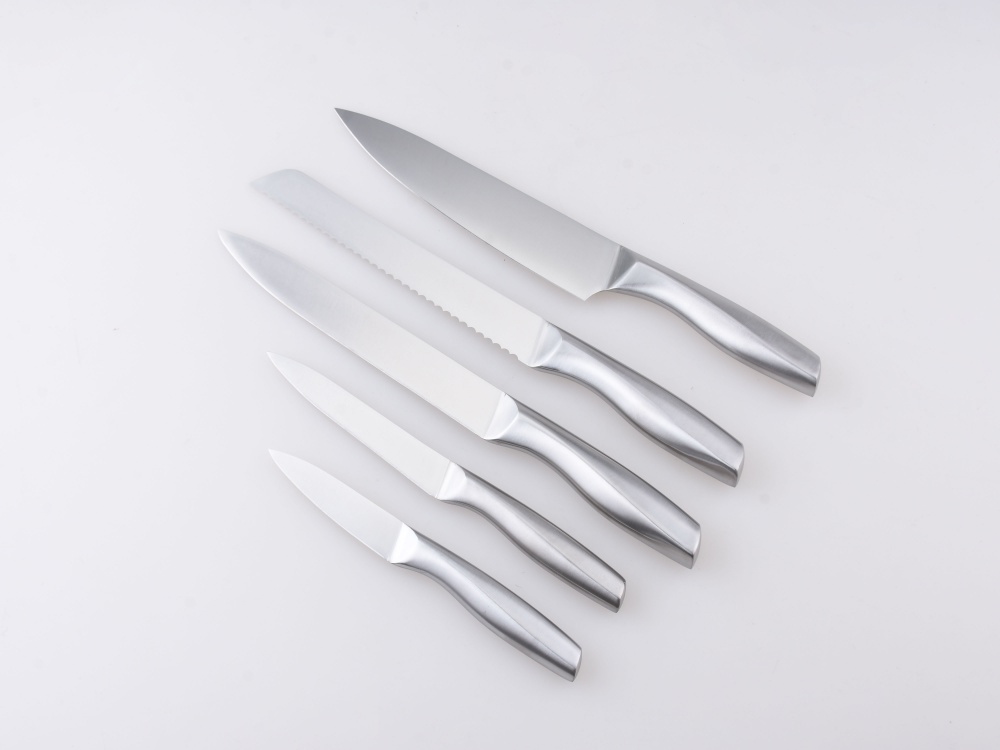
Explore FASAKA hollow handle kitchen knife sets for one type of stainless steel handle construction.
Choose Composite When the Specific Formulation Meets the Design Brief
Composite materials may provide wood-like styling or other engineered characteristics. Their suitability depends on the precise formulation, finish, construction, and care requirements. Ask for the actual material specification and assess a production-representative sample.
The best material is the one that meets the intended performance requirements and target-market expectations—not necessarily the most expensive or visually distinctive option.
10. What B2B Buyers Should Confirm Before Ordering
For importers, wholesalers, distributors, and private label brands, handle evaluation should be included in the product specification review. Before confirming a bulk order, ask the manufacturer to clarify the following:
- Material identification: What exact material, polymer, steel grade, or composite formulation is used?
- Surface finish: What texture, coating, polishing, or protective finish is specified?
- Wet-grip requirements: Are there defined handling or slip-resistance requirements for the intended use?
- Chemical compatibility: Which cleaning agents and conditions are supported by the product specification or test evidence?
- Care instructions: Is hand washing required, and is dishwasher use permitted for the complete knife?
- Construction: How is the handle attached to the blade, and how is the joint inspected?
- Aging evaluation: What cleaning, moisture, heat, or durability checks have been performed, if applicable?
- Sample approval: Will mass production follow the approved sample, material, and finish?
- Customization: Can handle shape, dimensions, color, texture, logo, and packaging be adjusted?
- Order terms: What are the MOQ, sample arrangements, lead time, and quotation terms?
- Documentation: Can the supplier provide relevant material specifications and supporting documents required for the target market?
For customized orders, document approved material specifications and acceptance criteria before production. Any material substitution or change to the finish should be reviewed and approved rather than assumed to be equivalent.
11. OEM and ODM Kitchen Knife Handle Customization
Private label brands may need more than a standard handle material. A project may require a particular color, shape, texture, surface finish, logo, or packaging design to match an existing product range.
Depending on the model and manufacturing capability, customization discussions may include:
- Handle material and surface finish.
- Handle shape, length, thickness, and color.
- Texture and ergonomic design requirements.
- Brand logo and identification methods.
- Blade and handle coordination.
- Individual packaging or coordinated retail sets.
- Sample approval, quality criteria, and production specifications.
Not every option is available for every existing model. Tooling, material selection, order quantity, and production processes can affect cost and lead time. Confirm feasibility and MOQ with the manufacturer before finalizing a design.
Learn more about FASAKA OEM and ODM kitchenware solutions for product development and private label requirements.
12. Frequently Asked Questions About Knife Handle Materials
Which knife handle material has the best wet grip?
There is no universal winner. Wet grip depends on the material, surface texture, handle shape, and moisture condition. Compare the actual finished samples using a consistent, safe evaluation method instead of choosing by material name alone.
Are plastic knife handles better than wood handles?
Not in every situation. Plastic can offer design flexibility and practical maintenance, while wood provides natural grain and a traditional appearance. Their suitability depends on the exact material, cleaning routine, grip requirements, and intended market.
Are stainless steel knife handles slippery when wet?
A smooth stainless steel handle may feel slippery when wet. Surface texture, grooves, contours, and ergonomics can influence grip, so evaluate the finished handle under appropriate conditions.
Which knife handle material is most resistant to cleaning chemicals?
Resistance depends on the specific chemical and the exact material specification. Some plastics, stainless steel grades, wood finishes, and composites may tolerate certain cleaning conditions but not others. Confirm compatibility with the actual cleaner, concentration, contact time, and temperature.
Do wood knife handles deteriorate when exposed to water?
Repeated or prolonged moisture exposure may contribute to swelling, cracking, warping, staining, or finish wear, depending on the wood species, finish, and construction. Follow the product's care instructions and do not assume every wood handle is dishwasher-safe.
Can plastic knife handles crack or become brittle over time?
They can under some conditions. Aging depends on the polymer, formulation, heat, chemical exposure, UV exposure, mechanical stress, and manufacturing quality. The risk should be evaluated against the product's expected use conditions.
Are composite knife handles more durable than natural wood?
Some engineered composites can provide greater dimensional consistency than untreated natural wood, but “composite” covers many different formulations. Durability and chemical resistance must be assessed for the specific material and finished handle.
Are all stainless steel knife handles corrosion-proof?
No. Stainless steel is not immune to corrosion in every environment. Steel grade, surface finish, cleaning chemicals, deposits, and maintenance conditions all influence performance.
Can I test wet grip by holding a wet knife and cutting food?
This is not a recommended screening method because a slippery handle combined with an exposed blade creates an injury risk. Use a controlled non-cutting assessment with the blade safely secured. Formal grip claims require a suitable validated method.
What should wholesale buyers request before selecting a handle material?
Request the material specification, care instructions, relevant test information, and a production-representative sample. Define the intended cleaning conditions and acceptance criteria before approving the product for mass production.
13. Related FASAKA Kitchen Knife Guides
- Wood Handle Kitchen Knife Sets
- Plastic Handle Kitchen Knife Sets
- Hollow Handle Kitchen Knife Sets
- Forged Kitchen Knife Sets
- Kitchen Knife Handle Materials Guide
- Explore FASAKA Kitchen Knives
Conclusion: Evaluate the Complete Handle, Not Just the Material
Wood, plastic, stainless steel, and composite knife handles each have different strengths and potential limitations. Wood offers natural character but may require more moisture care. Plastic provides broad design flexibility, although chemical resistance and aging depend on the polymer. Stainless steel creates a modern appearance but may need careful attention to wet grip and corrosion conditions. Composite handles offer additional design options, with performance determined by their specific formulation and construction.
For B2B buyers, the most reliable approach is to compare wet grip, cleaning compatibility, and aging risks under conditions relevant to the target market. Confirm the material specification, inspect a production-representative sample, define acceptance criteria, and verify care instructions before placing a bulk order.
Looking for Kitchen Knife OEM or Private Label Solutions?
FASAKA supports kitchen knife sourcing and customization discussions for wholesalers, distributors, and private label brands. Share your target market, preferred handle material, design requirements, and expected order quantity to discuss suitable options.
Explore OEM & ODM Solutions Contact FASAKA