



What Is a Steak Knife?
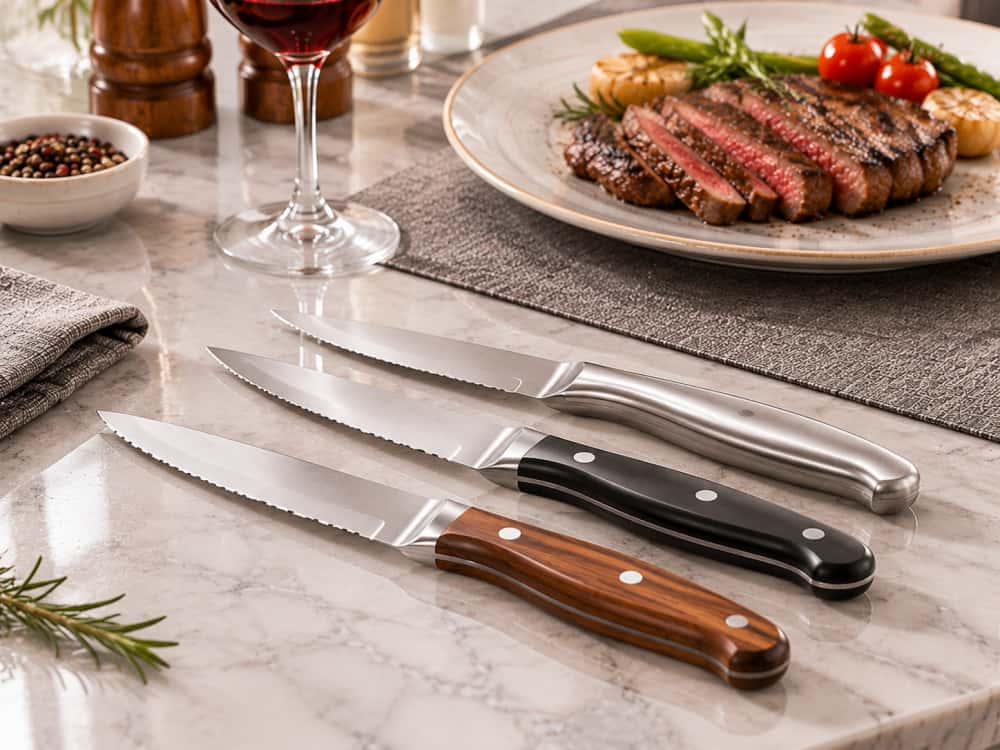
A steak knife is a table knife designed for cutting cooked meat, including steak, pork chops, grilled chicken, and other protein dishes. It typically features a relatively sharp blade with either a serrated or straight cutting edge, helping diners cut meat more easily at the table.
Unlike a standard table knife, which is mainly intended for general dining tasks, a steak knife is designed with meat cutting in mind. Its blade shape, edge design, handle, and overall construction can affect cutting comfort and performance.
Steak knives are commonly used in homes, restaurants, hotels, steakhouses, and BBQ establishments. They are also popular products for kitchenware brands, retailers, and foodservice suppliers.
For businesses sourcing steak knives, FASAKA OEM and ODM kitchenware solutions provide a starting point for discussing product specifications, branding, and packaging requirements.
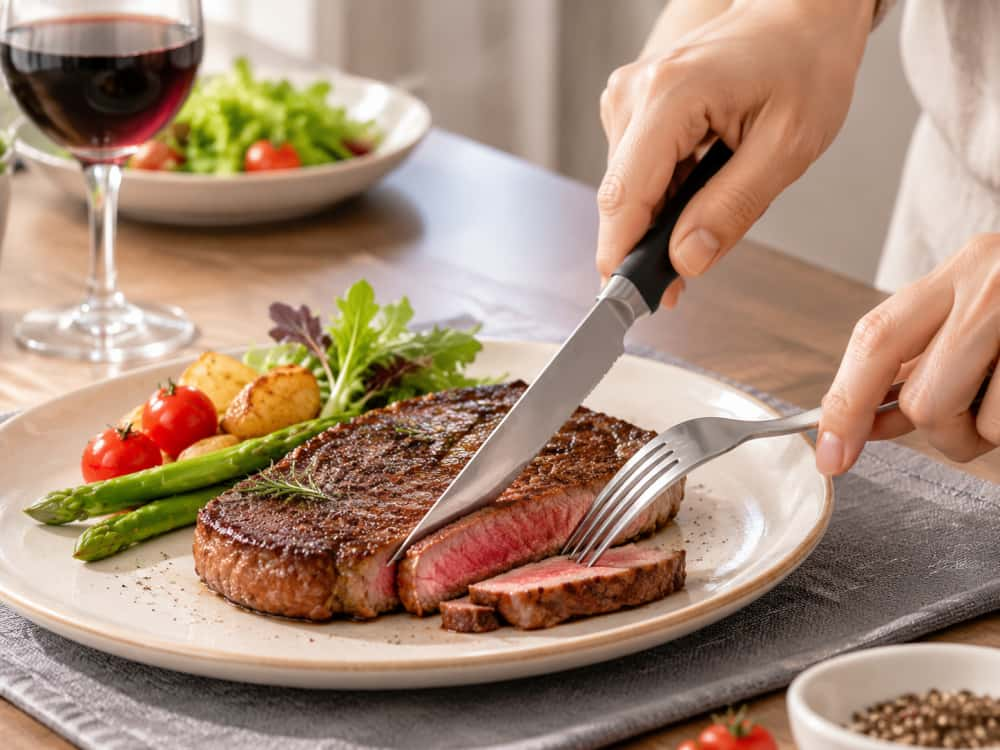
Quick Answer: A steak knife is a dining knife designed to cut cooked meat. It usually has a sharper cutting edge than a conventional table knife and comes with either a serrated or straight-edge blade. The best design depends on cutting preferences, maintenance requirements, and the intended dining environment.
What Is a Steak Knife Used For?
Steak knives are primarily designed for cutting cooked meat during meals. Their cutting edges help diners slice through different meat textures with controlled pressure.
Common uses include:
- Cutting steak, including grilled and roasted beef
- Slicing pork chops and other cooked pork dishes
- Cutting grilled or roasted chicken
- Serving BBQ and roasted meat dishes
- Cutting other suitable cooked foods at the dining table
Steak knives are particularly useful in restaurants and steakhouses where diners regularly eat meat-based dishes. Their blade design and handle construction can also contribute to the overall dining experience.
Main Types of Steak Knives
Steak knives are commonly classified by their blade edge design. The two main options are serrated and straight-edge steak knives. Each has different cutting characteristics and maintenance considerations.
Serrated Steak Knives
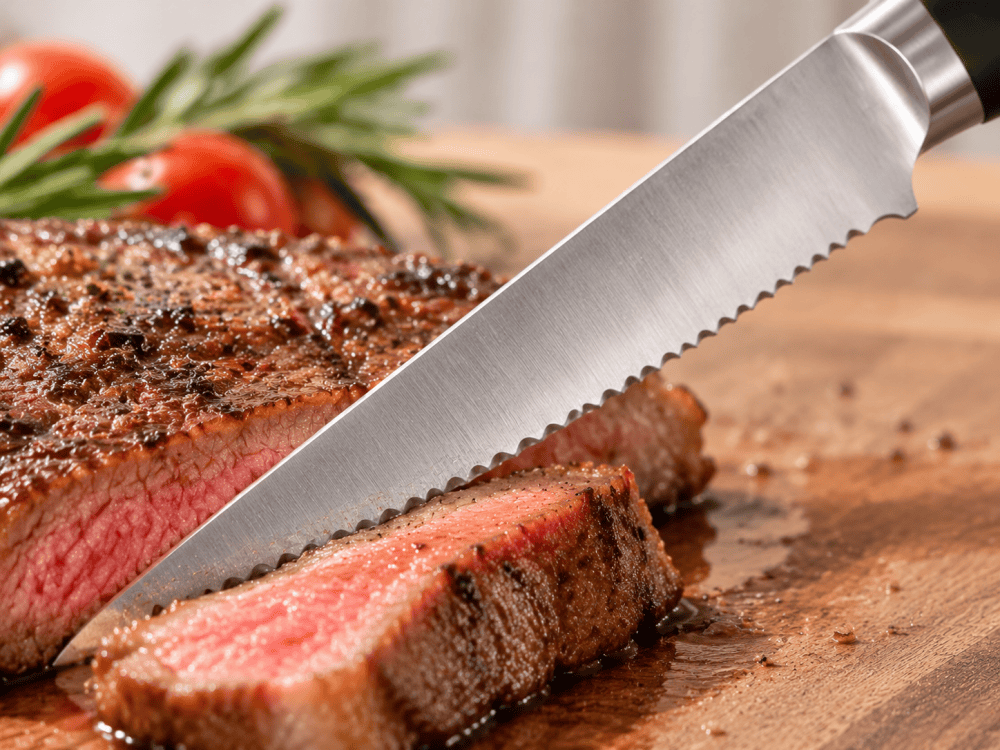
Serrated steak knives feature small teeth along the blade edge. These teeth can help grip the surface of cooked meat and initiate cutting, making this design popular for everyday dining and restaurant use.
Common characteristics include:
- Toothed cutting edge for gripping meat surfaces
- Can maintain useful cutting performance between sharpening sessions
- Suitable for many everyday dining applications
- Sharpening may require specialized tools or professional service
Serrated steak knives are often selected for casual dining, BBQ restaurants, and foodservice settings. However, actual cutting performance depends on the tooth profile, blade material, and manufacturing quality.
Straight-Edge Steak Knives
Straight-edge steak knives feature a smooth cutting edge without serrations. They can provide controlled, smooth cuts when properly sharpened and maintained.
Common characteristics include:
- Smooth cutting edge for controlled slicing
- Can produce clean cuts when properly sharpened
- Suitable for premium dining and home use
- Requires periodic sharpening to maintain cutting performance
Straight-edge steak knives are often considered for premium dining collections. Their performance depends on blade geometry, edge sharpness, steel quality, and maintenance.
Serrated vs. Straight-Edge Steak Knives
| Feature | Serrated Steak Knife | Straight-Edge Steak Knife |
|---|---|---|
| Blade Edge | Small teeth along the edge | Smooth cutting edge |
| Cutting Style | Teeth help grip and cut meat surfaces | Smooth slicing action |
| Maintenance | May require specialized sharpening | Can be sharpened with suitable sharpening tools |
| Common Applications | Everyday dining, BBQ, restaurants | Home dining and premium tableware collections |
| Key Consideration | Tooth design and cutting consistency | Edge sharpness and maintenance |
Neither blade style is universally better. Buyers should consider the intended users, dining environment, maintenance preferences, and target market before selecting a design.
Key Features of a Good Steak Knife
A good steak knife should combine suitable blade construction, comfortable handling, and practical maintenance requirements. For both individual users and commercial buyers, several product features deserve attention.
Blade Material
Stainless steel is commonly used for steak knife blades because it offers a balance of corrosion resistance, ease of maintenance, and practical cutting performance.
Different stainless steel grades may be selected according to the product's price range, intended use, and manufacturing requirements. Examples include:
- 3Cr13 stainless steel: Used in some value-oriented knife products.
- 5Cr15MoV stainless steel: Used in various consumer knife applications where a balance of properties is desired.
- Other stainless steel grades: May be selected according to the target product specifications and performance requirements.
The steel grade alone does not determine the final quality of a steak knife. Heat treatment, blade geometry, edge finishing, and manufacturing consistency also influence cutting performance and durability.
Blade Hardness and Edge Performance
Blade hardness affects how a knife behaves during use. However, higher hardness does not automatically mean better performance. A suitable balance of hardness, toughness, edge geometry, and heat treatment is important for a steak knife.
For buyers, it is useful to evaluate cutting performance and edge consistency through product samples rather than relying only on material descriptions or hardness figures.