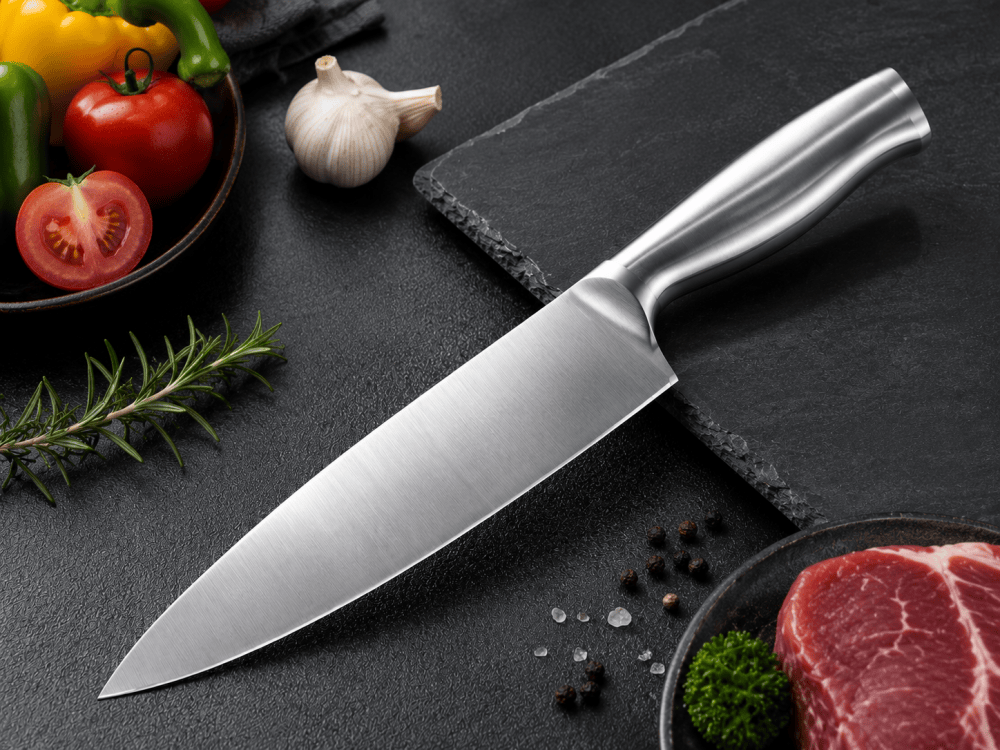



What Is 420HC Steel? Is 420HC Good for Knives?
What Is 420HC Steel? Is 420HC Good for Knives?
420HC steel is a high-carbon stainless steel in the 420 family that is widely associated with practical knife and multi-tool applications. It is known for a useful balance of corrosion resistance, toughness, ease of sharpening, manufacturability, and cost.
But is 420HC steel good for knives? For many everyday and working knife applications, yes. Its main strengths are corrosion resistance, toughness, relatively easy sharpening, and predictable performance when properly heat treated. Its main limitation is that its edge retention is generally below that of many modern premium knife steels.

Quick answer: 420HC is a practical knife steel when you want a combination of corrosion resistance, toughness, easy maintenance, and controlled cost. It can work well for everyday knives, utility blades, outdoor knives, and multi-tool blades.
However, 420HC is not designed to maximize edge retention or wear resistance. For a B2B knife project, the final choice should consider heat treatment, target hardness, blade geometry, edge angle, intended use, production requirements, and target price rather than the steel name alone.
What Is 420HC Stainless Steel?
420HC stands for 420 High Carbon. It is commonly described as a higher-carbon variant of 420-series martensitic stainless steel developed for applications where greater hardness and cutting performance are needed than lower-carbon 420 variants can provide.
The "HC" designation refers to the relatively higher carbon content compared with standard 420 stainless steels. The additional carbon allows the material to achieve useful hardness after heat treatment while retaining the corrosion resistance associated with its chromium content.
420HC is therefore different from simply saying "420 stainless steel." When discussing knife performance, the specific material specification and heat treatment matter.
420HC Stainless Steel Composition
Commonly cited 420HC compositions contain approximately 0.40–0.50% carbon and 12–14% chromium, with smaller amounts of elements such as manganese and silicon. Some published material references also list small additions of vanadium depending on the specific production variant.
Because 420HC is used as an industry knife-steel designation rather than a simple universal purchasing specification, exact chemistry should be confirmed against the supplier's material documentation.
| Element | Commonly Cited Level | Why It Matters |
|---|---|---|
| Carbon (C) | About 0.40–0.50% | Supports hardness and strength after heat treatment. |
| Chromium (Cr) | About 12–14% | Provides the corrosion resistance associated with stainless steel. |
| Manganese (Mn) | Usually below 1% | Supports steel processing and mechanical properties. |
| Silicon (Si) | Usually below 1% | Used as a controlled alloying element. |
| Vanadium (V) | Small amount in some published specifications | Can contribute to grain refinement and carbide formation. |
Published sources vary somewhat in the exact 420HC chemistry they report, which is another reason an OEM buyer should specify the applicable material standard or supplier specification instead of relying only on the name "420HC." :contentReference[oaicite:2]{index=2}
Is 420HC Steel Good for Knives?
Yes, 420HC can be a good choice for knives. Its performance profile is particularly useful when the product needs good corrosion resistance, reasonable toughness, easy sharpening, and controlled manufacturing cost.
Leatherman, for example, describes 420HC as offering good edge retention, toughness, and corrosion resistance while remaining relatively easy to sharpen, and identifies it as a practical material for everyday working blades. :contentReference[oaicite:3]{index=3}
However, "good" depends on the application. A knife intended for everyday use has different requirements from a blade designed primarily for maximum edge retention during abrasive cutting.
Corrosion Resistance
420HC provides useful corrosion resistance for everyday and outdoor applications, making it practical where moisture exposure is a concern.
Easy Sharpening
Its moderate hardness and relatively simple microstructure make 420HC comparatively easy to resharpen using common sharpening equipment.
Balanced Performance
420HC emphasizes a practical balance of toughness, corrosion resistance, maintainability, and cost rather than maximum edge retention.
What Are the Advantages of 420HC Steel?
Advantages
- Good corrosion resistance
- Useful toughness for everyday knife applications
- Relatively easy to sharpen
- Can achieve useful knife hardness through heat treatment
- Suitable for high-volume manufacturing
- Generally cost-effective compared with premium knife steels
- Suitable for everyday and outdoor applications
Limitations
- Edge retention is generally below many premium knife steels
- Wear resistance is not its main strength
- Performance depends heavily on heat treatment
- Not designed for maximum abrasive cutting performance
- Exact performance varies between manufacturers and processing conditions
How Hard Is 420HC Steel?
There is no single hardness value that applies to every 420HC knife. The final hardness depends on the heat-treatment process and the manufacturer's target specification.
A commonly cited range for properly heat-treated 420HC knife blades is approximately 56–58 HRC. Leatherman also states that its properly heat-treated 420HC blades consistently reach this range. :contentReference[oaicite:4]{index=4}
This hardness range helps explain the steel's practical balance. It is hard enough for useful edge stability while remaining relatively easy to sharpen and sufficiently tough for many everyday applications.
Why Does Heat Treatment Matter for 420HC Knives?
Heat treatment is particularly important when evaluating 420HC knife steel.
The chemical composition establishes the potential properties of the material, but heat treatment determines much of the final blade condition. Quenching, tempering, and process control influence hardness, toughness, edge stability, and overall consistency.
Leatherman specifically emphasizes that 420HC's manufacturing and heat-treatment process is an important part of its final performance. Its explanation of 420HC also notes that the steel is highly manufacturable and can be heat treated according to the function of individual components. :contentReference[oaicite:5]{index=5}
What Should Buyers Ask About Heat Treatment?
- What is the target finished hardness?
- What HRC range is controlled during production?
- How is heat treatment monitored?
- Is the hardness tested on finished blades?
- How is consistency maintained between production batches?
- Can the supplier provide a material or inspection report if required?
Does 420HC Stainless Steel Rust?
420HC has good corrosion resistance, but no stainless steel should be described as completely rust-proof under every condition.
Its chromium content provides useful resistance to corrosion in everyday environments. This makes 420HC suitable for many outdoor, utility, and working-knife applications where moisture exposure is possible.
However, saltwater, prolonged moisture, acidic substances, poor cleaning, and surface damage can still affect a stainless-steel blade.
Leatherman describes 420HC as providing reliable corrosion resistance in everyday and outdoor environments while also noting that more demanding saltwater exposure requires more maintenance. :contentReference[oaicite:6]{index=6}
How Good Is 420HC Edge Retention?
420HC offers moderate edge retention rather than extreme wear resistance.
Compared with basic 420-series steels, its higher carbon content allows it to achieve greater hardness and better cutting performance. However, many modern high-performance steels contain more carbon, alloying elements, or carbide-forming elements and can provide longer edge life under highly abrasive cutting conditions.
This does not make 420HC a poor knife steel. It means that the steel's design priorities are different.
| Performance Factor | 420HC | What It Means for Users |
|---|---|---|
| Corrosion resistance | Good | Useful for humid and everyday environments with normal maintenance. |
| Toughness | Good | Suitable for many working and outdoor knife applications. |
| Edge retention | Moderate | Will generally require sharpening sooner than many premium wear-resistant steels. |
| Sharpenability | Relatively easy | Convenient for users who prefer simple maintenance. |
| Cost | Generally economical | Useful for products where material cost matters. |
What Types of Knives Use 420HC Steel?
420HC is commonly used in knife and multi-tool applications where corrosion resistance, toughness, easy maintenance, and manufacturing consistency are more important than maximum edge retention.
| Knife Type | 420HC Suitability | Why |
|---|---|---|
| Everyday utility knives | Suitable | Good balance of toughness, corrosion resistance, and sharpening convenience. |
| EDC knives | Suitable | Low maintenance and practical everyday cutting performance. |
| Outdoor knives | Suitable for selected designs | Corrosion resistance and toughness can be useful outdoors. |
| Hunting knives | Suitable for selected applications | Useful where corrosion resistance and easy field sharpening matter. |
| Kitchen knives | Application-dependent | Can work for certain products, but the required edge retention and food-use specification should be considered. |
| Multi-tool blades | Common application | Balances durability, corrosion resistance, ease of sharpening, and manufacturability. |
| Premium high-edge-retention knives | Less suitable | Other steels may offer stronger wear resistance and longer edge retention. |
Is 420HC Good for Kitchen Knives?
420HC can be used for kitchen knives, but the decision should be based on the intended product positioning and performance requirements.
For a cost-conscious kitchen knife, 420HC's corrosion resistance and ease of sharpening can be useful. For a premium chef knife where long edge retention is a major selling point, a different steel may be more appropriate.
For B2B buyers, it is therefore more useful to define the product requirements first and then select the steel.
For example:
If your target product is a practical, easy-maintenance kitchen knife for high-volume retail, 420HC can be considered.
If your product is positioned around maximum edge retention and premium cutting performance, compare 420HC with higher-performance blade steels before finalizing the specification.
420HC vs 420 Stainless Steel: What Is the Difference?
420HC is generally described as the higher-carbon version of the 420 family used for knife applications. The additional carbon allows it to achieve higher hardness and better edge performance than lower-carbon 420 variants when properly heat treated.
| Feature | 420HC | Lower-Carbon 420 Variants |
|---|---|---|
| Carbon | Higher, commonly around 0.40–0.50% | Lower depending on specification |
| Hardness potential | Higher | Generally lower |
| Edge performance | Better suited to knife blades | More limited for demanding cutting applications |
| Corrosion resistance | Good | Generally good |
| Sharpening | Relatively easy | Generally easy |
| Typical knife positioning | Budget to mid-range working blades | Lower-performance or non-blade applications depending on grade |
420HC vs 420J2: What Is the Difference?
420HC and 420J2 are often discussed together because both belong to the broad 420 stainless-steel family, but they are not interchangeable material specifications.
420HC has substantially more carbon than typical 420J2 formulations. That difference supports greater hardness and cutting performance in properly heat-treated knife blades, while 420J2 is often selected where corrosion resistance and low cost are more important than edge retention.
For knife sourcing, buyers should specify the exact steel grade instead of using "420 stainless steel" as a general description.
420HC vs 440C: Which Has More Edge Retention?
440C generally has greater carbon and chromium content than 420HC and can achieve higher hardness and greater wear resistance. This can give 440C an advantage when long edge retention is the primary requirement.
420HC, on the other hand, is generally easier to sharpen and offers a practical balance of toughness, corrosion resistance, manufacturing cost, and maintenance.
| Factor | 420HC | 440C |
|---|---|---|
| Carbon content | Lower | Higher |
| Typical hardness potential | Moderate | Higher |
| Edge retention | Moderate | Generally higher |
| Sharpening | Generally easier | Generally more demanding |
| Corrosion resistance | Good | Good to very good depending on heat treatment and conditions |
| Typical positioning | Practical working knives | Higher-performance stainless knife applications |
Is 420HC a Good Choice for B2B Knife Sourcing?
420HC can be considered for B2B knife sourcing when the product requires a balance of corrosion resistance, toughness, ease of sharpening, manufacturing consistency, and cost.
For importers, distributors, retailers, and private-label brands, the important question is not simply whether 420HC is "good." The more useful question is whether the finished 420HC knife meets the requirements of the target market.
Evaluate these factors together:
- Steel grade and material documentation
- Finished hardness
- Heat-treatment process
- Blade thickness
- Blade geometry
- Edge angle
- Grinding quality
- Surface finish
- Handle material and construction
- Target retail price
- Expected usage
- Required packaging
- MOQ
- Production lead time
- Target-market compliance requirements
How Should You Specify 420HC in an OEM Knife RFQ?
When requesting a quotation, avoid sending only "420HC knife." A supplier needs enough information to understand the actual product you want to manufacture.
Example OEM RFQ:
Product: Stainless steel kitchen / utility knife
Blade material: 420HC stainless steel
Target hardness: 56–58 HRC or buyer-specified range
Blade length: [required dimension]
Blade thickness: [required dimension]
Blade finish: [satin / polished / other]
Handle: [required material and color]
Logo: Custom private-label logo
Packaging: Custom retail packaging
Quantity: [required quantity]
Target market: [country / sales channel]
Required documentation: [applicable requirements]
This type of RFQ allows suppliers to quote based on the same product specification and makes supplier comparison easier.
What Makes a 420HC Knife Perform Well?
A good 420HC knife is not created by the steel grade alone.
The most important factors include:
Steel Quality
The raw material should match the specified 420HC grade and applicable material requirements.
Heat Treatment
Proper quenching and tempering determine the finished hardness and strongly influence blade performance.
Blade Geometry
Blade thickness, grind, edge angle, and overall geometry determine how the steel performs in actual cutting.
This is why two knives carrying the same "420HC" marking can deliver different user experiences.
What Are the Pros and Cons of 420HC Steel for Knives?
| Pros | Cons |
|---|---|
| Good corrosion resistance | Moderate rather than premium edge retention |
| Relatively easy to sharpen | Lower wear resistance than many modern premium steels |
| Good practical toughness | Performance depends heavily on heat treatment |
| Suitable for many everyday applications | Not designed for maximum abrasive cutting performance |
| Cost-effective for many products | May not fit premium high-edge-retention positioning |
| Manufacturing-friendly | Exact properties vary with processing and specification |
Should You Choose 420HC for Your Knife?
The answer depends on what the knife is designed to do.
| Product Requirement | 420HC Consideration |
|---|---|
| Everyday working knife | Suitable candidate |
| Easy maintenance | Strong fit |
| Good corrosion resistance | Strong fit |
| Easy sharpening | Strong fit |
| Cost-conscious product | Worth considering |
| Maximum edge retention | Consider other steels |
| Premium wear resistance | Consider higher-performance steels |
| OEM/private-label knife | Suitable when the complete specification matches the application |
FASAKA and Stainless Steel Knife Sourcing
FASAKA is a brand under DKS Enterprises Co., Ltd., a manufacturer and supplier based in Yangjiang, Guangdong, China, specializing in hardware knives and scissors, BBQ tools, and kitchenware.
For B2B knife sourcing projects, steel selection is only one part of the product specification. Buyers can also discuss blade dimensions, grinding, handles, finishing, logos, packaging, quantities, and target-market requirements.
For OEM, ODM, and private-label projects, providing a detailed product specification helps the supplier evaluate the appropriate material and production requirements.
Explore FASAKA OEM & ODM solutions
Frequently Asked Questions About 420HC Steel
420HC is commonly described as a high-carbon stainless steel in the 420 family. It is widely used for knife and multi-tool blades because it offers a practical balance of corrosion resistance, toughness, sharpening convenience, and cost.
420HC can be a good choice when the product requires corrosion resistance, toughness, easy sharpening, and controlled cost. Its suitability depends on the intended application and the quality of heat treatment.
Yes. 420HC is suitable for many everyday, utility, outdoor, and multi-tool knives. It offers useful corrosion resistance and toughness and is relatively easy to sharpen, although its edge retention is generally below many premium knife steels.
420HC can be used for kitchen knives, especially products where corrosion resistance, easy sharpening, and cost are important. For premium knives focused on maximum edge retention, other steels may be considered.
420HC has good corrosion resistance, but it is not completely rust-proof. Prolonged exposure to saltwater, moisture, acidic substances, or poor maintenance can still cause corrosion or staining.
A commonly cited hardness range for properly heat-treated 420HC knife blades is around 56–58 HRC, although the actual specification varies by manufacturer and application. :contentReference[oaicite:7]{index=7}
For knife blades, 420HC generally offers higher hardness and better edge performance because of its higher carbon content. 420J2 can be selected when corrosion resistance and low cost are more important than edge retention.
They are designed for different performance balances. 440C generally offers greater hardness and wear resistance, while 420HC is known for easier sharpening, useful toughness, corrosion resistance, and practical cost.
Yes. 420HC can be specified for OEM and private-label knives when its performance matches the intended application. Buyers should define the steel specification, hardness, blade dimensions, geometry, handle, finishing, packaging, MOQ, and target market requirements.
420HC Knife Steel Buyer Checklist
Before placing a bulk order, confirm:
- Exact 420HC material specification
- Applicable material standard
- Target finished hardness
- Heat-treatment requirements
- Blade dimensions and thickness
- Blade geometry and edge angle
- Surface finish
- Handle material
- Logo customization
- Packaging requirements
- MOQ
- Sample approval process
- Production lead time
- Quality inspection requirements
- Target-market compliance requirements
Looking for Custom Knife Manufacturing?
FASAKA supports B2B buyers sourcing kitchen knives, scissors, BBQ tools, and kitchenware from China. Discuss your required steel grade, hardness, blade design, handle, packaging, quantity, and private-label requirements with our team.
Contact FASAKA