
2026-05-28

Kitchen Knife Steel Guide: What Is The Best Steel For Kitchen Knives?

Kitchen Knife Steel Guide: What Is The Best Steel For Kitchen Knives?

Published by FASAKA | Kitchen Knife Knowledge Center

When evaluating kitchen knives, many buyers focus on appearance, handle design, or price. However, the most important factor influencing cutting performance is the steel used in the blade. The steel composition determines how sharp a knife can become, how long it stays sharp, how resistant it is to rust, and how easy it is to maintain.

Whether you are a retailer, distributor, importer, private-label brand, or professional chef, understanding kitchen knife steel is essential for choosing the right products. Different steels are designed for different purposes, and selecting the wrong material can lead to poor user experience, increased returns, and reduced product competitiveness.

In this comprehensive guide, we will explain the most common kitchen knife steels, compare their performance characteristics, discuss hardness and heat treatment, and help buyers understand which blade material is best for different markets and applications.

Kitchen Knife Steel Guide

Quick Answer: The best kitchen knife steel depends on the intended use. For affordable everyday knives, 3Cr13 offers good value. For premium household knives, 5Cr15MoV provides an excellent balance of sharpness, durability, and corrosion resistance. For high-end Japanese-style knives, VG10 delivers superior edge retention, while 420J2 is widely used where rust resistance and toughness are priorities.

Why Knife Steel Matters

Many people assume that all kitchen knives perform similarly. In reality, two knives that look nearly identical can perform very differently because of the steel hidden inside the blade.

Knife steel affects:

  • Sharpness potential
  • Edge retention
  • Corrosion resistance
  • Toughness and impact resistance
  • Ease of sharpening
  • Long-term durability
  • Overall manufacturing cost

For companies developing products through OEM and ODM kitchenware manufacturing services, steel selection is often one of the first and most important decisions during product development.

Understanding the Main Elements in Knife Steel

Kitchen knife steel is an alloy rather than a pure metal. Manufacturers combine iron with different elements to create specific performance characteristics.

Element Function in Knife Steel
Carbon (C) Increases hardness and edge retention
Chromium (Cr) Improves rust and corrosion resistance
Molybdenum (Mo) Enhances toughness and wear resistance
Vanadium (V) Improves grain structure and edge stability
Nickel (Ni) Improves corrosion resistance and toughness

Understanding these alloying elements helps explain why steels such as 5Cr15MoV generally outperform simpler stainless steels in premium kitchen knives.

Stainless Steel vs Carbon Steel

Before comparing individual steels, it is important to understand the difference between stainless steel and carbon steel.

Feature Stainless Steel Carbon Steel
Rust Resistance Excellent Lower
Maintenance Easy Requires more care
Sharpness Potential High Very High
Popularity Most common Specialized use

For most modern kitchen knives, stainless steel remains the preferred choice because it offers a practical balance between cutting performance and corrosion resistance.

For a deeper comparison, read: High Carbon vs Stainless Steel Knives

The Most Common Kitchen Knife Steels

The following steels are among the most widely used materials in today's kitchen knife industry.

1. 3Cr13 Stainless Steel

3Cr13 is one of the most common entry-level stainless steels used in affordable kitchen knife sets. It provides good corrosion resistance, easy maintenance, and cost-effective manufacturing.

  • Good rust resistance
  • Easy sharpening
  • Budget-friendly
  • Suitable for mass-market products

Typical applications include supermarket knife sets, promotional products, and entry-level household knives.

2. 420J2 Stainless Steel

420J2 is known for exceptional corrosion resistance and toughness. While it does not achieve the hardness of premium steels, it performs very well in humid environments and food-service applications.

  • Outstanding rust resistance
  • High toughness
  • Easy maintenance
  • Excellent for kitchen scissors and utility tools

Many commercial kitchen scissors and seafood-processing tools use 420J2 because of its resistance to moisture and salt exposure.

3. 5Cr15MoV Stainless Steel

5Cr15MoV is widely regarded as one of the best value-for-money kitchen knife steels. It combines higher carbon content with molybdenum and vanadium to improve hardness and edge retention.

  • Excellent balance of performance and cost
  • Good edge retention
  • Strong corrosion resistance
  • Popular in premium household knives

Many OEM kitchen knife brands choose 5Cr15MoV because it offers reliable performance while remaining affordable for large-scale production.

Detailed comparison: 5Cr15MoV vs 3Cr13 vs 420J2
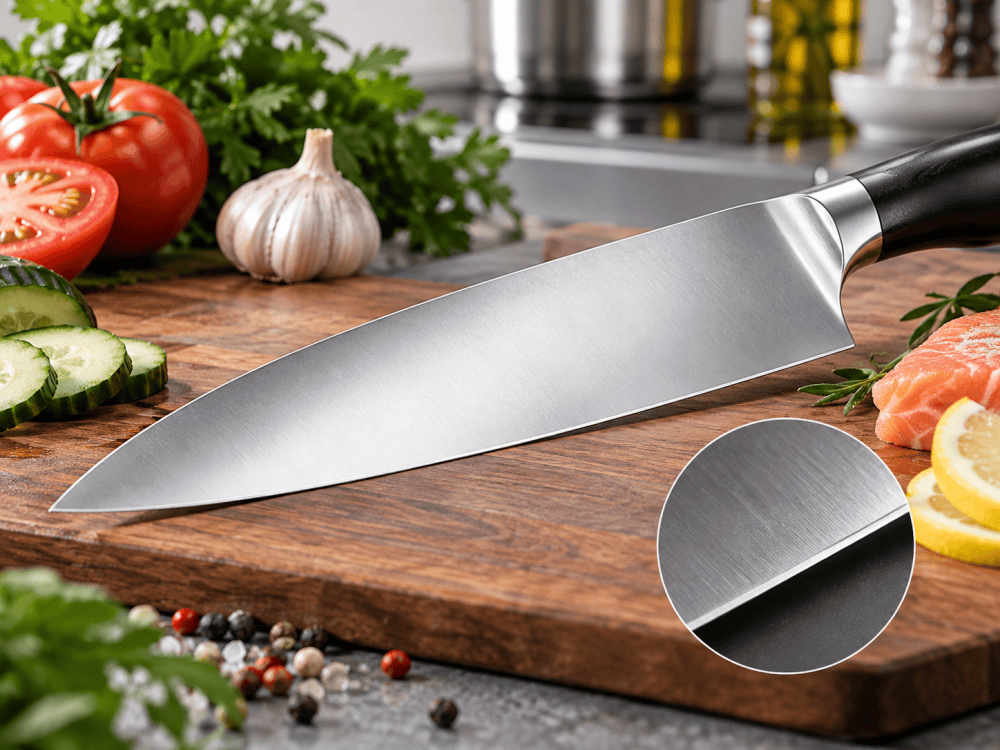
Popular Kitchen Knife Steel Types Explained

Today's kitchen knives are manufactured using a wide range of steel grades, each designed to balance sharpness, durability, corrosion resistance, and cost. Understanding the characteristics of different steels helps buyers choose the right products for their target markets.

Steel Type Hardness (HRC) Corrosion Resistance Typical Use
420J2 52-54 Excellent Entry-level knives
3Cr13 54-56 Very Good Mass-market kitchen knives
5Cr15MoV 56-58 Very Good Premium household knives
AUS-8 57-59 Good Mid-range performance knives
VG10 60-62 Very Good Japanese premium knives

Among these options, 3Cr13 and 5Cr15MoV remain the most widely used steels in global OEM kitchen knife manufacturing because they offer an excellent balance of performance, food safety, durability, and cost efficiency.

For a detailed comparison of the most common entry-level and mid-range knife steels, read our guide: 5Cr15MoV vs 3Cr13 vs 420J2: Which Steel is Better?

How Hardness Affects Steel Performance

One of the biggest misconceptions among buyers is assuming that harder steel automatically means a better knife. In reality, hardness is only one part of overall knife performance.

Knife hardness is measured using the Rockwell Hardness Scale (HRC). Higher HRC generally means:

  • Better edge retention
  • Longer sharpening intervals
  • Sharper cutting performance

However, excessively hard steel may also:

  • Become more brittle
  • Chip more easily
  • Require more difficult sharpening

For most household kitchen knives, the ideal hardness range falls between 55-58 HRC, balancing durability and edge retention.

Learn more here: Kitchen Knife Hardness Guide

High Carbon Steel vs Stainless Steel

Another common question buyers ask is whether high carbon steel or stainless steel is better.

The answer depends on the intended application.

Factor High Carbon Steel Stainless Steel
Sharpness Excellent Very Good
Edge Retention Excellent Good
Rust Resistance Poor Excellent
Maintenance High Low

For mass-market retail products, stainless steel remains the preferred choice because of its low maintenance requirements and superior corrosion resistance.

Related reading: High Carbon vs Stainless Steel Knives

Why Japanese Knives Use Harder Steel

Japanese knife manufacturers are famous for producing blades with hardness levels exceeding 60 HRC.

These harder steels provide exceptional sharpness and precision cutting performance, making them popular among professional chefs and culinary enthusiasts.

However, harder steels also require more careful handling and maintenance than softer Western-style stainless steel knives.

Learn more: Why Japanese Knives Are Harder Than Western Knives

The Importance of Heat Treatment

Even the highest-quality steel will perform poorly if heat treatment is not properly controlled.

Heat treatment determines:

  • Final hardness level
  • Toughness and flexibility
  • Edge retention
  • Corrosion resistance stability
  • Long-term durability

Many knife performance issues are actually caused by poor heat treatment rather than poor steel selection.

Read more: How Heat Treatment Affects Knife Performance

Why Blade Thickness Matters

Steel selection is only part of knife performance. Blade geometry also plays a major role.

A thinner blade typically offers:

  • Smoother slicing performance
  • Less cutting resistance
  • Greater precision

A thicker blade provides:

  • Higher durability
  • Better stability
  • Greater resistance to bending

Professional knife design balances steel composition, hardness, heat treatment, and blade thickness together.

Further reading: Why Blade Thickness Matters in Kitchen Knives

How to Choose the Best Kitchen Knife Steel

There is no single "best" knife steel for every user. The ideal steel depends on your target market, customer preferences, budget, and intended application.

When evaluating kitchen knife materials, buyers should consider the following factors:

  • Edge Retention: How long the blade stays sharp.
  • Corrosion Resistance: Ability to resist rust and staining.
  • Toughness: Resistance to chipping and cracking.
  • Ease of Sharpening: How easily the edge can be restored.
  • Manufacturing Cost: Material and production expenses.
  • Market Positioning: Entry-level, mid-range, or premium product lines.

For example, supermarkets and mass-market retailers often prefer 3Cr13 or 420J2 due to their affordability and excellent corrosion resistance. Premium brands typically choose 5Cr15MoV or VG10 to deliver better cutting performance and longer-lasting sharpness.

For OEM and private-label projects, balancing performance and cost is usually more important than selecting the highest-end steel available.

Recommended Steel Selection by Market Segment

Market Segment Recommended Steel Reason
Promotional Products 420J2 Low cost, excellent rust resistance
Mass Retail 3Cr13 Good balance of quality and price
Mid-Range Brands 5Cr15MoV Better sharpness and edge retention
Professional Kitchen AUS-8 / VG10 High cutting performance
Premium Japanese Style VG10 Excellent sharpness and premium positioning

Why Global Buyers Choose FASAKA

As a professional kitchen knife manufacturer and OEM/ODM supplier, FASAKA helps global distributors, retailers, importers, and private-label brands select the most suitable steel for their markets.

  • 28+ years of manufacturing experience
  • OEM & ODM customization support
  • 420J2, 3Cr13, 5Cr15MoV and premium steel options available
  • FDA & LFGB compliant materials
  • Strict quality control and heat treatment management
  • Flexible MOQ and private-label support
  • Export experience across North America, Europe, Japan, and Southeast Asia

Explore our OEM manufacturing solutions: OEM & ODM Kitchenware Manufacturing

Browse our complete knife collection: Kitchen Knives Product Catalog

Frequently Asked Questions (FAQ)

What is the best steel for kitchen knives?

There is no universal best steel. For most household and commercial applications, 5Cr15MoV offers one of the best balances of sharpness, corrosion resistance, durability, and affordability.

Is 420J2 stainless steel good for kitchen knives?

Yes. 420J2 provides excellent rust resistance and affordability, making it popular for entry-level kitchen knives and high-volume retail products.

Why is 5Cr15MoV more expensive than 3Cr13?

5Cr15MoV contains additional alloying elements such as molybdenum and vanadium, which improve hardness, wear resistance, and edge retention.

Does harder steel always mean a better knife?

No. Harder steel generally improves edge retention but may reduce toughness and increase brittleness. Proper balance is more important than maximum hardness.

What steel do Japanese kitchen knives typically use?

Many Japanese knives use premium steels such as VG10 and high-carbon steels, often hardened above 60 HRC for exceptional cutting performance.

How important is heat treatment compared to steel selection?

Heat treatment is extremely important. Even premium steel can perform poorly if heat treatment is not properly controlled during manufacturing.

Related Kitchen Knife Guides

Looking for Professional Kitchen Knife Manufacturing Solutions?

FASAKA specializes in OEM & ODM kitchen knives using 420J2, 3Cr13, 5Cr15MoV, and other premium steel options. We help global brands, wholesalers, and retailers develop high-quality knife collections with reliable manufacturing and compliance support.

Contact Us