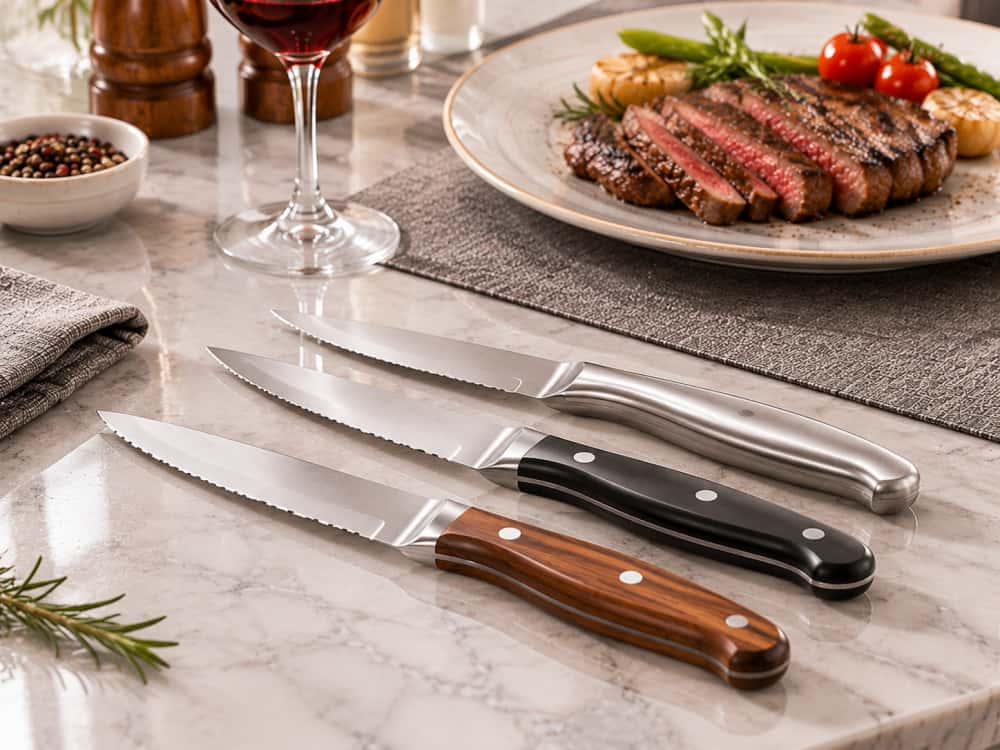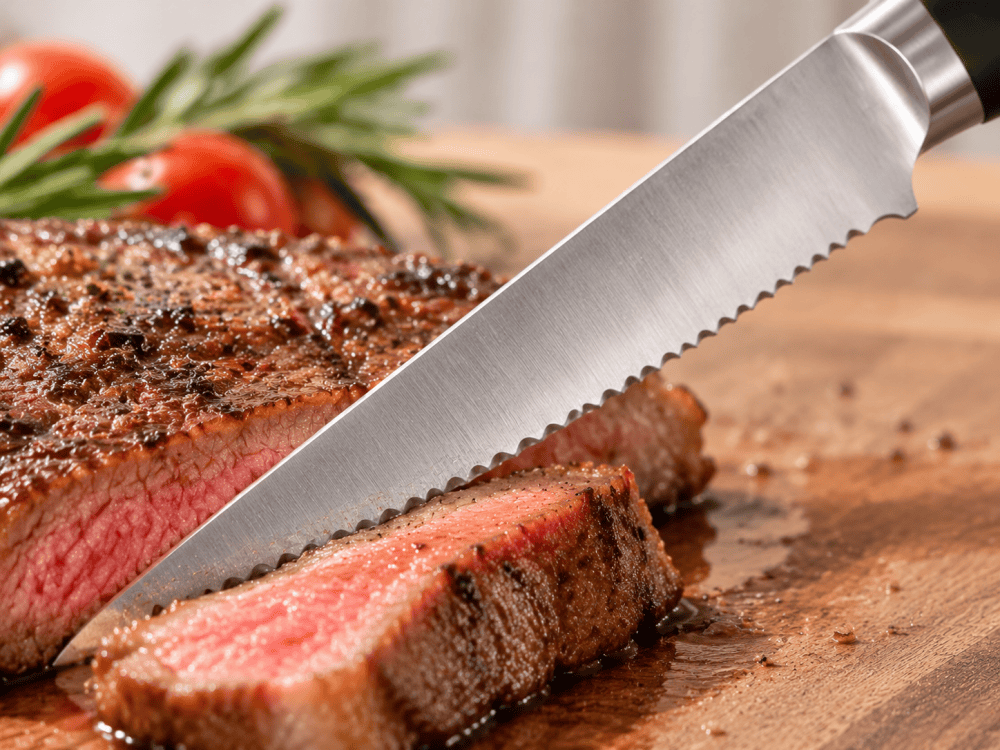




Kitchen Knife Edge Angles Explained: 15° vs. 20°
A kitchen knife's edge angle affects how easily it cuts, how well its edge withstands everyday use, and how often it may need sharpening. Choosing the right angle is important for home cooks, professional kitchens, and businesses sourcing wholesale kitchen knives.
In general, a lower edge angle can support easier slicing, while a higher angle usually provides more material behind the cutting edge and can improve durability. However, the best angle depends on the blade steel, overall geometry, intended application, and manufacturer's design.
Quick Answer: Is 15° or 20° Better?
15° per side: A more acute edge that can reduce cutting resistance and support precise slicing, but may be less tolerant of rough use.
20° per side: A more robust edge that generally offers better support for everyday cutting and harder use, although it may create slightly more cutting resistance.
Neither angle is universally better. For an existing knife, follow the manufacturer's recommended sharpening angle whenever possible.
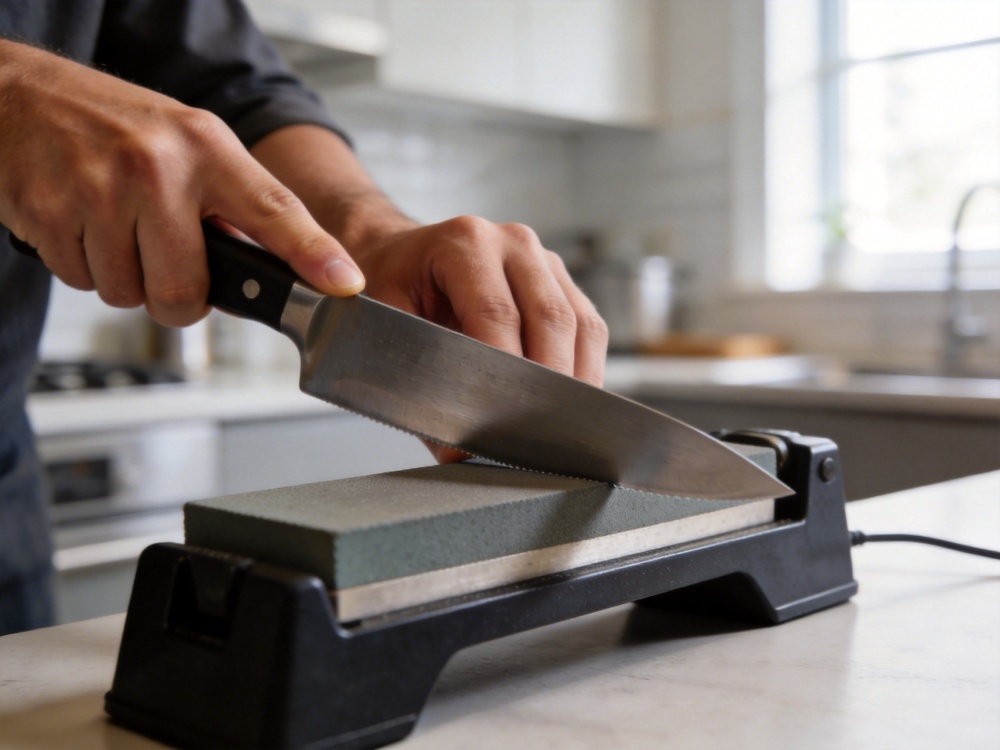
1. What Is a Kitchen Knife Edge Angle?
A kitchen knife edge angle describes the angle of the bevel near the cutting edge. For most double-bevel kitchen knives, sharpening angles are commonly specified per side, meaning the angle between one blade face and the sharpening surface.
It is important to distinguish the per-side angle from the included angle, which combines both sides of the cutting edge.
| Per-Side Angle | Included Angle | General Description |
|---|---|---|
| 15° per side | 30° total | More acute edge geometry |
| 20° per side | 40° total | More robust edge geometry |
These calculations apply to a symmetrical double-bevel edge. Single-bevel knives and asymmetrical edge designs require a different interpretation, so their specifications should clearly identify the angle on each side.
2. Kitchen Knife Edge Angles: 15° vs. 20°
The main difference between a 15-degree and a 20-degree edge is the balance between cutting ease and edge durability. The following comparison is a general guide for double-bevel kitchen knives, not a universal rule for every blade.
| Factor | 15° Per Side | 20° Per Side |
|---|---|---|
| Cutting performance | Can offer lower cutting resistance for precise slicing. | May create more cutting resistance, depending on the blade geometry. |
| Edge durability | A thinner edge may be less tolerant of impact, twisting, or misuse. | Generally provides more support behind the cutting edge. |
| Suitable applications | Precision slicing and suitable fine-edge kitchen knives. | General-purpose cutting and applications requiring a more robust edge. |
| Important consideration | Requires an appropriate combination of steel, geometry, and use. | Still requires suitable steel, heat treatment, and edge finishing. |
Is a 15° Edge Sharper Than a 20° Edge?
A 15-degree edge is more acute than a 20-degree edge when both figures are measured per side. This geometry can help a knife pass through food with less resistance. However, the angle alone does not determine sharpness.
The quality of the cutting apex, sharpening consistency, steel properties, and overall blade geometry also influence how sharp a knife feels and performs. A well-finished 20-degree edge can cut effectively, while a poorly sharpened 15-degree edge may perform badly.
Does a 20° Edge Last Longer?
A 20-degree edge often provides more support behind the cutting edge than a 15-degree edge on an otherwise comparable blade. This can improve resistance to rolling or damage during demanding use.
Actual edge retention also depends on steel composition, hardness, heat treatment, cutting surfaces, food materials, and maintenance. A larger angle cannot compensate for unsuitable steel or poor manufacturing quality.
3. What Is the Best Edge Angle for Different Kitchen Knives?
The appropriate edge angle depends on the knife's intended job and construction. The ranges below are illustrative starting points for some double-bevel kitchen knives. Always check the specific manufacturer's guidance before sharpening or changing an existing edge.