



Full Tang Kitchen Knives Explained: Benefits, Construction & Buying Guide
When choosing a kitchen knife, buyers often compare blade steel, sharpness, handle materials, and overall design. However, another important factor deserves attention: the knife's tang construction. The tang is the part of the blade that extends into the handle, and its design influences the knife's structural strength, weight distribution, and overall construction.
A full tang kitchen knife is designed with a tang that extends through the full length of the handle. This construction is commonly found in professional-style kitchen knives because it provides a continuous steel structure from the blade into the handle. When properly designed and assembled, it can offer reliable support for demanding kitchen tasks.
But is a full tang knife always better? How does it compare with partial tang and hidden tang designs? In this guide, FASAKA explains full tang construction, its main benefits, differences between tang types, and what distributors, importers, and kitchen knife brands should consider when sourcing knives.

Quick Answer: What Is a Full Tang Kitchen Knife?
A full tang kitchen knife is a knife in which the steel tang extends through the full length of the handle. The continuous steel structure can improve handle support and structural stability when properly manufactured. Full tang construction is commonly used in professional-style kitchen knives, although the best tang design depends on the knife's intended use, weight, balance, and price range.
1. What Is a Full Tang Kitchen Knife?
A full tang kitchen knife has a blade and tang made from a continuous piece of steel. The tang extends through the entire length of the handle, rather than stopping partway inside it.
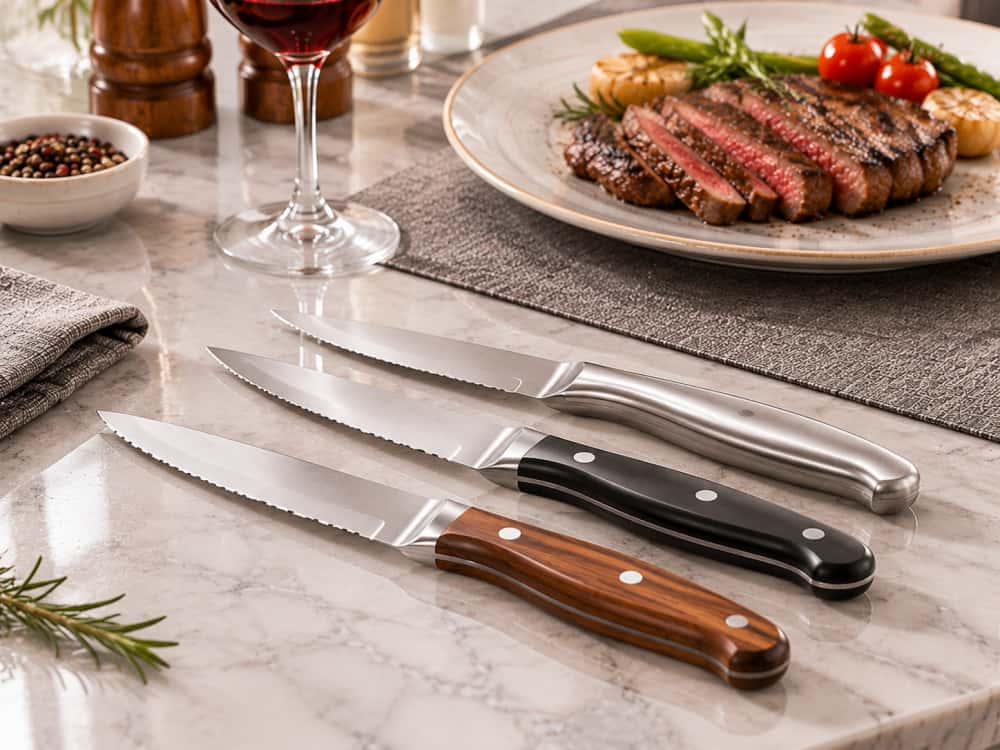
In many full tang designs, the steel tang is visible between the handle scales. The handle scales are attached to both sides of the tang, commonly using rivets or other suitable fastening methods.
This construction creates a continuous metal structure from the cutting blade to the end of the handle. It can provide strong support for the handle assembly and help the knife withstand repeated use when the materials, dimensions, and assembly quality are appropriate.
Key Characteristics of Full Tang Construction
- The tang extends through the full length of the handle.
- The blade and tang form a continuous steel structure.
- Handle scales are commonly attached to the sides of the tang.
- The exposed tang may be visible along the handle edges.
- The design allows manufacturers to control weight distribution through blade and handle specifications.
2. Why Does Full Tang Construction Matter?
The tang is an important part of a kitchen knife's overall structure. It connects the blade to the handle and helps transfer forces during cutting, slicing, and chopping. A properly designed full tang construction offers several practical advantages.
1. Strong Structural Support
Because the steel extends through the handle, full tang construction provides continuous structural support between the blade and handle. This can help reduce the risk of handle failure caused by an inadequately supported tang or poorly designed connection.
2. Reliable Handle Attachment
Full tang knives commonly use handle scales secured to the exposed tang. When properly fitted and fastened, this construction can create a stable handle assembly for repeated kitchen use.
However, tang construction alone does not guarantee handle durability. Rivet quality, fastening methods, handle materials, and assembly precision are also important.
3. Flexible Weight Distribution
The amount and distribution of steel inside the handle influence a knife's overall weight and balance. Full tang construction gives designers more flexibility to adjust the relationship between blade weight and handle weight.
A well-balanced knife can feel comfortable and controlled during use. However, full tang knives are not automatically better balanced. The final result depends on the complete knife design.
4. Suitable for Repeated Kitchen Use
Many full tang kitchen knives are designed for frequent use in home and professional kitchens. Their continuous steel construction can provide dependable structural support during regular cutting tasks, provided the knife is manufactured and maintained correctly.
3. Full Tang vs. Partial Tang vs. Hidden Tang Knives
Kitchen knives use different tang constructions depending on their intended applications, manufacturing methods, and price positioning. The three commonly discussed designs are full tang, partial tang, and hidden tang.
| Feature | Full Tang | Partial Tang | Hidden Tang |
|---|---|---|---|
| Tang structure | Extends through the full handle | Extends only partway into the handle | Extends inside the handle and is mostly concealed |
| Visibility | Often visible along the handle | Usually not fully visible | Usually concealed by the handle |
| Handle attachment | Often uses handle scales and rivets | Varies by design and fastening method | Often uses a fitted handle surrounding the tang |
| Weight | Depends on tang and handle dimensions | Can use less steel in the handle | Depends on the internal construction |
| Typical applications | Chef knives and many professional-style knives | Selected lightweight and cost-focused designs | Many traditional and Japanese-style knives |
| Main consideration | Handle assembly and overall balance | Tang dimensions and attachment strength | Tang fit, handle integrity, and construction quality |