



Common Kitchen Knife Types and Their Uses: Complete Guide
Kitchen knives are designed for different food preparation tasks. From chopping vegetables and slicing bread to preparing meat and filleting fish, each knife type has a blade shape, edge design, and size suited to a particular application.
Understanding the different types of kitchen knives and their uses helps home cooks, professional chefs, retailers, and distributors choose the right products. For wholesale buyers, it also makes it easier to plan practical knife collections that meet different customer needs.
In this guide, we explain 11 common kitchen knife types, compare their main functions, and discuss how to select suitable knives for household, professional, and wholesale markets.
For buyers sourcing products in bulk, you can also explore FASAKA's kitchen knife collection for different knife styles and product options.

The most common kitchen knife types include chef knives, Santoku knives, bread knives, utility knives, paring knives, cleavers, Nakiri knives, boning knives, fillet knives, carving knives, and steak knives. Each type is designed for specific cutting tasks, so the best choice depends on the food being prepared and the user's working habits.
Quick Comparison of 11 Common Kitchen Knife Types
The following table summarizes the main uses and typical applications of common kitchen knives.
| Knife Type | Main Uses | Typical Applications |
|---|---|---|
| Chef Knife | Chopping, slicing, dicing, and mincing | Daily food preparation |
| Santoku Knife | Slicing, chopping, and mincing | Vegetables, fish, and boneless meat |
| Bread Knife | Cutting through crusts and soft interiors | Bread, cakes, and pastries |
| Utility Knife | General-purpose slicing and trimming | Fruits, vegetables, and small food portions |
| Paring Knife | Peeling and precision cutting | Small fruits and vegetables |
| Cleaver | Chopping and food preparation | Vegetables, meat, or heavier cutting depending on design |
| Nakiri Knife | Straight downward vegetable cuts | Leafy vegetables and other produce |
| Boning Knife | Separating meat from bones | Meat and poultry preparation |
| Fillet Knife | Removing skin and making fish fillets | Fish and seafood |
| Carving Knife | Slicing cooked meat | Roasts, turkey, and ham |
| Steak Knife | Cutting cooked meat at the table | Steak and dining service |
1. Chef Knife: The Most Versatile Kitchen Knife
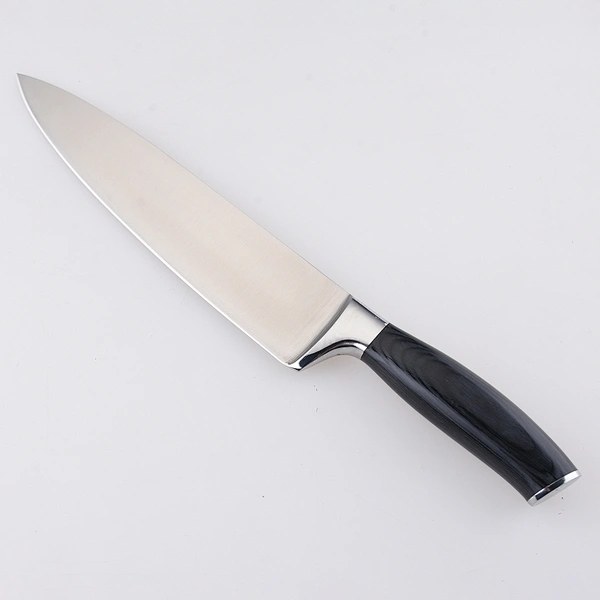
A chef knife is one of the most versatile tools in a kitchen. It typically has a broad blade, a pointed tip, and a curved or slightly curved cutting edge that supports different cutting techniques.
It is suitable for many everyday preparation tasks, making it a practical choice for both home kitchens and professional food preparation environments.
- Main uses: Chopping, slicing, dicing, and mincing.
- Common blade length: Approximately 6–10 inches, depending on the design.
- Suitable foods: Vegetables, herbs, meat, and fish.
- Common designs: Forged and stamped construction.
For buyers building a household knife collection, a chef knife is often the core product because it covers a wide range of preparation tasks. It is commonly included in multi-piece kitchen knife sets.
2. Santoku Knife: A Japanese Multi-Purpose Knife
The Santoku knife is a Japanese-style kitchen knife whose name is commonly associated with three uses: slicing, dicing, and mincing. It generally features a shorter, wider blade than a typical Western chef knife.
Its relatively flat cutting edge and compact design make it suitable for controlled cutting movements, especially when preparing vegetables, fish, and boneless meat.
- Main uses: Slicing, chopping, dicing, and mincing.
- Blade design: Broad blade with a relatively flat cutting profile.
- Suitable foods: Vegetables, fish, and boneless meat.
- Optional feature: Some models have Granton-style indentations along the blade to help reduce food sticking.
Compared with a traditional chef knife, a Santoku knife may feel more compact and controlled. However, the best option depends on the user's preferred cutting technique and blade design.
3. Bread Knife: Designed for Bread and Soft Baked Goods
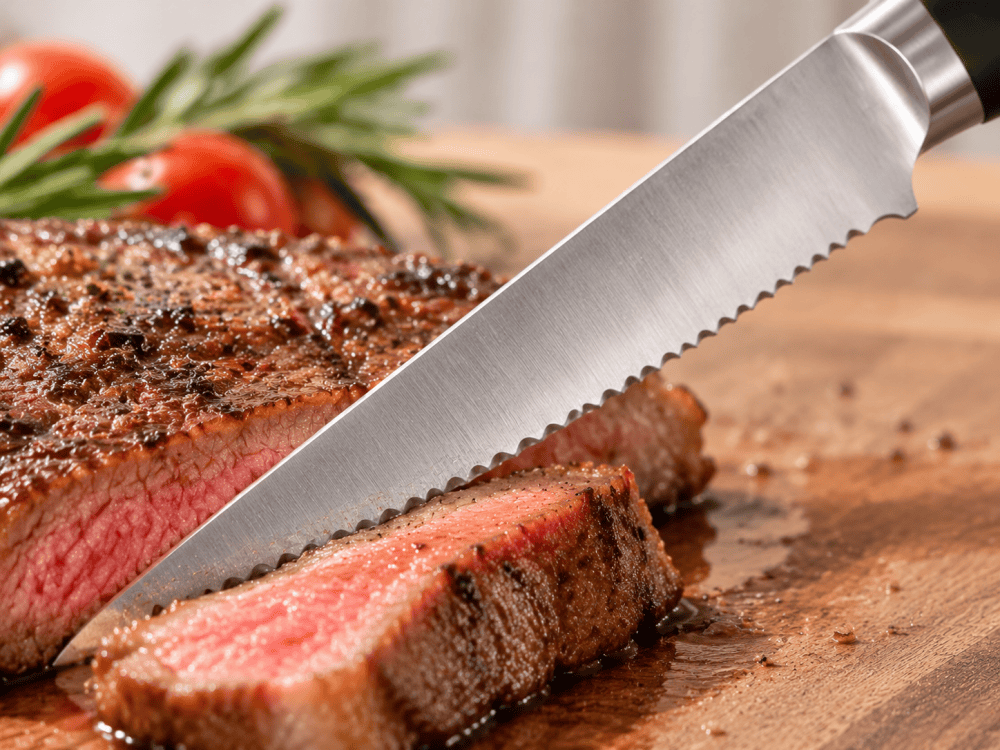
A bread knife is easy to recognize by its long serrated blade. The teeth along the cutting edge help grip hard crusts and cut through soft interiors without applying excessive downward pressure.
- Main uses: Cutting bread and other foods with firm outer surfaces and soft interiors.
- Blade design: Long serrated cutting edge.
- Suitable foods: Bread loaves, baguettes, cakes, and some pastries.
- Common advantage: Helps reduce crushing when slicing crusty bread.
Unlike a straight-edge chef knife, a bread knife is generally used with a gentle sawing motion. Its serrated edge is especially useful when cutting through crusts while keeping the inside of the food intact.
4. Utility Knife: A Flexible Everyday Kitchen Knife
A utility knife is a medium-sized kitchen knife that sits between a chef knife and a paring knife in terms of blade length. It is useful when a chef knife feels too large but a small paring knife is not practical.
- Main uses: Slicing, trimming, and general food preparation.
- Common blade length: Approximately 4–7 inches.
- Suitable foods: Fruits, vegetables, sandwiches, and smaller portions of meat.
- Common markets: Household kitchens and compact knife sets.
For retailers, utility knives are useful additions to entry-level and mid-range kitchen knife collections because they offer a practical balance between size and versatility.
5. Paring Knife: Precision Cutting for Small Ingredients
A paring knife is a small kitchen knife designed for tasks that require detailed control. Its short blade makes it easier to handle small ingredients and perform precise cutting work.
- Main uses: Peeling, trimming, coring, and decorative cutting.
- Common blade length: Approximately 3–4 inches.
- Suitable foods: Small fruits, vegetables, and other ingredients.
- Common advantage: Precise handling for detailed preparation tasks.
A paring knife is a useful complement to a chef knife. While a chef knife handles larger preparation tasks, a paring knife is better suited to smaller and more detailed work.
6. Cleaver: A Broad-Bladed Knife for Different Cutting Tasks
Cleavers have broad, rectangular blades, but not all cleavers are designed for the same purpose. Their weight, blade thickness, edge geometry, and overall construction determine the tasks they can handle.
Chinese Vegetable Cleaver
A Chinese vegetable cleaver usually has a relatively thin blade designed for slicing, chopping, and transferring prepared ingredients. Despite its appearance, it is not intended for heavy bone chopping.
Heavy-Duty Meat Cleaver
A heavy-duty meat cleaver has a thicker and often heavier blade designed for more demanding meat preparation. Some models are made for chopping through smaller bones, but the intended application should always be confirmed with the product specifications.
- Main uses: Vegetable preparation or heavier meat cutting, depending on the design.
- Blade design: Wide rectangular blade.
- Typical markets: Household kitchens, butcher shops, and commercial food preparation.
7. Nakiri Knife: A Japanese Knife for Vegetable Preparation
The Nakiri knife is a Japanese-style vegetable knife with a straight cutting edge and a rectangular blade. Its relatively flat profile allows the blade to make consistent contact with the cutting board during downward cutting movements.
- Main uses: Slicing, chopping, and preparing vegetables.
- Blade design: Rectangular blade with a relatively straight edge.
- Suitable foods: Cabbage, carrots, leafy greens, and other vegetables.
- Common advantage: Efficient straight-down cutting for vegetable preparation.
Unlike a chef knife with a more curved cutting edge, a Nakiri is primarily designed for vegetable preparation. It is a specialized option for customers who frequently work with fresh produce.
8. Boning Knife: Designed for Separating Meat from Bones
A boning knife has a narrow blade designed to separate meat from bones and work around joints. Its slim profile helps users make controlled cuts in areas where a wider kitchen knife would be less convenient.
- Main uses: Removing bones and trimming meat.
- Blade design: Narrow blade, available in different levels of flexibility.
- Suitable foods: Chicken, beef, pork, and other meats.
- Common users: Butchers, restaurants, and professional food preparation teams.
Flexible boning knives can be useful when following curved bones or working around joints. More rigid designs may be preferred for tasks that require additional blade control.
9. Fillet Knife: A Specialized Knife for Fish Preparation
A fillet knife is designed for preparing fish. It typically has a long, narrow, and flexible blade that allows users to follow the shape of the fish and make precise cuts along the bones.
- Main uses: Filleting fish and removing skin.
- Blade design: Long, narrow, and often flexible.
- Suitable foods: Different types of fish and seafood.
- Common users: Seafood processors, fish markets, and professional kitchens.
Blade flexibility is an important selection factor. The appropriate level depends on the fish size, preparation method, and user's experience.
10. Carving Knife: For Slicing Roasted Meat
A carving knife is designed to cut thin, even slices from cooked meat. It usually has a long and relatively narrow blade that helps users make smooth cuts through larger portions of food.
- Main uses: Slicing cooked meat and poultry.
- Blade design: Long, narrow blade with a straight cutting edge.
- Suitable foods: Roast beef, turkey, ham, and other cooked meats.
- Common pairing: Often used with a carving fork.
Carving knives are commonly included in premium kitchen knife collections and are also suitable for special dining occasions and professional food service.
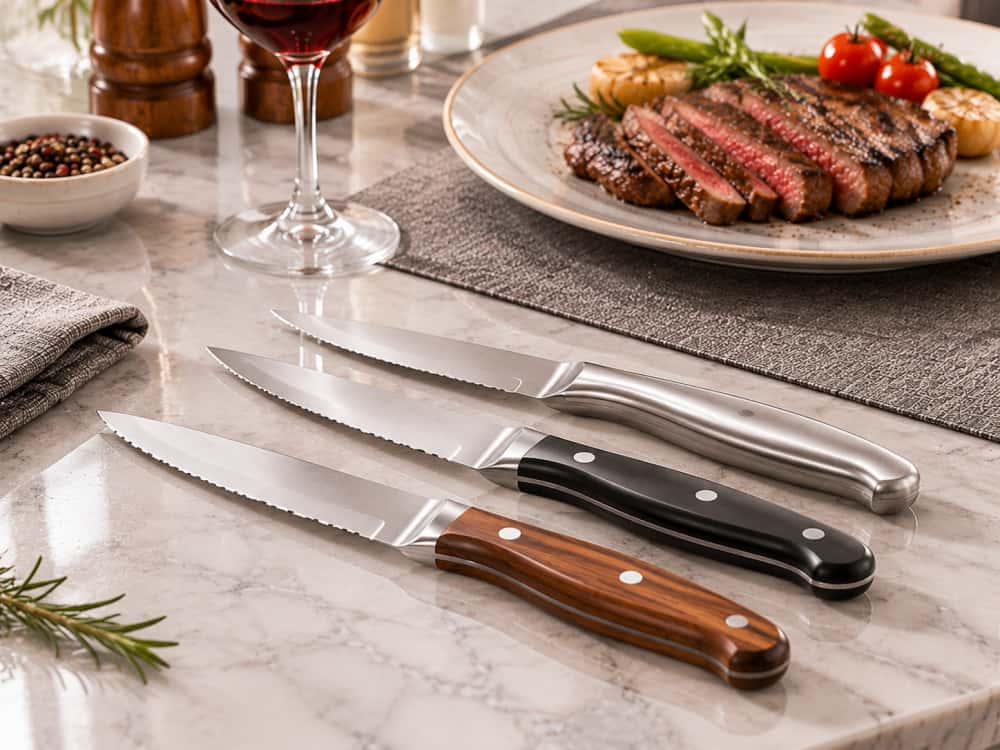
11. Steak Knife: Designed for Dining and Table Service
A steak knife is intended for cutting cooked meat at the dining table. Unlike most preparation knives, steak knives are designed primarily for individual dining use.
- Main uses: Cutting steak and other cooked meats.
- Edge options: Straight or serrated.
- Handle options: Different materials, shapes, and finishes.
- Common markets: Household dining, restaurants, and hospitality businesses.
For wholesalers and retailers, steak knives are often sold in sets. Handle design, visual consistency, packaging, and the overall dining experience can all influence product positioning.
Forged vs. Stamped Kitchen Knives: What Is the Difference?
Besides knife type, manufacturing method is another factor buyers should consider. Forged and stamped knives are produced through different processes, and each construction method can suit different product designs and market requirements.
| Feature | Forged Kitchen Knife | Stamped Kitchen Knife |
|---|---|---|
| Manufacturing Process | Steel is shaped through a forging process. | The blade is cut or stamped from a steel sheet. |
| Blade Structure | May feature a thicker profile, bolster, or other structural details depending on the design. | Often features a relatively uniform blade profile. |
| Weight | Often heavier, depending on blade and handle construction. | Often lighter and easier to handle for some users. |
| Product Positioning | Commonly used in mid-range and premium collections. | Commonly used in practical and value-oriented collections. |
| Key Selection Factors | Blade geometry, balance, steel, heat treatment, and workmanship. | Steel quality, blade thickness, heat treatment, edge geometry, and workmanship. |
Neither construction method is automatically better in every situation. A well-made stamped knife can perform very well, while a poorly designed forged knife may not meet user expectations.
When comparing products, buyers should evaluate the complete knife rather than relying only on whether it is forged or stamped.
Explore FASAKA's forged kitchen knife sets to learn more about one type of knife construction.
How to Choose the Right Kitchen Knife for Different Users
The best kitchen knife depends on the user's cooking habits, food preparation tasks, experience, and budget. For B2B buyers, the target market is also important when selecting products for a retail or distribution portfolio.
| Target User or Market | Recommended Knife Types | Selection Focus |
|---|---|---|
| Home Users | Chef knife, utility knife, paring knife | Versatility, comfortable handling, and everyday convenience. |
| Professional Chefs | Chef knife, Santoku, boning knife, fillet knife | Cutting performance, blade geometry, and task-specific designs. |
| Restaurants | Chef knife, bread knife, carving knife, utility knife | Practical performance, maintenance, and replacement needs. |
| Supermarkets and Retailers | Chef knife, paring knife, utility knife, knife sets | Price positioning, packaging, and product variety. |
| Premium Private Label Brands | Forged knives, Santoku knives, steak knife sets | Design differentiation, materials, finishes, and branding. |
How to Select Kitchen Knives for Wholesale Orders
For importers, distributors, and retailers, selecting kitchen knives involves more than choosing popular knife types. A well-planned product range should cover different customer needs while maintaining a practical balance between product variety, pricing, and inventory.
1. Define Your Target Market
Start by identifying whether your customers are household users, professional chefs, restaurants, supermarkets, or premium kitchenware brands. Different markets may require different blade designs, handle materials, packaging, and price points.
2. Choose a Practical Product Combination
A basic household collection may include a chef knife, utility knife, and paring knife. A more comprehensive collection can add a bread knife, Santoku knife, and steak knives.
Professional or specialized collections may include boning knives, fillet knives, carving knives, and different cleaver designs.
3. Confirm Blade and Handle Specifications
Before placing a bulk order, confirm the key product specifications, including:
- Blade steel grade and thickness
- Blade length and shape
- Hardness requirements and applicable testing method
- Edge geometry and sharpening requirements
- Handle material, shape, and construction
- Overall product dimensions and weight
- Packaging style and labeling requirements
These details help buyers and manufacturers establish consistent product expectations before mass production.
4. Evaluate Samples Before Mass Production
Sample evaluation allows buyers to check blade finish, sharpness, balance, handle comfort, assembly quality, and packaging before confirming a larger order.
For private label projects, approved samples and written specifications can also help reduce misunderstandings during production.
5. Discuss Customization and Compliance Requirements
OEM and ODM projects may involve customized blade materials, handle designs, logos, packaging, and product combinations. Buyers should confirm which options are available for the selected product.
For products intended for markets with food-contact requirements, compliance should be assessed according to the relevant materials, components, intended use, and applicable regulations. Do not assume that a complete knife automatically has FDA or LFGB approval simply because a particular steel grade is used.
OEM & ODM Kitchen Knife Manufacturing
For global brands, wholesalers, and distributors, working with an experienced kitchen knife manufacturer can help develop product collections that match specific market requirements.
Depending on the product and project, OEM and ODM discussions may cover:
- Blade specifications: Steel grade, blade shape, length, thickness, and finish.
- Hardness requirements: Target hardness and agreed verification methods.
- Handle customization: Handle materials, shapes, colors, and construction.
- Branding: Logo application and private label requirements.
- Packaging: Retail boxes, sets, labels, and customized packaging.
- Product combinations: Knife types and set configurations for different market segments.
FASAKA is a brand under DKS Enterprises Co., Ltd., a manufacturer and supplier based in Yangjiang, Guangdong, China. DKS serves global customers in hardware knives and scissors, BBQ tools, and kitchenware.
FASAKA supports OEM and ODM discussions for kitchen knife projects, helping importers, distributors, retailers, and private label brands explore product and customization options.
Learn more about our OEM & ODM manufacturing services.
Frequently Asked Questions About Kitchen Knife Types
What are the most common types of kitchen knives?
The most common types include chef knives, Santoku knives, bread knives, utility knives, paring knives, cleavers, Nakiri knives, boning knives, fillet knives, carving knives, and steak knives.
What are the three most essential kitchen knives?
For many home kitchens, a chef knife, paring knife, and bread knife or utility knife provide a practical starting combination. The best selection depends on the foods being prepared and personal cooking habits.
What is the best kitchen knife for cutting vegetables?
Chef knives, Santoku knives, and Nakiri knives are all suitable for vegetable preparation. A chef knife is versatile, a Santoku supports controlled slicing and chopping, and a Nakiri is specifically designed for vegetable cutting.
What is the difference between a chef knife and a Santoku knife?
A chef knife usually has a more curved cutting edge and a pointed tip, making it suitable for different cutting techniques. A Santoku typically has a shorter, wider blade with a flatter cutting profile and is commonly used for slicing, dicing, and mincing.
What is the difference between a cleaver and a chef knife?
A cleaver has a broad, rectangular blade, while a chef knife has a narrower blade with a more pointed tip. Cleavers come in different designs, including thin vegetable cleavers and heavier meat cleavers. Their intended applications are not interchangeable.
Are forged kitchen knives better than stamped knives?
Not necessarily. Forged and stamped knives are made using different manufacturing processes, but performance also depends on steel quality, heat treatment, blade geometry, construction, and workmanship. Buyers should compare the complete product rather than the manufacturing method alone.
Can kitchen knives be customized for wholesale orders?
Yes, depending on the product and manufacturer, wholesale kitchen knife projects may include customized blade specifications, handle designs, logos, packaging, and product combinations. Buyers should confirm available options and minimum order requirements before placing an order.
How do I choose a kitchen knife manufacturer for bulk orders?
Compare product range, material specifications, sample quality, production arrangements, quality control procedures, customization options, MOQ, lead time, and communication. Reviewing samples and confirming written specifications before mass production are important steps.
Looking for a Kitchen Knife Manufacturer for Wholesale or OEM Projects?
FASAKA provides kitchen knife product options and OEM/ODM project support for global importers, wholesalers, distributors, retailers, and private label brands.
Explore our kitchen knife collection or contact our team to discuss product specifications, customization options, and wholesale requirements.
Explore Kitchen Knives Contact FASAKA