



OEM vs ODM Kitchenware: Which Model Is Right for Your Business?
When sourcing kitchenware from China, importers, wholesalers, distributors, and private-label brands often face an important decision: should you choose OEM or ODM manufacturing? Both models allow businesses to work with professional manufacturers, but they differ in product development, design control, customization, investment, and time to market.
Understanding the difference between OEM and ODM kitchenware manufacturing can help you select the right production model, manage sourcing costs, and build a product range that matches your target market.

OEM manufacturing is generally based on the buyer's product design, specifications, or development requirements. ODM manufacturing uses product designs developed by the manufacturer, which buyers may select and customize. OEM is suitable for businesses seeking greater product differentiation, while ODM is often a practical choice for buyers who want to launch products using existing designs.
1. What Is OEM Kitchenware Manufacturing?
OEM stands for Original Equipment Manufacturer. In kitchenware manufacturing, OEM generally refers to a production arrangement in which the buyer provides the product design, technical specifications, drawings, samples, or detailed requirements, and the manufacturer produces the product accordingly.
The buyer has greater involvement in defining the product, while the manufacturer is responsible for production based on the agreed specifications. Depending on the project, the manufacturer may also provide engineering suggestions, material recommendations, prototyping, and production support.
Common Features of OEM Kitchenware
- Buyer-led product development: The buyer provides the initial design or detailed product requirements.
- Greater design control: Product dimensions, structure, materials, and functional details can be developed around the buyer's needs.
- Brand-specific products: Products can be manufactured for a particular brand or market positioning.
- Customized production: Tooling, molds, samples, and production specifications may be required depending on the design.
- Long-term product differentiation: OEM can help brands develop products that are less dependent on standard market designs.
OEM Kitchenware Examples
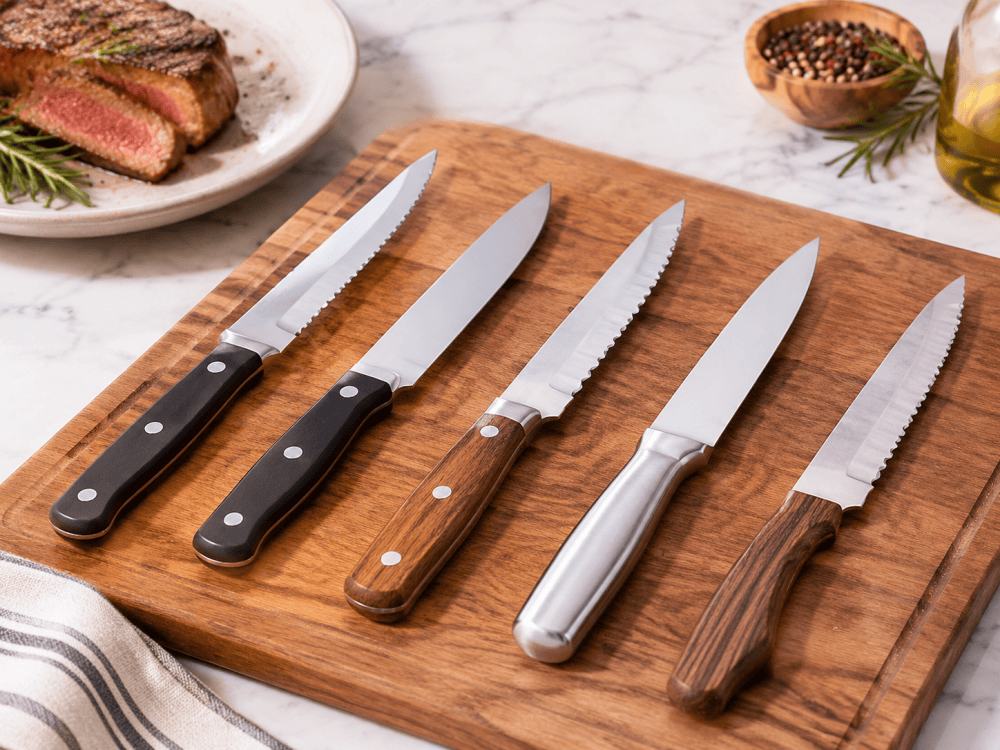
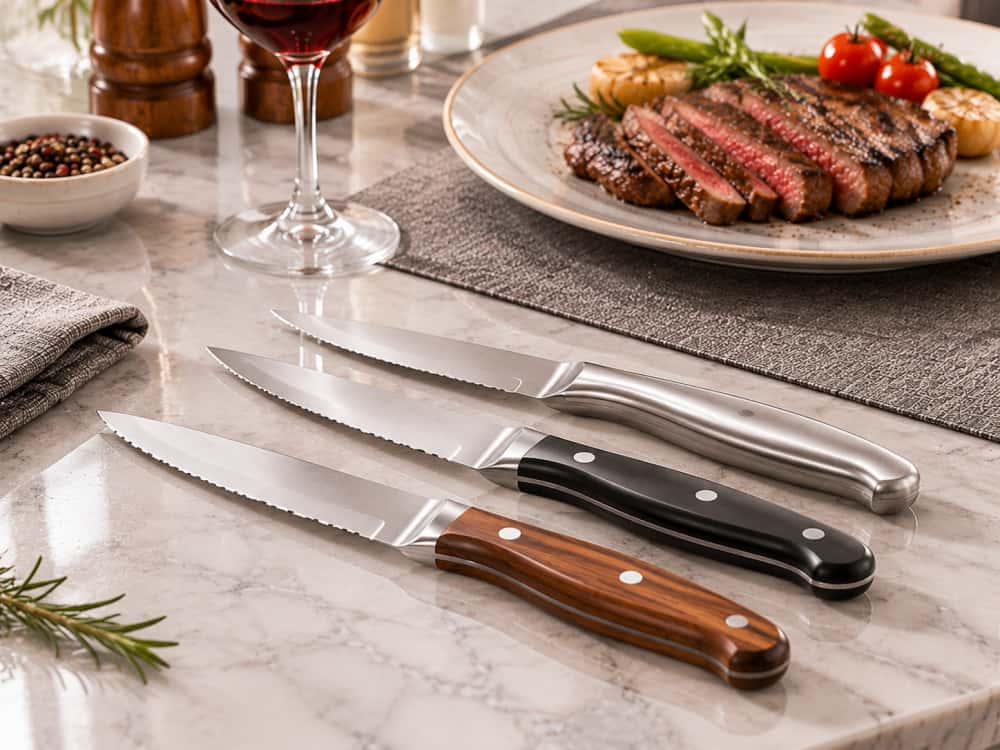
A kitchenware brand may provide a custom kitchen knife design with a specific blade shape, handle structure, material, and logo position. The manufacturer then evaluates the requirements, develops samples where necessary, and produces the approved product.
Other OEM projects may include customized scissors, BBQ tools, kitchen utensil sets, and branded kitchen accessories.
2. What Is ODM Kitchenware Manufacturing?
ODM stands for Original Design Manufacturer. Under this model, the manufacturer develops product designs and offers them to buyers. Buyers can select suitable products from the manufacturer's existing range and may customize certain details according to the available options.
Depending on the manufacturer's capabilities and the product design, ODM customization may include logo printing, color selection, packaging, product combinations, and selected material or specification adjustments.
Common Features of ODM Kitchenware
- Manufacturer-developed designs: Products are based on designs already developed or offered by the manufacturer.
- Faster product selection: Buyers can start with existing models rather than developing every product from the beginning.
- Branding options: Logos, labels, and packaging can often be customized.
- More predictable development: Existing product structures can reduce the need for new product development.
- Flexible product combinations: Buyers may select different models or create product sets, depending on available options.
ODM Kitchenware Examples
A wholesaler may choose an existing kitchen knife set from a manufacturer's catalog, add a private-label logo, select a suitable packaging design, and order the products under its own brand.
This approach can also work for scissors, BBQ accessories, and selected kitchenware products when existing models meet the buyer's requirements.
3. OEM vs ODM Kitchenware: Key Differences
The main difference between OEM and ODM is who leads the product design and development. However, the right choice also depends on customization requirements, development investment, production schedule, and the buyer's business strategy.
| Comparison | OEM Manufacturing | ODM Manufacturing |
|---|---|---|
| Product design | Generally led by the buyer | Generally developed by the manufacturer |
| Development | May require new design, engineering, or tooling | Starts from existing manufacturer-developed designs |
| Customization | Can accommodate more extensive product-specific requirements | Usually based on available customization options |
| Initial investment | May be higher when new development or tooling is needed | Can be lower when existing designs and tooling are used |
| Development time | Can take longer depending on project complexity | Can be shorter when the selected design is production-ready |
| Product differentiation | Greater potential for unique product features | Depends on the design and permitted customization |
| Best suited for | Brands with specific product requirements | Buyers seeking existing designs and faster market entry |
4. When Should You Choose OEM Kitchenware Manufacturing?
OEM is a suitable model for businesses that have clear product requirements and want greater control over product design, specifications, and differentiation.
Choose OEM If Your Business:
- Has its own product drawings, samples, or technical specifications.
- Needs a distinctive product structure or functional design.
- Wants to develop a differentiated private-label product range.
- Has specific requirements for dimensions, materials, or product performance.
- Plans to build a long-term product line around its own designs.
Example: Custom Kitchen Knife Development
A brand wants to launch a kitchen knife collection with a particular blade profile, handle design, and product specification. It provides reference drawings and requirements to the manufacturer. After technical evaluation and sample approval, the manufacturer proceeds with production.
In this situation, OEM is a suitable approach because the buyer wants the product to follow its own design direction.
5. When Should You Choose ODM Kitchenware Manufacturing?
ODM is often a practical option for startups, wholesalers, retailers, and importers that want to select from existing products and add their own branding without starting a complete product development project.
Choose ODM If Your Business:
- Does not have its own product drawings or technical design.
- Wants to select products from an existing catalog.
- Needs logo printing or private-label packaging.
- Wants to test market demand before investing in new product development.
- Prefers to focus on sourcing, branding, and distribution.
Example: Private Label Kitchenware
A distributor selects existing kitchen scissors and kitchen utensil models from a manufacturer's catalog. The products are customized with the distributor's logo and packaging requirements.
Since the buyer is using existing product designs, ODM can be a practical starting point.
6. What Can Be Customized in OEM and ODM Kitchenware?
Customization options depend on the product, manufacturing process, existing tooling, and supplier capabilities. Some requirements can be handled through simple changes, while others may require new development or additional investment.
| Customization Item | OEM | ODM |
|---|---|---|
| Product structure | Can be developed to project specifications | Usually based on existing designs |
| Materials | Specified according to project requirements | Selected from available material options |
| Size and dimensions | Can be developed to agreed specifications | Depends on existing product and tooling |
| Color | Can be specified for the project | Often available from selected color options |
| Logo and branding | Available according to project requirements | Common private-label option |
| Packaging | Can be customized | Can often be customized |
For both models, buyers should confirm customization scope, minimum order quantity, sample costs, tooling ownership, and production lead time before placing an order.
7. How Does the OEM/ODM Kitchenware Process Work?
Although OEM and ODM projects start differently, both require clear communication, specification confirmation, sample evaluation, and production quality control.
Identify the product category, target market, expected price range, materials, functions, and branding requirements.
Decide whether to develop a product based on your own requirements or select an existing manufacturer-developed design.
Review product details, customization options, MOQ, pricing, packaging, tooling requirements, and estimated lead time.
Evaluate product appearance, materials, dimensions, functionality, and branding details before confirming mass production.
Production follows the approved specifications, with quality checks arranged according to the agreed inspection requirements.
Complete the agreed packaging, shipping marks, and export arrangements before dispatch.
8. How FASAKA Supports OEM and ODM Kitchenware Projects
FASAKA is a brand under DKS Enterprises Co., Ltd., a manufacturer and supplier based in Yangjiang, Guangdong, China. Established in 1998, DKS specializes in hardware knives and scissors, BBQ tools, and kitchenware.
FASAKA works with global B2B buyers, including importers, wholesalers, distributors, retailers, and private-label brands. Depending on product requirements, we support OEM and ODM cooperation for selected product categories.
Product Categories
- Kitchen knives and knife sets
- Household and specialized scissors
- BBQ tools and accessories
- Selected kitchenware products
Project Support
- Existing product selection and customization discussions
- Product specifications and material options
- Logo and private-label packaging requirements
- Sample evaluation and specification confirmation
- Production and order coordination
Whether you are developing a customized product or sourcing existing models for your brand, the first step is to define your product requirements and discuss the available manufacturing options.
Explore our kitchen knife products or learn more about our OEM and ODM kitchenware services.
9. Frequently Asked Questions About OEM vs ODM Kitchenware
What is the main difference between OEM and ODM?
OEM generally uses the buyer's design or product requirements, while ODM starts with designs developed by the manufacturer. The main difference is who leads the product design and development.
Which is cheaper, OEM or ODM?
ODM can be more cost-effective when existing designs and tooling are suitable. OEM may involve additional design, sample, or tooling costs. The actual quotation depends on the product and project requirements.
Which is better for a startup: OEM or ODM?
ODM is often a practical starting point for startups because they can select existing products and add branding. However, OEM may be more suitable if the business already has a distinctive product design.
Can ODM kitchenware be customized with my own logo?
In many cases, yes. Logo printing, labeling, and packaging customization are common ODM options. Buyers should confirm the available methods and requirements with the manufacturer.
Does OEM always require new molds or tooling?
No. If the requested product can be manufactured using existing tooling or production processes, new molds may not be necessary. New tooling is generally considered when the design requires new structures or dimensions.
Can a manufacturer provide both OEM and ODM services?
Yes. Some manufacturers support both models. The available services depend on product categories, design capabilities, existing product ranges, and production arrangements.
What should I prepare before contacting a kitchenware manufacturer?
Prepare product photos or drawings if available, estimated order quantity, material preferences, target market, branding requirements, packaging expectations, and any relevant quality or compliance requirements.
Can FASAKA support private-label kitchenware projects?
FASAKA supports branding and customization discussions for selected products. Contact our team with your product requirements to confirm available options.
Looking for an OEM or ODM Kitchenware Manufacturer?
Share your product ideas, specifications, or sourcing requirements with FASAKA. Our team can discuss suitable product options and customization possibilities for your business.
Get a Free Quote